创投

Search documents
深圳举行创投行业25周年大会
Zhong Zheng Wang· 2025-12-22 09:22
中证报中证网讯(记者齐金钊)日前,以"高起点,大格局,再出发"为主题的深圳创投行业25周年大会举 行。本次大会由深圳市创业投资同业公会主办,深创投、东方富海、达晨财智、同创伟业、松禾资本、 基石资本、前海方舟联合主办。 中国工程院院士、香港中文大学(深圳)校长徐扬生以"人工智能:突破口在哪里?"为题,从学术视角解 读了人工智能产业的发展现状与未来方向。他认为,人工智能正从"感知智能"向"认知智能""具身智 能"演进,核心突破口在于算法创新、算力提升与场景落地的深度融合。深圳拥有完整的产业链优势和 活跃的创新生态,有望成为人工智能技术转化和产业应用的核心阵地。 清科集团创始人、董事长倪正东则从行业发展趋势出发,分析了当前创投行业面临的机遇与挑战。他表 示,随着科技创新进入深水区,创投行业正从"规模扩张"向"质量提升"转型,专业化、精细化、生态化 成为未来发展的核心关键词。深圳创投机构要继续发挥先行优势,聚焦硬科技领域,加强投后赋能,与 创业者共同成长。" 作为被投企业代表,云豹智能创始人、CEO萧启阳分享了企业在资本赋能下的成长历程。"从初创到成 为行业骨干企业,深圳创投机构不仅提供了资金支持,更带来了资源对接 ...
国家十年前在深圳布的局,已成为硬科技投资的"引擎"
投中网· 2025-12-22 07:56
将投中网设为"星标⭐",第一时间收获最新推送 不投网红、不炒概念,他们十年闷声只干一件大事。 作者丨 簪竹 来源丨 投中网 " 国产 DEA 第一股 " 华大九天、港股 " 自动驾驶第一股 " 知行科技、科创板首家未盈利即上市的企业泽璟制 药 …… 近年来一批有标杆意义的硬科技上市公司,背后都有一个共同的股东,那就是被称为 " 国家级 VC" 的 国中资本。 2015 年底,因为国家中小企业发展基金的横空出世,国中资本应运而生。 首支直投子基金即达 60 亿元的超大 规模,国家五部委相关领导出席成立仪式,这家崭新的 VC 机构彼时备受市场瞩目。 回望 2015 年前后, 中国经济正处于 " 三期叠加 " (增长速度换挡期、结构调整阵痛期、前期刺激政策消化 期)的复杂环境中。 中小企业作为国民经济的 " 毛细血管 " ,贡献了 50% 以上的税收、 60% 以上的 GDP 、 70% 以上的技术创新和 80% 以上的城镇劳动就业,却长期面临着严峻的 " 融资难、融资贵 " 问题。 据当时的数据显示,彼时我国中小企业发展所需资金的 65% 来源于自有资金,仅有 25% 来源于银行贷款,三 分之二的中小企业普遍感到 ...


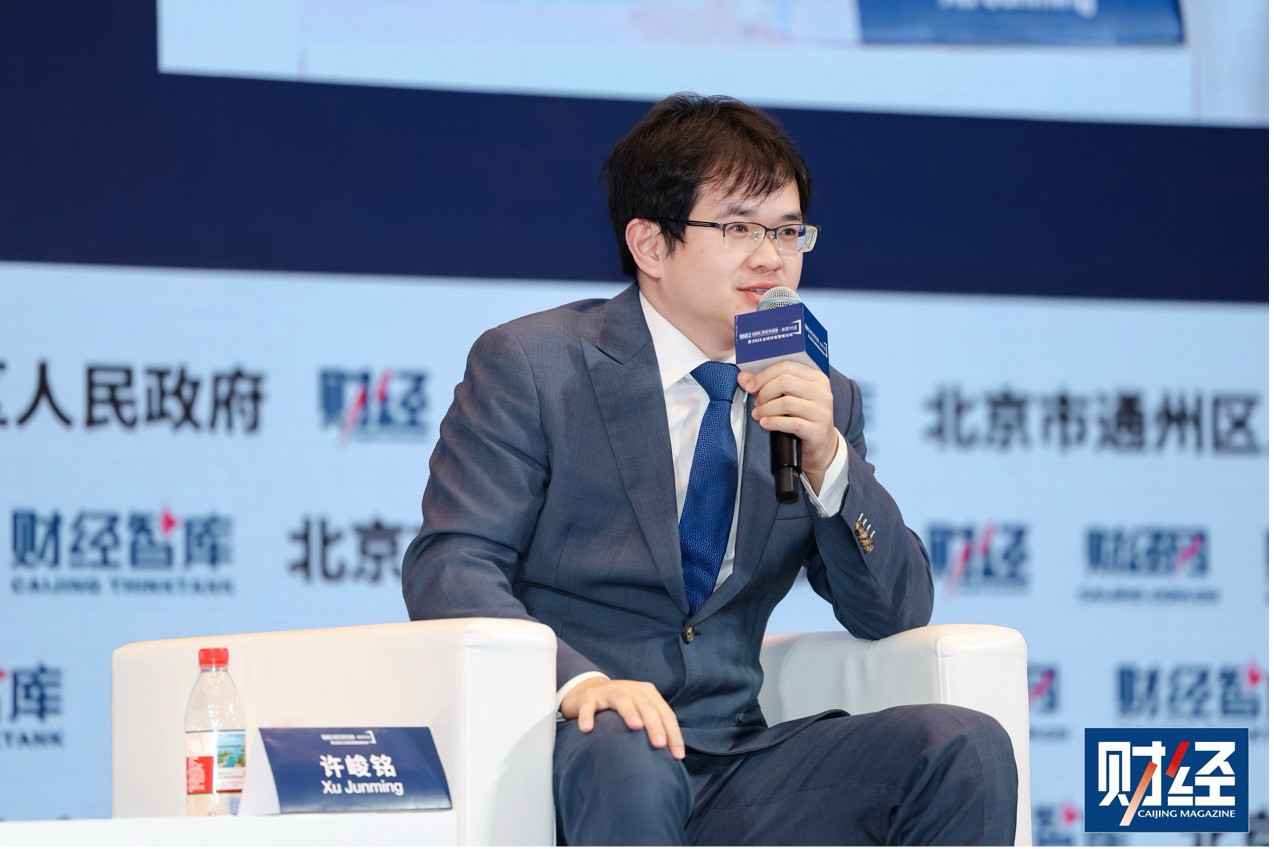
熙诚致远私募基金管理公司总经理许峻铭:投资于人,探索无形资产与专利基金的创新路径
Xin Lang Cai Jing· 2025-12-20 13:56
Core Insights - The conference "2026 Annual Dialogue and Global Wealth Management Forum" focuses on the theme "China's Resilience in Changing Circumstances" and highlights the importance of investing in human capital as a new focus for financial institutions [1] - Xu Junming, General Manager of Xicheng Zhiyuan Private Equity Fund Management Company, emphasizes the need for rationality in venture capital and the search for structural opportunities, particularly in digital transformation and artificial intelligence [3][12] Group 1: Investment Opportunities - There are significant opportunities in the "Finance + Technology + Industry" integration, especially in sectors requiring digital transformation and AI empowerment [3][11] - The emergence of innovative financial tools like "Science and Technology Loans" has helped SMEs, but there is still room for further innovation, such as using intellectual property as collateral for financing [3][12] - The concept of investing in human capital is gaining traction, as the knowledge and skills of managers and engineers can be transformed into data assets in the AI era [3][12] Group 2: Challenges in Investment - The dominance of local guiding funds as the main source of capital presents two major bottlenecks: spatial and temporal conflicts between local fund management and the free flow of capital [4][14] - The short tenure of decision-makers in local guiding funds often does not align with the long-term nature of venture capital investments, creating challenges for sustained support of innovative projects [4][15] - The need for new fund models, such as talent funds or patent-based funds, is highlighted as a potential solution to overcome existing bottlenecks in the investment landscape [4][15] Group 3: Market Dynamics - The current investment landscape shows a significant divide between commercial viability and technological competition, with varying attitudes towards AI among major tech companies [8][9] - The market is experiencing a fear of missing out (FOMO) among investors, leading to a rush towards early-stage investments despite the high valuations of many AI companies [9][10] - Historical comparisons are drawn between the current AI wave and past technology bubbles, emphasizing the need for careful evaluation of investment opportunities [10][11]
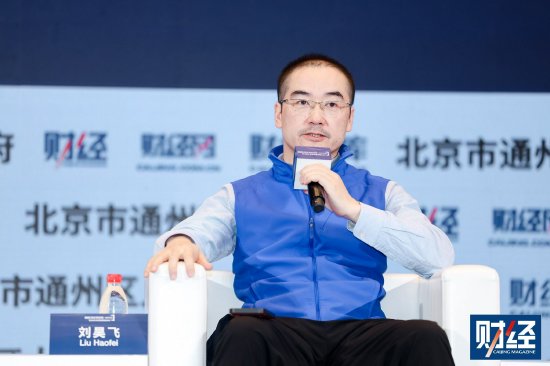
刘昊飞:创投行业在金融领域属“边缘化”,本质是科技服务业
Xin Lang Cai Jing· 2025-12-20 09:02
专题:财经年会2026:预测与战略暨2025全球财富管理论坛 《财经》年会2026:预测与战略暨2025全球财富管理论坛于2025年12月18-20日在北京举行。盛景嘉成 创投创始合伙人刘昊飞指出,中国在互联网时代的创新多为模式创新,底层技术与商业模式多引进自美 国,而当前G2竞争背景下,真正的科技创新必须聚焦"不被卡脖子"的核心技术,且能实现商业化落 地。 他强调,创投行业在金融领域虽属"边缘化",管理规模难以与传统金融机构相比,但却是科技转化的关 键纽带,其本质是科技服务业,核心价值并非单纯提供资金,而是帮助早期科技企业"活下去、晚死 亡"。 责任编辑:李思阳 专题:财经年会2026:预测与战略暨2025全球财富管理论坛 《财经》年会2026:预测与战略暨2025全球财富管理论坛于2025年12月18-20日在北京举行。盛景嘉成 创投创始合伙人刘昊飞指出,中国在互联网时代的创新多为模式创新,底层技术与商业模式多引进自美 国,而当前G2竞争背景下,真正的科技创新必须聚焦"不被卡脖子"的核心技术,且能实现商业化落 地。 他强调,创投行业在金融领域虽属"边缘化",管理规模难以与传统金融机构相比,但却是科技转化的 ...
首都创投发盈喜,预期年度净利润约1.15亿港元至1.4亿港元 同比转亏为盈
Zhi Tong Cai Jing· 2025-12-19 11:17
Group 1 - The company anticipates an unaudited consolidated net profit for the fiscal year ending September 30, 2025, due to a significant turnaround in its listed equity investments, moving from a loss of approximately 22.1 million HKD in the previous year to a profit of about 125 million HKD in the current year [1] - The expected net profit for the current fiscal year is projected to be between approximately 115 million HKD and 140 million HKD, compared to an unaudited net loss of about 19.9 million HKD in the previous year [1]
市场化LP不想再冒险
FOFWEEKLY· 2025-12-18 10:01
Core Viewpoint - The article discusses the structural recovery of the venture capital fundraising market in China, highlighting the challenges and strategies for optimizing the limited partner (LP) structure to ensure sustainable development in the industry [4][8]. Group 1: Market Recovery - The venture capital fundraising market in China is experiencing a recovery, with new fund numbers and fundraising amounts showing an upward trend in 2023 after a decline from 2022 to 2024 [7]. - In the first three quarters of 2023, the number of new funds reached 3,501, and the fundraising amount was 11,614.3 billion yuan, representing year-on-year increases of 18.3% and 8%, respectively [7]. Group 2: Challenges in Fundraising - Despite the recovery, the willingness of market-oriented LPs to invest remains low, with many still hesitant due to past investment experiences where returns were significantly lower compared to their counterparts in the U.S. [11]. - The article notes that from 2012 to 2022, LPs in the U.S. received 148 yuan back for every 100 yuan invested, while Chinese LPs only received about 46 yuan [11]. Group 3: Shifts in Investment Strategies - There is a noticeable shift in the investment strategies that appeal to market-oriented LPs, moving from "scale" and "odds" strategies to a focus on "success rate" strategies, where LPs prioritize the probability of successful exits [15]. - To adapt to these new preferences, venture capital firms are breaking down larger funds into smaller, specialized funds that focus on specific high-tech investment areas, allowing LPs to assess individual project success probabilities [16]. Group 4: The Role of State-Owned LPs - State-owned LPs are becoming the dominant source of funding in the venture capital market, accounting for 81.2% of total contributions by the first half of 2024 [19]. - The article emphasizes the need for a balance between state-owned and market-oriented LPs to address the long-term challenges of fundraising in the venture capital industry [20]. Group 5: New Capital Operation Models - To enhance the willingness of market-oriented LPs to invest, venture capital firms are exploring new capital operation models, such as incorporating corporate venture capital (CVC) as a significant LP in new high-tech investment funds [21]. - This model aims to leverage industry capital to provide resources and support to technology companies, thereby increasing the likelihood of successful project outcomes and exits [21].

创投界掘金“十五五”:锚定未来产业 践行长期主义
Shang Hai Zheng Quan Bao· 2025-12-17 19:19
◎记者 郭成林 王玉晴 12月16日,2025上证多层次资本市场高质量发展大会在江苏南通举行。在主题为"掘金'十五五'投资与 并购机遇"的圆桌对话中,来自金浦投资、源星资本、弘毅投资、中科育成投资、恒辉安防、盛世投 资、华登、国寿股权公司、德同资本等公司的9位投资人、企业家畅谈"十五五"期间股权投资的新趋 势、新机遇。 实践耐心资本理念 平衡短期与长期收益 聚焦"十五五"规划建议重点产业 在畅谈"十五五"期间股权投资机遇时,多位投资人不约而同地将目光锁定在"十五五"规划建议中提到的 新兴产业与未来产业,包括新能源、新材料、量子科技、生物制造、核聚变能、具身智能等领域。 金浦投资总裁范寅认为,"十五五"时期是中国经济迈向高质量发展的关键阶段,新一轮科技革命与产业 变革加速演进。资本市场作为资源配置的核心枢纽,正迎来结构性的投资与并购机遇,资本力量应当更 加自觉地与国家战略同频共振,与产业升级深度绑定,与科技创新携手同行。 中科育成投资董事长陈静鹤表示,"十五五"规划建议为创投机构提供了明确的布局指引。展望"十五 五",中科育成投资一方面将前瞻布局"十五五"规划建议中提到的量子科技、生物制造、氢能和核聚变 能等六 ...
49个项目喜提扶持“大礼包”
Xin Hua Ri Bao· 2025-12-17 06:46
Group 1 - The "Just in Jiangsu" Youth Entrepreneurship Competition concluded successfully in Changzhou, featuring 49 projects that won first, second, and third prizes, including "Craftsmanship Dream: National Blade Crown Drill Tool Technology Leadership" from Xuzhou [1] - The competition included three tracks: livelihood demand + entrepreneurial projects, technology skills + entrepreneurial projects, and labor brand + entrepreneurial projects, focusing on various consumer scenarios and advanced manufacturing sectors [1] - The livelihood demand track emphasized areas such as night economy, live e-commerce, elderly care, cultural sports, environmental protection, agricultural production, healthcare, and education [1] Group 2 - Judges for the competition included representatives from major financial institutions in Jiangsu, venture capital firms, and entrepreneurial mentors, ensuring professional evaluation and access to extensive resources for participants [2] - All participants had the opportunity to receive personalized policy service packages, including entrepreneurial loans, subsidies, and various support services such as management training, talent recruitment, and market expansion [2] - Award-winning projects in the technology skills track will be prioritized for inclusion in vocational ability assessment development plans, with eligible projects guided to quality entrepreneurial bases for policy support [2]

深圳金融支持人才创新创业体系再升级 已提供落地融资超亿元
Zheng Quan Shi Bao Wang· 2025-12-17 04:35
Group 1 - The event "聚金汇才圳帮你" was successfully held, aimed at providing comprehensive support for talent and enterprises in Shenzhen through various financial initiatives [1] - Shenzhen has established an angel fund, innovative financial products, and support for company listings, contributing to over 100 talents and their enterprises receiving services and achieving financing exceeding 100 million [1] - The core brand "聚金汇才圳帮你" operates under a "1+N+X" mechanism, which includes regular main activities, flexible collaboration with financial experts, and personalized services for enterprises [1] Group 2 - The second batch of the "Financial Support for Talent Innovation and Entrepreneurship Advisory Group" was introduced, expanding to include professionals such as accountants and lawyers, marking a shift to a comprehensive support model [2] - The list of the second batch of "Shenzhen High-level Talent Financial Service Partners" was officially released, including institutions like Zhejiang Merchants Bank Shenzhen Branch and Beijing Bank Shenzhen Branch [2]

刚刚,深圳超级国资诞生
投资界· 2025-12-17 03:08
Core Insights - The article discusses the establishment of the "Guochuang Yinkechuang Fund" in Shenzhen, which has a registered capital of 18.9 billion RMB, highlighting the significant involvement of state-owned enterprises and government-backed funds in the investment landscape [5][6][7]. Fund Overview - The Guochuang Yinkechuang Fund was officially registered on December 15, 2025, with a total capital of 18.9 billion RMB, located in the Qianhai Shenzhen-Hong Kong Cooperation Zone [6]. - The fund is managed by Shenzhen Guochuang Investment Co., Ltd., which is wholly owned by the Shenzhen Guiding Fund Investment Co., Ltd. [6]. - Major contributors include Shenzhen Guiding Fund (12.8 billion RMB, 67.72%), Huitong Financial Holdings (3 billion RMB, 15.87%), and Qianhai Financial Holdings (2 billion RMB, 10.58%) [6][7]. Investment Landscape - Since 2015, Shenzhen has established government investment funds exceeding 150 billion RMB, creating 13 guiding funds that have mobilized nearly 500 billion RMB in capital [7]. - The total scale of state-owned funds in Shenzhen exceeds 7 trillion RMB, with over 500 funds targeting strategic emerging industries and future industries, accounting for over 90% of the investment [7]. Future Goals - Shenzhen aims to form a "dual ten-thousand" structure by the end of 2026, targeting a trillion-level "20+8" industrial fund group and over 10,000 registered equity investment and venture capital funds [8]. Economic Development Initiatives - Shenzhen's government has outlined nine key areas for economic work in 2026, focusing on nurturing new growth drivers, enhancing the integration of technology and industry, and optimizing traditional industries [9]. - The Shenzhen Municipal Financial Office has proposed measures to support the reform of the Growth Enterprise Market and promote venture capital activities [9]. Talent Attraction Strategies - Shenzhen has introduced various measures to attract young talent, including free accommodation for recent graduates, transitional housing at 60% of market rates, and entrepreneurial subsidies up to 30,000 RMB [9][10]. - Financial incentives for talent settlement include up to 100,000 RMB for PhDs, 50,000 RMB for master's degree holders, and 30,000 RMB for bachelor's degree holders [10]. Startup Ecosystem - The article highlights the vibrant startup ecosystem in Shenzhen, with notable companies like Ying Shi Innovation and Tuo Zhu Technology emerging from the region [10][11]. - The presence of a robust supply chain has attracted numerous investors to Shenzhen, particularly in the AI hardware sector [11].