Search Engines

Search documents
Billionaire Bill Ackman Has 75% of His Hedge Fund's $15 Billion Portfolio Invested in Just 5 Big Stocks
The Motley Fool· 2025-11-15 15:00
Core Viewpoint - Bill Ackman sees significant upside potential in his investments, particularly in Uber, Brookfield Corporation, and Alphabet, among others, due to their strong fundamentals and growth prospects [1][2]. Investment Strategy - Ackman focuses on high-quality businesses with strong cash flow and limited downside risk, often taking activist positions to unlock shareholder value [2][3]. Portfolio Overview - Pershing Square Capital Management holds shares in 15 large-cap companies, with 75% of its $15 billion stock portfolio concentrated in five key holdings [3]. Key Holdings - **Uber Technologies (19.6%)**: Ackman appreciates Uber's strong network effects, management quality, operational performance, and cash flow, expecting earnings per share to grow over 30% annually [4][5]. - **Brookfield Corporation (17.7%)**: Added to the portfolio in 2024, Brookfield is positioned for growth due to AI infrastructure demand and an aging population, potentially quadrupling its wealth solutions asset base to $600 billion [6][8]. - **Alphabet (14.4%)**: Ackman has invested in Alphabet due to its rapid AI integration and strong financial performance, including $100 billion in revenue and a 33% year-over-year profit growth [9][11]. - **Howard Hughes Holdings (13.4%)**: Ackman aims to transform Howard Hughes into a diversified holding company, increasing its stake to 47% and focusing on unlocking value from real estate assets [12][13]. - **Restaurant Brands (10.6%)**: The company is valued for its capital-light business model and plans to enhance sales through investments in Burger King and expansion in Tim Hortons [14][17].






Google Launches Agentic Shopping Tools Ahead of Holidays
Youtube· 2025-11-14 21:55
Core Insights - The article discusses the emergence of agent technology in retail, focusing on how it addresses consumer problems and enhances the shopping experience through automation and AI [1][6][10] Group 1: Agent Technology and Consumer Experience - Agent technology aims to simplify tedious shopping tasks by automating processes such as price tracking and purchasing on behalf of consumers [2][7] - Consumers can track product prices and receive alerts when prices drop, allowing for automated purchases, which can help merchants retain customers who might otherwise abandon their carts due to high prices [7][11] - The technology has been positively received by both consumers and merchants, as it increases consumer confidence in product availability and facilitates smoother transactions [4][8] Group 2: Implementation and Development - The technology is still in its early stages, with ongoing developments in AI capabilities, such as the Duplex system that allows AI to make calls on behalf of users [9][10] - The company has built a shopping graph containing 50 billion product listings, which supports the agent technology by providing extensive data on available products [13] - Future developments may include enhanced interactions between different agents, potentially allowing for more complex transactions and communications between merchants and consumers [14]


German court rules Google must pay €572M for violating antitrust rules in price comparison sector
TechCrunch· 2025-11-14 15:40
Core Points - A German court has ruled that Google abused its dominant market position in the price comparison sector, ordering the company to pay €572 million ($665.6 million) in damages to two German price comparison companies [1] - Idealo is set to receive approximately €465 million ($540 million) while Producto will receive €107 million ($124 million) as part of the damages awarded [1] - Idealo had initially claimed damages of €3.3 billion, linking its lawsuit to a previous ruling by the European Court of Justice in 2024 that found Google was self-preferencing its own shopping comparison service [2] - Idealo intends to continue pursuing the full damages initially sought against Google [2] - Idealo's CEO emphasized the importance of holding Google accountable for market abuse and indicated that the fight against such practices will continue [3] - Google may appeal the ruling, indicating ongoing legal challenges for the company [3] - This ruling follows a recent EU investigation into Google's spam policy and a fine of €2.95 billion (approximately $3.5 billion) for breaching EU antitrust rules by favoring its own advertising services [4]

Google offers to change search results amid $3.4 billion EU penalty threat — Here's what we know
MINT· 2025-11-14 07:54
Core Viewpoint - Google has proposed changes to its ad tech products and search results in an attempt to resolve a $3.4 billion penalty threat from the European Union, while still planning to appeal the EU's decision from September 2025 [1][3][7] Group 1: Proposed Changes - Google plans to provide publishers with options to set different minimum prices for bidders on its Ad Manager platform [2] - The company aims to enhance interoperability across its ad tech services to offer more flexibility to publishers and advertisers [2] Group 2: Ongoing Disputes - Despite the proposed changes, Google maintains its disagreement with the EU's September decision and intends to appeal [3] - The EU antitrust regulator has accused Google of abusing its market dominance by favoring its own ad exchanges [3] Group 3: Potential Penalties - Google faces the risk of penalties or fines in the coming months due to alleged antitrust violations [4] - The company is seeking a balanced solution to close the EU investigations while acknowledging the risks involved [4] Group 4: Industry Reactions - A spokesperson expressed concerns that changes to Search may prioritize the interests of a few intermediaries over European businesses [5] - EU competition chief Teresa Ribera suggested that a true level playing field would require Google to divest parts of its ad tech arm [6] Group 5: Financial Impact - Alphabet's stock closed 2.84% lower at $278.57 following the news, but saw a slight recovery in after-hours trading at $279.40 [7]

发布即开放:百度猎户座葫芦里卖的什么药?
量子位· 2025-11-14 05:38
Core Viewpoint - The article discusses the launch of Baidu's new AI-powered search system, "Baidu Orion," which aims to transform traditional search into a more interactive and intelligent experience, capable of understanding user intent and executing complex tasks [5][10][22]. Group 1: Baidu Orion Overview - Baidu Orion is a multi-agent framework that enhances search capabilities by integrating AI APIs and a rich service ecosystem, allowing for task planning and execution [5][10]. - The system is designed to evolve search from merely providing answers to understanding user needs, remembering past interactions, and engaging in meaningful dialogue [6][13]. Group 2: User Experience Enhancements - Baidu Orion can break down user queries into multiple needs and generate comprehensive plans, making the search experience more intuitive and user-friendly [10][11]. - The system supports multi-modal outputs, providing results in various formats such as images, videos, and even generating custom content based on user requests [11][21]. Group 3: AI Content Generation - The AI capabilities of Baidu Orion allow it to create new content rather than just retrieving existing information, with daily AI content generation exceeding ten million and video model usage surpassing two million [21][22]. - This shift positions search as a creative tool, expanding its role from a simple query-response mechanism to a versatile assistant capable of generating tailored solutions [22]. Group 4: Industry Trends and Open Access - The article highlights a broader industry trend where search engines are evolving into foundational capabilities that can be accessed via APIs, allowing developers to integrate advanced search functionalities into their applications [23][24]. - Baidu has opened up access to Baidu Orion, enabling 625 companies across various sectors to leverage its search AI API, which encapsulates 25 years of search technology and authoritative content resources [23][24].


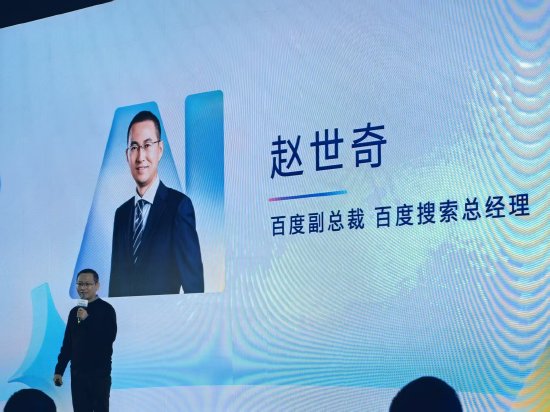
百度搜索总经理赵世奇:AI没有取代搜索,而是在重塑搜索
Xin Lang Ke Ji· 2025-11-13 06:51
Core Insights - The rapid development of AI is reshaping search engines rather than replacing them [1][3] - Baidu has upgraded its search engine to an AI engine, launching the Orion AI engine to create a new super brain for the intelligent era [3] Group 1: AI Transformation in Search - The most significant transformation brought by AI to search engines is the transition from traditional search to AI-driven search [3] - AI aims to enhance search products to understand complex sentences and human language, shifting from passive responses to proactive planning [3] Group 2: Redefining Search Boundaries - The AI era requires a redefinition of search boundaries, enabling the search engine to not only collect materials but also possess content creation capabilities [3] - The ability to understand information and engage in creative processes is essential for the evolution of search in the AI landscape [3]
百度搜索首条结果富媒体覆盖率70%
Bei Jing Shang Bao· 2025-11-13 03:09
Core Insights - Baidu has significantly transformed its search engine by integrating AI, with the majority of search results now generated by AI technology [1] - The coverage of rich media in the top search results has reached 70%, indicating a shift from traditional text-based links to a more multimedia-focused approach [1] - Baidu positions itself as the most aggressive in AI transformation among global search engines, moving beyond simple AI summaries to a comprehensive AI-driven search experience [1] Company Developments - The latest AI enhancements in Baidu's search engine were unveiled by founder Li Yanhong at a global conference on November 13 [1] - The new search results format emphasizes rich media content, including images, videos, live broadcasts, and even digital avatars, rather than just text links [1] Industry Trends - The shift towards AI-generated search results reflects a broader trend in the search engine industry, where companies are increasingly adopting AI technologies to enhance user experience [1] - The integration of rich media in search results may set a new standard for how information is presented and consumed online, potentially influencing competitors in the search engine market [1]
李彦宏:百度搜索AI API全面开放 已有625家厂商接入
Sou Hu Cai Jing· 2025-11-13 03:06
Core Insights - Baidu has fully restructured its search engine with AI, generating the majority of search results through artificial intelligence, achieving a 70% coverage of rich media in the top search results [1][3] Group 1: AI Integration in Search - Baidu is recognized as the most aggressive company in AI transformation among global search engines, shifting from text and links to rich media content as the core of its search application [3] - Users now receive answers in various formats such as images, videos, live broadcasts, and digital personas, with 7 out of 10 answers presented in these forms [3] Group 2: Partnerships and API Accessibility - Baidu has opened its search capabilities through AI APIs, partnering with major hardware manufacturers like Samsung, Honor, and Vivo, with 625 companies integrating Baidu's search API via Baidu Smart Cloud [5] Group 3: Search Engine Revamp - The most significant overhaul of Baidu's search in a decade occurred in July, transforming the search box into a "smart box" that supports extensive text input and enhanced capabilities for photo, voice, and video [5] - Baidu's executives acknowledge the challenges of balancing innovation with user familiarity, emphasizing the need for change in response to rapid technological advancements and user preferences [5]

李彦宏:百度搜索绝大部分结果由 AI 生成,AI API 全面开放
Sou Hu Cai Jing· 2025-11-13 02:37
Core Insights - Baidu's search results are predominantly generated by AI, with 70% of the top results featuring rich media content such as images, videos, and live broadcasts [1][3]. Group 1: AI Integration in Search - Baidu is recognized as the most aggressive in AI transformation among global search engines, shifting from text-based results to a rich media-centric approach [3]. - The company has restructured its search results page to prioritize rich media content over traditional text links [3]. Group 2: Partnerships and API Development - Baidu has opened its AI search capabilities through an API, collaborating with major manufacturers like Samsung, Honor, and Vivo [3]. - A total of 625 companies have integrated Baidu's search API via Baidu Smart Cloud [3].
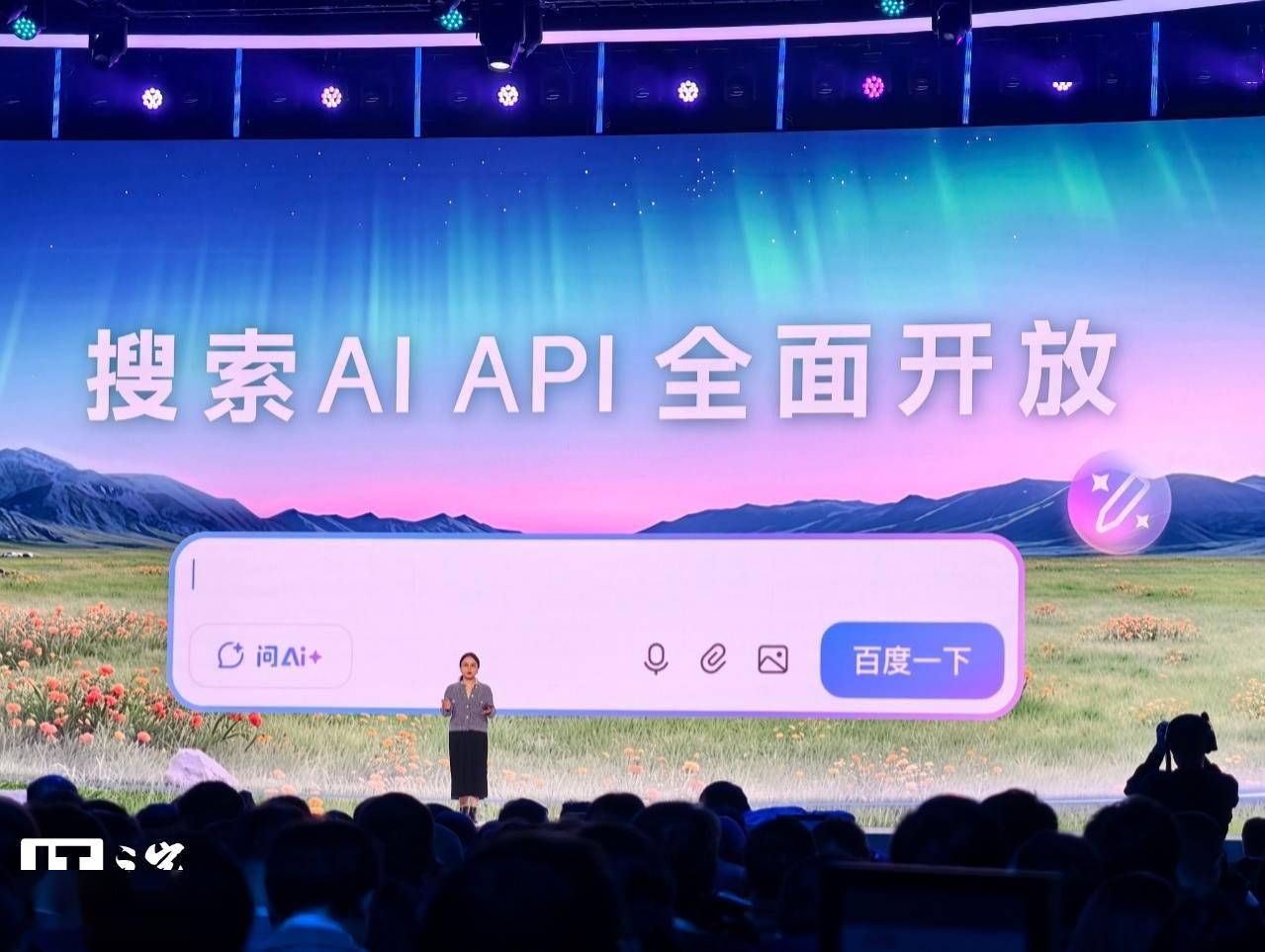
李彦宏:百度全球搜索引擎AI化最激进,富媒体覆盖率已达70%
Xin Lang Ke Ji· 2025-11-13 02:09
Group 1 - The core viewpoint is that Baidu is leading the AI transformation in the search engine industry, with significant advancements in AI integration into its search functionalities [1][3] - Baidu has restructured its search page to prioritize multimedia content, shifting from a text-based link format to one that emphasizes images and videos, with 70% of the top search results now being rich media [1][3] - The company aims to be the first to fully AI-enable all its products, starting with the search function, and intends to lead a transformative change in the search industry [3]