Consumer Electronics

Search documents
黄仁勋2026年首度来华,现身上海陆家嘴锦德菜市场;iPhone Air三个月暴跌近3000元;俞敏洪谈新东方转型丨邦早报
创业邦· 2026-01-25 01:09
Group 1 - Huang Renxun visited Nvidia's new office in Shanghai and engaged with employees, reflecting on key events of 2025 [3] - The iPhone Air saw a price drop of nearly 2900 yuan within three months of its launch, now priced at approximately 5499 yuan after discounts [5][6] - Yu Minhong discussed New Oriental's transformation, emphasizing the shift from a purely educational focus to new business ventures post-2021 [6] Group 2 - Baidu merged its document and cloud storage services into a new personal super-intelligent business group, enhancing AI application capabilities [8] - Zhou Hongyi predicted that by 2026, there will be at least 10 billion intelligent agents globally, with companies in the AI sector being relatively small [8] - Tesla plans to start training its Optimus robot at the Austin factory next month, indicating a move towards automation in production [10] Group 3 - OpenAI's API business achieved a significant growth, reaching an annual recurring revenue of over 20 billion dollars by the end of 2025, up from 6 billion in 2024 [16] - OpenAI announced the launch of multiple Codex-related products in the coming month, focusing on AI programming safety and efficiency [16][20] - Alphabet's CEO Sundar Pichai sold 32,500 shares of the company, cashing out 10.6 million dollars [21] Group 4 - The Chinese foldable smartphone market is dominated by Huawei, which holds over 70% market share, while Apple is expected to enter the market with its foldable iPhone in fall 2026 [28]



Could a Wearable AI Pin Be the Next Big Thing for Apple Stock?
Yahoo Finance· 2026-01-24 19:12
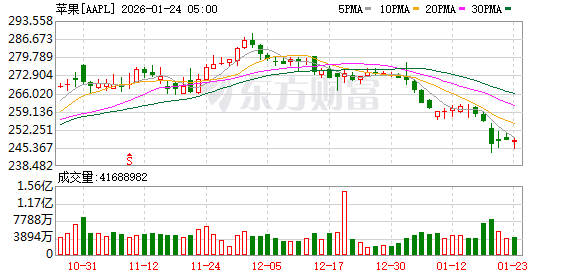
Core Viewpoint - Apple is facing challenges in the stock market, lagging behind the S&P 500 Index, while exploring new product opportunities in the AI wearable space [1][4]. Group 1: Stock Performance - Apple's stock has declined by 8.76% year-to-date, contrasting with a 1% gain for the S&P 500 Index, as investors are more interested in high-valuation AI and cloud companies [1]. Group 2: New Product Development - Apple is reportedly developing a wearable AI "pin" expected to launch as early as 2027, which may include multiple cameras, microphones, a speaker, and wireless charging [2][4]. - The concept of a wearable AI pin is not new, as Humane launched a similar product in 2024 but failed to gain traction, selling fewer than 10,000 units [3][5]. Group 3: Market Potential and Challenges - The wearable AI market presents an opportunity for Apple, especially given its established ecosystem with products like the iPhone, Watch, and Vision Pro, which could enhance the product's appeal [5]. - Despite the potential, the wearable AI pin is still in preliminary development stages and may be abandoned, raising questions about consumer acceptance of another wearable device [5][6]. Group 4: Upcoming Financial Report - Apple's next financial report is scheduled for January 29, with Wall Street expecting revenue of nearly $138.4 billion, reflecting a 10.4% year-over-year increase, and earnings of $2.65 per share [7]. - The anticipated growth aligns with CEO Tim Cook's guidance of 10 to 12% revenue growth and double-digit iPhone unit growth for the holiday quarter, despite challenges with iPhone supply constraints [7].
Jim Cramer Reveals Why Apple (AAPL) Stock is Struggling
Yahoo Finance· 2026-01-24 15:59
Core Viewpoint - Apple Inc. (NASDAQ:AAPL) has seen its shares decline by 8.3% year-to-date, yet Jim Cramer continues to defend the stock, emphasizing its potential in the upcoming earnings report and the strength of its Services business [2][3]. Group 1: Stock Performance and Analyst Ratings - Apple Inc.'s shares are down 8.3% year-to-date, indicating a muted performance [2]. - UBS maintains a Neutral rating on Apple with a price target of $280, citing potential benefits from iPhone strength, expecting December iPhone sell-through to be between 84.5 million to 85 million units, representing a 13% annual growth [2]. - Goldman Sachs has an Outperform rating with a price target of $330, highlighting strong consumer demand for the iPhone [2]. Group 2: Jim Cramer's Insights - Jim Cramer believes that owning Apple shares is preferable to trading them, linking the current share price weakness to cost control issues [2][3]. - Cramer perceives that Apple's stock struggles are due to market perceptions regarding margin pressures [3].
UBS Reaffirms Its ‘Neutral’ Rating with a $280 Price Target on Apple (AAPL)
Yahoo Finance· 2026-01-24 14:29
Core Viewpoint - Apple Inc. (NASDAQ:AAPL) is viewed positively by analysts, with varying price targets reflecting strong demand for the iPhone 17 series and growth potential in the coming years [2][3]. Group 1: Analyst Ratings and Price Targets - UBS maintains a 'Neutral' rating on Apple with a price target of $280, citing strong early demand for the iPhone 17 series and a modest pull-forward in unit sales due to rising memory costs [2]. - Goldman Sachs reiterates a 'Buy' rating with a price target of $320, attributing the recent 4% pullback in stock price to short-term concerns rather than long-term fundamentals [3]. Group 2: Sales Projections and Growth Drivers - UBS has increased its iPhone unit sales forecast by approximately 12%-13% to 84.5-85.0 million units, indicating a positive outlook for the December quarter [2]. - Goldman Sachs projects a 9% growth in iPhone revenue for fiscal years 2026 and 2027, with a notable 26% expected surge in shipments to China [3]. - The anticipated launch of the iPhone Fold and software-driven upgrade cycles are identified as key growth catalysts for Apple in the long term [3].
UBS Reaffirms Its ‘Neutral’ Rating with a $280 Price Target on Apple (AAPL)
Yahoo Finance· 2026-01-24 14:29
Core Viewpoint - Apple Inc. (NASDAQ:AAPL) is viewed positively by analysts, with varying price targets reflecting strong demand for the iPhone 17 series and growth potential in the coming years [2][3]. Group 1: Analyst Ratings and Price Targets - UBS maintains a 'Neutral' rating on Apple with a price target of $280, citing strong early demand for the iPhone 17 series and a modest pull-forward in unit sales due to rising memory costs [2]. - Goldman Sachs reiterates a 'Buy' rating with a price target of $320, attributing recent stock pullbacks to short-term concerns rather than long-term fundamentals, projecting 9% iPhone revenue growth for fiscal years 2026 and 2027 [3]. Group 2: Sales Projections and Market Dynamics - UBS has increased its iPhone unit sales forecast by approximately 12%-13% to 84.5-85.0 million units, indicating a positive outlook for the December quarter [2]. - Goldman Sachs anticipates a 26% surge in shipments to China, contributing to a projected 13% year-over-year growth in fiscal Q1 2026 [3]. Group 3: Long-term Growth Catalysts - Goldman Sachs identifies the upcoming iPhone Fold launch and software-driven upgrade cycles as significant growth catalysts for Apple in the long term [3].
Xiaomi Suffers EV/Smartphone Headwinds - Oversold Indicators Imply Trading Floor
Seeking Alpha· 2026-01-24 14:05
Core Viewpoint - The article emphasizes the importance of conducting personal in-depth research and due diligence before making investment decisions, highlighting the inherent risks involved in trading [3]. Group 1 - The analysis is intended solely for informational purposes and should not be interpreted as professional investment advice [3]. - There is a clear disclaimer regarding the lack of any stock, option, or similar derivative positions in the companies mentioned, indicating a neutral stance [2]. - The article expresses the author's personal opinions and does not reflect the views of any affiliated organization [4].


iPhone Air大降2500元,苹果旗舰店新年大促销在即
Xin Lang Cai Jing· 2026-01-24 12:25
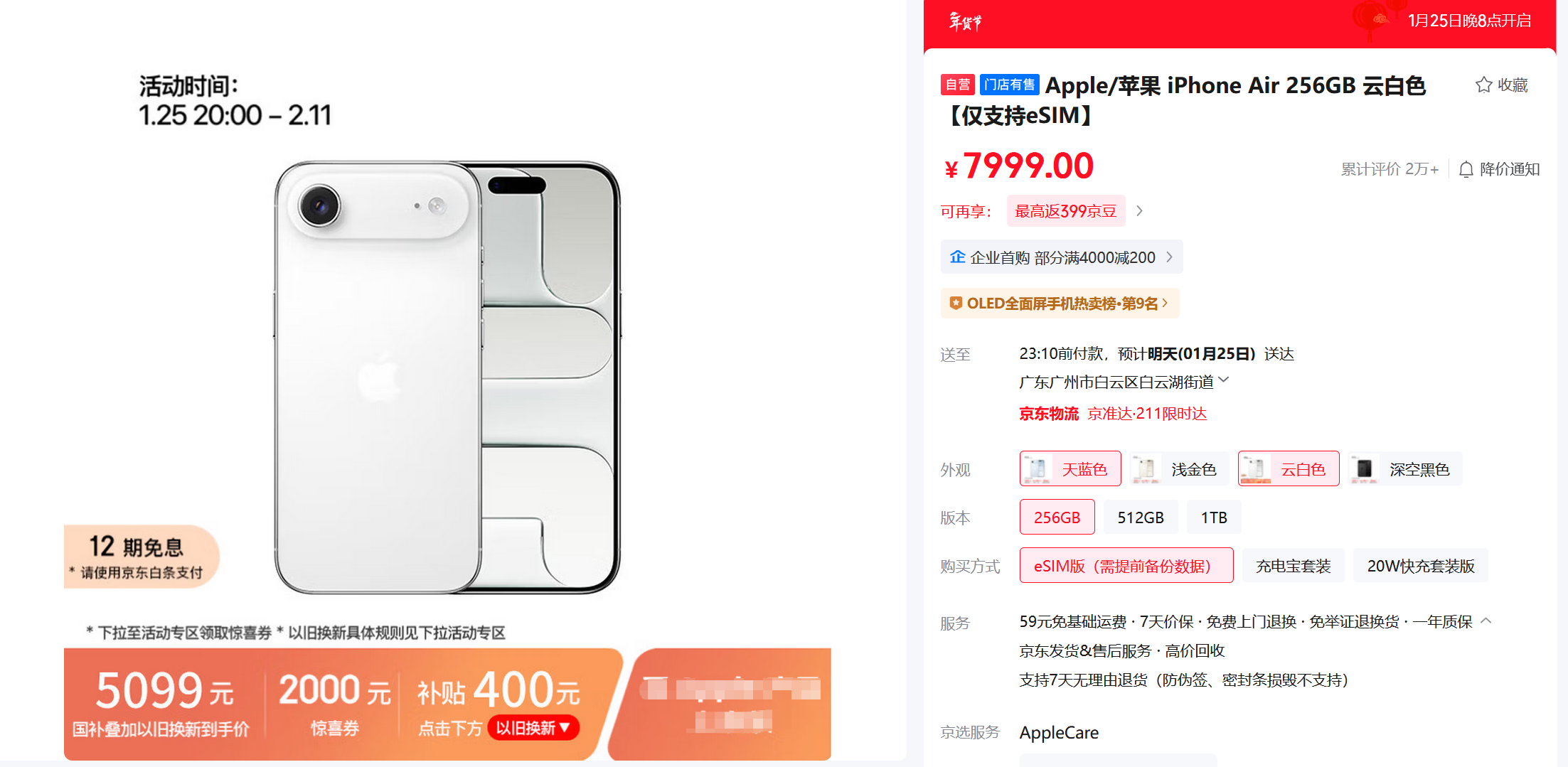
苹果官方旗舰店即将开启新年大促销活动,其中,iPhone Air大降价引发大量关注。 智通财经查询苹果天猫旗舰店发现,2026年1月25日晚上20:00起至2月11日凌晨23:59:59止,苹果将开启2026年天猫年货狂欢季。其中,原价7999元的256G 的iPhone Air,官方立减2000元,叠加国补到手价5499元起。 最高可省¥300* iPhone 17 Pro 和 iPhone 17 Pro Max 预估到手 ¥ 8699 起* 最高可省¥2000' iPhone Air 预估到手 ¥ 5999 其他产品也有300到1200元不等的优惠,包括目前仍在热销的iPhone17 Pro/17 Pro MAX,最高可优惠300元;MacBook Air最高优惠1200元,iPad Air最高优惠 1000元。其他促销产品还包括Apple Pencil和AirPods,降价100元到300元不等。 公告显示,苹果官方旗舰店为上述时段的优惠活动共计准备了这么多备货:约20万台iPhone17 Pro/17 Pro MAX,1万3千台iPhoneAir,7300台 MacBookAir(M4芯片),2万台i ...
苹果降价!
证券时报· 2026-01-24 11:59
Core Viewpoint - Apple has launched a limited-time promotional event in China from January 24 to 27, offering discounts on various products, including the iPhone 16 series, Mac, iPad, Apple Watch Series 11, and AirPods 4, while the iPhone 17 series is excluded from the promotion [1][3]. Summary by Sections Promotional Details - Discounts include 300 yuan off the iPhone 16 and iPhone 16 Plus, and 200 yuan off the iPhone 16e. MacBook Pro discounts can reach up to 1000 yuan, while MacBook Air discounts range from 700 to 800 yuan [3]. - The promotion is available for end consumers using specific payment methods, including Alipay, WeChat Pay, and certain credit cards, and cannot be combined with other promotions [4]. Market Performance - In the fourth quarter of FY2025, Apple's revenue from the Greater China region was $14.493 billion, a year-on-year decline of 3.6%. The total annual revenue for the region was $64.377 billion, down 3.8% year-on-year [4]. - However, following the release of the iPhone 17 series, Apple saw a turnaround, with a 21.5% year-on-year increase in shipments in the fourth quarter, regaining the top market share at 21.1% [4]. Competitive Landscape - Despite competition from Xiaomi and Huawei, Apple maintains a strong position in the high-end smartphone market, holding nearly 50% market share in the segment priced above $600, which increased by 1.8 percentage points year-on-year [5]. - Huawei follows with over 30% market share in the same segment [5]. Stock Performance - Apple's stock has experienced a continuous decline for eight weeks, marking the longest losing streak since May 2022, with a cumulative drop of nearly 12% during this period [6]. - The next critical date for Apple is January 29, when the company will announce its first-quarter earnings [6].

AI手机的终局,“读屏”还是“对话”?
创业邦· 2026-01-24 10:43
Core Viewpoint - The article discusses two distinct technological approaches to AI integration in mobile devices: the GUI (Graphical User Interface) route, which prioritizes speed and ease of use, and the A2A (Agent-to-Agent) route, which emphasizes security and collaboration through standardized APIs [7][17][29]. Group 1: AI Integration Approaches - The GUI approach allows AI to simulate user actions on apps by utilizing system permissions, enabling rapid deployment but raising concerns about user experience and security [10][14]. - The A2A approach establishes a standardized communication protocol between AI and applications, requiring dual authorization from users and app developers, which enhances security and accountability [14][15]. - The choice between these approaches reflects companies' strategic interests and their positions within the tech ecosystem, with GUI being faster but riskier, while A2A is slower but more stable and secure [17][29]. Group 2: Industry Responses - Major tech companies like Apple and Google favor the A2A approach, focusing on API integration to maintain control over their ecosystems and ensure compliance with privacy regulations [18][21]. - Microsoft has developed frameworks like "AutoGen" to facilitate multi-agent collaboration, while OpenAI and Anthropic are pushing for API standards that align with the A2A model [19][21]. - In contrast, domestic companies like ByteDance are exploring high-permission GUI routes to disrupt existing ecosystems and capture new market opportunities [23][24]. Group 3: Future Implications - The A2A model is seen as a long-term solution that could lead to new business opportunities, including the development of specialized agents for various industries and the establishment of a new ecosystem of protocols and middleware [33][35]. - The article suggests that the evolution of AI integration will ultimately shape the relationship between humans and machines, emphasizing the need for AI to serve as an intelligent assistant rather than a replacement for human decision-making [37][38].




iPhone Air直降2000元!创苹果史上最高降价纪录
2 1 Shi Ji Jing Ji Bao Dao· 2026-01-24 10:18
Core Viewpoint - Apple has initiated a significant discount on the newly launched iPhone Air, marking a notable price drop within just three months of its release [2] Pricing and Discounts - The official price of the iPhone Air was set at 7999 yuan at launch, but it has now dropped by 2900 yuan to a starting price of 5499 yuan after discounts [2] - On third-party e-commerce platforms, the price has further decreased to approximately 5099 yuan when including trade-in subsidies [2] Product Specifications - The iPhone Air, released on October 22, 2025, is designed to be ultra-thin, weighing only 165 grams and measuring 5.6 millimeters in thickness, making it the thinnest iPhone to date [2] - It features built-in eSIM technology, eliminating the need for a physical SIM card slot [2] Market Impact - This promotional discount represents the largest price reduction for a new iPhone model shortly after its launch, breaking previous records for price drops in new iPhone releases [2]