卫星导航

Search documents
华大北斗递表港交所 招银国际、平安证券(香港)为联席保荐人
Zheng Quan Shi Bao Wang· 2025-12-22 00:55
Core Viewpoint - Huada Beidou has submitted an application for listing on the Hong Kong Stock Exchange, with CMB International and Ping An Securities (Hong Kong) as joint sponsors [1] Company Overview - Huada Beidou is a space positioning service provider that offers navigation and positioning chips and modules supporting Beidou and major global GNSS systems, along with GNSS-related solutions [1] - In 2024, the company ranks sixth globally in the GNSS chip and module market by shipment volume, holding a market share of 4.8% [1] - By revenue in 2024, the company ranks eighth globally and third among mainland Chinese enterprises in the GNSS chip and module market, with a market share of approximately 1.1% [1] Market Insights - The GNSS chip and module sub-market accounts for about 2.1% of the total revenue of the GNSS space positioning service market [1]
北斗技术应用正重塑区域产业形态
Ke Ji Ri Bao· 2025-12-22 00:40
Core Viewpoint - The Beidou system is transforming from a national asset into a key for industrial upgrading, providing precise navigation services that empower various sectors and contribute to global development [1] Group 1: Domestic Applications and Impact - In regions like Qujing and Dehong, hundreds of high-precision monitoring devices have been deployed to monitor geological hazards, successfully preventing disasters through timely alerts [2] - In 2023, Beidou technology enabled 33 disaster warnings in Yunnan, leading to the safe evacuation of 627 individuals [2] - The agricultural sector benefits from Beidou's centimeter-level positioning technology, which allows for autonomous precision driving of machinery, reducing labor costs by over 50% and supporting green agriculture [2] Group 2: Water Resource Management - Beidou technology is deeply integrated into the water resources sector, ensuring all-weather monitoring of hydrological data and dam safety through local partnerships [3] Group 3: International Cooperation and Expansion - Yunnan is positioning itself as a core hub for Beidou technology to expand into South and Southeast Asia, facilitating digital infrastructure projects under the Belt and Road Initiative [4] - The region is actively promoting Beidou applications in digital water management, cross-border logistics, and ecological protection [4] Group 4: Communication Capabilities - Beidou's communication capabilities in the South and Southeast Asia regions range from 1.2 Kbps to 200 Mbps, with applications in vehicle networking, land surveying, and agricultural monitoring [5] - The Beidou system can provide centimeter-level positioning accuracy and short message services across 29 countries, catering to the needs of foreign residents and overseas Chinese [5] Group 5: Future Development and Recommendations - Experts propose enhancing the "digital maritime" support system for Beidou, leveraging its regional advantages to develop space-related tourism projects and explore international satellite data trading [6]
新股消息 | 华大北斗再度递表港交所 2024年出货量在全球GNSS芯片及模组市场排名第六
智通财经网· 2025-12-22 00:18
Company Overview - Shenzhen Huada Beidou Technology Co., Ltd. (Huada Beidou) is a well-known provider of space positioning services in China, headquartered in Shenzhen, specializing in chips, modules, and related solutions supporting Beidou and other major GNSS systems [3] - The company ranks sixth globally in GNSS chips and modules market share by shipment volume, with a market share of 4.8% in 2024, and ranks eighth by revenue with a market share of approximately 1.1% among domestic companies in China [3] - Huada Beidou offers a comprehensive product portfolio, including self-developed GNSS chips and modules, as well as third-party sourced products, catering to various applications such as transportation, consumer electronics, and environmental monitoring [3][4] Financial Performance - In the fiscal years 2022, 2023, and 2024, Huada Beidou reported revenues of approximately RMB 698 million, RMB 645 million, and RMB 840 million respectively, with a projected revenue of RMB 335 million for the first half of 2024 and RMB 403 million for the first half of 2025 [5][6] - The company experienced losses in the same periods, with net losses of approximately RMB 92.6 million in 2022, RMB 289.1 million in 2023, and RMB 141.3 million in 2024, indicating ongoing financial challenges [6][7] Industry Overview - The global GNSS space positioning services market is expected to grow significantly, with a projected market size of RMB 22,863 billion in 2024 and a compound annual growth rate (CAGR) of 7.9% from 2024 to 2029 [8] - The growth is driven by advancements in artificial intelligence technology, the increasing demand for smart vehicles, and the expansion of low-altitude economies, which will enhance the demand for GNSS services [8] - The Chinese GNSS space positioning services market is projected to grow from RMB 4,407 billion in 2020 to RMB 5,476 billion in 2024, with a CAGR of 5.6%, supported by government initiatives and the integration of GNSS into the digital economy [16]


【公告全知道】商业航天+存储芯片+无人驾驶+第三代半导体+CPO!公司芯片产品已应用于低轨卫星千帆星座等
财联社· 2025-12-21 15:34
Group 1 - The article highlights significant announcements in the stock market, including "suspensions and resumption of trading, shareholding changes, investment wins, acquisitions, performance reports, unlocks, and high transfers" [1] - Important announcements are marked in red to assist investors in identifying investment hotspots and preventing various black swan events, providing ample time for analysis and selection of suitable listed companies [1] Group 2 - The company is involved in commercial aerospace, storage chips, autonomous driving, third-generation semiconductors, and CPO, with its chip products already applied in low-orbit satellite constellations [1] - Another company focuses on controllable nuclear fusion, commercial aerospace, satellite navigation, military industry, and nuclear power, with successful applications in manned space engineering (Tianhe core module of the space station) and orders in the nuclear fission power plant sector [1] - The company is also engaged in autonomous driving and drones, supplying humanoid robot joint modules [1]

南京导航集体失灵 原因公布:本次干扰精准针对北斗、GPS民用频段
Zhong Guo Ji Jin Bao· 2025-12-19 12:53
Core Viewpoint - The navigation signal anomaly in Nanjing on December 17, 2025, was caused by temporary interference affecting GNSS satellite signals, not by a network signal interruption [2][4]. Technical Analysis - Offline maps cannot resolve the navigation anomaly as they only store geographic data and do not replace the need for positioning signals from GNSS satellites [3]. - Navigation requires signals from at least four GNSS satellites to calculate position coordinates, making positioning signals and map data independent systems [3]. - The interference specifically targeted the civilian frequency bands of Beidou and GPS, leading to issues such as position drift and lack of data feedback, rendering offline maps ineffective for navigation [3]. Strategic Significance - The simultaneous impact on both Beidou and GPS signals during the anomaly validates the strategic foresight of China's Beidou system in planning its civilian frequency bands [4]. - The compatibility of Beidou's civilian signal (B1C band) with GPS's civilian signal (L1C band) breaks the spectrum resource blockade and creates a strategic balance, where interference with Beidou also affects GPS applications [4]. - The design of frequency compatibility serves as a deterrent against malicious interference, ensuring that any disruption to Beidou's civilian signals will also impact GPS, thereby enhancing the security of civilian navigation services [4]. Military Frequency Resilience - The signal anomaly only affected civilian GNSS frequency bands, while Beidou's military frequencies remained unaffected [5]. - Beidou employs a military-civilian frequency separation design, with military frequencies being exclusive and physically isolated from civilian bands [5]. - The military system incorporates advanced anti-jamming technologies, ensuring robust resistance to interference and deception, thus providing stable and reliable services for national defense and emergency support [5].
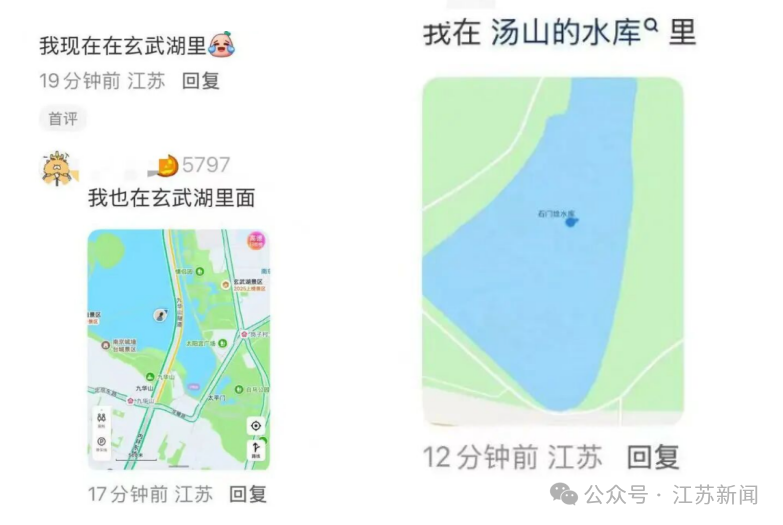
南京导航集体失灵,原因公布:GNSS卫星信号受到临时干扰压制,精准针对北斗、GPS民用频段,北斗军用频率不受影响
Mei Ri Jing Ji Xin Wen· 2025-12-19 12:50
Core Viewpoint - The navigation signal anomaly in Nanjing on December 17, 2025, was caused by temporary interference affecting GNSS satellite signals, not by a network signal interruption [1][2]. Technical Analysis - Offline maps cannot resolve the navigation anomaly as they only store geographic data and do not replace the need for positioning signals [2][3] - Mobile navigation relies on GNSS satellite signals (at least 4 satellites) to calculate position coordinates, making positioning signals and map data independent systems [3] - The interference specifically targeted the civilian frequency bands of Beidou and GPS, leading to unrecognized positioning signals, resulting in navigation failures even with offline maps [3] Strategic Significance - The simultaneous impact on Beidou and GPS signals during the anomaly validates the strategic foresight of China's Beidou system in planning civilian frequency bands [4] - The international satellite navigation spectrum follows a "first come, first served" rule, with GPS having occupied core L-band resources early on, leaving limited quality spectrum for Beidou [4] - The compatibility of Beidou's civilian signal (B1C band) with GPS's civilian signal (L1C band) breaks the spectrum resource blockade and creates a strategic balance, where interference with Beidou also affects GPS applications [4] Military Frequency Resilience - The signal anomaly only affected civilian GNSS frequency bands, while Beidou's military frequencies remained unaffected [5] - Beidou employs a military-civilian frequency separation design, with military frequencies being exclusive and physically isolated from civilian bands [5] - The military system incorporates advanced anti-jamming technologies, ensuring robust resistance to interference and deception, thus maintaining reliable time-space services for national defense and emergency support [5] Context of the Anomaly - If the navigation anomaly was a result of temporary signal control measures for major event security, it falls within standard safety protocols, with signals gradually returning to normal post-event [6] - Reports indicated that multiple navigation software systems experienced failures, leading to delivery delays and operational issues for services like food delivery and bike-sharing [9][17]
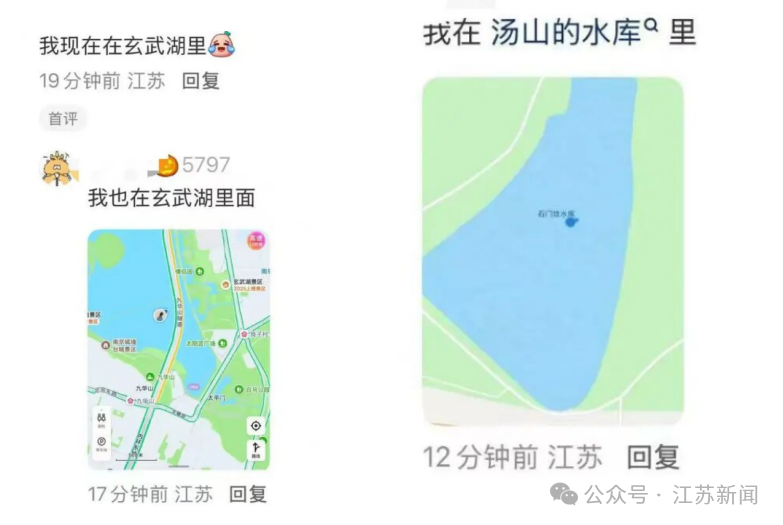
“人在家中坐,定位在玄武湖”,导航集体失灵?南京卫星协会发布说明
Xin Jing Bao· 2025-12-19 12:44
Core Viewpoint - The navigation signal anomaly in Nanjing on December 17, 2025, was caused by temporary interference affecting GNSS satellite signals, specifically targeting the civilian frequencies of Beidou and GPS, rather than a network signal interruption [2][3][4]. Group 1: Technical Analysis - Offline maps cannot resolve the navigation anomaly as the core issue is the interference of GNSS signals, which cannot be substituted by stored geographic data [2][3]. - The navigation system requires signals from at least four GNSS satellites to determine location coordinates, indicating that positioning signals and map data are independent systems [2][3]. - The interference specifically targeted the civilian frequency bands of Beidou and GPS, leading to unrecognized positioning signals, resulting in navigation failures even with offline maps [2][3]. Group 2: Strategic Significance - The simultaneous impact on both Beidou and GPS signals during the anomaly validates the strategic foresight of China's Beidou system in planning its civilian frequency bands [3][4]. - The compatibility of Beidou's civilian signal (B1C band) with GPS's civilian signal (L1C band) not only breaks the spectrum resource blockade but also creates a strategic balance where interference with Beidou also affects GPS [3][4]. - This design serves as a deterrent against malicious interference, as any disruption to Beidou's civilian signals will simultaneously impact GPS applications, thereby enhancing the security of China's civilian navigation services [3][4]. Group 3: Military Frequency Resilience - The signal anomaly only affected civilian GNSS frequencies, while Beidou's military frequencies remained unaffected due to their separation from civilian bands [4][5]. - The military system employs advanced anti-jamming technologies, ensuring robust resistance to interference and deception [4][5]. - The independence and resilience of Beidou's military frequencies provide stable and reliable time-space services for national defense and emergency support, unaffected by the civilian signal disruptions [4][5]. Group 4: Industry Response - The Nanjing Satellite Application Industry Association will continue to monitor industry developments and share professional knowledge on satellite navigation technology to enhance public understanding [4][5]. - The association encourages relevant enterprises to participate in discussions and will waive membership fees to facilitate communication between businesses and the government [5].
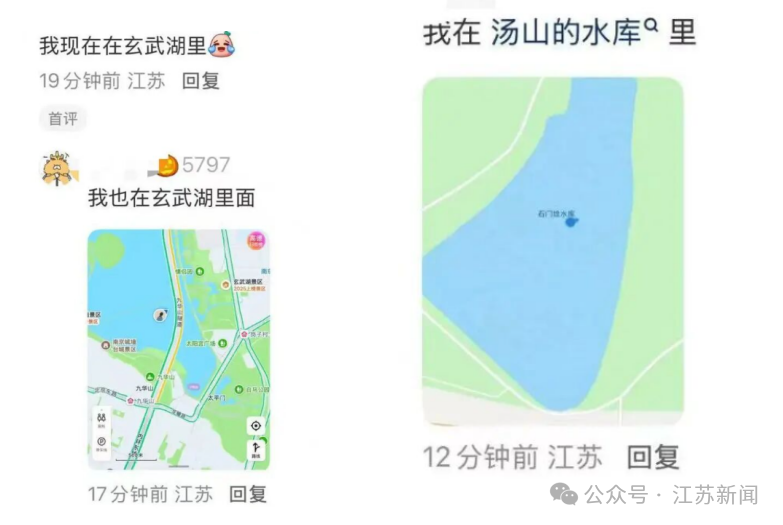
南京导航集体失灵,原因公布:本次干扰精准针对北斗、GPS民用频段
中国基金报· 2025-12-19 12:44
Core Viewpoint - The article discusses the navigation signal anomalies that occurred in Nanjing on December 17, 2025, emphasizing the technical reasons behind the issue and the strategic significance of the BeiDou and GPS systems' compatibility. Group 1: Navigation Signal Anomaly - The navigation failure was primarily due to temporary interference suppressing GNSS satellite signals (including BeiDou and GPS), rather than a network signal interruption, making offline maps ineffective [3][4]. - Offline maps only store geographic data and cannot replace the positioning signal source, as mobile navigation relies on GNSS signals from at least four satellites to calculate location coordinates [4]. Group 2: Strategic Significance of BeiDou and GPS Compatibility - The simultaneous impact on both BeiDou and GPS signals during the anomaly validates the strategic foresight of China's BeiDou system's civilian frequency planning [5][6]. - The compatibility of BeiDou's civilian signal (B1C frequency) with GPS's civilian signal (L1C frequency) allows for interoperability, creating a strategic balance where interference with BeiDou also affects GPS, thus deterring malicious disruptions [6]. Group 3: Military Frequency Resilience - The signal anomaly only affected civilian GNSS frequencies, while BeiDou's military frequency remained unaffected due to its separation from civilian frequencies [7]. - BeiDou's military system employs advanced anti-jamming technologies, ensuring robust resistance to interference and maintaining reliable time-space services for national defense and emergency support [7].
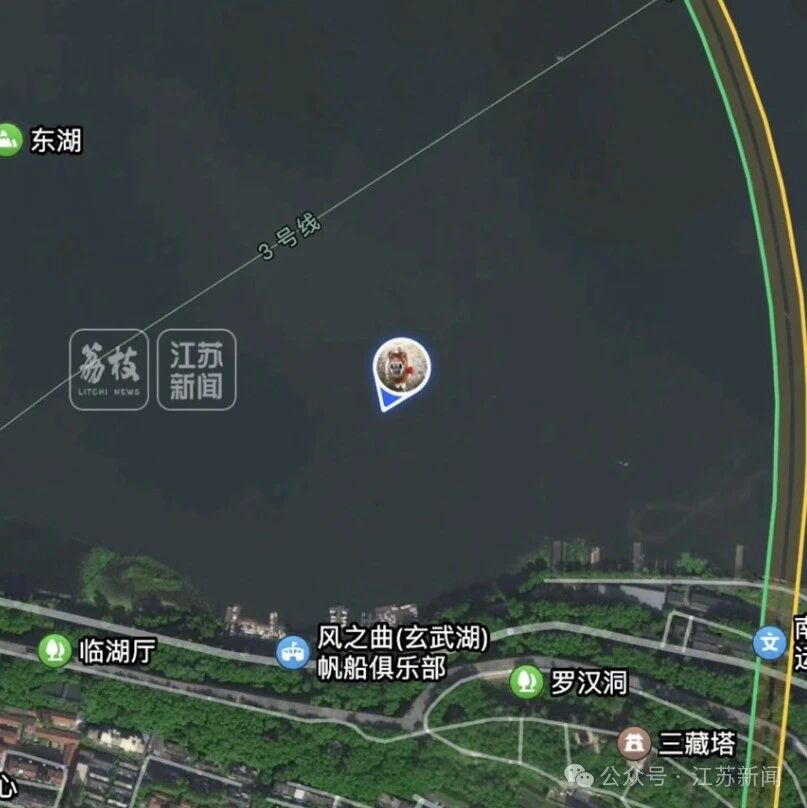
最新通报:卫星信号(含北斗、GPS)受到临时干扰压制,北斗军用频率不受影响
Xin Lang Cai Jing· 2025-12-19 12:44
Core Viewpoint - On December 17, 2025, a navigation signal anomaly occurred in Nanjing, affecting multiple navigation software systems and causing delivery delays for food delivery services due to the inability to access navigation data [12][18]. Group 1: Technical Analysis of the Navigation Anomaly - The core reason for the navigation failure was temporary interference suppression of GNSS satellite signals (including Beidou and GPS), rather than a network signal interruption, making offline maps ineffective [6][20]. - Offline maps only store geographic data and cannot replace the positioning signal source, as mobile navigation relies on GNSS satellite signals to calculate location coordinates [8][21]. - The interference specifically targeted the civilian frequency bands of Beidou and GPS, leading to the inability of receivers to recognize positioning signals, resulting in navigation drift and lack of data feedback [8][22]. Group 2: Strategic Significance of Beidou and GPS Compatibility - The simultaneous impact on Beidou and GPS signals during the anomaly validates the forward-looking strategic vision of China's Beidou system's civilian frequency band planning [8][22]. - The international satellite navigation spectrum resources follow a "first come, first served" rule, with GPS having occupied core L-band resources early on, leaving limited quality spectrum for Beidou [8][22]. - The compatibility of Beidou's civilian signal (B1C band) with GPS's civilian signal (L1C band) not only breaks the spectrum resource blockade but also creates a strategic balance where interference with Beidou also affects GPS applications [8][22]. Group 3: Resilience of Beidou Military Frequency - It is important to note that the signal anomaly only affected civilian GNSS frequency bands, while Beidou's military frequencies remained completely unaffected [9][23]. - The Beidou system employs a military-civilian frequency separation design, with military frequencies being exclusive and physically isolated from civilian bands [9][23]. - The military system is equipped with advanced anti-jamming technology and adaptive filtering algorithms, providing strong resistance to interference and deception, ensuring stable and reliable time-space services for national defense and emergency support [9][23].
南京导航集体失灵,原因公布
证券时报· 2025-12-19 12:39
Core Viewpoint - The article discusses the navigation signal anomalies in Nanjing on December 17, 2025, clarifying the technical reasons behind the issue and emphasizing the strategic significance of the Beidou and GPS systems' compatibility [2][5]. Technical Analysis - Offline maps cannot resolve the navigation anomaly as the core issue is the temporary interference of GNSS satellite signals (including Beidou and GPS), not a network signal interruption [3]. - The core function of offline maps is to store geographic data, which only addresses the "map display" issue and cannot replace the positioning signal source [4]. - Mobile navigation relies on GNSS satellite signals (at least 4 satellites) to calculate position coordinates, and the positioning signal and map data are independent systems [4]. - The interference specifically targeted the civilian frequency bands of Beidou and GPS, preventing the positioning signal from being recognized by receivers, leading to issues like positioning drift and lack of data feedback, making effective navigation impossible [4]. Strategic Significance - The simultaneous impact on Beidou and GPS signals during the anomaly validates the forward-looking strategic vision of China's Beidou system's civilian frequency band planning [5]. - The international satellite navigation spectrum resources follow a "first come, first served" rule, with GPS having occupied core L-band resources early on, leaving limited quality spectrum for Beidou [6]. - Under the framework of the International Telecommunication Union, the compatibility of Beidou's civilian signal (B1C band) with GPS's civilian signal (L1C band) breaks the spectrum resource blockade and creates a strategic balance where interference with Beidou also affects GPS [6]. - Given the military ties of the U.S. and EU, NATO systems also rely on GPS signals, making this frequency compatibility a significant strategic deterrent against malicious interference [6]. Military Frequency Resilience - The signal anomaly only affected civilian GNSS frequency bands, while Beidou's military frequency remains unaffected [7]. - Beidou employs a military-civilian frequency separation design, with military frequencies being exclusive and confidential, physically isolated from civilian bands [7]. - The military system incorporates full digital anti-jamming technology and adaptive intelligent filtering algorithms, enabling precise identification and filtering of interference signals, thus possessing strong anti-jamming and anti-deception capabilities [7]. - The independence and anti-jamming capabilities of Beidou's military frequency provide stable and reliable time-space services for national defense security and emergency support in critical areas, unaffected by the civilian signal interference [7].