ETFs

Search documents
5 Momentum ETFs With More Room to Run in 2026
ZACKS· 2025-12-12 13:00
Group 1: Market Overview - Wall Street is experiencing volatility due to overvaluation concerns in AI stocks and signs of a weakening U.S. labor market, with consumer sentiment remaining muted [1] - U.S. retail sales increased by only 0.2% in September 2025, the smallest rise in four months and below the forecast of 0.4%, indicating fragile consumer spending behavior [1] Group 2: AI Sector Insights - Despite economic uncertainty, the AI boom is expected to continue, supported by strong earnings growth driven by a significant AI investment cycle [2] - Wedbush analyst Dan Ives believes the tech market is not in a bubble but is in the early stages of an 8-10 year AI buildout, predicting a continuation of the tech bull market for at least two more years [3] Group 3: S&P 500 Forecasts - Oppenheimer has set a bullish target for the S&P 500 at 8100 for the end of 2026, which would represent a 16% gain if achieved [4] - Deutsche Bank anticipates "mid-teens returns" for the S&P 500 next year, supported by ongoing investment flows, strong buybacks, and persistent earnings strength [5] Group 4: Earnings and Economic Projections - Total earnings for the S&P 500 are projected to rise by 11% in 2025 and 11.8% in 2026, with revenue growth forecasted at 5.2% for 2025 and 6.7% for 2026 [7] - The Federal Reserve has revised its GDP growth projections for 2026 to 2.3%, up from 1.8%, while maintaining the unemployment rate at 4.4% for 2026 [8] Group 5: Federal Reserve Outlook - The Fed's outlook for 2026 includes a projection of one rate cut, consistent with previous forecasts, following three rate cuts in 2025 totaling 0.75 percentage points [10] - The Fed Funds rate is projected to remain at 3.4% for 2026, with potential for more cuts if the labor market improves and inflation declines [11] Group 6: Investment Strategies - Momentum investing is suggested as a viable strategy despite economic strains, with a focus on high-momentum ETFs such as iShares MSCI USA Momentum Factor ETF (MTUM) [6][12] - Notable high-momentum ETFs include VanEck Junior Gold Miners ETF (GDXJ) up 13.2%, iShares Silver Trust (SLV) up 19.3%, and State Street SPDR S&P Bank ETF (KBE) up 8.3% over the past month [12]


交易最火爆的A500ETF基金(512050)本周再“吸金”11亿,连续8日获净申购,创业板50ETF涨3%
Ge Long Hui· 2025-12-12 09:33
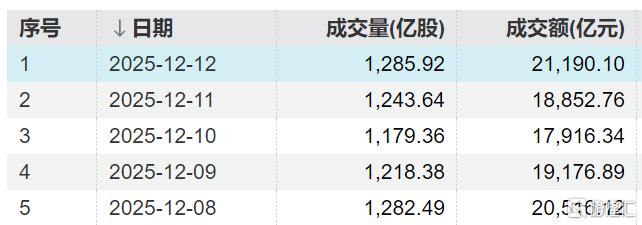
Market Overview - The A-share market experienced significant fluctuations this week, with a return to a trading volume of over 2 trillion yuan on Monday, led by the CPO sector, followed by three consecutive days of decline, dropping below the 2 trillion yuan mark again. The market sentiment showed continuous adjustments over three days, but rebounded in the afternoon on the last trading day, driven by gains in semiconductor equipment, electric grid, and CPO sectors, with trading volume returning to over 2 trillion yuan [1]. Index Performance - The growth style index performed notably well this week, with the ChiNext 50, ChiNext Index, Sci-Tech Innovation Comprehensive Index, and Sci-Tech 100 all rising over 2%. The CSI A500 saw a slight increase of 0.3%, while the CSI 300 experienced a minor decline of 0.08%. The CSI Dividend Index weakened, dropping by 2.36%. The Hong Kong stock market continued to decline, with the Hang Seng Index and Hang Seng Technology Index both down by 0.4% [2][3]. ETF Performance - The A500 ETF (512050) attracted a net inflow of 1.109 billion yuan over the first four days of the week, marking the eighth consecutive day of inflows, with a total net inflow of 7.13 billion yuan since October 21, making it the top performer in the stock ETF market. The strong inflow is attributed to rising profit-taking demands as year-end approaches and a shift in market style from growth to value [4][6]. A500 Index Insights - The A500 Index, recognized as the first core broad-based index after the release of the "New National Nine Articles," has rapidly gained market acceptance, becoming the second-largest broad-based index in A-shares by the end of 2024, with ETF product scale exceeding 200 billion yuan. It has become the fastest-growing index in A-share history, favored by insurance funds, with a total holding of 45.2 billion yuan in the first half of 2025, surpassing the CSI 300's 28.82 billion yuan [6][8]. Sector Focus - The Sci-Tech Chip ETF, which tracks the Sci-Tech Innovation Board Chip Index, rose by 2.7% this week. It focuses on the entire semiconductor industry chain, covering 86% of the semiconductor companies on the Sci-Tech Board, positioning it as a key player in domestic substitution [12][13]. Company Earnings - Broadcom's Q4 earnings exceeded expectations, with AI chip sales projected to double, leading to a 97% increase in net profit. The company anticipates Q1 revenue of approximately 19.1 billion USD, a 28% year-on-year increase, surpassing analyst expectations [14][15]. Growth Potential - The ChiNext 50 ETF rose by 3% this week, leading the performance among ETFs, with a year-to-date increase of 58.9%. The Federal Reserve's anticipated rate cut and the central economic work conference's emphasis on innovation-driven growth are expected to benefit the technology growth sector significantly [16][17][19]. Investment Strategy - The ChiNext 50 Index, which includes 50 leading companies from the ChiNext market, reflects the overall performance of high-quality growth stocks in emerging sectors such as new energy, AI, and innovative pharmaceuticals. It is considered a core tool for capturing opportunities in technological innovation and industrial upgrades, with a focus on companies with larger market capitalizations and stronger risk resistance compared to the broader ChiNext Index [19].


Keep It Simple With Bonds And ETFs
Seeking Alpha· 2025-12-11 22:45
Market Overview - The S&P 500 has become a dominant force in the market, making it challenging for investors to justify complex investment strategies [6][7] - Risk management is increasingly important due to the crowded nature of the market, particularly at the top with a few stocks [7][8] - The bond market, especially the treasury yield curve, is expected to significantly influence the stock market in the coming years [9][8] Bond Market Insights - Interest rates have risen significantly since 2022, leading to a renewed interest in bonds, particularly zero coupon treasuries [9][10] - A bond ladder strategy is recommended for investors seeking predictable returns, with the potential for hedging against rising rates [11][19] - Current treasury rates are among the highest seen in the last 20 years, presenting an opportunity for investors to lock in returns [14][15] Investment Strategies - A simplified investment approach is suggested, focusing on a combination of offensive (S&P 500 ETF) and defensive (T-bill ETF) strategies [24][30] - The ROAR (Reward Opportunity and Risk) score is introduced as a proprietary indicator to assess risk and manage investments effectively [27][34] - The portfolio includes a mix of ETFs, with an emphasis on simplicity and risk management, rather than extensive stock picking [26][36] Future Market Predictions - The bond market is anticipated to dictate stock market movements, with potential scenarios including rising rates due to fiscal concerns or declining rates aimed at stimulating growth [61][62] - The performance of small-cap stocks is highlighted as particularly vulnerable in a downturn, suggesting a defensive strategy may be prudent [54][30] - The potential for significant returns from a bond ladder is emphasized, especially if interest rates decline [67][68]

Use this ETF as a Contrarian Play in 2026
Etftrends· 2025-12-11 16:12
Core Insights - The article discusses the potential for bonds, particularly the Neuberger Berman Total Return Bond ETF (NBTR), to be considered as contrarian investment ideas for 2026, amidst a prevailing enthusiasm for growth stocks [2][3]. Investment Opportunities - Bonds are highlighted as a significant asset class, and the interest in ETFs like NBTR stems from the need for portfolio diversification rather than criticism of bonds [2]. - The NBTR ETF is positioned as a potentially better-performing option compared to passive funds, especially in a market concerned about low fixed income returns [4]. Performance Metrics - The Morningstar US Core Bond Index has achieved an average annual return exceeding 4% since late 2022, with a current yield of 4.25%, which is above the inflation rate [5]. - NBTR has a weighted average duration of 5.87 years, categorizing it as an intermediate-term fund, which historically provides better diversification in equity-heavy portfolios [6]. Market Conditions - The current economic environment, characterized by a weakening dollar and anticipated Federal Reserve monetary easing, is favorable for intermediate-term bonds and ETFs like NBTR [6]. - Experts suggest that the 'sweet spot' for fixed-income investing lies in intermediate-term bonds, while expressing caution towards longer maturities due to their vulnerability to interest rate shifts [7].

3 Dividend ETFs to Buy and Hold for Life if the Market Crashes
247Wallst· 2025-12-11 16:06
Core Viewpoint - Dividend ETFs are highlighted as a strong investment option, particularly in the context of potential market downturns, providing both income and stability against inflation [1][2]. Group 1: iShares 20+ Year Treasury Bond ETF (TLT) - TLT tracks the ICE U.S. Treasury 20+ Year Bond Index, offering exposure to long-dated U.S. government debt, which is expected to perform well during recessions [3]. - Long-term government bonds provide higher yields and are considered a safe investment, backed by the U.S. government [4]. - TLT currently offers a 3.97% monthly dividend yield, which is expected to remain stable, especially during market downturns when the Federal Reserve may cut interest rates [5]. - Historical performance shows TLT's price can significantly increase during recessions, as seen in late 2008 when it rose from $93 to over $122 [6]. Group 2: iShares Global Consumer Staples ETF (KXI) - KXI tracks the S&P Global 1200 Consumer Staples Index, providing exposure to global consumer staples stocks, which are known for their inelastic demand [7]. - This ETF is considered a good complement to bonds, offering both dividends and potential upside, with a low beta indicating resilience during market downturns [8]. - KXI yields 2.38% with an expense ratio of 0.39%, and it benefits from international stock exposure, which can appreciate if the U.S. dollar weakens [9]. Group 3: iShares US Pharmaceuticals ETF (IHE) - IHE tracks the Dow Jones U.S. Select Pharmaceuticals Index, focusing on large pharmaceutical companies that tend to perform well during economic downturns [11]. - The pharmaceutical sector is characterized by inelastic demand for medications, making it a stable investment choice [12]. - IHE has significant exposure to major companies like Eli Lilly and Johnson & Johnson, which together account for approximately 48% of the ETF's holdings, and it has shown strong year-to-date performance with a 26.7% increase [13].

ETF Prime: Vanguard Opens Crypto Access After Two-Year Holdout
Etftrends· 2025-12-10 19:59
Group 1: Crypto ETF Developments - Vanguard Group has opened its brokerage platform to spot crypto ETFs, which could significantly drive inflows due to its 50 million customers [2] - Bank of America Corp. will allow its advisors to recommend crypto allocations of 1% to 4%, contributing to a 5% increase in Bitcoin prices [3] - Strong demand for newly launched spot crypto ETFs is evident, with Bitwise Asset Management's Solana ETF attracting over $800 million in net inflows and total spot Solana assets reaching $1.3 billion to $1.4 billion [4] Group 2: Goldman Sachs Acquisition - Goldman Sachs Group Inc. has acquired Innovator ETFs for $2 billion, positioning itself as the leader in defined outcome ETFs, with Innovator managing approximately $28 billion to $30 billion across 150 ETFs [5] - The defined outcome ETF space has expanded from $5 billion to about $75 billion over the past five years, indicating significant growth in this sector [5] Group 3: Regulatory Environment - The SEC has delayed filings for five times leveraged ETFs from nine issuers, with concerns raised about the high level of leverage [6]


纽约白银继续吊打空头,白银LOF基金溢价率依然坚挺,套利不要停!
Sou Hu Cai Jing· 2025-12-09 17:24
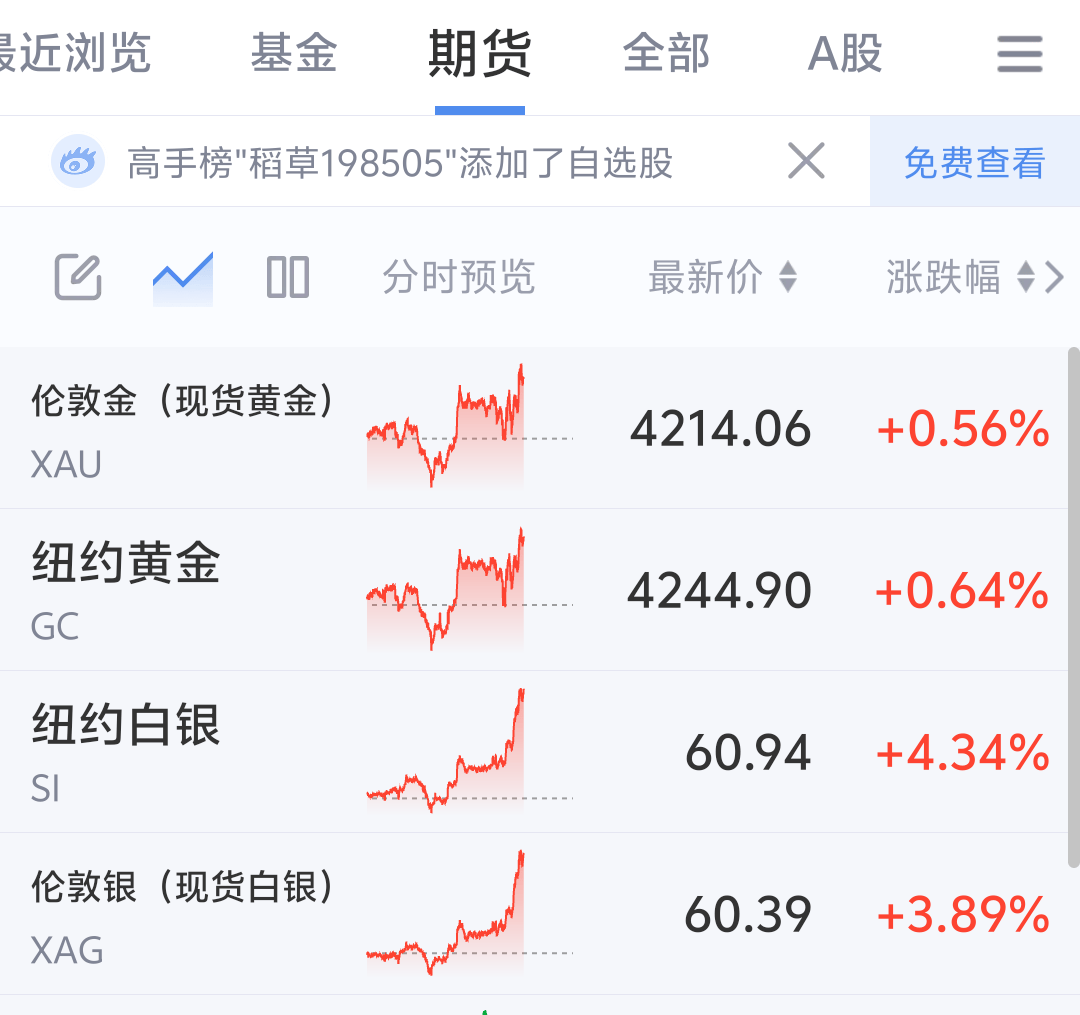
Group 1 - The core viewpoint of the article highlights the strong performance of silver in the market, with significant price increases and a stable premium for silver LOF, indicating ongoing arbitrage opportunities [1][3][10] - The recent announcement by former President Trump allowing NVIDIA to sell AI chips to China is seen as a positive development for the domestic AI industry, potentially boosting market sentiment [6][11] - The upcoming Federal Reserve meeting is a focal point for market participants, with expectations leaning towards a hawkish rate cut, which could influence market dynamics [7][8][9] Group 2 - The article discusses the current high premium of silver LOF, which has remained around 10%, providing consistent arbitrage opportunities for investors [3][10] - The demand for silver is driven by both its safe-haven appeal amid market uncertainties and its industrial applications, particularly in the context of the growing AI and renewable energy sectors [11][12] - The article suggests that if the U.S. stock market experiences a pullback post-Fed meeting, it may present a better entry point for silver LOF investments [12] Group 3 - The article outlines four key factors influencing the Hong Kong stock market, including expectations from the Central Economic Work Conference and the valuation advantages of the Hang Seng Tech Index [19][20][22] - The potential risk of a Bank of Japan interest rate hike is highlighted as a factor that could impact the Hong Kong market, particularly through carry trade dynamics [23] - The article emphasizes the importance of long-term investment strategies in the Hong Kong market, suggesting a diversified approach through ETFs [24] Group 4 - The U.S. stock market is experiencing a "Christmas rally" with technology stocks leading the gains, despite mixed economic signals [25][26] - The article notes that market volatility is expected to increase around the Fed's interest rate decision, with potential implications for both hawkish and dovish outcomes [27][28] - Long-term trends in the U.S. market remain positive, driven by supportive policies and the ongoing growth of the technology sector [29][30]
Conservative Investors May Be Well-Served By AOK (NYSEARCA:AOK)
Seeking Alpha· 2025-12-09 13:08
Group 1 - The market features a variety of blended ETFs that combine stocks and bonds, with BlackRock's iShares brand offering several options, including the conservative iShares Core 30/70 Conservative Allocation ETF (AOK) [1] - The financial markets are viewed as efficient, with most stocks reflecting their true current value, suggesting that the best profit opportunities lie in less-followed stocks or those that do not accurately represent market opportunities [1]

XRT: I Underestimated The Retail Boom This Year (Rating Upgrade) (NYSEARCA:XRT)
Seeking Alpha· 2025-12-09 10:04
Core Insights - The article evaluates the State Street® SPDR® S&P® Retail ETF (XRT) as a potential investment option at its current market price, focusing on its objectives and performance metrics [1]. Investment Focus - The fund aims to provide investment exposure to the retail sector, which is a significant component of the broader economy [1]. - The analysis includes macroeconomic factors that may influence the retail sector and the ETF's performance [1]. Analyst Background - The author has 15 years of experience in financial services, specializing in identifying undervalued sectors and thematic investment ideas [1]. - The author emphasizes a disciplined approach to saving and investing, which has led to successful portfolio management [1]. Portfolio Management - The author manages a seven-figure investment account, indicating a strong track record in investment strategies [1]. - The article highlights the importance of keeping portfolios updated and actively managing investments [1].

Top-Ranked ETFs to Power Your Portfolio Higher
ZACKS· 2025-12-08 16:55
Market Overview - The S&P 500 ended November flat but experienced significant volatility throughout the month, starting December with a gain of approximately 0.9% over the past week [1] - Several top banks predict the S&P 500 could reach between 7,500 and 8,000 by the end of next year, with an 87.4% likelihood of a Fed rate cut to 3.5-3.75% in December, a notable increase from the previous month [2] Economic Indicators - The core personal consumption expenditures (PCE) price index for September rose 2.8% year over year, slightly below the 2.9% estimate, while the month-over-month increase matched expectations at 0.2% [3] - U.S. consumer confidence saw an uptick in early December, with the Consumer Sentiment Index rising to 53.3 from 51.0 at the end of November. Inflation expectations for the next year decreased to 4.1% from 4.5% [4] Sector Performance - The Technology Select Sector SPDR ETF (XLK) benefits from anticipated Fed rate cuts, which support affordable borrowing for growth [6] - The 'Magnificent Seven' tech stocks have significantly outperformed the S&P 500, contributing to a 25.37% gain in the S&P 500 Information Technology Index year to date, compared to the broader S&P 500's 16.81% [7] - The Health Care Select Sector SPDR ETF (XLV) has gained momentum due to increased investor interest amid economic volatility and the adoption of AI in healthcare, with the Dow Jones U.S. Health Care Index up 11.83% year to date [11] - The Financial Select Sector SPDR ETF (XLF) has gained 3.2% over the past three months and 20.64% over the past year, indicating strong performance in the financial sector [14] ETF Details - The Technology Select Sector SPDR ETF has an asset base of $94.37 billion, with top holdings in NVIDIA (14.13%), Apple (13.16%), and Microsoft (11.29%), and has gained 11.49% over the past three months [8][9] - The Health Care Select Sector SPDR ETF has an asset base of $40.39 billion, with top holdings in Eli Lilly (14.44%), Johnson & Johnson (8.74%), and AbbVie (7.18%), and has gained 3.75% over the past three months [12][13] - The Materials Select Sector SPDR ETF has an asset base of $5.04 billion, with top holdings in Linde PLC (15.27%), Newmont (8.04%), and Sherwin-Williams (6.27%), and has gained 2.58% over the past three months [15][16]