
学前教育

Search documents
我国幼儿园数量连续三年减少
第一财经· 2025-06-12 12:51
2025.06. 12 而幼儿园在园幼儿数量的减少,会逐渐波及小学、初中、高中以及大学。北京师范大学教育学部高等 教育研究院乔锦忠老师此前在接受媒体采访时介绍,根据其团队模型预测,2035年全国小学、初中 需求数分别为9.28万和4.79万所,较2020年分别减少5.14万和0.38万所。显然,小学受到的影响 比初中要大,这是因为小学在规划时分布更密、服务半径更小,所以总体基数上也更大,而初中辐射 的面积更大一些,存在更多冗余空间。 当然,从趋势来看,未来幼儿园数量减少的态势有望趋缓。这是因为,一方面,从出生人口数量变化 来看,从2021年到2023年,虽然出生人口持续下降,但整体降幅趋缓。2024年,出生人口比2023 年增加52万人。出生人口变化的态势也将影响未来幼儿园数量的变化。 另一方面,在招生难的情况下,很多幼儿园也在探索托幼一体和老幼同养的新模式。尤其是在发展托 育的同时,越来越多的幼儿园改成为养老院。例如,浙江金华一家开办25年的老牌幼儿园,2023年 改造成"社区养老院"。公开报道显示,在金华市婺城区北苑小区,建在小区内的北苑第一幼儿园于 1998年开张,占地4亩左右,到2023年改造前已经经 ...

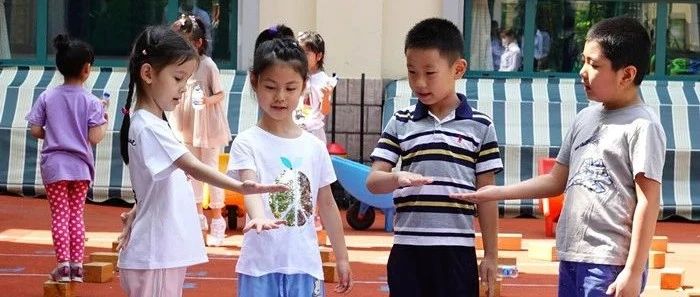
我国幼儿园数量连续三年减少,多地试水“老幼共托”模式
Di Yi Cai Jing· 2025-06-12 11:58
Core Viewpoint - The decline in birth rates is significantly impacting the number of kindergartens in China, leading to a reduction in both the quantity of kindergartens and the enrollment of children in early education [1][2][3] Group 1: Kindergarten Statistics - As of 2024, there are 253,300 kindergartens in China, with 221,000 being inclusive kindergartens, accounting for 87.26% of the total [1] - The number of children enrolled in preschool education is 35.84 million, with 32.83 million in inclusive kindergartens, representing 91.61% of total enrollment [1] - The number of kindergartens has decreased for three consecutive years, with a reduction of 21,100 from 2023 to 2024, and a total decline of 148,080 from 2022 to 2023 [1][2] Group 2: Future Projections - The decline in kindergarten numbers is expected to affect primary, middle, and high school enrollments, with predictions indicating a decrease in demand for primary and middle schools by 51,400 and 3,800 respectively by 2035 compared to 2020 [2] - Although birth rates have been declining, the rate of decline is slowing, with an expected increase of 520,000 births in 2024 compared to 2023, which may stabilize the number of kindergartens in the future [2] Group 3: Innovative Models - Many kindergartens are exploring new models such as integrating childcare and elderly care, with some transforming into community nursing homes due to declining enrollment [3][4] - The trend of combining childcare and elderly care is gaining traction in various cities, with a significant increase in the elderly population projected to exceed 310 million by the end of 2024 [4] Group 4: Policy Adjustments - Local governments are optimizing educational resource allocation, with initiatives to build new public kindergartens in urban areas while halting new establishments in rural regions [5] - Experts suggest a need for proactive planning and top-level design to address the changes in birth rates and ensure sustainable development of educational institutions [5]
多样化“小小娃”托育服务 “幼有善育”托起民生幸福
Yang Shi Wang· 2025-06-06 23:08
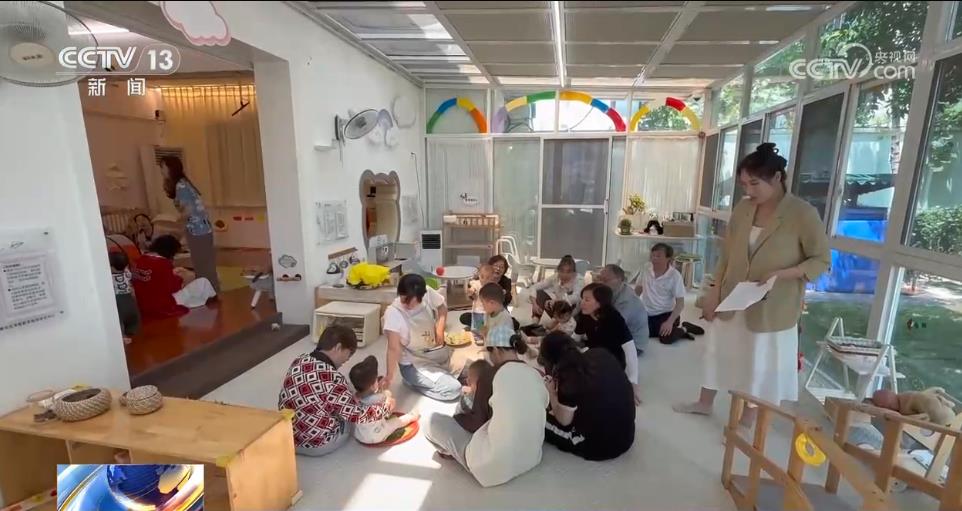
Core Points - The implementation of the "Preschool Education Law of the People's Republic of China" encourages kindergartens to offer childcare services starting from June 1 [1] - The "Sprout Project" in Shanghai's Jing'an District aims to explore the establishment of infant care classes to meet the needs of families with children aged 6 months to 3 years [1][6] Group 1 - The "Beibei Class" at Dongbu Kindergarten provides centralized care services for children aged 6 to 36 months, with options for half-day and full-day attendance [2][3] - A gradual parent accompaniment program is designed to help infants adapt to the new environment, addressing concerns about separation anxiety [4][5] - The Jing'an District plans to pilot this infant care class model across the district, aiming to establish 8 to 10 classes by September, providing over 3,000 childcare spots [6]
探索开设小月龄托班:家长渐进式入园陪伴缓解分离焦虑
Yang Shi Wang· 2025-06-03 07:02
Core Viewpoint - The implementation of the "Preschool Education Law" in China encourages kindergartens to offer childcare services, with Shanghai's Jing'an District launching a pilot program for infant care classes to meet the needs of families with children under three years old [1][10]. Group 1: Program Overview - The "Beibei Class" at Dongbu Kindergarten in Jing'an District provides centralized care services for children aged 6 months to 36 months, offering half-day and full-day options for parents [2]. - The program includes various age-specific classes such as "Mengmeng Class" for 6-12 months, "Yayaya Class" for 12-18 months, "Paopao Class" for 18-24 months, and "Diandian Class" for 2-3 years [6]. Group 2: Parental Involvement - The program features a gradual parent accompaniment approach to help children adapt to the new environment, addressing concerns about separation anxiety [4][8]. - Parents can observe their children during the first two weeks of school, allowing them to share specific habits with teachers to facilitate better understanding and care [8]. Group 3: Health and Education Integration - Medical professionals are involved in the program, providing regular health guidance and creating personalized growth records for each child [10]. - The initiative aims to enhance the availability of affordable childcare services, with plans to establish 8 to 10 additional classes by September, providing over 3,000 childcare spots [10].
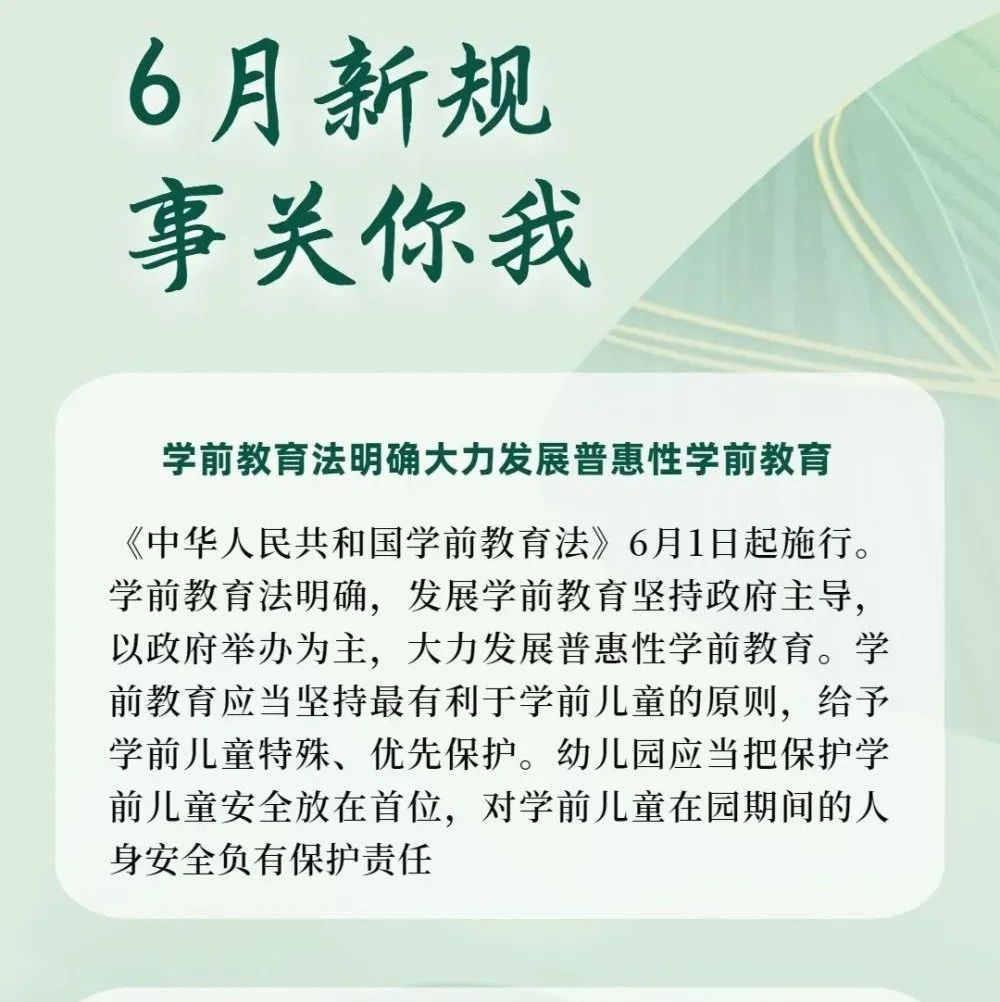
一批新规,即将施行!
券商中国· 2025-05-31 15:38
Group 1 - New regulations related to preschool education, facial recognition technology, and express packaging will be implemented starting in June [1] - The article highlights the importance of these regulations and their potential impact on daily life [1] Group 2 - The article does not provide specific details on the financial implications or industry analysis related to the mentioned regulations [2][3]
学前教育法实施在即,幼儿园园长谈如何“平等对待每一个儿童”
Xin Jing Bao· 2025-05-30 14:11
Core Viewpoint - The implementation of the "Preschool Education Law" in China marks a significant advancement in the legal framework governing preschool education, particularly impacting private kindergartens and their operational strategies [1][2]. Group 1: Impact of Preschool Education Law - The law introduces specific regulations for the classification and registration of kindergartens, aiming to eliminate unlicensed institutions and ensure compliance with either profit-oriented or non-profit status [2][3]. - Government support for inclusive private kindergartens is emphasized, with provisions for financial subsidies and tax incentives to promote the development of non-profit institutions [3][4]. - The law mandates that new kindergartens in residential areas must be inclusive, which is expected to reduce educational costs for families [2][3]. Group 2: Quality Standards and Compliance - The law sets clear requirements for both the infrastructure ("hardware") and educational programs ("software") of kindergartens, ensuring safety and quality in operations [3][4]. - It prohibits the adoption of primary school curricula in kindergartens, emphasizing the importance of respecting children's developmental stages and preventing premature academic pressure [6][7]. - The law allows for administrative penalties against non-compliant institutions, enhancing the protection of children's rights and parental interests [4][5]. Group 3: Educational Approach and Family Involvement - The law encourages a play-based learning approach, aligning with children's natural learning processes and promoting their holistic development [7][9]. - Parents are recognized as active participants in their children's education, with legal obligations to support their development and maintain communication with kindergartens [10][11]. - The law promotes the integration of special needs children into mainstream kindergartens, ensuring equitable access to education and support for all children [13]. Group 4: Future Directions for Kindergartens - The changing demographics and declining birth rates necessitate a reevaluation of kindergarten resource allocation and operational strategies [12]. - The law encourages kindergartens to explore additional services, such as daycare programs, to adapt to evolving educational needs [12]. - There is a growing emphasis on developing comprehensive support systems for special needs children, ensuring they receive appropriate educational resources [13].
学前教育法释放了哪些信号?北京朝阳法院法官以案释法
Xin Jing Bao· 2025-05-30 08:40
Core Viewpoint - The implementation of the "Law on Preschool Education" aims to protect children's development rights, standardize preschool education quality, and translate these into specific actions in daily educational practices [2][3]. Group 1: Key Aspects of the Law - The law emphasizes the importance of child safety, prohibiting "primary school-like" teaching, and insisting on the combination of care and education [2][3]. - Article 51 mandates that kindergartens prioritize the protection of preschool children's safety, while Article 52 requires immediate protective measures and reporting to relevant authorities in case of suspected harm [2][3]. - The law sets strict admission criteria for preschool educators, requiring background checks for criminal records and holding kindergarten operators accountable [3][6]. Group 2: Legal Implications and Case Studies - The law clarifies administrative responsibilities in cases of infringement on children's rights, including both criminal and civil cases [4][5]. - A notable civil case involved a child injured during a game due to inadequate safety measures, resulting in the kindergarten being held fully liable for damages [4]. - Another case highlighted the need for kindergartens to fulfill their duty of care, with the court determining liability percentages between the kindergarten and the child's peers [5]. Group 3: Special Considerations for Vulnerable Children - The law requires cross-departmental cooperation to ensure tailored support for special needs children, advocating for a "one case, one plan" approach [7]. - It emphasizes the need for specialized judicial personnel trained in both education and law to ensure effective implementation of the law [7]. - The law also addresses parental responsibilities, urging parents to avoid the misconception of outsourcing education and to remain vigilant regarding their children's well-being [8].
“一老一小”都是“宝”
Liao Ning Ri Bao· 2025-05-18 00:35
Group 1: Elderly Care Services - The province has developed 776 community dining facilities, serving approximately 15,000 elderly individuals daily, addressing the meal difficulties faced by the elderly, especially those who are elderly and living alone [2] - The provincial government has initiated concentrated care services for economically disadvantaged elderly individuals, ensuring that those with moderate to severe disabilities and high-aged individuals receive necessary support [3] - The province has established 2,414 elderly care institutions, with nursing bed occupancy reaching 55.5%, and has built 12,000 family care beds for eligible elderly individuals [3] Group 2: Childcare and Education Services - The province has expanded its public preschool resources, with 8 new or renovated public kindergartens and 2,659 new slots in affordable kindergartens this year [6] - The province has achieved a coverage rate of 90.8% for quality public kindergartens in townships, ensuring that rural children have access to better educational environments [7] - Professional training for preschool teachers has been emphasized, with 900 rural kindergarten teachers trained in the first five months of the year to enhance educational quality [8]
新疆乌苏市:“食”战演练“战”味足 观摩校园食安同守护
Zhong Guo Shi Pin Wang· 2025-05-16 02:16
Core Points - The article discusses a food safety emergency drill conducted by the Fourth Kindergarten in Urumqi, Xinjiang, aimed at enhancing food safety management and emergency response capabilities [1][2][3] Group 1: Emergency Drill Overview - The drill involved over 80 participants, including officials from various departments such as market supervision, health, and education, as well as kindergarten staff [1] - The simulation included scenarios of suspected food poisoning among children, with teachers and health staff responding promptly to manage the situation [2][3] Group 2: Response Actions - Upon receiving reports of symptoms, the emergency plan was activated, with medical teams providing immediate care and contacting emergency services [3] - Various emergency groups were established, including medical rescue, information liaison, and incident investigation teams, to ensure a coordinated response [3][4] Group 3: Post-Drill Evaluation - A summary meeting was held to discuss the drill's execution, identifying areas for improvement such as timely information transfer and staff training [4] - The kindergarten emphasized the importance of ongoing food safety education and regular emergency drills to enhance staff preparedness and teamwork [4][5] Group 4: Broader Implications - The drill aimed to strengthen the overall food safety management system in Urumqi, with a commitment to rigorous monitoring and emergency management practices [5] - The local food safety committee plans to implement stricter regulations and conduct further training to improve response capabilities across all relevant departments [5]
一幼儿园成上市公司前十大股东,咋回事?
21世纪经济报道· 2025-04-30 12:45
天眼查显示,该幼儿园成立于2 0 1 5年9月,为民办非企业单位,开办资金为3万元。股权穿透 显示,其属于云南世博阳光教育投资股份有限公司(简称"云南世博教育",曾用名:云南世 博阳光幼儿投资股份有限公司)。 | 宝利国际 300135 | | | | | | | | | | --- | --- | --- | --- | --- | --- | --- | --- | --- | | 2 同花顺 F10 全面解读 全新体验 | | 最新价:3.79 | | 涨跌幅:0.00% | 上一个殿 | 下一个殿 | 输入股票名称或代码 | Q @ 换肤 | | 宝利国际 | 最新动态 | 公司资料 | 股东研究 | 经营分析 | 股本结构 | | 资本运作 | 盈利预测 | | 处理 300135 | 新闻公告 | 概念题材 | 主力持仓 | 财务分析 | 分红融资 | | 公司大事 | 行业对比 | | 十大流通股东 | | 股东人数 | | 十大股东 | 控股层级关系 | | | | | 2025-03-31 | 2024-12-31 | 2024-09-30 | 2024-06-30 | | 2024-03- ...

