Coal

Search documents
午评:沪指半日涨0.42%刷新年内新高 存储芯片、商业航天概念股集体大涨
Feng Huang Wang· 2025-10-24 03:40
Core Viewpoint - The market experienced a significant upward movement in the morning, with the Shanghai Composite Index reaching a new high for the year and the ChiNext Index rising over 2% [1] Market Performance - The total trading volume in the Shanghai and Shenzhen markets reached 1.23 trillion, an increase of 180.8 billion compared to the previous trading day [1] - By the end of the trading session, the Shanghai Composite Index rose by 0.42%, the Shenzhen Component Index increased by 1.3%, and the ChiNext Index gained 2.09% [1] Sector Performance - The storage chip sector saw substantial gains, with companies like Shannon Technology and Puran Co. both hitting new highs [1] - The commercial aerospace sector experienced a strong surge, with Dahua Intelligent Technology achieving two consecutive trading limit increases, and over ten commercial aerospace stocks hitting the daily limit [1] - The computing hardware sector also saw fluctuations, with Zhongji Xuchuang reaching a new high [1] Declining Sectors - The coal sector faced a collective decline, with companies such as Antai Group and Yunmei Energy hitting the daily limit down [1] - Sectors with notable gains included storage chips and CPO, while coal, local Shenzhen stocks, and gas sectors experienced significant declines [1]
Earnings Preview: Peabody Energy (BTU) Q3 Earnings Expected to Decline
ZACKS· 2025-10-23 15:07
Core Viewpoint - Wall Street anticipates a year-over-year decline in earnings for Peabody Energy due to lower revenues, with a consensus estimate of a quarterly loss of $0.19 per share, reflecting a significant year-over-year change of -125.3% [1][3] Earnings Expectations - Revenues for Peabody Energy are projected to be $971.6 million, which is a decrease of 10.7% compared to the same quarter last year [3] - The upcoming earnings report is expected to be released on October 30, and the stock may react positively if actual results exceed expectations, while a miss could lead to a decline [2] Estimate Revisions - The consensus EPS estimate has been revised down by 500% over the last 30 days, indicating a significant reassessment by analysts [4] - The Most Accurate Estimate for Peabody Energy aligns with the Zacks Consensus Estimate, resulting in an Earnings ESP of 0% [12] Earnings Surprise Prediction - The Zacks Earnings ESP model suggests that a positive or negative reading indicates the likely deviation of actual earnings from the consensus estimate, but its predictive power is mainly significant for positive readings [9][10] - Peabody Energy currently holds a Zacks Rank of 4, which complicates the prediction of an earnings beat [12] Historical Performance - In the last reported quarter, Peabody Energy was expected to post a loss of $0.04 per share but actually reported a loss of $0.06, resulting in a surprise of -50.00% [13] - Over the past four quarters, the company has beaten consensus EPS estimates two times [14] Industry Context - Ramaco Resources, another player in the coal industry, is expected to report a loss per share of $0.33 for the same quarter, with revenues projected at $125.32 million, down 25.1% year-over-year [18] - The consensus EPS estimate for Ramaco Resources has been revised down by 4400% in the last 30 days, and it also holds a Zacks Rank of 4, indicating challenges in predicting an earnings beat [19][20]



中国基础材料监测_2025 年 10 月-China Basic Materials Monitor_ October 2025_ The fall in construction
2025-10-23 02:06
Summary of China Basic Materials Monitor - October 2025 Industry Overview - The report focuses on the **China Basic Materials** industry, particularly construction materials, steel, coal, cement, aluminum, copper, and lithium sectors. Key Points Construction and Demand Trends - End-user orderbooks showed a month-over-month (MoM) increase as of mid-October, aligning with seasonal trends. However, infrastructure construction is deteriorating faster than anticipated, with weakened project start rates. The impact of central government special funding remains unclear based on feedback from construction dealers and producers of cement and construction steel [1][2][3] - Current Chinese demand for cement and construction steel is reported to be **11-18% lower year-over-year (YoY)**, while demand for copper and aluminum is **5-6% lower YoY**. Flat steel demand has increased by **2% YoY** [2][3] Supply Side Dynamics - There have been no significant cuts in steel production, while corrections in excess production and safety inspections in coal continue. Domestic disruptions in copper scrap have deepened [2] - Recent weeks have seen improvements in margins/pricing for coal, cement, aluminum, copper, and lithium, while steel prices have softened [2] Producer Feedback and Order Trends - A proprietary survey indicates that **61%** of respondents in downstream sectors and **26%** in basic materials reported an MoM increase in orderbooks for October. Conversely, **26%** of respondents indicated a lower MoM trend [3] Price and Margin Analysis - Margin improvements have been noted across several materials, including coal, cement, aluminum, copper, and lithium, while steel margins have softened [2] Market Sentiment - The overall sentiment in the basic materials sector reflects a cautious outlook due to the declining trends in construction and infrastructure projects, despite some positive signals in specific sectors like auto/EV and battery production [1][2] Additional Insights - The report highlights the importance of monitoring the impact of government funding on infrastructure projects, as its effects are yet to be fully realized [1] - The data suggests a potential shift in investment focus towards sectors showing resilience, such as auto/EV and battery production, while traditional construction materials may face ongoing challenges [1][2] This summary encapsulates the critical insights from the October 2025 report on the China Basic Materials industry, emphasizing the current demand trends, supply dynamics, and market sentiment.
X @Bloomberg
Bloomberg· 2025-10-21 02:28
The decision by Australia’s Queensland to extend the life of its coal-fired power fleet could chill investment in renewable projects needed to meet ambitious national climate targets, according to energy ministers from other states https://t.co/kT0NogVXoD ...
A股缩量反弹,持续性待如何?
Sou Hu Cai Jing· 2025-10-20 13:01
Market Overview - The A-share market opened higher as expected, but the trading volume decreased by 203.1 billion, reaching only 1.7513 trillion, the lowest since August 8 [1] - A total of 4,064 stocks rose, with 96 hitting the daily limit, and the average increase for individual stocks was 1.24%, indicating a decent profit effect [2] Market Sentiment - Despite the positive profit effect, the overall market sentiment felt weak due to low trading volume and concerns about sustainability [4] - Technology stocks initially surged due to favorable weekend news but faced continuous selling pressure afterward [4] Sector Performance - The ChiNext index rose over 3 points, and the Sci-Tech 50 index gained over 2 points, but both indices faced selling pressure in the afternoon [5] - Coal and energy stocks saw gains, but their capacity was insufficient to absorb funds from the technology sector, making it challenging for these cyclical stocks to drive the market [6] Economic Data - Recent economic data revealed disappointing real estate figures, with a 0.3% month-on-month decline in housing prices across 70 cities, indicating a lack of the expected "golden September and silver October" [9] - GDP growth for the first three quarters was 5.2%, with the third quarter at 4.8%, suggesting that the pressure to achieve a full-year growth of 5% is not as severe as anticipated [9] - Retail sales grew by 3%, but the growth rate has noticeably slowed compared to the first half of the year, while fixed investment saw a decline of 0.5% [9] Future Outlook - The upcoming meetings are crucial for breaking the current market pattern, with expectations for measures to boost consumption and support the technology sector [7][9] - The market requires new narratives or significant measures to attract incremental capital and regain upward momentum [9]
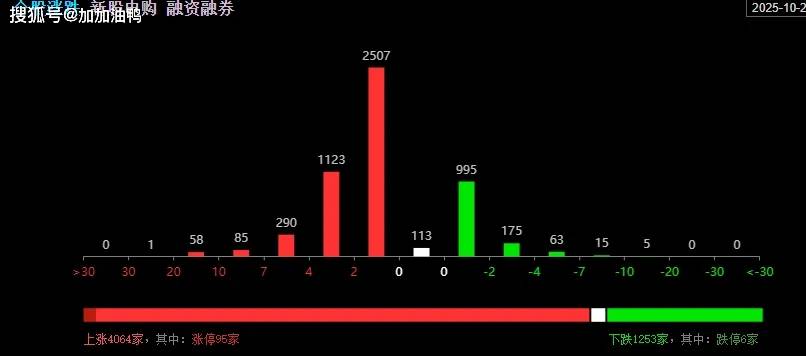
午评:主要股指均显著上涨 通信设备股和煤炭股涨幅靠前
Xin Hua Cai Jing· 2025-10-20 04:33
Market Performance - The Shanghai and Shenzhen stock indices opened significantly higher on October 20, with the ChiNext index rising approximately 3.64% at one point before narrowing its gains [1] - By midday, the Shanghai Composite Index was at 3866.09 points, up 0.69%, with a trading volume of approximately 512.4 billion yuan; the Shenzhen Component Index was at 12863.53 points, up 1.38%, with a trading volume of about 650.7 billion yuan [1] Sector Performance - Technology sector leaders showed a majority of upward movement, with communication equipment and coal stocks leading the gains [1] - Other notable sectors with significant increases included electric motors, brain engineering, composite copper foil, AI mobile PCs, 6G concepts, quantum technology, high-speed copper cable connections, mixed reality, consumer electronics, and components [1] - The precious metals sector experienced a significant adjustment due to the drop in silver and Hunan silver stocks [1] Economic Indicators - China's GDP grew by 5.2% year-on-year in the first three quarters, with a total GDP of 101503.6 billion yuan [4] - The first, second, and third industries saw increases of 3.8%, 4.9%, and 5.4% respectively, indicating stable economic growth [4] - The high-tech manufacturing sector's value added increased by 9.6% year-on-year, with notable production growth in industrial and service robots [6] Investment Insights - Citic Securities suggests that the market is in a bull market consolidation phase, with a focus on structural adjustments and sector rotation, emphasizing the importance of capital market reforms and structural prosperity [2] - Guotai Junan highlights that the current adjustments in Chinese assets are normal and that the true bull market has yet to begin, recommending a focus on domestic industries with recovering demand [3] - The National Bureau of Statistics indicates that new productive forces are accelerating, contributing to high-quality development and providing new growth engines for the economy [5][6]
铁矿石与煤炭:黄金周后关键信号表现如何-Iron Ore & Coal_ How are key signals tracking post-Golden Week_
2025-10-19 15:58
Summary of Key Points from the Conference Call Industry Overview - The conference call primarily discusses the **Iron Ore and Coal** industry, focusing on market trends, production data, and trade dynamics. Core Insights and Arguments 1. **Iron Ore Prices and Market Sentiment** - Iron ore prices have increased to **$109/t**, aligning with other commodities due to improved sentiment from the China Work Plan and Fed rate cut expectations [5][6] - The positioning in the Dalian market shifted from a net short position of approximately **-3Mt** before the Golden Week to a broadly neutral stance [5] 2. **China's Iron Ore Inventory and Shipments** - Iron ore inventories in China are stable at ports and have increased seasonally at mills ahead of the Golden Week [5] - Year-to-date shipments from Brazil and Australia have increased by **3%** and **1%** respectively, while non-traditional supply and domestic production in China remain soft [5] 3. **Steel Production and Exports in China** - Steel production in China slowed seasonally in late September, but the MySteel utilization rate remains high at over **90%** post-Golden Week [5] - China's steel exports reached approximately **120Mtpa** in September, reflecting a **10%** month-over-month increase despite rising trade restrictions [6] 4. **Company Ratings and Free Cash Flow Estimates** - Neutral ratings are maintained for Vale, RIO, BHP, and FMG, with a Sell rating on KIO. Estimated spot 2026 free cash flow yields are **5%** for BHP, **10%** for RIO, and over **15%** for Vale [5] 5. **September Trade Data from China** - Preliminary September trade data indicates a **10%** month-over-month increase in iron ore imports to a record high of **116Mt**, while coal imports decreased by **3%** year-over-year [6] Additional Important Insights 1. **Production Guidance and Performance** - RIO's 3Q production is expected to be **84Mt**, down **1Mt** year-over-year, while BHP's shipments are projected at **69Mt**, down **3Mt** year-over-year [9] - Vale's production is anticipated to increase by **2Mt** year-over-year to **93Mt** in the September quarter [9] 2. **Future Production Estimates** - RIO has trimmed its 2025 guidance by approximately **7Mt** due to weather disruptions, now targeting the lower end of the **323-338Mt** range [9] - BHP's FY26 guidance is set at **284-296Mt**, with FMG targeting **195-205Mt** including contributions from Iron Bridge [9] 3. **Coal Market Dynamics** - Glencore announced a **5-10Mt** curtailment at the Cerrejon thermal coal mine due to weak market conditions, with FY production now estimated at **11-16Mt** [9][12] 4. **Regional Production Trends** - Brazilian iron ore producers, including Vale, are tracking towards the mid-point of their 2025 guidance range of **325-335Mt** [9] - South African and Canadian producers are also adjusting their production estimates based on market conditions and operational performance [11] This summary encapsulates the key points discussed in the conference call, providing insights into the current state and future outlook of the iron ore and coal industries.




X @Bloomberg
Bloomberg· 2025-10-16 03:00
Chinese coal prices are creeping higher as the weather becomes increasingly unpredictable and the government expands its supervision of mines in a bid to prevent accidents and curb overproduction https://t.co/2OrwfCtGSD ...
Stock Market Rises, But Are Indexes Flip-Flopping In Leadership? Don't Get Burned By This Investing Mistake
Investors· 2025-10-15 22:34
Group 1 - The stock market performance in the fourth quarter has shown significant movement, particularly in small-cap stocks, which have finally started to yield positive results after years of recommendations from strategists [1] - Ramaco Resources Cl A has demonstrated improving price performance, earning an upgrade to its IBD Relative Strength Rating, indicating a positive trend in its market position [2][4] - The company has achieved a Relative Strength Rating of over 90, joining an elite group of stocks, which reflects its strong market leadership and technical strength [4] Group 2 - The coal industry, represented by stocks like Ramaco Resources, has faced challenges with many stocks falling below key levels, despite some showing renewed technical strength [4]
2 Coal Stocks Worth Watching as the Industry Battles Challenges
ZACKS· 2025-10-13 17:11
Core Viewpoint - The Zacks Coal industry is experiencing significant challenges due to declining coal usage in U.S. thermal power plants, with projections indicating a marginal improvement in demand by 2025 followed by a drop in 2026 due to ongoing energy transitions and utility operators phasing out coal assets [1][3]. Industry Overview - The Zacks Coal industry includes companies involved in coal exploration and mining, with the U.S. holding an estimated 252 billion short tons of recoverable coal reserves, 58% of which is underground mineable [3]. - Five U.S. states contribute to approximately 70% of annual coal production and 60% of surface mine extraction [3]. - The industry faces long-term challenges as renewable energy adoption accelerates and coal-fired power plants are gradually retired [3]. Trends Impacting the Industry - Coal export volumes are expected to decline in 2025 and continue into 2026 due to a global supply surplus and falling prices, particularly affecting metallurgical coal exports [2][4]. - The U.S. coal production is projected to be 531 million short tons in 2025, an increase from 512 million short tons in 2024, but expected to drop to 494 million short tons in 2026 [5]. - Coal's share in U.S. electricity generation is anticipated to decrease from 17% in 2025 to 16% in 2026, driven by rising environmental concerns and the transition to cleaner energy sources [5]. Industry Performance and Valuation - The Zacks Coal industry ranks 230, placing it in the bottom 5% of 243 Zacks industries, indicating a lackluster performance outlook [6][8]. - The coal industry has outperformed the Zacks Oil and Gas sector and the S&P 500 composite over the past year, with a gain of 22.7% compared to a 4.2% decline in the Oil-Energy sector and a 13.9% gain in the S&P 500 [9]. - The industry currently trades at a trailing 12-month EV/EBITDA of 8.84X, significantly lower than the Zacks S&P 500 composite's 18.12X [12]. Notable Companies - **Alliance Resource Partners (ARLP)**: Based in Tulsa, OK, ARLP produces coal primarily for utilities and industrial users, with projected sales tonnage in 2025 between 32.75-34 million short tons. The current distribution yield is 9.58% [16][17]. - **SunCoke Energy (SXC)**: Located in Lisle, IL, SXC focuses on metallurgical coal essential for steel production. The company benefits from its acquisition of Phoenix Global, which is expected to enhance earnings and cash flow stability. The current dividend yield is 5.82% [21][22].