Semiconductors

Search documents
2 Semiconductor Stocks to Sell Before They Drop 32% and 43%, According to Wall Street Analysts (Hint: Not Nvidia)
The Motley Fool· 2026-03-22 08:12
Group 1: Micron Technology - Micron Technology reported a significant revenue increase of 196% to $23.8 billion in Q2 of fiscal 2026, driven by record sales in DRAM, HBM, and NAND memory products [4] - The company achieved a non-GAAP net income increase of 682% to $12.20 per diluted share, setting new records across revenue, gross margin, earnings per share, and free cash flow [5] - Despite strong performance, analysts predict a potential 43% downside for Micron, with a bear-case target price set at $240 per share by Morgan Stanley [9] - The semiconductor industry is facing a supply shortage due to high demand for AI infrastructure, which has caused memory chip prices to triple or quadruple recently [6] - Historical trends suggest that current supply shortages may lead to a future supply glut, resulting in decreased prices and potentially lower valuations for Micron [7][10] Group 2: Intel - Intel has lost substantial market share in the CPU market over the last decade due to execution missteps, allowing competitors like TSMC and AMD to gain an advantage [11][12] - The company has experienced a 16% decline in sales, a 7 percentage point contraction in gross margin, and a 99% drop in net income since the AI boom began in early 2023 [13] - Intel's turnaround strategy focuses on gaining share in chip manufacturing services, with potential government incentives for using American foundries [14] - However, skepticism remains regarding Intel's ability to execute this strategy effectively, given its history of technical missteps and the dominance of TSMC in advanced chip manufacturing [15][16] - Analysts estimate a 32% downside for Intel, with a target price of $30 per share set by Rosenblatt Securities, despite projected earnings growth of 20% in 2026 [9][16]


1 Growth Stock Dynamo to Buy Before It Soars Past $8 Trillion, According to 1 Wall Street Analyst
The Motley Fool· 2026-03-22 07:02
Core Viewpoint - Current market uncertainties present significant investment opportunities, particularly in strong companies like Nvidia, which is poised for growth despite recent stock price stagnation [1][2]. Company Performance - Nvidia reported a revenue of $68 billion for its fiscal 2026 fourth quarter, marking a 73% year-over-year increase and a 20% sequential increase, with adjusted earnings per share (EPS) of $1.62, an 82% increase [3][4]. - Analysts had estimated revenue of $66.2 billion and EPS of $1.54, indicating Nvidia exceeded expectations [4]. Analyst Insights - Tigress Financial analyst Ivan Feinseth has reiterated a strong buy rating for Nvidia, raising the 12-month price target to $360, suggesting a potential upside of 100% from the current stock price [4][5]. - The analyst predicts Nvidia will achieve revenue of $406 billion and net operating profit of $201 billion in the coming year, applying a multiple of 30 to its earnings to justify the price target [5][6]. Market Position - Nvidia holds a dominant 92% share of the GPU data center market, with its GPUs accounting for 39% of the total costs in AI data centers [7]. - McKinsey & Company projects that capital expenditures for data center build-out will reach $7 trillion by 2030, with $5.2 billion allocated for AI workloads, indicating a strong market for Nvidia's products [7]. Future Projections - CEO Jensen Huang estimates Nvidia will generate "at least" $1 trillion from the sale of Blackwell and Vera Rubin chips by the end of 2027, suggesting a conservative outlook on demand [8]. - The growth trajectory indicates a clear path for Nvidia to potentially surpass an $8.7 trillion market cap within the next 12 to 18 months, with the stock currently valued at just 22 times forward sales, presenting a bargain opportunity [9].

Bold Prediction: SMH Is About to Soar. Here's Why.
The Motley Fool· 2026-03-22 05:30
Market Overview - U.S. equities have experienced volatility in 2026 but have generally maintained stability, with the conflict in Iran introducing uncertainty that may present "buy low" opportunities [1] Semiconductor Sector - The semiconductor sector has shown strong performance, driven by the ongoing artificial intelligence (AI) infrastructure boom, which is still in its early stages [2] - Despite significant earnings growth in the tech sector over the past year, it is projected to deliver the highest earnings growth among S&P 500 sectors in both 2026 and 2027, indicating a robust fundamental foundation [3] - The VanEck Semiconductor ETF (SMH) has a trailing 12-month price-to-earnings (P/E) ratio of 43, but the forward P/E ratio based on next 12 months' earnings is 23, suggesting that while valuations are elevated, they do not indicate overvaluation given the sector's growth trajectory [5] - The semiconductor boom cycle is ongoing, and the rally in semiconductor stocks and the VanEck Semiconductor ETF is expected to continue [6]

台积电董事长傲慢发言:“中国大陆一直弄机器人跳来跳去,没用,好看头而已”
是说芯语· 2026-03-22 04:44
Core Insights - TSMC Chairman Wei Zhejia was awarded an honorary doctorate by Asia University for his leadership in advancing the global semiconductor industry and enhancing supply chain resilience [1] - Wei emphasized the exponential growth in semiconductor technology, noting that TSMC is moving from 0.25-micron technology in 1998 to 2-nanometer process technology, representing a hundredfold improvement in just over two decades [3] - The integration of AI and healthcare is crucial, with Wei highlighting the need for practical robots to assist with elder care due to aging populations, which requires advanced semiconductor technology for reliability [3][4] Group 1 - TSMC's significant role in the global robotics market, with 95% of robot "brains" manufactured by TSMC, underlining the importance of semiconductor reliability [4] - Wei's caution against arrogance in leadership, referencing the book "How the Mighty Fall," which discusses the pitfalls of corporate leadership [3] - The challenges of developing practical robots that can safely assist the elderly, necessitating advanced sensory technology and reliable semiconductor support [3] Group 2 - Wei expressed gratitude for the honorary doctorate, acknowledging the influence of his family and mentors, particularly founder Morris Chang [5]


The 1-Minute Market Report, March 22, 2026
Seeking Alpha· 2026-03-22 03:10
Market Overview - The equity market experienced a pullback last week, resulting in a loss of 1.9%, which brings the total decline from the January 27 high to 6.8% [1] Historical Context - The current decline of 6.8% is relatively minor when compared to historical market declines, indicating that it barely registers in the context of past market performance [1] Investment Philosophy - The approach to investing emphasizes discipline, reliance on data, and the importance of keeping emotions out of investment decisions [1] - A rules-based framework is highlighted as a method to assist investors in building better portfolios, focusing on systematic thinking and behavioral awareness [1]

The Tech Stock With More Potential Than Any Cryptocurrency
The Motley Fool· 2026-03-22 03:00
Company Overview - ASML is a Dutch company that operates as the sole provider of extreme ultraviolet (EUV) lithography machines, which are essential for the production of advanced semiconductor chips [3][5]. - The company is foundational to the tech industry, with every major semiconductor manufacturer relying on its technology [6]. Technology and Market Position - EUV lithography machines are complex and costly, priced at over $400 million each, and are crucial for creating chips as small as 7 nanometers [4][5]. - ASML has maintained a monopoly on EUV technology for over 20 years, with no competitors successfully replicating its machines [8][10]. Industry Demand - The global semiconductor industry is projected to exceed $975 billion in sales this year and is expected to reach $2 trillion by 2036, indicating a strong growth trajectory [9]. - ASML's machines are integral to the production of advanced semiconductors, ensuring continued demand as the industry expands [11]. Financial Performance - ASML reported net sales of €32.6 billion for 2025, reflecting a 15% increase from 2024, with earnings per share rising by 28.4% [11]. - The company's net bookings for new machines surged from 5,399 in Q3 2025 to 13,158 in Q4 2025, highlighting a significant increase in demand [12]. Investment Consideration - Given the rising demand for semiconductor chips and ASML's unique market position, investing in ASML shares may be a favorable opportunity, especially considering the current price of Bitcoin [13].

X @Tesla Owners Silicon Valley
Tesla Owners Silicon Valley· 2026-03-22 02:51
🚀 **TERAFAB just dropped** — Tesla and SpaceX’s insane new joint venture to build the world’s largest AI chip factory at Giga Texas!Elon Musk is calling on engineers to join the mission:“The goal is to produce over a TERAWATT of compute per year (logic, memory & packaging) with ~80% for space and ~20% for the ground.”This beast will crank out 100-200 billion advanced 2nm chips annually — powering AI, Optimus humanoid robots, autonomous vehicles, and Starship Mars missions at a scale that blows past TSMC and ...

Could Buying $10,000 of Sandisk Make You a Millionaire?
The Motley Fool· 2026-03-22 02:45
Company Overview - Sandisk has experienced a remarkable stock increase of nearly 2,000% since its spinoff from Western Digital, with a 200% gain year to date [1][2] Demand and Supply Dynamics - The growth in Sandisk's stock is driven by rising demand from hyperscale cloud providers and an industry-wide supply shortage of NAND chips, which are essential for Sandisk's products [2][6] - Hard disk drive manufacturers like Seagate and Western Digital are facing supply constraints, leading hyperscalers to shift towards Sandisk's solid-state drives (SSDs) for better speed and performance [3][4] - A significant shortage in the memory chip market has led NAND chipmakers to focus on DDR memory, allowing Sandisk to capture a larger market share as it exclusively produces NAND chips [6][9] Financial Performance - Sandisk reported a mid-30% increase in the average selling price per gigabyte of storage, while bit shipments rose by a low single-digit percentage, resulting in a 61% revenue growth and a gross margin expansion to 51.1% [7][8] - The current market cap of Sandisk stands at $105 billion, reflecting its substantial growth over the past year [12][14] Future Outlook - Despite the current growth, Sandisk's core product lacks differentiation, and its pricing power is contingent on the current supply-demand imbalance, which may not be sustainable in the long term [9][10] - The long-term trend in bit shipments is expected to favor Sandisk due to increasing storage demand from consumers and data centers, but pricing volatility is anticipated as supply and demand cycles fluctuate [11][13] - Management insights suggest that the supply shortage may persist until 2028, raising concerns about future earnings and stock valuation at current prices [13][14]

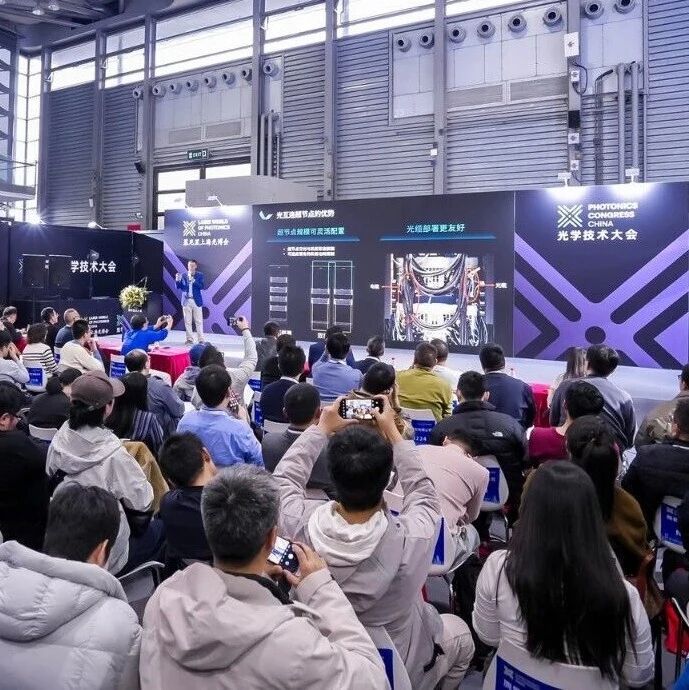
直击2026上海光博会,解锁后摩尔时代创新密码
半导体行业观察· 2026-03-22 02:42
Core Viewpoint - The integration of semiconductor and optoelectronic technologies is becoming a central theme in industry development, driven by the post-Moore era and the explosive demand for AI computing power, emphasizing the importance of collaboration across the entire industry chain [1][3]. Group 1: Forum Insights - The "Industry Collaboration and Communication Upgrade" forum gathered top experts and industry leaders to discuss core topics across the semiconductor and optoelectronic fields, sharing cutting-edge technological achievements and insights into industry development opportunities [3]. - The forum highlighted the need for collaborative innovation across materials, devices, packaging, testing, and system applications to inject new ideas and directions for high-quality industry development [3]. Group 2: Two-Dimensional Semiconductors - Two-dimensional semiconductors are identified as a key technology in the post-Moore era, offering significant advantages over silicon-based semiconductors, including reduced difficulty and cost in advanced processes [6][7]. - Major companies like TSMC, Intel, and Samsung are actively investing in two-dimensional semiconductor technology, which is expected to be integrated into heterogeneous systems after the 1nm node, with potential low-power applications by 2029 [6][7]. - Original Microelectronics has launched China's first engineering demonstration line for two-dimensional semiconductors, with plans for small-batch production of 90nm CMOS processes by September this year [7]. Group 3: Silicon Photonics - Silicon photonics technology is poised for explosive growth, driven by the demand for high-speed AI interconnects, with the market for 1.6T products expected to reach $4.5 billion by 2028 [10]. - The establishment of an 8-inch low-loss silicon nitride production platform has enabled the mass production of silicon photonic chips, addressing key challenges in traditional silicon photonics [10][11]. Group 4: Capacitor Innovations - Silicon capacitors are emerging as a solution to energy integrity challenges in AI applications, with a projected market size of $11.7 billion by 2027 [14]. - Their superior temperature stability and long lifespan make them ideal for high-density power delivery networks in AI chips and optical modules [14]. Group 5: Optical Interconnects - Optical interconnects are seen as a solution to the bandwidth, power, and topology challenges faced by traditional electrical interconnects, with the optical interconnect market expected to exceed $23 billion by 2025 [21]. - Companies are developing integrated optical solutions to enhance bandwidth and reduce power consumption, with significant advancements in optical computing technologies [21][22]. Group 6: Advanced Packaging - The "EDA+" paradigm is proposed to address the limitations of traditional EDA tools in advanced packaging, enabling collaborative design across multiple chiplets and layers [24][25]. - This new approach supports various packaging forms and integrates multiple physical field analyses, enhancing the efficiency of heterogeneous integration in chip design [24][25]. Group 7: Photonic Chips for AI and Quantum Computing - Photonic chips are positioned as a core hardware support for AI and quantum computing, with significant advantages in bandwidth and energy efficiency [36][37]. - The development of a fully controllable technology system based on lithium niobate thin films aims to facilitate the mass production of photonic chips for various applications [36][37]. Group 8: Testing Innovations - The transition from hardware to software-defined testing solutions is reshaping the testing and measurement industry, with platforms like Moku enabling customizable instrument solutions [28][29]. - High-speed oscilloscopes are being developed to meet the rigorous testing demands of optical communication technologies, ensuring reliable performance in high-speed applications [40][41]. Conclusion - The forum underscored the importance of collaborative innovation across the semiconductor and optoelectronic industries, addressing the core demands of computing power and communication upgrades in the post-Moore era, while outlining a clear blueprint for future industry development [42].
这个芯片,让AI功耗大降70%
半导体行业观察· 2026-03-22 02:42
Core Viewpoint - Researchers at Cambridge University have developed a brain-inspired chip that can reduce energy consumption in artificial intelligence hardware by up to 70% [2][4][6] Group 1: Technology and Innovation - The new memristor technology utilizes a special form of hafnium oxide, which mimics the way brain cells connect, leading to significant energy savings [4][5] - Traditional computer chips are inefficient, primarily wasting energy on data transfer between memory units and processors, generating heat and consuming power [5] - The Cambridge team has created a neuromorphic chip that processes both tasks on a single chip using stable, low-power memristors [5][6] Group 2: Performance and Reliability - The new device operates with a switching current that is one million times smaller than older technologies, significantly lowering power consumption [6] - It supports hundreds of stable, different current levels, which are essential for advanced analog memory computing and multi-tasking capabilities [6] - Laboratory tests confirm that these devices can endure tens of thousands of cycles and retain data for about a day, simulating biological learning processes [6] Group 3: Challenges and Future Prospects - The current manufacturing process requires a temperature of 700°C, which is too high for standard semiconductor manufacturing [6] - Efforts are underway to reduce this temperature to make the technology compatible with modern production lines, which could lead to a disruptive solution for ultra-low-power AI hardware [6]