
食品

Search documents
揭阳市乙介食品有限公司成立 注册资本10万人民币
Sou Hu Cai Jing· 2025-09-19 06:55
天眼查App显示,近日,揭阳市乙介食品有限公司成立,注册资本10万人民币,经营范围为许可项目: 食品生产;食品销售。(依法须经批准的项目,经相关部门批准后方可开展经营活动,具体经营项目以 相关部门批准文件或许可证件为准)一般项目:食品销售(仅销售预包装食品);食品互联网销售(仅 销售预包装食品);食用农产品初加工;农副产品销售;初级农产品收购;日用品销售;日用百货销 售;互联网销售(除销售需要许可的商品);技术服务、技术开发、技术咨询、技术交流、技术转让、 技术推广。(除依法须经批准的项目外,凭营业执照依法自主开展经营活动)。 ...
东莞市黔味美食品有限公司成立 注册资本100万人民币
Sou Hu Cai Jing· 2025-09-19 06:44
天眼查App显示,近日,东莞市黔味美食品有限公司成立,法定代表人为刘大慧,注册资本100万人民 币,经营范围为一般项目:食品销售(仅销售预包装食品);食品互联网销售(仅销售预包装食品); 保健食品(预包装)销售;餐饮管理;企业管理;品牌管理;供应链管理服务;国内贸易代理;市场营 销策划;商务代理代办服务;包装服务;物联网技术服务;技术服务、技术开发、技术咨询、技术交 流、技术转让、技术推广;外卖递送服务;组织文化艺术交流活动;信息咨询服务(不含许可类信息咨 询服务);会议及展览服务;食用农产品初加工;食用农产品批发;食品添加剂销售;商业、饮食、服 务专用设备销售;农产品智能物流装备销售;食品用塑料包装容器工具制品销售;厨具卫具及日用杂品 批发;互联网销售(除销售需要许可的商品);日用百货销售。(除依法须经批准的项目外,凭营业执 照依法自主开展经营活动)许可项目:食品销售。(依法须经批准的项目,经相关部门批准后方可开展 经营活动,具体经营项目以相关部门批准文件或许可证件为准)。 ...
广州恒清和大健康食品有限公司成立 注册资本10万人民币
Sou Hu Cai Jing· 2025-09-19 06:44
Core Viewpoint - Guangzhou Hengqing and Health Food Co., Ltd. has been established with a registered capital of 100,000 RMB, indicating a new player in the food and health sector [1] Company Summary - The legal representative of the company is Feng Jingwen, suggesting a potential leadership direction and management style [1] - The company’s business scope includes wholesale of edible agricultural products, daily necessities sales, and various food-related sales, indicating a diversified approach in the food industry [1] - The company is involved in the sale of infant formula and other baby food products, highlighting a focus on health and nutrition for young consumers [1] Industry Summary - The establishment of the company reflects ongoing trends in the food and health industry, particularly in the areas of e-commerce and health food products [1] - The inclusion of services such as supply chain management and marketing planning suggests a strategic approach to enhance operational efficiency and market reach [1] - The company’s activities in food additives and biochemistry product development indicate a potential for innovation within the food sector [1]
江门仙兔食品有限公司成立 注册资本10万人民币
Sou Hu Cai Jing· 2025-09-19 06:44
天眼查App显示,近日,江门仙兔食品有限公司成立,注册资本10万人民币,经营范围为一般项目:食 品销售(仅销售预包装食品);中医养生保健服务(非医疗);养生保健服务(非医疗);信息技术咨 询服务;健康咨询服务(不含诊疗服务);网络技术服务;技术服务、技术开发、技术咨询、技术交 流、技术转让、技术推广;互联网销售(除销售需要许可的商品);食品互联网销售(仅销售预包装食 品);日用品销售;办公用品销售;家用电器销售;家居用品销售;厨具卫具及日用杂品批发;保健食 品(预包装)销售;食用农产品零售;第二类医疗器械销售;第一类医疗器械销售;第一类医疗设备租 赁;第二类医疗设备租赁。(除依法须经批准的项目外,凭营业执照依法自主开展经营活动)许可项 目:食品销售;生活美容服务;食品互联网销售;药品零售。(依法须经批准的项目,经相关部门批准 后方可开展经营活动,具体经营项目以相关部门批准文件或许可证件为准)。 ...
江西炬峰食品有限公司成立 注册资本10万人民币
Sou Hu Cai Jing· 2025-09-19 04:21
天眼查App显示,近日,江西炬峰食品有限公司成立,法定代表人为余诗凯,注册资本10万人民币,经 营范围为许可项目:食品销售,食品互联网销售(依法须经批准的项目,经相关部门批准后在许可有效 期内方可开展经营活动,具体经营项目和许可期限以相关部门批准文件或许可证件为准)一般项目:食 品销售(仅销售预包装食品),食品互联网销售(仅销售预包装食品),水产品批发,餐饮管理,市场 营销策划,企业管理咨询(除依法须经批准的项目外,凭营业执照依法自主开展经营活动)。 ...
河南零工市场首场招聘会明日启幕
Zheng Zhou Ri Bao· 2025-09-19 00:40
Group 1 - The Henan Gig Market officially opened on September 20, providing over 3,500 job positions for job seekers [1] - The first gig job fair, focusing on flexible employment, aims to connect job demand and supply, particularly for key groups like college graduates [1] - The market emphasizes non-full-time, seasonal, and temporary employment needs, offering "one-stop" services for gig workers and employers [1] Group 2 - The job fair will feature over 2,000 gig positions and 1,500 full-time positions across various popular industries, including food service, retail, logistics, and IT [1] - Participating companies include well-known firms such as Haoxiangni Group, Yutong Group, and JD.com, indicating strong corporate interest in the event [2]
盐城如川食品有限公司成立 注册资本100万人民币
Sou Hu Cai Jing· 2025-09-18 23:43
Group 1 - Yancheng Ruchuan Food Co., Ltd. has been established with a registered capital of 1 million RMB [1] - The legal representative of the company is Chen Liye [1] - The business scope includes food sales, food production, and road cargo transportation (network freight) [1] Group 2 - The company is authorized to engage in food sales, specifically pre-packaged food [1] - It also includes internet sales of food, grain purchasing, and wholesale and retail of aquatic products [1] - Additional services offered by the company include corporate image planning, marketing planning, conference and exhibition services, and advertising services [1]
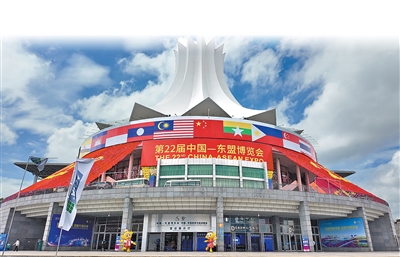
促进中国东盟往来 深化区域发展合作
Ren Min Ri Bao· 2025-09-18 22:12
Group 1: Event Overview - The 22nd China-ASEAN Expo and China-ASEAN Business and Investment Summit was held in Nanning, Guangxi from September 17 to 21, attracting over 3,200 enterprises from 60 countries and regions [1] - The theme of this year's expo was "Digital Intelligence Empowers Development, Innovation Leads the Future," focusing on showcasing the latest developments in emerging industry cooperation, trade investment, and cultural exchanges between China and ASEAN countries [1] Group 2: Artificial Intelligence Focus - A new 10,000 square meter AI pavilion was established at the expo, highlighting the significant role of artificial intelligence, with over 50% of exhibits in the China exhibition area related to AI [2] - The first China-ASEAN AI Ministerial Forum was held, and a list of future unicorn AI companies targeting ASEAN was released, indicating strong interest in AI collaboration [2] - Indonesian AI startup AiSensum expressed that the AI pavilion provided an important platform for ASEAN companies to connect with the Chinese market [2] Group 3: Economic Integration and Trade - ASEAN and China are each other's largest trading partners, with steady growth in direct investment, as stated by Cambodian Deputy Prime Minister [4] - The establishment of the ASEAN-China Free Trade Area 3.0 is expected to promote regional economic integration, benefiting trade growth and sectors like digital and green economies [4][5] - The expo featured a "Belt and Road" international exhibition area, showcasing products from various countries, indicating the event's expanding influence beyond just China and ASEAN [4] Group 4: Cultural Exchange - The expo serves as a platform for cultural exchanges, enhancing mutual understanding between China and ASEAN countries [6] - The China-ASEAN Youth Leaders Growth Program was initiated to foster international cooperation among young leaders, with support from Thailand's Ministry of Commerce [6][7] - Increased personnel exchanges between China and ASEAN countries, with over 25.2 million visits recorded from January to August, reflecting growing ties [7]

任丘市优调通食品有限公司成立 注册资本30万人民币
Sou Hu Cai Jing· 2025-09-18 21:55
Group 1 - The establishment of Renqiu Youdiaotong Food Co., Ltd. has been registered with a legal representative named Xue Aijun and a registered capital of 300,000 RMB [1] - The company's business scope includes licensed projects such as food sales, which require approval from relevant authorities before operation, and general projects like retail of edible agricultural products, sales of agricultural and sideline products, sales of beans and tubers, and retail of fresh fruits and vegetables [1]
张家口琛膳源食品有限公司成立 注册资本20万人民币
Sou Hu Cai Jing· 2025-09-18 21:55
Group 1 - Zhangjiakou Chenshanyuan Food Co., Ltd. has been established with a registered capital of 200,000 RMB [1] - The legal representative of the company is Liu Chen [1] - The business scope includes food sales, food import and export, and various agricultural product services [1] Group 2 - The company is authorized to engage in food sales subject to approval from relevant authorities [1] - General projects include online sales of pre-packaged food, fresh meat retail and wholesale, and supply chain management services [1] - The company also offers information technology consulting services and domestic trade agency services [1]