Database

Search documents
Aerospike Automates Database 8 Deployment on Amazon EKS
GlobeNewswire News Room· 2025-05-12 09:00
Core Insights - Aerospike, Inc. has launched a new Terraform blueprint that enables the deployment of Database 8 on Amazon EKS in under 30 minutes [1][2]. Company Overview - Aerospike provides a multi-model database that supports various data models including document, graph, key-value, and vector search, all within a single scalable real-time database [5]. - The company emphasizes that developers can build high-performance applications using 80% less infrastructure compared to legacy solutions [5]. - Aerospike has received the Data Breakthrough Awards three times, highlighting its effectiveness in simplifying deployment, cluster management, and monitoring [5]. - The company is recognized for its low latency and high throughput data platform, serving notable clients such as Adobe, Airtel, Criteo, DBS Bank, Experian, PayPal, Snap, and Sony Interactive Entertainment [6]. Product Features - The Aerospike Kubernetes Operator (AKO) automates the deployment and management of Aerospike databases in both cloud and on-premises environments [2]. - The new Terraform blueprint allows users to start and scale a production-ready Aerospike Database on EKS without requiring deep expertise in Aerospike or AWS [2][3]. - The blueprint provisions the EKS cluster, configures the underlying infrastructure, and deploys both the AKO and Aerospike server with recommended defaults [3].



独家对话杨传辉:AI时代来临,数据库龙头OceanBase如何自我变革?|钛媒体AGI
Tai Mei Ti A P P· 2025-05-12 02:05
Core Insights - OceanBase is transitioning to become an integrated data foundation for the AI era, driven by market demand and existing technological capabilities [4][6][14] - The global big data IT investment is projected to reach approximately $354 billion in 2024, with a compound annual growth rate (CAGR) of 16.8% expected to reach nearly $644 billion by 2028 [2] - By 2028, China's big data IT spending is anticipated to be $62.17 billion, accounting for about 10% of the global market, with a remarkable CAGR of 24.9% [2] Company Overview - OceanBase, founded in 2010, is a leading integrated distributed database company in China, having commercialized its operations under Ant Group since 2020 [3] - The company has supported over 2,000 clients across various sectors, including finance, government, telecommunications, retail, and the internet, in upgrading their critical business systems [3] Strategic Developments - In April 2025, OceanBase's CEO announced a strategic shift towards AI, emphasizing the creation of a "DATA×AI" core capability and an integrated data foundation for the AI era [3][4] - The company is enhancing its talent and organizational structure to support this strategic transition, appointing its CTO as the head of AI strategy and establishing new departments focused on AI [3][4] Technological Challenges and Solutions - OceanBase aims to address the complexities of data types and scales in the AI era, moving beyond traditional structured data to include unstructured data such as images, text, and videos [4][6] - The company recognizes the challenges posed by data fragmentation and the need for innovative solutions to enhance data processing capabilities [4][8] Upcoming Initiatives - OceanBase plans to unveil AI-related database products and capabilities at its upcoming developer conference, focusing on integrated data processing and vector database enhancements [10] - The company will also introduce RAG services to help enterprises combine their proprietary data with public data models for greater business value [10] Future Vision - OceanBase envisions itself as a leading integrated data foundation in the AI era, emphasizing the importance of continuous innovation and ecosystem development to meet evolving market needs [13][14] - The company aims to maintain its focus on data processing, adapting to the increasing complexity and volume of data in the AI landscape [13][14]

让 PostgreSQL 更契合Agent、氛围编程!成立四年、微软投资,这家开源数据库公司终10亿美元卖身Databricks
AI前线· 2025-05-09 05:18
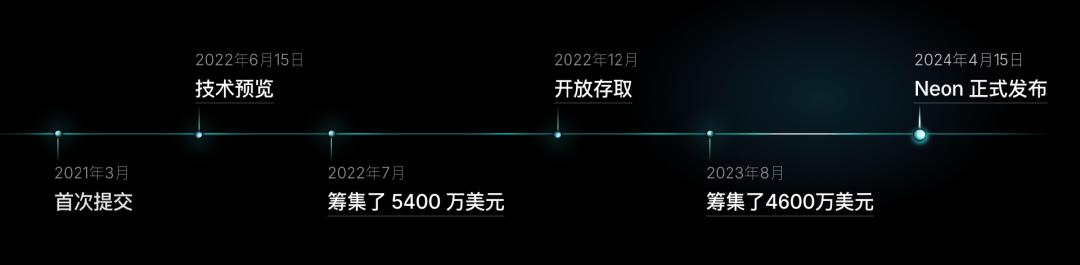
Core Viewpoint - Databricks is in negotiations to acquire Neon, an open-source database startup, for approximately $1 billion, which may exceed this amount when including employee retention incentives. The deal is seen as a strategic move to enhance Databricks' AI capabilities and infrastructure [1][16]. Group 1: Company Overview - Neon is a four-year-old open-source database company founded by Nikita Shamgunov, Heikki Linnakangas, and Stas Kelvich, focusing on PostgreSQL [2][3]. - The current CEO, Shamgunov, has a strong background in computer science and has previously contributed to SQL Server at Microsoft and co-founded MemSQL (now SingleStore) [5][6]. - The company aims to create a PostgreSQL variant suitable for AI applications, allowing customers to pay for database usage on demand, with a focus on efficiency for AI agents [11][12]. Group 2: Technology and Features - Neon employs a serverless architecture that separates storage and compute, allowing for automatic scaling based on workload demands [7][8]. - The technology includes features like copy-on-write for checkpointing and time-point recovery, as well as connection pooling to enhance performance [8][9]. - Neon supports vector data storage and utilizes HNSW indexing for efficient high-dimensional vector searches, making it valuable for natural language processing tasks [11][12]. Group 3: Investment and Financials - Neon has raised over $130 million in funding, including a recent $46 million round led by Menlo VC, bringing its total funding to approximately $104 million [14]. - The company previously received a $25 million strategic investment from Microsoft's M12, enhancing its collaboration with Azure [13][14]. Group 4: Databricks' Strategic Moves - Databricks, founded in 2013, has shifted its focus towards AI, acquiring companies like MosaicML for $1.3 billion to bolster its AI capabilities [16][17]. - The company has been actively enhancing its platform through various product developments and acquisitions, including the launch of Databricks Apps for building customized AI applications [17][18]. - Databricks is reportedly facing challenges in its transition to AI, with some industry insiders expressing concerns about its current direction and operational efficiency [20].

新旧势力再较量,数据库不需要投机 | 企服国际观察
Tai Mei Ti A P P· 2025-05-08 09:50
Core Insights - The generative AI technology transformation is driving intense competition among database vendors [2][3] - Traditional vendors are being challenged by cloud-native distributed databases, prompting adjustments in data strategies to better align with enterprise AI use cases [3][4] - The competition between Databricks and Snowflake highlights the ongoing battle in the cloud lakehouse space, with both companies striving to capture market share [4][15] Industry Dynamics - The emergence of generative AI applications has not yet produced widely adopted enterprise solutions, primarily due to issues like "hallucination" in AI outputs [5] - The evolution of the database market is a natural progression, influenced by technological advancements and changing enterprise needs [5][6] - The concepts of data warehouses and data lakes have evolved, with data lakes emerging to address the limitations of traditional data warehouses in handling unstructured data [9][10] Technological Developments - The introduction of the lakehouse architecture by Databricks in 2020 aims to combine the benefits of data warehouses and data lakes, enhancing data management capabilities [11][12] - Databricks has positioned itself as a leader in the lakehouse space, leveraging open-source technologies like Apache Spark and Delta Lake to build a comprehensive product suite [13][19] - Snowflake has also made significant strides in AI and data analytics, acquiring multiple companies to enhance its platform and compete effectively with Databricks [22] Competitive Landscape - Databricks and Snowflake are engaged in a fierce competition, with both companies focusing on enhancing their AI capabilities and expanding their customer bases [18][21] - Recent trends indicate a shift in market demand from traditional data warehouses to lakehouse technologies, benefiting Databricks [21] - The competition has prompted both companies to explore acquisitions and partnerships to strengthen their positions in the AI-driven database market [15][17] Market Trends - The global big data analytics market is projected to reach $549.73 billion by 2028, indicating a growing demand for advanced data management solutions [13] - The integration of AI capabilities into database solutions is becoming essential, as enterprises seek to leverage data for actionable insights [14][27] - The database market is increasingly competitive, with numerous startups and established companies vying for market share, particularly in the lakehouse segment [15][27]

让PostgreSQL更契合Agent、氛围编程,立四年、微软投资,这家开源数据库公司终10亿美元卖身Databricks
3 6 Ke· 2025-05-07 10:37
Core Viewpoint - Databricks is in negotiations to acquire the open-source database startup Neon for approximately $1 billion, with the potential for the total deal value to exceed this amount when including employee retention incentives. However, the negotiations are still ongoing and could fall through [1]. Group 1: Databricks - Databricks is a leading data platform company founded in 2013 and is known for pioneering the "Lakehouse" architecture. The company has shifted its strategic focus towards AI in recent years [15]. - In June 2023, Databricks acquired MosaicML for $1.3 billion to enhance its AI capabilities and has since made several product developments and acquisitions to strengthen its platform [15][16]. - Databricks has also acquired Fennel AI and Lilac AI to bolster its AI application capabilities and data management solutions [17]. Group 2: Neon - Neon is a four-year-old open-source database company based on PostgreSQL, founded by Nikita Shamgunov and others. The company aims to create a database suitable for AI applications [2][10]. - Neon has raised over $130 million in funding, including a recent $46 million round led by Menlo VC, bringing its total funding to $104 million [13]. - The company offers a serverless architecture that allows users to scale resources automatically based on workload demands, which is particularly beneficial for AI applications [6][11]. Group 3: Technology and Features - Neon implements a "copy-on-write" technology that supports features like branching and point-in-time recovery, enhancing its usability for developers [7]. - The database allows for on-demand payment and can be spun up in seconds, making it cost-effective for enterprises using AI agents to create temporary databases [10]. - Neon supports vector data storage and utilizes the HNSW indexing algorithm for efficient high-dimensional vector searches, which is valuable for natural language processing tasks [10].
蚂蚁集团旗下OceanBase全员信曝光 CTO杨传辉任AI一号位
Xi Niu Cai Jing· 2025-05-07 09:32
Core Viewpoint - Ant Group's subsidiary OceanBase is entering the AI era, focusing on building "DATA×AI" core capabilities and enhancing its organizational structure to support this transition [3][4]. Group 1: AI Strategy and Organizational Changes - OceanBase has appointed CTO Yang Chuanhui as the head of AI strategy, establishing new departments such as the AI Platform and Applications Department and the AI Engine Group [3][4]. - The AI Platform and Applications Department will focus on building the "DATA×AI" platform and advancing related application development, while the AI Engine Group will concentrate on developing AI inference engines [4]. Group 2: Historical Context and Future Outlook - Over the past 15 years, OceanBase has developed a high-quality integrated distributed database product, overcoming challenges related to stability, high concurrency, scalability, real-time analysis, and multi-cloud environments [4]. - The company aims to become a foundational data platform in the AI era by addressing the integration of DATA and AI, which is expected to reshape various industries [4]. Group 3: Support from Ant Group - OceanBase's AI strategy is strongly supported by Ant Group, which will provide access to all AI scenarios to assist in building the data foundation for the AI era [5].

速递|YC校友开源数据库Supabase,时隔七个月再融2亿美金,估值20亿或成应用“隐形基建”
Z Potentials· 2025-04-28 03:16
图片来源: Scale AI 2020 年,开源数据库 Supabase 成⽴时,其新西兰籍⾸席执⾏官 Paul Copplestone 未曾料到,公司会精准踩中 2025 年最⼤趋势Vibe Coding的⻛⼝。 根据财富报道,这家初创公司于4⽉末成果显现, 公司宣布完成由 Accel 领投的 2 亿美元 D 轮融资,投后估值达 20 亿美元,Coatue、Y Combinator、 Craft Ventures 及⻓期投资者 Felicis 参与本轮投资。 此次新获 2 亿美元融资,距离 Supabase 宣布由 Peak XV(红杉分拆机构)和 David Sacks 的 Craft Ventures 领投 8000 万美元仅七个⽉。当时公司未对估值 置评,但 PitchBook 数据显⽰约为 9 亿美元。 参考资料 ⾄此,这家初创公司总融资额已达约 3.98 亿美元。 Supabase 再次证明了开源项⽬在商业上的巨⼤成功潜⼒。它提供了 Firebase 的开源版本,这是⾕歌的 数据库 AI 应⽤开发平台,并以每⽉最⾼ 600 美元的价格托管应⽤,企业⽤⼾费⽤更⾼。 Supabase 将开源 SQL ...
OceanBase迎来最大规模组织人才升级:全面进入AI时代
Bei Jing Shang Bao· 2025-04-27 07:32
Core Viewpoint - OceanBase is fully embracing AI, aiming to build a "DATA×AI" core capability and establish a data foundation for the AI era [1][2] Group 1: Strategic Upgrade - OceanBase has initiated a significant strategic upgrade since its independent operation began last March [1] - The company has appointed CTO Yang Chuanhui as the leader of its AI strategy and established new departments such as the AI Platform and Applications Department and the AI Engine Group [2] Group 2: Talent and Organizational Structure - The talent and organizational system is being upgraded to ensure the effective implementation of the AI strategy [2] - Yang Chuanhui, a founding team member and protégé of OceanBase's founder, will oversee the AI strategy and product implementation [2] Group 3: AI Strategy Support - OceanBase's AI strategy has received full support from Ant Group, which will open all AI scenarios to assist OceanBase in building its data foundation for the AI era [2] - The company aims to refine its "DATA×AI" capabilities into a new core competitive advantage and gradually serve external clients [2]
对话Zilliz产品负责人郭人通:向量数据库将成为承接AI上下半场的“桥梁”
Zhong Guo Jing Ying Bao· 2025-04-24 07:48
随着近年来企业数字化转型的深入,海量非结构化数据的处理与价值挖掘成为企业竞争的关键。据 Gartner测算,从2019年到2024年,包括各类文本、图片、视频、音频在内的非结构化数据容量增加了2 倍。企业花费大量成本长期存放这些数据,却常未能带来满意的附加价值。 而在生成式AI出现后,企业数据的灵活管理与价值释放,正在进一步变得便捷。如何借助AI将其转化 为可落地的应用,也成为企业能否赢得AI时代主动权的关键命题。 在近日举办的亚马逊云科技出海大会上,作为开源向量数据库Milvus的缔造者的Zilliz合伙人与产品负责 人郭人通向《中国经营报》记者表示,Zilliz正在通过亚马逊云科技提供的全球基础设施和生成式AI能 力,为各类企业构建多样化、高可用、合规且可扩展的向量数据库解决方案,助力企业高效应对AI时 代的挑战。 "如果把人工智能的发展分为上、下半场,上半场主要是利用大规模数据训练AI能力;而下半场,则是 AI能力反过来深入行业,产生海量关键数据。企业更需关注如何挖掘数据价值,实现AI应用快速落 地。"郭人通表示。 构建AI数据新基建:向量数据库的全球化演进 在郭人通看来,承接上、下半场趋势的"桥梁", ...
The Rise of Graph Database Market: A $2,143.0 million Industry Dominated by IBM Corporation (US), Oracle (US), Graphwise (Australia)| MarketsandMarkets™
GlobeNewswire News Room· 2025-04-11 14:00
Market Overview - The Graph Database Market is projected to grow from USD 507.6 million in 2024 to USD 2,143.0 million by 2030, reflecting a Compound Annual Growth Rate (CAGR) of 27.1% during the forecast period [1] - Graph databases facilitate enterprise knowledge management by reconstructing complex data with interconnected nodes and relationships, enhancing information retrieval and navigation [1] Market Dynamics Drivers - Rising demand for AI and generative AI solutions is driving the growth of graph databases [3] - The rapid increase in data volume and complexity necessitates advanced data management solutions [3] - There is a growing demand for semantic search capabilities [3] Restraints - Challenges related to data quality and integration are hindering market growth [3] - The navigation of a saturated data management tool landscape poses difficulties for organizations [3] - Scalability issues are a concern for businesses looking to implement graph databases [3] Opportunities - Leveraging large language models (LLMs) can reduce the costs associated with knowledge graph construction [3] - The proliferation of knowledge graphs presents opportunities for data unification [3] - Increasing adoption in healthcare and life sciences is expected to revolutionize data management and enhance patient outcomes [3] Market Segmentation - The property graph segment is anticipated to hold the largest market size during the forecast period, representing data as nodes, edges, and properties [3] - The services segment is expected to experience the highest growth, encompassing managed services and professional services to support graph database implementation and operation [5] Regional Insights - The Asia-Pacific region is projected to have the highest market growth rate, driven by digital transformation and demand for sophisticated data management solutions [6] - In China, businesses are adopting graph database technology to enhance innovation and operational efficiency across various industries [6] - Australia is leveraging Neo4j's technology to develop a national-scale graph database aimed at improving research collaboration and sustainability [6] Key Players - Major vendors in the Graph Database market include IBM Corporation, Oracle, Microsoft Corporation, AWS, Neo4j, and others [7] - These companies are employing various growth strategies such as partnerships, new product launches, and acquisitions to expand their market presence [7]