
住宿

Search documents
50城入选有奖发票试点城市名单
Xin Lang Cai Jing· 2026-01-23 18:53
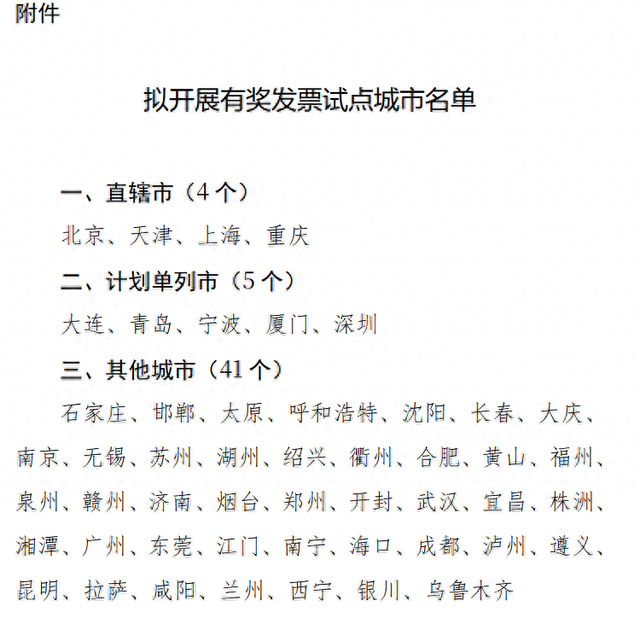
据介绍,试点城市对个人消费者以本人名义向零售、餐饮、住宿、文化艺术、娱乐、旅游、体育、居民 服务业等行业的经营主体购买商品和服务,且取得的票面金额在一定额度以上的发票组织抽奖。中央财 政将对试点城市分档安排奖补资金。 三部门有关负责人此前表示,此次出台的有奖发票试点政策着重从需求端发力,鼓励居民消费并取得发 票后参与抽奖。试点政策覆盖日常消费主要场景,如购物、外出就餐、旅游住宿、文体活动、生活服务 等,与居民"衣食住行"密切相关。 (《50城入选有奖发票试点城市名单》由贵阳日报为您提供,转载请注明来源,未经书面授权许可,不 得转载或镜像。) 转自:贵州日报 新华社北京1月23日电 商务部、财政部、国家税务总局1月23日对外公示拟开展有奖发票试点城市名 单,包括北京、上海等50个城市入选。 为进一步激发消费需求,释放消费潜力,三部门于2025年12月底发布通知称,将支持50个左右城市开展 有奖发票试点工作,政策实施期为6个月。近期,三部门组织开展了有奖发票试点城市评审工作。这一 评审结果公示期为2026年1月23日至2026年2月2日。 ...
有奖发票50个试点城市公示 四川成都泸州入选
Xin Lang Cai Jing· 2026-01-23 18:53
据介绍,试点城市对个人消费者以本人名义向零售、餐饮、住宿、文化艺术、娱乐、旅游、体育、居民 服务业等行业的经营主体购买商品和服务,且取得的票面金额在一定额度以上的发票组织抽奖。中央财 政将对试点城市分档安排奖补资金。 三部门有关负责人此前表示,此次出台的有奖发票试点政策着重从需求端发力,鼓励居民消费并取得发 票后参与抽奖。 据新华社北京1月23日电(记者 申铖 谢希瑶) 转自:成都日报锦观 有奖发票50个试点城市公示 四川成都泸州入选 商务部、财政部、国家税务总局1月23日对外公示拟开展有奖发票试点城市名单,包括北京、上海、成 都、泸州等50个城市入选。 为进一步激发消费需求,释放消费潜力,三部门于2025年12月底发布通知称,将支持50个左右城市开展 有奖发票试点工作,政策实施期为6个月。近期,三部门组织开展了有奖发票试点城市评审工作。这一 评审结果公示期为2026年1月23日至2026年2月2日。 ...
有奖发票试点城市公示
Xin Lang Cai Jing· 2026-01-23 17:51
(来源:衢州日报) 为进一步激发消费需求,释放消费潜力,三部门于2025年12月底发布通知称,将支持50个左右城市开展 有奖发票试点工作,政策实施期为6个月。近期,三部门组织开展了有奖发票试点城市评审工作。这一 评审结果公示期为2026年1月23日至2026年2月2日。 据介绍,试点城市对个人消费者以本人名义向零售、餐饮、住宿、文化艺术、娱乐、旅游、体育、居民 服务业等行业的经营主体购买商品和服务,且取得的票面金额在一定额度以上的发票组织抽奖。中央财 政将对试点城市分档安排奖补资金。 转自:衢州日报 据新华社北京1月23日电 (记者 申铖 谢希瑶) 商务部、财政部、国家税务总局1月23日对外公示拟开展 有奖发票试点城市名单,包括北京、上海等50个城市入选。 三部门有关负责人此前表示,此次出台的有奖发票试点政策着重从需求端发力,鼓励居民消费并取得发 票后参与抽奖。试点政策覆盖日常消费主要场景,如购物、外出就餐、旅游住宿、文体活动、生活服务 等,与居民"衣食住行"密切相关。 ...
50城拟入选有奖发票试点城市
Xin Lang Cai Jing· 2026-01-23 16:48
Group 1 - The core idea of the article is the announcement of a pilot program for prize invoices in approximately 50 cities, including major cities like Beijing and Shanghai, aimed at stimulating consumer demand and releasing consumption potential [1][3] - The pilot program will be implemented for a duration of six months, starting from the announcement made by the Ministry of Commerce, Ministry of Finance, and the State Taxation Administration [1] - Consumers will be encouraged to participate in a lottery by obtaining invoices for purchases made in various sectors such as retail, dining, accommodation, cultural activities, entertainment, tourism, sports, and residential services [1][3] Group 2 - The central government will allocate prize funds to the pilot cities based on a tiered arrangement, supporting the initiative financially [1] - The pilot program is designed to focus on everyday consumption scenarios closely related to residents' daily lives, including shopping, dining out, travel, cultural and sports activities, and life services [1]

有奖发票试点城市公示!重庆入选
Xin Hua She· 2026-01-23 14:14
据介绍,试点城市对个人消费者以本人名义向零售、餐饮、住宿、文化艺术、娱乐、旅游、体育、居民 服务业等行业的经营主体购买商品和服务,且取得的票面金额在一定额度以上的发票组织抽奖。中央财 政将对试点城市分档安排奖补资金。 编辑:高鑫 责编:王光建 审核:廖异 新华社消息,商务部、财政部、国家税务总局1月23日对外公示拟开展有奖发票试点城市名单,包括北 京、上海等50个城市入选。 原标题:有奖发票试点城市公示!这些城市入选 为进一步激发消费需求,释放消费潜力,三部门于2025年12月底发布通知称,将支持50个左右城市开展 有奖发票试点工作,政策实施期为6个月。近期,三部门组织开展了有奖发票试点城市评审工作。这一 评审结果公示期为2026年1月23日至2026年2月2日。 三部门有关负责人此前表示,此次出台的有奖发票试点政策着重从需求端发力,鼓励居民消费并取得发 票后参与抽奖。试点政策覆盖日常消费主要场景,如购物、外出就餐、旅游住宿、文体活动、生活服务 等,与居民"衣食住行"密切相关。 ...
有奖发票试点城市公示!这些城市入选
Xin Hua Wang· 2026-01-23 13:43
新华社北京1月23日电(记者申铖、谢希瑶)商务部、财政部、国家税务总局1月23日对外公示拟开 展有奖发票试点城市名单,包括北京、上海等50个城市入选。 三部门有关负责人此前表示,此次出台的有奖发票试点政策着重从需求端发力,鼓励居民消费并取 得发票后参与抽奖。试点政策覆盖日常消费主要场景,如购物、外出就餐、旅游住宿、文体活动、生活 服务等,与居民"衣食住行"密切相关。 【纠错】 【责任编辑:焦鹏】 为进一步激发消费需求,释放消费潜力,三部门于2025年12月底发布通知称,将支持50个左右城市 开展有奖发票试点工作,政策实施期为6个月。近期,三部门组织开展了有奖发票试点城市评审工作。 这一评审结果公示期为2026年1月23日至2026年2月2日。 据介绍,试点城市对个人消费者以本人名义向零售、餐饮、住宿、文化艺术、娱乐、旅游、体育、 居民服务业等行业的经营主体购买商品和服务,且取得的票面金额在一定额度以上的发票组织抽奖。中 央财政将对试点城市分档安排奖补资金。 ...
迎“史上最长”春节假期,各地开足马力促消费
Di Yi Cai Jing· 2026-01-23 09:15
发放消费券等促消政策效果显著 连休9天的"史上最长"春节假期将至,各地为了促进消费开足马力。 武汉经开区有关负责人对第一财经记者表示,发放汽车消费券对车谷汽车消费拉动效应明显。2025年, 武汉经开区累计核销消费券4.56万张、总额1.95亿元。单车补贴约4300元,直接拉动新车销售65.5亿 元,拉动比达1:40,助推全区社零额同比增长7.1%,增速居武汉全市第一。与2024年同期相比,促消费 政策带动"车谷造"汽车在湖北、武汉两级市占率分别提升0.6个百分点和1.7个百分点。 记者梳理发现,本月以来,全国多地陆续启动新春消费季活动,并对外发布消费券发放安排。 比如,河南省组织各地举办"跨年焕新""网上年货节""消费帮扶新春大集"等活动1000场以上,围绕零 售、餐饮、文旅、住宿等重点领域发放2亿元消费券,鼓励各地市因地制宜发放消费券。 江西南昌通过汽车补贴、商超优惠和融合消费红包,发放千万元补贴与消费券。其中,汽车补贴从1月 24日持续到4月30日,个人购车最高可享6000元补贴,补贴总金额达3320万元。在全市发放25000张"满 200减40"商超消费券。在农历大年初一、初二发放融合消费红包,红包面值 ...
让消费者舒心购无忧购
Bei Jing Ri Bao Ke Hu Duan· 2026-01-23 00:13
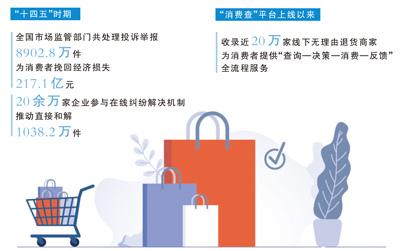
Core Insights - The article emphasizes the importance of optimizing the consumer environment to boost consumer confidence and stimulate economic vitality, which is crucial for high-quality economic development and ensuring a high-quality life [2] Group 1: Consumer Environment Optimization - Various local governments are actively exploring ways to enhance consumer convenience, comfort, and satisfaction, as highlighted by the central economic work conference's call for actions to boost consumption and expand the supply of quality goods and services [2] - The three-year action plan led by market regulatory departments aims to address prominent issues and create a trustworthy consumer environment [2] Group 2: Innovative Consumption Scenarios - In Nanjing, the integration of art and commerce at Deji Plaza has created a vibrant shopping atmosphere, attracting significant foot traffic and enhancing the consumer experience [3][4] - Deji Plaza aims to become a cultural and tourism destination by leveraging diverse exhibitions and activities, projecting sales of 26.2 billion yuan and attracting approximately 66 million visitors by 2025 [3] Group 3: Policy Support for Consumption - The Nanjing government has implemented measures to promote the development of first-store economies, offering financial incentives for commercial entities that attract high-profile brands [4] - Many commercial complexes in Nanjing are innovating consumption scenarios, such as Huacai Tiandi's eco-art theme and the integration of traditional culture with modern trends in the Laomendong area [4][5] Group 4: Cross-Regional Return Policies - The introduction of cross-regional no-reason return services in Chongqing and Sichuan enhances consumer convenience, with approximately 85% of products in Chongqing's department stores now eligible for this service [6][7] - The initiative has facilitated nearly 8,000 cross-regional returns in the past two years, reflecting a growing trend towards consumer-friendly policies [7] Group 5: Trustworthy Consumption Initiatives - In Huangshan, the "True No. 2 Price" initiative aims to enhance consumer trust by ensuring fair pricing and quality service, with a significant increase in customer satisfaction and a reduction in complaints [8][9] - The initiative has expanded across various sectors, with 178 businesses recognized as trustworthy, leading to a 20% increase in repurchase rates and a notable improvement in online ratings [9][10]
各地多措并举优化消费环境 让消费者舒心购无忧购
Ren Min Ri Bao· 2026-01-22 23:24
Group 1 - The core viewpoint emphasizes the importance of optimizing the consumer environment to boost consumer confidence and stimulate economic vitality, which is crucial for high-quality economic development and ensuring a high-quality life [1] - The Central Economic Work Conference highlighted the implementation of special actions to boost consumption and expand the supply of quality goods and services [1] - Various localities are actively exploring ways to enhance consumer convenience, comfort, and satisfaction through initiatives like the three-year action plan to optimize the consumer environment [1] Group 2 - In Nanjing, the integration of art and commerce is creating new consumer experiences, with over 200 first stores introduced in the past three years, enhancing the city's consumption vitality [3] - The Nanjing government has implemented measures to promote the development of first-store economies, offering rewards of up to 2 million yuan for commercial entities that attract first stores and flagship stores [3] - Commercial complexes in Nanjing are innovating consumer scenarios by combining traditional culture with modern experiences, such as immersive scenes and themed markets [3] Group 3 - The introduction of cross-regional no-reason return services in Sichuan and Chongqing is enhancing consumer convenience, allowing customers to return items purchased in one city at stores in another [4][5] - Approximately 85% of the product categories in Chongqing's department stores now offer no-reason cross-regional return services, with nearly 8,000 returns processed in the past two years [6] Group 4 - The "True No. 2 Price" initiative in Huangshan aims to enhance consumer trust by ensuring transparent pricing and fair treatment, leading to increased customer satisfaction and repeat purchases [7][8] - Huangshan has cultivated 178 "True No. 2 Price" stores, resulting in a 20% increase in repeat purchase rates and a 98.5% online positive review rate [8]
各地多措并举优化消费环境 让消费者舒心购无忧购(大数据观察)
Ren Min Ri Bao· 2026-01-22 22:05
Core Insights - The article emphasizes the importance of optimizing the consumer environment to boost consumer confidence and stimulate economic vitality, which is crucial for high-quality economic development and ensuring a high-quality life [1] Group 1: Consumer Environment Optimization - The central economic work conference highlighted the implementation of special actions to boost consumption and expand the supply of quality goods and services [1] - Various local governments are actively exploring ways to enhance consumer convenience, comfort, and satisfaction through a three-year action plan led by market regulatory departments [1] Group 2: Innovative Consumption Scenes - In Nanjing, the integration of art and commerce has created new consumption scenes, with over 200 first stores introduced in the past three years, enhancing consumer vitality [3] - The Nanjing government has implemented measures to promote the development of first-store economies, offering rewards of up to 2 million yuan for commercial entities that attract first stores and flagship stores [3] Group 3: Cross-Regional Return Policies - Chongqing has initiated a cross-regional no-reason return service, allowing consumers to return items purchased in Sichuan at stores in Chongqing, enhancing shopping convenience [4][5] - Approximately 85% of the product categories in Chongqing's department stores have committed to this no-reason return policy, facilitating nearly 8,000 cross-regional returns in the past two years [6] Group 4: Trustworthy Consumption Initiatives - In Huangshan, the "True No. 2 Price" initiative has been implemented to enhance consumer trust, with a focus on customer satisfaction leading to a 20% increase in repurchase rates [7][8] - The initiative has expanded across various sectors, with 178 stores recognized as trustworthy, resulting in a 50% decrease in quality complaints and a 20.8% reduction in price complaints [8]