
城市更新

Search documents
中国资源循环集团等在江苏新设城市更新公司
Zheng Quan Shi Bao Wang· 2025-12-02 06:24
人民财讯12月2日电,企查查APP显示,近日,中资环新源城市更新(江苏)有限公司成立,法定代表人为 李九辰,注册资本9000万元,经营范围包括建设工程施工、建设工程勘察、建设工程监理、资源再生利 用技术研发等。企查查股权穿透显示,该公司由中国资源循环集团新能源科技有限公司、江苏省环境资 源有限公司等共同持股。 ...
海陵:高质量推进城市更新,“文化古城”展新颜
Xin Hua Ri Bao· 2025-12-02 06:00
Core Viewpoint - The article highlights the efforts of Hailing District in Taizhou to preserve and revitalize its historical and cultural heritage while promoting urban renewal, aiming to create a modern, livable, and resilient ancient city that integrates tradition with contemporary life [1][2][3]. Group 1: Urban Renewal and Cultural Preservation - Hailing District adopts a "small-scale, incremental" approach to urban renewal, focusing on integrating historical and cultural preservation into urban development [2]. - The district has completed the restoration of 11 cultural heritage sites and established several memorial museums, enhancing public cultural spaces [2]. - A total of 126 old residential communities built before 2000 have undergone renovation, benefiting approximately 50,000 residents [3]. Group 2: Community Engagement and Innovative Mechanisms - Hailing District promotes community involvement in urban renewal through initiatives like the "street discussion system," encouraging residents to participate in the maintenance and improvement of their neighborhoods [2][8]. - The district has implemented a "micro-renewal" strategy, focusing on restoring building facades and enhancing the visual appeal of streets while maintaining their historical character [4]. - A unique long-term maintenance mechanism has been established, involving local businesses in maintaining cleanliness and order in the streets [8][9]. Group 3: Economic Development and Tourism - The revitalization of historical streets has led to the emergence of new commercial activities, attracting young consumers and boosting local employment [6][7]. - The "Ten Victory Street" has seen significant foot traffic, with over 800,000 visitors since its opening, creating more than 600 jobs [6]. - Hailing District is actively promoting cultural tourism by integrating historical sites with modern commercial offerings, enhancing the overall visitor experience [7][10].
中资环新源城市更新(江苏)有限公司成立
Zheng Quan Ri Bao Wang· 2025-12-01 13:17
Group 1 - The establishment of Zhongzi Huanxinyuan Urban Renewal (Jiangsu) Co., Ltd. has been reported, with a registered capital of 90 million yuan [1] - The company's business scope includes construction engineering, engineering surveying, engineering supervision, and research and development of resource recycling technology [1] - The shareholders of the company include China Resource Recycling Group New Energy Technology Co., Ltd., Jiangsu Environmental Resources Co., Ltd., and Jiangsu Energy Conservation and Environmental Protection New Industry Fund (Limited Partnership) [1]
稳中求进每月看|绘就笃行致远新图景——11月全国各地经济社会发展观察
Xin Hua She· 2025-12-01 01:16
Group 1: Agricultural Production - The autumn and winter planting season is crucial for agricultural production, with efforts focused on improving sowing technology to ensure a bountiful summer grain harvest next year [5][8] - As of November 20, over 95% of winter wheat has been sown nationwide, with significant advancements in precision agriculture technology being utilized [8] - Various regions are implementing measures to enhance planting quality and efficiency, such as using high-performance seeders and promoting mechanized planting techniques [7][8] Group 2: Consumer Market Trends - The consumer market is exhibiting new trends characterized by personalization, quality, and scenario-based consumption, driven by technological empowerment [11][14] - Innovative consumption models, such as drone delivery and automated transport, are being developed to enhance consumer experiences [13][14] - The government is promoting the cultivation of new consumption scenarios and enhancing supply-demand matching through various initiatives [11][14] Group 3: New Productive Forces - New productive forces are emerging as a core engine for developing new advantages and seizing future opportunities, with a focus on integrating technological and industrial innovation [16][19] - The World Internet Conference showcased advancements in AI and flexible production technologies, highlighting the role of technology in transforming traditional industries [18][19] - Various regions are actively fostering the development of new productive forces, with initiatives aimed at enhancing the digital economy and manufacturing services [18][19] Group 4: Urban Renewal - Urban renewal is a systematic project aimed at enhancing the quality of urban life, with a focus on human-centered approaches and meticulous execution [21][25] - Significant progress has been made in renovating old urban areas, with over 240,000 old residential communities upgraded during the 14th Five-Year Plan period [24][25] - Local governments are implementing tailored urban renewal projects to optimize urban structures and upgrade functionalities [24][25]

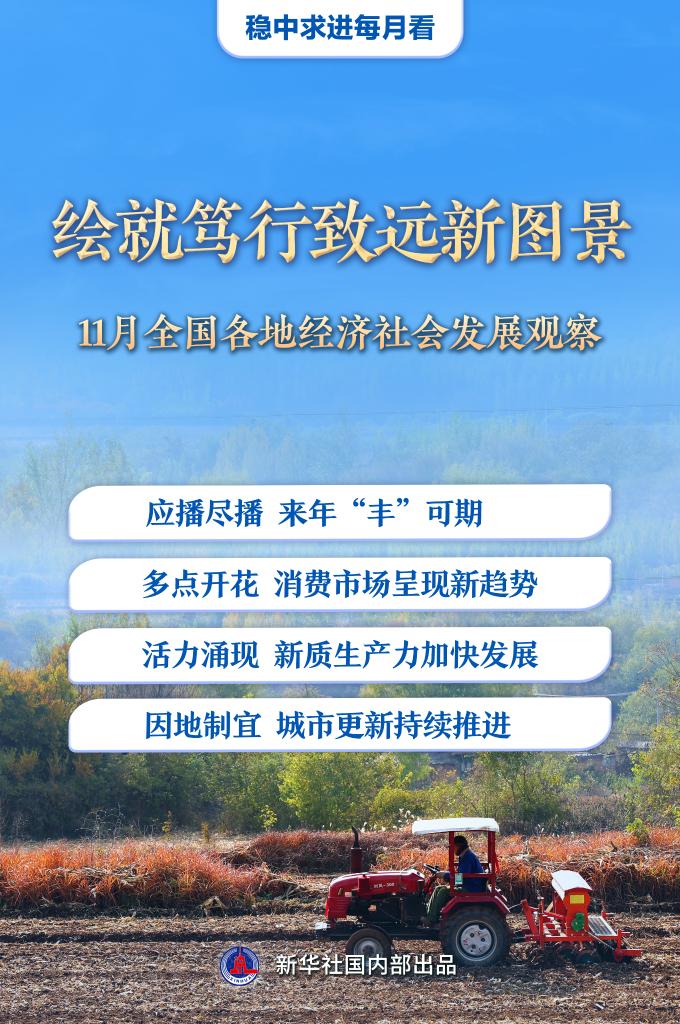
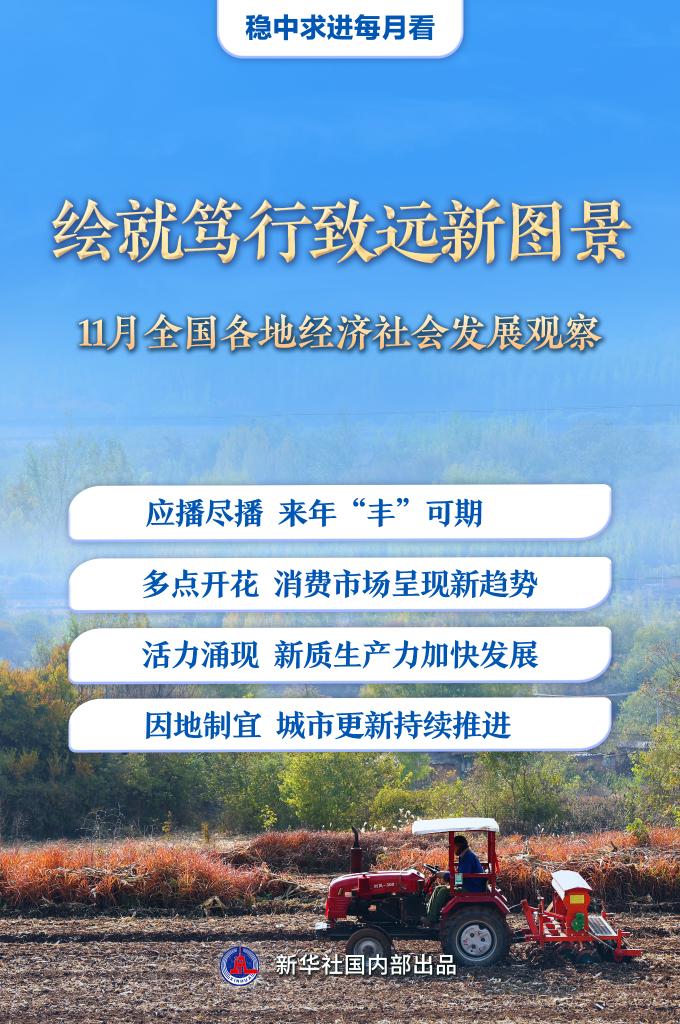
稳中求进每月看丨绘就笃行致远新图景——11月全国各地经济社会发展观察
Xin Hua Wang· 2025-11-30 09:45
Group 1: Agricultural Production - The autumn and winter planting season is crucial for agricultural production, with efforts focused on improving sowing technology to ensure a good harvest for summer grain next year [10][11]. - As of November 20, over 95% of the winter wheat has been sown nationwide, with significant advancements in technology such as high-performance precision sowing machines being utilized [11]. - Various regions are implementing measures to enhance sowing quality and efficiency, including the use of organic fertilizers and mechanized sowing techniques [10][11]. Group 2: Consumer Market Trends - The consumer market is evolving towards personalization, quality, and scenario-based consumption, driven by technology and innovative supply-demand matching [14][17]. - The government has initiated policies to enhance the adaptability of consumer goods supply and demand, focusing on new technologies and market scenarios [16][17]. - Platforms like Douyin and Taobao are leveraging AI and algorithm optimization to improve consumer experience and support local industries [16][17]. Group 3: New Productive Forces - New productive forces are recognized as a core engine for developing new advantages and seizing future opportunities, with a focus on integrating technological and industrial innovation [20][23]. - The World Internet Conference showcased advancements in AI and flexible production technologies, highlighting their role in transforming traditional industries [22]. - Various regions are actively promoting the development of new productive forces, with significant initiatives in manufacturing and digital economy [22][23]. Group 4: Urban Renewal - Urban renewal is a systematic project aimed at enhancing the quality of urban life, with a focus on human-centered approaches and meticulous execution [26][30]. - Significant progress has been made in renovating old urban areas, with over 240,000 old residential communities improved during the "14th Five-Year Plan" period [29][30]. - Local governments are implementing diverse urban renewal projects, addressing infrastructure and community management challenges through innovative solutions [29][30].
第八届城市更新大资管论坛在苏举行 名城集团获5个“年度最佳”
Su Zhou Ri Bao· 2025-11-29 00:35
Core Insights - The 2025 Urban Renewal Asset Management Forum was held in Suzhou, attended by over 200 experts, scholars, and industry leaders in the urban renewal field [1] - The forum, originally established in 2017, focuses on industry hot topics, publishes white papers, and evaluates outstanding cases annually [1] - Key themes discussed included "Anchoring '14th Five-Year Plan' to Expand Domestic Demand: Revitalizing Commercial Districts and Activating Consumption Potential" and "High-Quality Area Renewal's Three Evolutions" [1] Industry Highlights - The forum featured presentations from industry experts, including a talk by Sun Lifeng, Chairman of Suzhou Mingcheng Protection Group, on urban renewal practices in Suzhou [1] - Two sub-forums were organized, focusing on "Cultural Renewal of Cities and Quality Improvement of Assets" and "Value Return: Discovering the Future in Reality and Gaining True Knowledge through Action" [1] - The event recognized 70 projects and institutions across seven categories for annual excellence in urban renewal, with Suzhou Mingcheng Protection Group winning five awards [2]
探讨经济可持续的高质量城市更新发展,第八届城市更新大资管论坛在苏州开幕
Yang Zi Wan Bao Wang· 2025-11-28 15:17
Core Insights - The 2025 Urban Renewal Asset Management Forum was held in Suzhou, focusing on "sustainable and high-quality urban renewal development" with over 200 experts and industry leaders participating [1] - The forum, originally known as the "China Urban Renewal Forum," was established in 2017 by over 80 academic organizations and industry enterprises, serving as a non-profit platform for discussing industry trends and sharing best practices [1] - The "14th Five-Year Plan" emphasizes the need for significant urban renewal efforts to create modern, innovative, livable, beautiful, resilient, civilized, and smart cities [1] Group 1 - Sun Lifeng, Chairman of Suzhou Mingcheng Protection Group, presented a report on urban renewal practices in Suzhou, highlighting key projects such as Qianquan Street and Jincheng New Village, and promoting smart tourism and digital cultural innovation [2] - The forum recognized 70 projects and institutions across seven categories for their excellence in urban renewal, including best cultural city protection and best commercial street renewal [2] - The forum aims to integrate diverse resources, including policies and capital, to enhance urban renewal efforts and invites experts and scholars nationwide to contribute [2]
广州推出102个城市更新项目 总投资约8077亿元
Zhong Guo Xin Wen Wang· 2025-11-28 13:07
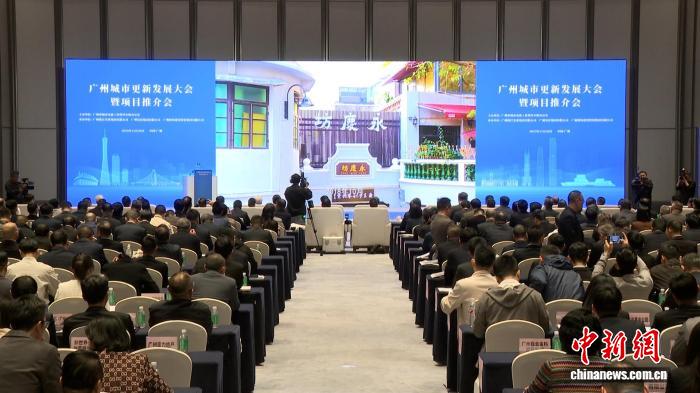
中新网广州11月28日电 (记者 许青青)广州城市更新发展大会暨项目推介会28日举行,会上一次性推出 102个城市更新项目,涵盖老旧小区改造、危旧房原拆原建、城中村改造、旧厂改造、历史文化保护、 基础设施升级等各种类型,总投资约8077亿元。 广州推出102个城市更新项目 总投资约8077亿元 大会还正式发布广州市城市更新专家咨询委员会特聘专家并为专家颁发聘书。 据悉,近年来,广州在城市更新政策机制、项目推进上持续突破取得丰硕成果,四个市级重点片区全部 动工,52个拆除新建类项目稳步推进,累计完成1257个老旧小区改造,惠及301万居民。(完) 来源:中国新闻网 编辑:王永乐 广告等商务合作,请点击这里 本文为转载内容,授权事宜请联系原著作权人 11月28日,广州城市更新发展大会暨项目推介会举行。广州市住房和城乡建设局供图 其中,在推进危旧住房原拆原建自主更新方面,重点推介得胜岗、应元路等8个项目,投资约18亿元; 在加强老旧小区整治改造方面,在海珠、荔湾、天河等区推出7个宜居改造项目,投资11亿元。在实施 老旧街区、老旧厂区、城中村更新改造方面,重点推介17个街区项目(662亿元)、20个旧厂房改造项目 ( ...
【学习贯彻四中全会精神在基层】天津:加快实施城市更新 让人民生活更有品质 山西太原:大力实施城市更新 办好民生实事
Yang Shi Wang· 2025-11-28 11:49
Group 1 - The core viewpoint of the articles emphasizes the importance of urban renewal as a means to enhance urban development and improve the quality of life for residents, as highlighted by the 20th Central Committee's Fourth Plenary Session [1] Group 2 - Tianjin has accelerated urban renewal efforts, transforming the former Tianjin First Machine Tool Factory site into a public park while retaining 22 old factory buildings, and has initiated 49 urban renewal projects during the 14th Five-Year Plan, benefiting approximately 530,000 households [2] - The city plans to establish urban renewal regulations, develop a specialized urban renewal plan, and enhance urban convenience living circles, while promoting cultural and tourism industries to empower urban renewal [2] Group 3 - In Shanxi's Taiyuan, significant urban renewal projects include the renovation of Tiancheng Road, which serves over 20,000 residents, and the completion of 125.8 kilometers of new and renovated urban roads during the 14th Five-Year Plan, impacting 545,000 households [3] - The city is also focusing on the renovation of 2,932 old residential communities and the creation of 240 pocket parks to enhance urban microspaces, while continuing to improve urban infrastructure and restore the urban ecosystem for high-quality development [3]
北京法源寺历史文化街区城市更新项目获亚洲金奖
Xin Jing Bao· 2025-11-28 02:15
2017年法源寺历史文化街区城市更新项目正式立项,2018年项目开始实施。作为法源寺历史文化街区城 市更新项目的运营方,宣房大德公司运用技术创新为老胡同"强身健体",让千年文脉在民生改善中焕发 新生。 作为亚洲城市更新领域的权威赛事,AURA亚洲城市更新奖始终以"挖掘革新典范,引领高质量发展"为 目标,聚焦那些对城市可持续发展、功能提升、生态改善、人文传承具有示范意义的优秀项目。国内外 150余家单位申报的近300个项目参与角逐,由27位专家从创新性、可持续性、社会价值等多维度进行严 格评审。 法源寺历史文化街区是北京市第二批历史文化保护区,位于西城区牛街街道,它由菜市口以西的胡同区 组成,其中包含南半截胡同、烂缦胡同等拥有明显历史痕迹与人文气息的老胡同,还包含了始建于唐代 的法源寺。会馆文化是这里的重要特点,胡同内的众多会馆遗址与老旧建筑是宣南文化的代表。 新京报讯 据"北京西城"微信公众号消息,近日,"2025年度AURA亚洲城市更新奖"获奖名单揭晓,北京 宣房大德置业投资有限公司(以下简称"宣房大德公司")申报的法源寺历史文化街区城市更新项目,以 卓越的遗产守护与创新活化实践,荣获2025年度AURA亚 ...