手术机器人

Search documents
数千万元!柳叶刀机器人完成A+轮融资
思宇MedTech· 2025-06-06 09:56
Core Insights - The article highlights the successful A+ round financing of Shenzhen Liuye Knife Robot Co., Ltd., which raised several tens of millions of yuan to enhance its position in the domestic surgical robot market [1][4] - The company has achieved comprehensive localization of surgical robots through independent research and development, making its products widely used in various hospitals, including grassroots and private specialty hospitals [4][11] - Liuye Knife Robot is one of the first Chinese surgical robot manufacturers to obtain FDA registration, actively expanding its overseas market presence with over 20 overseas order contracts [4][11] Company Overview - Liuye Knife Robot was established in 2018 and focuses on multiple surgical fields, including joint replacement, spinal surgery, oral implantation, neurosurgery, and vascular intervention [11] - The company has built a comprehensive product line of surgical robots, supported by a strong R&D team with backgrounds in engineering and clinical medicine [11] Product Development - The company has developed the Robpath AI hip replacement surgical robot system, which features advanced capabilities such as automatic identification and segmentation of oral tissues, intelligent surgical planning, and real-time adjustments during surgery [5][9][10] - The surgical robots are designed to enhance the efficiency and precision of operations, with capabilities such as sub-millimeter accuracy and dynamic calibration of implant positions [10][12] Upcoming Events - The article mentions several upcoming global medical technology conferences, including the first Global Aesthetic Technology Conference in June 2025 and the third Global Surgical Robot Conference in September 2025 [1][12]


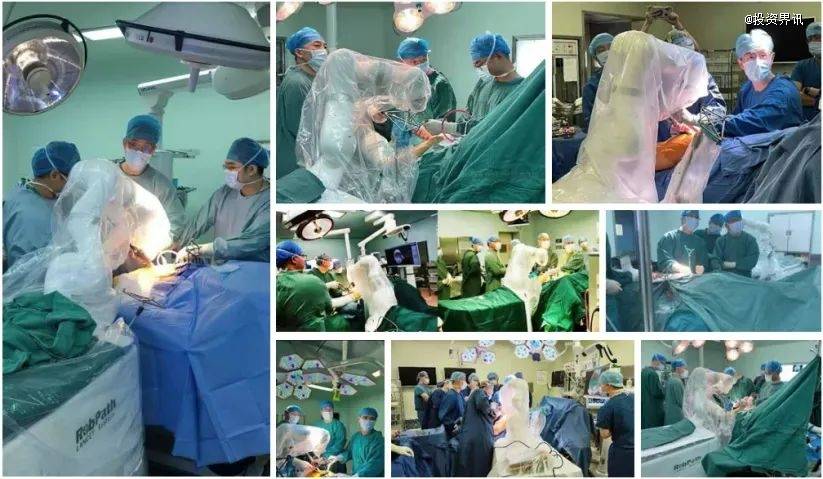
半年融两轮,柳叶刀机器人完成数千万元A+轮融资
Sou Hu Cai Jing· 2025-06-06 03:27
Core Insights - Shenzhen Liuyedao Robot Co., Ltd. has completed a multi-million yuan A+ round of financing led by Yuehu Fund, aimed at enhancing its position in the domestic surgical robot market [1] - The company focuses on providing comprehensive AI surgical robot solutions for medical institutions, having developed a complete product and service system covering multiple key clinical areas [2] - Liuyedao Robot has achieved 100% localization of core components, significantly reducing production costs and promoting the widespread adoption of high-end surgical robots in various healthcare settings [3] Company Developments - The company has obtained multiple medical device registrations, including five Class III medical device certificates and one FDA 510(k) registration, showcasing its strong regulatory compliance [2] - Liuyedao Robot's products are currently in use in dozens of hospitals, facilitating the accessibility of robotic-assisted surgeries in grassroots medical institutions [3] - The chairman expressed gratitude for the support from Yuehu Fund and emphasized the company's commitment to accelerating the registration and market introduction of its surgical robots [5] Technological Advancements - The company has made significant breakthroughs in core technologies, achieving full domestic production of surgical robot components, which has disrupted the market previously dominated by imported products [5] - The RobPath-THA robot has achieved a 96.6% accuracy rate in acetabular installation, setting a new industry standard [6] - Liuyedao Robot's non-closed platform design and its integrated business model of "equipment + consumables + services" have created a new paradigm for medical technology development [6] Market Positioning - Established in 2018, Liuyedao Robot is positioned in four key surgical fields: spine/trauma, joint replacement, oral implantation, and vascular intervention [7] - The company collaborates with renowned medical institutions to create a robust research and innovation platform, enhancing its capabilities in medical engineering integration [7] - The financing will support the company's expansion into global markets and the development of new products, reinforcing its status as an industry benchmark [5]

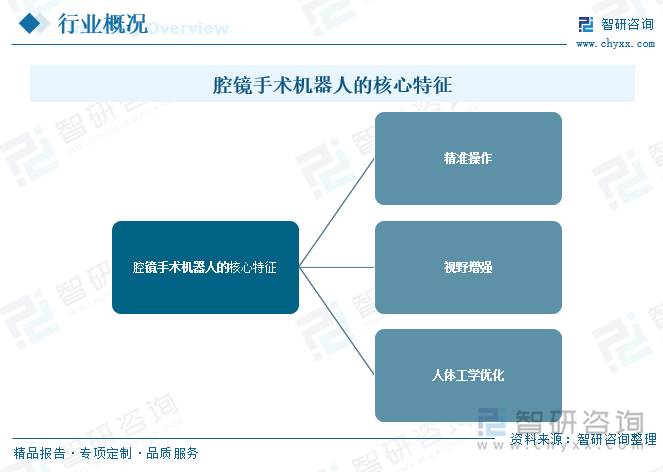
趋势研判!2025年中国腔镜手术机器人行业产业链、销量、国产化率、销售区域分布、竞争格局及行业发展趋势分析:国产替代将加速,行业正迎来高速发展期[图]
Chan Ye Xin Xi Wang· 2025-05-30 02:02
Core Viewpoint - The laparoscopic surgical robot market in China is experiencing rapid growth, driven by favorable policies and increasing domestic production, with sales expected to exceed 100 units in 2024, marking a 108.51% increase from 2023 [1][6][8]. Group 1: Industry Definition - Laparoscopic surgical robots are intelligent medical devices that assist surgeons in performing complex minimally invasive surgeries through coordinated operation of robotic arms, 3D imaging systems, and control consoles [2][4]. Group 2: Current Industry Development - The technology of laparoscopic surgical robots represents the highest form of minimally invasive surgery, significantly enhancing the capabilities of surgeons [4]. - The national planning for large medical equipment has led to the addition of 225 laparoscopic surgical robots from 2018 to 2020, with an additional 559 planned for the 14th Five-Year Plan [4]. Group 3: Market Growth and Trends - The sales of laparoscopic surgical robots in China are projected to surpass 100 units in 2024, with an expected increase to over 200 units in 2025 [6][8]. - The domestic market's localization rate is anticipated to rise from 32.61% in 2023 to 48.89% in 2024, approaching parity with imported brands [8]. Group 4: Competitive Landscape - The competitive landscape is shifting from a monopoly by the Da Vinci system to a more fragmented market with several domestic players, including Weigao, MicroPort, and Intuitive Surgical [12][13]. - The market concentration ratio (CR4) for major players is expected to reach 94% in 2024, indicating a highly competitive environment [12]. Group 5: Key Companies - Major companies in the market include Intuitive Surgical, MicroPort, and several domestic manufacturers such as Weigao and Shenzhen Jingfeng Medical Technology [2][15][18]. - MicroPort reported a revenue of 277.79 million HKD in 2024, reflecting a significant increase from the previous year [18]. Group 6: Future Industry Trends - The industry is expected to transition from high-end luxury products to clinical tools accessible to a broader range of healthcare providers, driven by technological advancements and policy support [20].
报名!第三届全球手术机器人大会
思宇MedTech· 2025-05-23 11:19
Core Viewpoint - The third Global Medical Robotics Conference is scheduled for September 4-5, 2025, in Beijing, focusing on commercialization, international expansion, and the intersection of medical and engineering fields in the surgical robotics industry [1][2]. Group 1: Event Overview - The event will feature a variety of sessions, including discussions on the commercialization of surgical robots, global market expansion, and best practices in the industry [2][3]. - The conference will also include an awards ceremony recognizing outstanding contributions in the surgical robotics field [1][3]. Group 2: Key Topics and Discussions - The agenda includes topics such as the commercialization path for surgical robots, hospital procurement decision-making, and strategies for financing during economic downturns [3]. - There will be a focus on how AI can enhance the commercialization success of surgical robots and the importance of building a brand recognized by doctors [3]. Group 3: Market Opportunities and Challenges - The conference will address how to successfully enter the European and American markets, as well as opportunities in emerging markets like Southeast Asia, the Middle East, and Latin America [7]. - Discussions will also cover the acceleration of international certifications (FDA/CE/NMPA) and finding suitable commercial partners abroad [7]. Group 4: Technological and Research Frontiers - The event will explore next-generation surgical robot technologies, remote surgery, and the role of clinical doctors in the development of surgical robots [7]. - Topics will include optimizing human-machine interaction and utilizing real-world data (RWD) to accelerate clinical applications of surgical robots [7]. Group 5: Supply Chain and Ecosystem Development - The conference will discuss the construction of a sustainable business model for surgical robots and the importance of supply chain development in the industry [5][7]. - There will be comparisons of domestic and international supply chains and collaboration models to enhance the surgical robotics ecosystem [7].

报名!第三届全球手术机器人大会
思宇MedTech· 2025-05-16 11:41
Core Insights - The third Global Medical Robotics Conference is scheduled for September 3-5, 2025, in Beijing, focusing on commercialization, international expansion, and the intersection of medical and engineering fields [1][2]. Group 1: Event Overview - The conference will feature a variety of sessions, including discussions on the commercialization of surgical robots and strategies for entering international markets [2][3]. - A report titled "Global Surgical Robot Industry Report 2025" will be released during the event [3]. - The event will include an awards ceremony recognizing achievements in the surgical robotics industry [1][3]. Group 2: Key Topics of Discussion - The agenda includes topics such as the path to commercialization for surgical robots, hospital procurement processes, and financing strategies during economic downturns [3]. - There will be a focus on how AI can enhance the commercialization success of surgical robots and the importance of building a brand recognized by doctors [3][7]. - Discussions will also cover the entry of surgical robots into day surgery and grassroots markets, as well as sustainable business models for the industry [3][7]. Group 3: Market Expansion and Innovation - The conference will address how to successfully enter the European and American markets, as well as opportunities in emerging markets like Southeast Asia, the Middle East, and Latin America [7]. - Topics will include accelerating international certifications and finding suitable commercial partners abroad [7]. - The future of remote surgery and the role of clinical doctors in the development of surgical robots will also be explored [7]. Group 4: Supply Chain and Ecosystem Development - The event will discuss the construction of a sustainable ecosystem for surgical robots, including supply chain comparisons and cooperation models between domestic and international players [5][7]. - There will be a focus on how to optimize human-machine interaction and the importance of real-world data in accelerating clinical applications [7]. - The development trends of surgical robots in specialized fields such as urology, neurosurgery, and orthopedics will be highlighted [7].

最新!直觉医疗换帅
思宇MedTech· 2025-05-16 10:27
Core Viewpoint - The article discusses the leadership transition at Intuitive Surgical, highlighting the achievements of outgoing CEO Gary Guthart and the incoming CEO Dave Rosa, while also addressing the company's evolution and future challenges in the medical robotics industry [2][5][7]. Group 1: Leadership Transition - Gary Guthart has served as CEO of Intuitive Surgical since 2002, leading the company from an annual revenue of less than $100 million to $8.35 billion in 2024 [2][5]. - Dave Rosa, who joined the company in 1996 and has held various key positions, will take over as CEO on July 1, 2025, marking a natural succession in leadership [6][7]. Group 2: Company Evolution - Under Guthart's leadership, Intuitive Surgical expanded its product offerings, market reach, and business model, establishing a comprehensive ecosystem that includes devices, consumables, and services [4][5]. - The company has installed over 10,000 surgical systems globally and has performed more than 17 million surgeries to date [5]. Group 3: Future Challenges - The leadership change occurs as Intuitive Surgical faces a new cycle characterized by increased competition in the medical robotics field, slower procedure expansion, stricter regulations, and heightened efficiency demands [7]. - Analysts suggest that Rosa's extensive product experience and systemic understanding will help maintain strategic coherence and enhance organizational efficiency in the face of these challenges [7].


威海|威海以科技创新引领新质生产力发展
Da Zhong Ri Bao· 2025-05-16 01:13
Core Viewpoint - Weihai is leveraging technological innovation to enhance the development of new quality productivity while upgrading traditional industries and expanding emerging sectors [1][2]. Group 1: High-tech Industry Development - In the previous year, Weihai's high-tech industry output value accounted for 73.47% of the total, maintaining the top position in the province [2]. - The city has implemented an innovation-driven development strategy, enhancing the effectiveness of its technological innovation system and promoting deep integration of technological and industrial innovation [2]. Group 2: Traditional Industries - Traditional industries such as shipbuilding, textiles, and tire manufacturing play a crucial role in Weihai's economic development, serving as a foundation for new industries and quality productivity [4]. - The launch of the digital green smart factory project by China Merchants Industry in Weihai marks a significant advancement in the shipbuilding sector, with a total contract value of 15 billion yuan and production plans extending to 2028 [3]. Group 3: New Quality Productivity - Weihai is focusing on both consolidating traditional industries and fostering new ones, with significant advancements in the carbon fiber and composite materials sector led by Guangwei Group [5]. - The carbon fiber industry park in Weihai has attracted over 40 projects, forming a complete industrial chain that extends into high-end civilian fields [5]. Group 4: Strategic Emerging Industries - Weihai has established four provincial-level strategic emerging industry clusters, including new generation information technology and high-end equipment for offshore wind power [6]. - The city is actively enhancing its industrial clusters through innovation chain deployment and increasing financial support for technological innovation [6]. Group 5: Future Industry Planning - Weihai is proactively planning for future industries, focusing on life sciences and artificial intelligence, with specific attention to unmanned equipment manufacturing and industrial internet [8]. - The city aims to develop a smart manufacturing base for unmanned equipment and promote differentiated development across five digital economy parks [8].
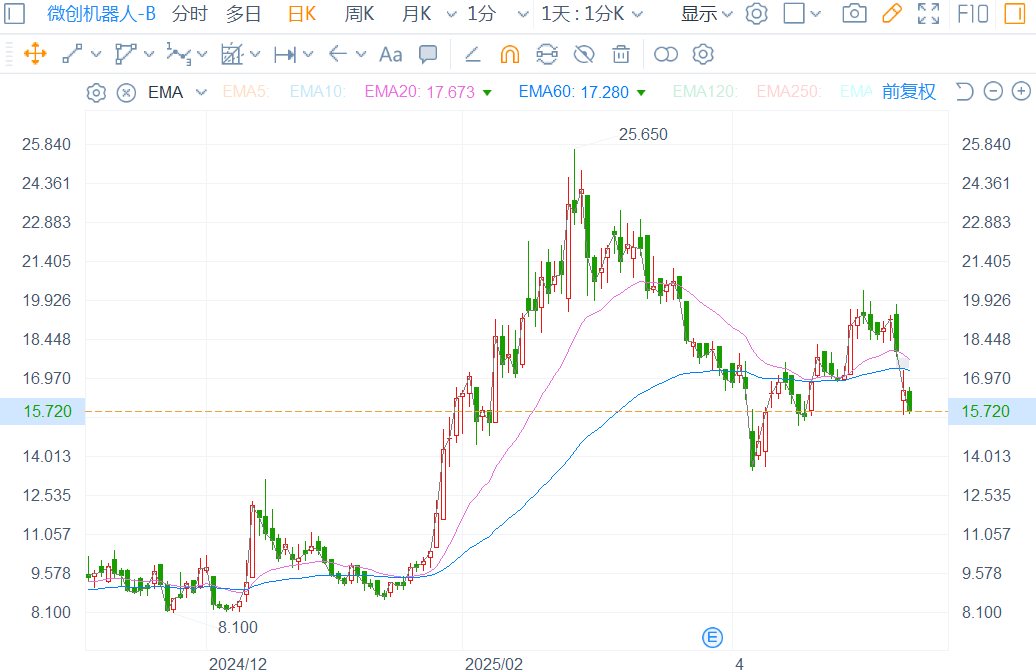
宣布折让13.8%配股+控股股东减持,微创机器人-B(02252)为何“流血式融资”?
智通财经网· 2025-05-15 11:16
Core Viewpoint - The recent announcement of a discounted placement by MicroPort Robotics has raised concerns about the company's financial health and investor confidence, highlighting ongoing cash flow challenges despite strong revenue growth [1][3]. Company Summary - MicroPort Robotics announced the placement of 25.1365 million new H-shares at HKD 15.5 per share, a discount of approximately 13.79% from the previous closing price, raising about HKD 382 million [1]. - The company's major shareholder, Shanghai Mocha Artificial Intelligence Technology, also sold 30.16 million shares at the same price, reducing its stake from 48.08% to 43.98%, resulting in a total dilution of approximately 2.44% [1]. - Following the announcement, the stock price dropped by 8.12% and 4.84% on May 14 and 15, respectively, with the current stock price at HKD 15.72 and a total market capitalization of HKD 15.817 billion [2]. Financial Performance - In 2024, MicroPort Robotics reported total revenue of CNY 257 million, a year-on-year increase of 145.95%, driven by strong sales in domestic and international markets [4]. - Despite revenue growth, the company has faced significant losses, with net losses of CNY 1.14 billion, CNY 1.012 billion, and CNY 642 million from 2022 to 2024, totaling CNY 2.794 billion in cumulative losses [4]. - The company's R&D expenses were CNY 569 million and CNY 309 million for 2023 and 2024, respectively, indicating high investment levels that have impacted profit margins [5]. Asset and Liability Structure - As of December 31, 2024, MicroPort Robotics had total assets of CNY 1.279 billion and total liabilities of CNY 1.021 billion, with a debt-to-asset ratio of 80%, up from 65% in 2023 [6]. - The company reported a net cash outflow from operating activities of CNY 298 million, with cash and cash equivalents totaling CNY 612 million, indicating limited liquidity [6]. Industry Context - The domestic surgical robot market is experiencing rapid growth, with a projected market size of approximately CNY 9.59 billion in 2024 and a compound annual growth rate of 34.5% over the past five years [9]. - The market is characterized by increasing competition and technological gaps, with the Da Vinci surgical robot currently dominating the market, holding a 46.9% share, which has decreased by 16.3 percentage points year-on-year [10]. - The industry faces challenges such as high R&D costs, reliance on imported core components, and slow commercialization efficiency, which complicate the path to profitability for companies like MicroPort Robotics [11].
手术量超11万例行业断层领先,天智航先发优势持续扩大
Zhong Guo Chan Ye Jing Ji Xin Xi Wang· 2025-04-29 07:11
Core Viewpoint - Tianzhihang, a leading domestic surgical robot company, reported a narrowing loss in 2024 and a significant revenue growth of 102.40% in Q1 2025, indicating a recovery in the surgical robot market driven by increasing surgical volumes and optimized revenue structure [1][2][3]. Financial Performance - In 2024, Tianzhihang achieved operating revenue of 179 million yuan, with a net profit loss of 121 million yuan, a 22.54% improvement from a loss of 156 million yuan in 2023 [2]. - The company reported a revenue of 58.58 million yuan in Q1 2025, up from 28.94 million yuan in the same period of 2024, marking a year-on-year growth of over 102.40% [2]. Surgical Application Growth - The Tianji orthopedic surgical robot completed over 39,000 surgeries in 2024, a 62.5% increase from over 24,000 surgeries in 2023 [3]. - By the end of Q1 2025, the cumulative surgical volume exceeded 110,000 cases, reflecting a steady market demand [3]. Revenue Structure Optimization - Revenue from supporting equipment and consumables reached 54.86 million yuan in 2024, a year-on-year increase of 28.52%, while technical service revenue was 42.96 million yuan, up 104.26% [3]. - The proportion of these two revenue streams increased from approximately 30% in 2023 to 54.7% in 2024, indicating a shift towards more stable and recurring income sources [3]. Industry Landscape - The surgical robot industry is recognized as a key sector in smart healthcare, with a projected global market size of 63.12 billion USD by 2030 and a potential market size of 70.85 billion yuan in China, with a compound annual growth rate exceeding 30% [4]. - As of the end of 2024, 64 companies had 115 surgical robot products approved in China, with orthopedic surgical robots accounting for 47% of the total, indicating intense competition [4]. Product Development and Innovation - Tianzhihang has established a product development framework of "pre-research generation, conversion generation, and上市 generation," enhancing its continuous innovation capability [6]. - The company has expanded its orthopedic surgical robot product line to cover major orthopedic procedures, including total hip and knee replacements, reflecting progress in product platform development [6]. Market Expansion and Strategy - Tianzhihang has maintained its leading market share in the domestic orthopedic surgical robot market and has received CE certification for its orthopedic navigation systems, facilitating overseas market expansion [7]. - The company is implementing differentiated pricing strategies to cater to various levels of medical institutions, enhancing its adaptability in the market [7].

最新公布:10.3万亿元!
21世纪经济报道· 2025-04-14 02:48
Core Viewpoint - In the first quarter of this year, China's foreign trade showed resilience with a total import and export value of 10.3 trillion yuan, reflecting a growth of 1.3% despite external challenges [1] Group 1: Export Performance - China's export scale exceeded 6 trillion yuan in the first quarter, achieving a rapid growth of 6.9%, demonstrating strong resilience under pressure [1] - Exports to over 170 countries and regions increased, with significant growth in high-end, intelligent, and green manufacturing sectors [1] - Notable export growth was observed in shipbuilding and marine engineering equipment (10.8%) and specialized equipment (16.2%) [1] - Renewable energy products played a crucial role in global green transformation, with exports of wind turbines (43.2%), lithium batteries (18.8%), and electric vehicles (8.2%) showing substantial increases [1] Group 2: Import Performance - Domestic industrial production growth led to increased imports of components and equipment, with automatic data processing equipment parts and marine engineering equipment growing by 95.6% and 52.5% respectively [2] - The consumer market remained stable, with imports of edible oils increasing by 12.1% and fresh and dried fruits rising by 8.3% [2] - Private enterprises accounted for 5.85 trillion yuan in imports and exports, growing by 5.8% and representing 56.8% of the total [2] - Private enterprises achieved record high exports of high-tech products, nearing 1 trillion yuan, with industrial robots (67.4%) and high-end machine tools (16.4%) showing significant growth [2] Group 3: Foreign Investment and Trade Relations - Foreign-invested enterprises accounted for about one-third of China's foreign trade over the past five years, with over 67,000 foreign enterprises engaged in import and export activities in the first quarter, marking a three-year high [3] - Trade with the EU reached 1.3 trillion yuan, growing by 1.4%, highlighting the strong economic complementarity and intertwined interests between China and the EU [3] - ASEAN remained China's largest trading partner, with trade volume of 1.71 trillion yuan, growing by 7.1%, and its share of China's overall foreign trade increasing to 16.6% [3] - Trade with Belt and Road Initiative countries reached 5.26 trillion yuan, growing by 2.2%, and its share of China's overall foreign trade rose to 51.1% [3]