船舶和海洋工程装备

Search documents
习近平:推动海洋经济高质量发展
国家能源局· 2026-03-15 09:29
Core Viewpoint - The article emphasizes the importance of high-quality development of the marine economy in China, highlighting the need for innovation, collaboration, and sustainable practices to strengthen the country's maritime capabilities and economic growth [3][5]. Summary by Sections Historical Context - China's maritime economic development has a long history, dating back to the pre-Qin period with salt production and flourishing during the Tang and Song dynasties through the Maritime Silk Road. The establishment of the People's Republic of China marked a systematic approach to marine resource utilization, with significant acceleration post-reform and opening up [3]. Current Economic Scale - By 2024, China's marine economy is projected to reach 10.5 trillion yuan, more than doubling since 2012, accounting for 7.8% of the national GDP. The country has made significant advancements in shipbuilding and marine industries, ranking globally in marine fisheries and offshore wind power [3]. Strategic Development Goals - The article outlines six key areas for enhancing marine economic development: 1. **Top-Level Design and Policy Support**: Formulating guidelines and plans to boost marine economic growth, with increased support for industries and technologies [6]. 2. **Enhancing Marine Technology Innovation**: Strengthening strategic marine technology capabilities and fostering leading marine tech enterprises [6]. 3. **Strengthening Marine Industries**: Conducting comprehensive marine surveys and promoting sustainable development in various marine sectors, including energy and biotechnology [8]. 4. **Integrated Planning of Coastal Areas**: Optimizing port operations and supporting green and digital transformations of key ports [8]. 5. **Marine Ecological Protection**: Implementing measures for marine environmental risk prevention and promoting sustainable coastal development [8]. 6. **Global Marine Governance Participation**: Engaging in international marine research and cooperation, particularly along the Belt and Road Initiative [9].


习近平:推动海洋经济高质量发展
财联社· 2026-03-15 07:17
Core Viewpoint - The article emphasizes the importance of high-quality development of the marine economy in China, highlighting the need for innovation, collaboration, and sustainable practices to enhance marine resource utilization and protect marine ecosystems [1][2]. Group 1: Strategic Focus Areas - The article outlines a strategic focus on innovation-driven development, urging breakthroughs in key technologies and promoting self-reliance in marine science and technology [1]. - It stresses the importance of coordinated development between land and sea, advocating for a synergistic approach to enhance overall growth [1]. - The need for upgrading traditional marine industries and fostering emerging marine industries is highlighted, aiming to build a modern marine industrial system [1]. - The article calls for a harmonious relationship between humans and the sea, emphasizing sustainable development and ecological protection [1]. - It advocates for active participation in global marine governance to ensure peaceful utilization of marine resources while safeguarding national sovereignty [1]. Group 2: Specific Action Areas - The article identifies six key areas for action: 1. Strengthening top-level design and policy support, including the formulation of the "14th Five-Year" marine economic development plan and encouraging social capital participation [2]. 2. Enhancing independent innovation capabilities in marine technology by fostering leading enterprises and specialized small and medium-sized enterprises [2]. 3. Promoting the growth and optimization of marine industries, including offshore wind power, modern deep-sea fishing, marine biomedicine, and digital marine initiatives [2]. 4. Improving overall planning for major bays and supporting the green and digital transformation of key ports [2]. 5. Strengthening marine ecological environment protection through risk prevention and comprehensive management of key sea areas [2]. 6. Deepening participation in global marine governance, including international cooperation in marine research and the establishment of the "Belt and Road" international port alliance [2].

向新而行|中国制造 更加“亮丽”
Yang Shi Wang· 2026-01-28 02:07
Group 1 - The core viewpoint of the article highlights the accelerated development of emerging industries in China, including new energy vehicles, photovoltaics, low-altitude equipment, and marine engineering equipment, enhancing the country's manufacturing reputation [2] - The Chinese government emphasizes the need for high-end, intelligent, and green development in the manufacturing sector, as stated by President Xi Jinping [2] - By 2025, the export scale of the "new three items" is expected to approach 1.3 trillion yuan, showcasing the growing prominence of Chinese manufacturing on the global stage [2]
向新而行丨中国制造 更加“亮丽”
Yang Shi Wang· 2026-01-28 01:56
Group 1 - The core viewpoint of the article highlights the accelerated development of emerging industries such as new energy vehicles, photovoltaics, low-altitude equipment, and marine engineering during the "14th Five-Year Plan" period, enhancing the reputation of Chinese manufacturing [1] - President Xi Jinping has emphasized the need to promote the high-end, intelligent, and green development of the manufacturing industry, guiding the nation towards advancing new industrialization [1] - By 2025, the export scale of the "new three items" is expected to approach 1.3 trillion yuan, showcasing the growing global prominence of Chinese manufacturing [1]
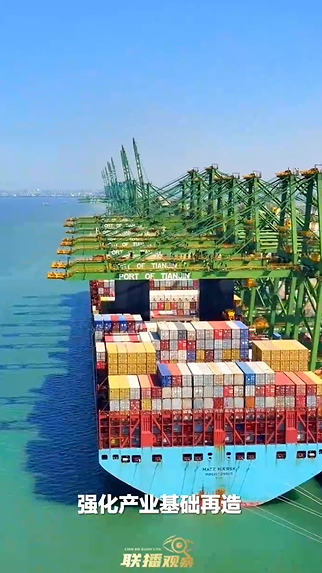
优势产业“强筋健骨”脱颖而出 供需两端发力打造新支柱产业为经济注入新动能
Yang Shi Wang· 2026-01-22 04:20
Group 1 - The core viewpoint is that the Ministry of Industry and Information Technology will implement actions to develop and strengthen emerging industries during the "14th Five-Year Plan" period [1] - A number of competitive industries such as new energy vehicles, photovoltaics, low-altitude equipment, and marine engineering equipment have accelerated their development [5] - The added value of industries like integrated circuits and electronic materials increased by 26.7% and 23.9% year-on-year, respectively, while industrial robot production rose by 28% and new energy vehicle sales reached 16.49 million units, up 28.2% year-on-year [9] Group 2 - The Ministry will implement actions to create national demonstration bases for emerging industry development and accelerate the cultivation of new pillar industries [13] - Future industry initiatives will include the implementation of strategic major technology projects and the establishment of future industry pilot zones, supported by increased government investment [17]
海关总署:前三季度我国出口高技术产品3.75万亿元
Zhong Guo Xin Wen Wang· 2025-10-13 05:59
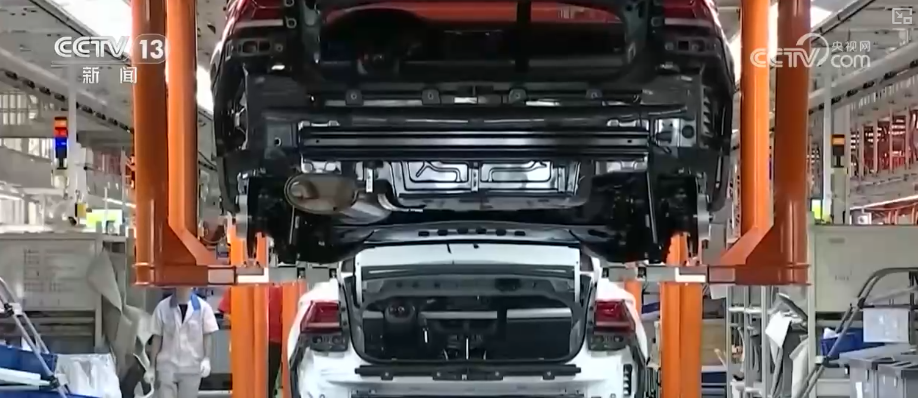
Core Points - The core viewpoint of the article highlights the significant growth in China's high-tech product exports, which reached 3.75 trillion yuan in the first three quarters of 2023, marking an increase of 11.9% compared to the previous year [1] Group 1: Export Performance - In the first three quarters, China's export of high-tech products amounted to 3.75 trillion yuan, contributing over 30% to the overall export growth [1] - The export of ships and marine engineering equipment saw a remarkable increase of 25.5% [1] Group 2: Brand Development - The share of domestic brands in the export of electric vehicles and agricultural machinery has increased significantly, reaching 59.5% and 40.2% respectively in the first three quarters of this year [1] - This increase in domestic brand share reflects the impact of technological innovation on brand development [1]
“十四五”新型工业化攀高向优、“新”潮澎湃
Yang Guang Wang· 2025-09-10 07:05
Core Insights - The new industrialization in China has achieved historic accomplishments since the 14th Five-Year Plan, emphasizing the importance of innovation, optimized industrial structure, and the rise of competitive industries [1][3] Group 1: Industrial Development - China has transitioned from "having" industries to "having good" industries, focusing on quality and innovation [1] - In 2024, 18 traditional manufacturing companies from China will be included in the World Brand 500, indicating the rapid rise of domestic brands [1] - Key industries such as new energy vehicles, photovoltaics, and lithium batteries are gaining international competitiveness [1] Group 2: Technological Innovation - The integration of 5G, artificial intelligence, and industrial internet is transforming industrial production methods [2] - Over 20,000 "5G + industrial internet" projects have been established, leading to new operational models like "unmanned mines" and "smart ports" [2] - More than 340 influential industrial internet platforms have been built in China, enhancing production efficiency [2] Group 3: Green Transformation - The green and low-carbon development of industries is a practical application of the "Two Mountains" concept [3] - The share of renewable energy generation capacity has increased by 20 percentage points during the 14th Five-Year Plan [3] - The promotion of green products such as electric vehicles and green building materials is becoming widespread [3] Group 4: Future Outlook - The path of new industrialization in China is filled with opportunities and challenges, including the need for key technology breakthroughs and structural optimization [3] - The commitment to innovation, digital empowerment, and green development is crucial for seizing opportunities in the new industrialization wave [3] - This transformation is expected to reshape China's industrial landscape and inject new vitality into the global economy [3]
海关总署:“天塌不下来”!
Xin Jing Bao· 2025-04-14 03:48
Group 1: Export Performance - In the first quarter, China's export scale exceeded 6 trillion yuan, achieving a growth rate of 6.9%, demonstrating strong resilience under pressure [1] - China's exports to over 170 countries and regions experienced growth, with notable increases of 7.8% and 12.5% to Asia and Africa respectively [1] - The export of high-end, intelligent, and green products is robust, with specific growth rates of 10.8% for shipbuilding and marine engineering equipment, and 16.2% for specialized equipment [1] Group 2: Market Demand and Innovation - Global manufacturing PMI averaged 49.9% in the first quarter, indicating an expansion in manufacturing in Asia and Africa, which positively impacted China's export demand [1] - The "small order quick response" model in traditional industries has significantly improved international competitiveness, reducing delivery times from one month to less than one week [2] - Domestic innovation in industries has led to the emergence of popular Chinese products gaining recognition globally, with double-digit growth in exports of sports goods to the EU and cosmetics to Southeast Asia [2] Group 3: Trade Relations and Challenges - Despite escalating trade tensions, bilateral trade between China and the U.S. grew by 4% in the first quarter, reaching 1.11 trillion yuan [3] - The Chinese government emphasizes that the essence of Sino-U.S. trade relations is mutually beneficial, countering U.S. tariffs as detrimental to global trade [3][4] - China is committed to implementing necessary countermeasures against U.S. tariffs to protect its economic interests and uphold international trade rules [6]
最新公布:10.3万亿元!
21世纪经济报道· 2025-04-14 02:48
Core Viewpoint - In the first quarter of this year, China's foreign trade showed resilience with a total import and export value of 10.3 trillion yuan, reflecting a growth of 1.3% despite external challenges [1] Group 1: Export Performance - China's export scale exceeded 6 trillion yuan in the first quarter, achieving a rapid growth of 6.9%, demonstrating strong resilience under pressure [1] - Exports to over 170 countries and regions increased, with significant growth in high-end, intelligent, and green manufacturing sectors [1] - Notable export growth was observed in shipbuilding and marine engineering equipment (10.8%) and specialized equipment (16.2%) [1] - Renewable energy products played a crucial role in global green transformation, with exports of wind turbines (43.2%), lithium batteries (18.8%), and electric vehicles (8.2%) showing substantial increases [1] Group 2: Import Performance - Domestic industrial production growth led to increased imports of components and equipment, with automatic data processing equipment parts and marine engineering equipment growing by 95.6% and 52.5% respectively [2] - The consumer market remained stable, with imports of edible oils increasing by 12.1% and fresh and dried fruits rising by 8.3% [2] - Private enterprises accounted for 5.85 trillion yuan in imports and exports, growing by 5.8% and representing 56.8% of the total [2] - Private enterprises achieved record high exports of high-tech products, nearing 1 trillion yuan, with industrial robots (67.4%) and high-end machine tools (16.4%) showing significant growth [2] Group 3: Foreign Investment and Trade Relations - Foreign-invested enterprises accounted for about one-third of China's foreign trade over the past five years, with over 67,000 foreign enterprises engaged in import and export activities in the first quarter, marking a three-year high [3] - Trade with the EU reached 1.3 trillion yuan, growing by 1.4%, highlighting the strong economic complementarity and intertwined interests between China and the EU [3] - ASEAN remained China's largest trading partner, with trade volume of 1.71 trillion yuan, growing by 7.1%, and its share of China's overall foreign trade increasing to 16.6% [3] - Trade with Belt and Road Initiative countries reached 5.26 trillion yuan, growing by 2.2%, and its share of China's overall foreign trade rose to 51.1% [3]

刚刚!海关总署,重磅发声!
券商中国· 2025-04-14 02:48
Core Viewpoint - In the first quarter of 2025, China's foreign trade showed resilience with a total import and export value of 10.3 trillion yuan, marking a 1.3% increase year-on-year, despite external challenges [2][3]. Trade Performance - Exports reached 6.13 trillion yuan, up 6.9%, while imports fell to 4.17 trillion yuan, down 6% [2]. - Monthly growth trends indicated a recovery, with March seeing a 6% increase after a decline of 2.2% in January and stability in February [2]. - Key export categories included shipbuilding and marine engineering equipment, which grew by 10.8% and 16.2%, respectively, alongside significant increases in renewable energy products such as wind turbines (43.2%) and lithium batteries (18.8%) [2]. Private Sector and High-Tech Products - Private enterprises accounted for 5.85 trillion yuan in imports and exports, a 5.8% increase, representing 56.8% of total trade [3]. - High-tech product exports reached nearly 1 trillion yuan, with industrial robots increasing by 67.4% and high-end machine tools by 16.4% [3]. - Foreign-invested enterprises also showed growth, with a total import and export value of 2.99 trillion yuan, up 0.4% [3]. Regional Trade Dynamics - Trade with ASEAN countries reached 1.71 trillion yuan, growing by 7.1%, solidifying ASEAN's position as China's largest trading partner [3]. - Trade with EU countries increased by 1.4%, totaling 1.3 trillion yuan, highlighting the strong economic ties between China and Europe [3]. Belt and Road Initiative - Trade with countries involved in the Belt and Road Initiative reached 5.26 trillion yuan, a 2.2% increase, accounting for 51.1% of China's total foreign trade [4]. Response to External Challenges - The Chinese government is implementing necessary countermeasures against U.S. tariffs to protect its trade interests and uphold international trade rules [5]. - The focus remains on enhancing the business environment for foreign investments, with a commitment to high-level opening-up and mutual cooperation [6]. Future Cooperation and Market Diversification - The negotiation of the China-ASEAN Free Trade Area 3.0 has been substantially completed, aiming to enhance cooperation in digital and green economies [8]. - The diversification of markets and deepening of supply chain cooperation are seen as key strategies to bolster resilience against external uncertainties [7]. AEO Certification Impact - In the first quarter, private enterprises with AEO certification saw export and import growth of 8.6% and 8.5%, respectively, outperforming the overall growth rates for private enterprises [8].