铁路运输

Search documents
12306购票页面有“暗号”,都是什么意思?
Xin Lang Cai Jing· 2026-01-25 13:04
Group 1 - The 2026 Spring Festival train tickets are now on sale, with specific keywords like "snow," "pet," "quiet," and "bed" indicating special services for certain train routes [1] - "Snow" indicates train services that provide "snow equipment convenience" starting from January 15, allowing passengers to carry snow gear with a service fee of 98 yuan per set [3] - "Pet" signifies trains that offer pet transportation services, allowing passengers to transport up to two healthy domestic pets, each weighing no more than 15 kg [5][6] Group 2 - "Exchange" refers to trains that allow ticket redemption using loyalty points, where travelers can earn points based on ticket price and redeem them once they reach 10,000 points [9] - Regular travelers earn 5 times the ticket price in points, while those aged 14-28 earn 10 times, and seniors over 60 earn 15 times [11] - "Quiet" indicates trains with "quiet carriages," providing a quieter travel environment by adjusting audio levels and encouraging quiet behavior among passengers [12][14] Group 3 - The "bed" feature allows online selection of sleeping berths, with priority given to passengers over 60 for lower berths [16] - Passengers can select their preferred sleeping arrangements by accessing the service through the designated train routes [18]


国家发展改革委:推进城际铁路健康可持续发展
Xin Lang Cai Jing· 2026-01-25 13:03
Core Viewpoint - The National Development and Reform Commission (NDRC) has issued the "Opinions on Promoting the Healthy and Sustainable Development of Intercity Railways," marking the first official document focused on intercity railways, aimed at enhancing policy guidance and support for higher quality and sustainable development [1] Group 1: Policy and Planning - The document emphasizes comprehensive management throughout the planning, construction, and operation of intercity railways [1] - Intercity railways are identified as a key passenger transport mode between major cities within urban clusters, with significant progress in the planning and construction of intercity railways in key regions [1] - The backbone network of intercity railways in the four major urban clusters (Beijing-Tianjin-Hebei, Yangtze River Delta, Guangdong-Hong Kong-Macau Greater Bay Area, Chengdu-Chongqing Economic Circle) is nearing 1,800 kilometers, facilitating 1 to 2-hour connectivity between major cities [1] Group 2: Functional Positioning - The "Opinions" specify that intercity railways will primarily connect central cities within urban clusters and large and medium-sized cities with a resident population of over 500,000, focusing on high-density, flexible transport modes to meet short to medium-distance travel needs [2] - Priority is given to the planning and construction of intercity railways in economically active and densely populated urban clusters [2] - New intercity railways are required to have a minimum bidirectional passenger flow density of 15 million trips per year, with design speeds typically ranging from 120 to 200 kilometers per hour [2]
国铁太原局增开客列13对 建立通达西北地区高铁“走廊”
Xin Lang Cai Jing· 2026-01-25 11:03
Core Viewpoint - The China Railway Taiyuan Group Co., Ltd. is implementing a new train operation schedule starting from January 26, which includes the addition of 13 pairs of daily passenger trains to enhance connectivity and meet travel demands for family visits, commuting, and tourism [1]. Group 1: Train Operations - The new schedule aims to establish a fast corridor connecting Jinbei and Northwest regions, facilitated by the upcoming operation of the Baoyin High-speed Railway by the end of 2025 [1]. - New high-speed train services include routes from Datong South to Xining, Yinchuan, Lanzhou West, and other key destinations, creating an efficient high-speed rail corridor linking Shanxi with Northwest China [1]. - Additional high-speed train services have been introduced to popular tourist cities within Shanxi and key areas like Beijing-Tianjin-Hebei, enhancing travel options for passengers [1][2]. Group 2: Adjustments and Enhancements - Adjustments have been made to the operation sections and train numbers for 23 high-speed and regular trains based on passenger flow trends, improving accessibility to various cities [2]. - The new G467/G468 high-speed train service between Datong South and Shanghai Hongqiao will significantly reduce travel time to approximately 6 hours and 59 minutes, saving nearly 2 hours compared to the fastest current service [2]. Group 3: Freight Operations - The Taiyuan Railway Bureau has arranged 26 cross-bureau freight trains and 133 direct freight trains to enhance logistics efficiency [3]. - Daily freight train operations include 87 pairs on the Daqin Railway, 84 pairs on the Wazhi Railway, and 94 pairs on the Houyue Railway, ensuring the transportation of winter coal supplies [3].
国家发改委发文推进城际铁路健康可持续发展
Jing Ji Guan Cha Wang· 2026-01-25 10:21
Core Viewpoint - The National Development and Reform Commission (NDRC) has issued a series of systematic policy measures aimed at promoting the healthy and sustainable development of intercity railways, emphasizing the need for clear responsibilities, enhanced coordination, and risk prevention throughout the planning, construction, and operation processes [1] Group 1: Policy Measures - The guidelines stress the implementation of sustainable development principles throughout the entire lifecycle of intercity railway projects [1] - New projects must meet a minimum threshold of 15 million passengers per year for bidirectional traffic [1] - Approval for new projects will be suspended in areas where post-operation passenger flow does not meet standards or where cash flow balance is not achieved over a long period [1] Group 2: Financial Responsibility - Local governments are required to fulfill their financial responsibilities and establish a long-term funding mechanism for investments [1] - There is a prohibition on illegal debt financing, and regions with high debt risks are not allowed to incur new local debts for new projects [1] - The guidelines encourage the diversification of financing channels to attract social capital participation [1]
中欧班列(成渝)年度开行量超5000列 领跑全国
Jin Rong Jie· 2026-01-25 09:58
Core Insights - The core viewpoint of the article highlights that the China-Europe Railway Express (Chengdu-Chongqing) is projected to exceed 5,000 trips by 2025, maintaining its position as the top railway service in the country for five consecutive years [1] Group 1 - The China-Europe Railway Express (Chengdu-Chongqing) is expected to have a significant increase in operational volume, surpassing 5,000 trips by 2025 [1] - This railway service has consistently ranked first in the nation for five consecutive years in terms of operational volume [1]
国家首次针对城际铁路出台文件,国家发改委新闻发言人答记者问
Yang Shi Wang· 2026-01-25 08:52
Core Viewpoint - The National Development and Reform Commission (NDRC) has issued the "Opinions on Promoting the Healthy and Sustainable Development of Intercity Railways," marking the first official document focused on intercity railways, aimed at enhancing policy guidance and support for higher quality and sustainable development in this sector [1][2]. Group 1: Background and Importance - Intercity railways are a crucial transportation mode within urban agglomerations, significantly supporting regional strategies and new urbanization efforts. The development of intercity railways has led to the formation of a backbone network nearing 1,800 kilometers, facilitating 1 to 2-hour travel between major cities [1][2]. - The document aligns with major decisions from the 20th National Congress, emphasizing the need for independent operations in monopolistic sectors and market-oriented reforms in competitive areas, thereby guiding future intercity railway development [2]. Group 2: Key Guidelines - **Function Positioning**: Intercity railways are designated as the primary passenger transport mode between key cities in urban clusters, focusing on short to medium-distance travel needs. The document prohibits the use of intercity railway projects to disguise the construction of high-speed rail or urban transit systems [3]. - **Standards and Conditions**: New intercity railways must have a minimum dual-direction passenger flow of 15 million trips per year. Projects with insufficient passenger density after five years of operation will be halted. New railways should generally be at-grade with design speeds between 120-200 km/h [3][4]. - **Implementation Procedures**: Planning for intercity railways will be coordinated by provincial departments, requiring pre-feasibility studies before approval. Significant changes in construction plans must follow established adjustment procedures [4]. - **Regulatory Requirements**: The National Railway Administration will oversee industry supervision, ensuring local governments are accountable for quality and safety. New projects must have at least 50% capital funding from local governments, and projects failing to achieve cash flow balance after ten years will be suspended [4]. - **Management System**: A national coordination mechanism will be established, with responsibilities shared among various departments to ensure effective planning, design, construction, and operation of intercity railways [4]. Group 3: Operational Guidelines - **Resource Utilization**: The document encourages leveraging existing railway capacity to enhance intercity passenger services, promoting collaboration between local governments and railway companies [5]. - **Diverse Operation Models**: It supports various operational models, including delegated and self-operated services, ensuring fair negotiations between railway companies and local governments [5]. - **People-Centric Approach**: The focus is on optimizing operational management to meet public travel needs, improving ticketing and station processes, and ensuring interoperability between different transport systems [5][6].
国家发改委:城际铁路发展已经取得积极成效
Xin Lang Cai Jing· 2026-01-25 07:58
Core Viewpoint - The National Development and Reform Commission (NDRC) has issued a document aimed at promoting the healthy and sustainable development of intercity railways, highlighting the importance of these railways in supporting regional strategies and urbanization efforts [1] Group 1: Background and Development - In recent years, the NDRC has coordinated the planning and construction of intercity railways, actively developing "urban agglomerations on rails" in key areas [1] - The intercity railway backbone networks in the four major urban agglomerations—Beijing-Tianjin-Hebei, Yangtze River Delta, Guangdong-Hong Kong-Macau Greater Bay Area, and Chengdu-Chongqing Economic Circle—are rapidly forming, with a total mileage approaching 1,800 kilometers [1] - The operational efficiency of these railways is steadily improving, achieving 1 to 2-hour connectivity between major cities within the urban agglomerations [1] Group 2: Impact and Importance - The development of intercity railways has played a significant role in facilitating public transportation, enhancing the comprehensive carrying capacity of urban agglomerations, and promoting coordinated regional development [1] - Overall, the intercity railway development has achieved positive results and has been crucial in supporting the growth of urban agglomerations and metropolitan areas [1]
国家发展改革委新闻发言人答记者问
Xin Lang Cai Jing· 2026-01-25 07:57
Core Viewpoint - The National Development and Reform Commission (NDRC) has issued the "Opinions on Promoting the Healthy and Sustainable Development of Intercity Railways," marking the first official document focused on intercity railways, aimed at enhancing policy guidance and support for higher quality and sustainable development in this sector [2][6]. Group 1: Background and Importance - Intercity railways are a crucial transportation mode within urban agglomerations, significantly supporting regional strategies and new urbanization efforts. The development of intercity railways has led to the formation of a backbone network nearing 1,800 kilometers, facilitating 1 to 2-hour travel between major cities in key urban clusters [1][2]. - The document aligns with major decisions from the 20th National Congress, emphasizing the need for independent operations in natural monopoly sectors and market-oriented reforms in competitive segments, thereby guiding the future development of intercity railways [2][3]. Group 2: Key Guidelines - The document outlines five clear directives for intercity railway planning and construction: 1. **Function Positioning**: Intercity railways are designated as the primary passenger transport mode between key cities, focusing on short to medium-distance travel needs. It prohibits the use of intercity railway designations for high-speed rail or urban transit projects [3]. 2. **Standard Conditions**: New intercity railways must have a minimum dual-direction passenger flow of 15 million trips per year. Projects with insufficient demand after five years of operation will be paused, and new lines should generally be at-grade with speeds between 120-200 km/h [3][4]. 3. **Implementation Procedures**: Planning must be coordinated among provincial departments, with projects requiring pre-feasibility studies and adherence to approval processes [4]. 4. **Regulatory Requirements**: The National Railway Administration will oversee industry supervision, ensuring local governments are accountable for quality and safety. New projects must have at least 50% capital funding from local governments, and projects failing to achieve cash flow balance after ten years will be halted [4]. 5. **Management System**: A national coordination mechanism will be established, involving multiple departments to ensure effective implementation of intercity railway development [4]. Group 3: Operational Guidelines - The document emphasizes comprehensive management of intercity railway operations, highlighting three main operational orientations: 1. **Utilization of Existing Resources**: Encourages collaboration between local governments and railway companies to maximize the use of existing railway capacity for intercity services [5]. 2. **Diverse Operating Entities**: Supports various operational models, including delegated and self-operated services, ensuring fair negotiations between railway companies and local governments [5]. 3. **People-Centric Approach**: Aims to enhance convenience and efficiency in operations, optimizing ticketing and station processes while promoting interoperability among different transport systems [5]. Group 4: Future Actions - The NDRC will collaborate with relevant departments to ensure the effective implementation of the document, focusing on enhancing comprehensive management and promoting the sustainable development of intercity railways [6].
渝贵铁路开通8年累计发送旅客超1.9亿人次
Xin Hua Wang· 2026-01-25 07:24
Core Insights - The Yuxi-Guizhou Railway has transported over 190 million passengers since its opening on January 25, 2018, highlighting its significance in regional transportation [1] - The railway, which spans approximately 345 kilometers with a design speed of 200 km/h, connects Chongqing West Station to Guiyang North Station, enhancing the logistics and economic development in Southwest China [1] - The railway has facilitated the transportation of Guizhou's coal and specialty agricultural products, effectively reducing logistics costs and supporting the "Belt and Road" initiative [1] Summary by Categories Operational Performance - The Yuxi-Guizhou Railway has achieved a cumulative passenger volume exceeding 190 million since its operation began [1] - The railway's operational efficiency has continuously improved over the past eight years, establishing it as a crucial hub for passenger and freight flow in the Southwest region [1] Economic Impact - The railway has contributed to population agglomeration and enhanced economic development quality along its route [1] - It has played a vital role in facilitating the transportation of local products, thereby lowering logistics costs and promoting regional economic growth [1] Strategic Importance - The Yuxi-Guizhou Railway is a key component of the Southwest railway network, supporting the development of the Western Land-Sea New Corridor [1] - It has established a development pattern characterized by efficient passenger transport and steady growth in freight transport [1]
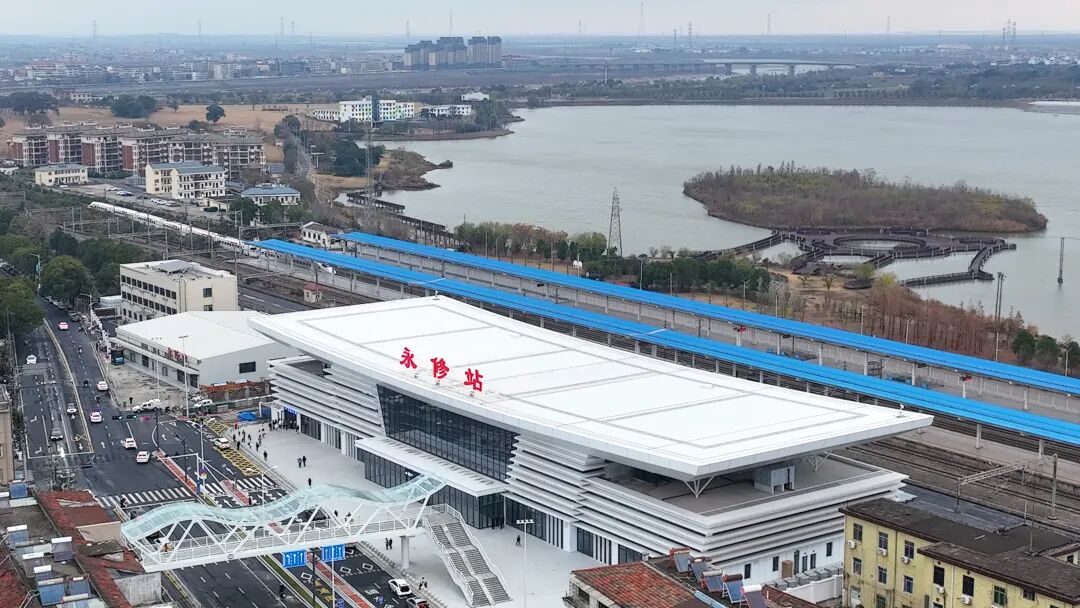
正式启用!这座百年老站全新亮相
Xin Hua Wang· 2026-01-25 05:55
Core Viewpoint - The upgrade and renovation of Yongxiu Station, a century-old railway station in Jiangxi Province, aims to enhance passenger service quality and accommodate increasing travel demand, with the new station building officially opened. Group 1: Station Background - Yongxiu Station, located in Jiujiang City, Jiangxi Province, was established in 1913 and originally named Tujia Bu Station before being renamed in 1996 after the opening of the Beijing-Kowloon Railway [3]. - The station has become a significant transportation hub in northern Jiangxi, with an annual passenger volume reaching 1 million [5]. Group 2: Renovation Details - The upgrade project commenced in October 2024 to address the inadequacies of the original station infrastructure and layout due to rapid urban development and increasing passenger flow [7]. - The new station design incorporates the imagery of a "Peng," reflecting the natural characteristics of Yongxiu, with a streamlined façade symbolizing the region's bright future [7]. - The waiting area has been expanded from 200 to 800 seats, with the addition of 10 convenient charging points and 4 smart temperature-controlled drinking fountains [11]. Group 3: Enhanced Services - A volunteer service desk has been established to assist passengers with inquiries and business transactions [13]. - The station has improved its arrival and departure capacity significantly, with new train services to Wuhan, Hefei, Fuzhou, and Xiamen, enhancing travel convenience and supporting regional cultural and tourism development [16]. - Clear signage has been installed in the station square and key intersections, with volunteers available to guide passengers to the new waiting area [18].