跨境电商

Search documents
亚马逊正式通知,将报送所有中国卖家涉税信息
3 6 Ke· 2025-10-16 09:12
一则来自亚马逊的官方通知,在跨境电商圈引发了热烈讨论。 10月13日,亚马逊正式向卖家发布关于"涉税信息报送"的通知,明确将按季度向中国税务机关报送中国 卖家的身份与收入信息。首次报送将于10月31日前完成,数据涵盖2025年7月至9月的交易。 消息一出,在卖家群体中引发了强烈的反响和激烈的讨论,各种声音传出: "亚马逊也要接入税务系统了,又有一大批老板要头疼。" "迟早的事,总要面对的。" "如果主体是境外企业理论上是没事的。" "出口报关不是交税了吗,销售怎么也管?因为境外利润回国没有交税,企业所得税、个人所得都没有 交。" 值得一提的是,截至目前,包括沃尔玛、SHEIN在内的多个跨境平台均已发布类似告知,一场覆盖全行 业的税务合规化浪潮已不可避免。 新规落地 实际上,这场变革早有征兆。 早在2025年6月26日,国家税务总局正式发布《关于互联网平台企业报送涉税信息有关事项的公告》 (2025年第15号),首次将涉税信息报送义务明确延伸至所有服务中国经营者的境外互联网平台。 该公告与同期发布的《互联网平台企业涉税信息报送规定》(国务院令第810号)共同构成了完整的监 管框架。 新规核心要点包括:依照外国( ...

虹桥国际中央商务区纳入上海自贸试验区联动创新区
Zhong Guo Jing Ji Wang· 2025-10-16 08:59
Core Insights - The Shanghai Free Trade Zone has announced the establishment of the second batch of "8+1" innovative zones, including the Hongqiao International Central Business District, aimed at enhancing trade and investment facilitation [1][2] - The Hongqiao International Central Business District will serve as a key area for multiple national strategies, including the Belt and Road Initiative and the integration of the Yangtze River Delta region [1] - The focus will be on developing cross-border e-commerce and optimizing financial and data cross-border services, with a strong emphasis on high-quality development of new trade formats [2] Group 1 - The second batch of innovative zones includes eight key areas and five national economic and technological development zones [1] - The Hongqiao International Central Business District covers an area of 151.4 square kilometers, making it the only area selected in its entirety among the eight key zones [1] - The district aims to become an international trade center and a world-class transportation hub, enhancing the strategic role of the Free Trade Zone [1][2] Group 2 - The development plan includes four major reform tasks: enhancing investment and trade facilitation, optimizing cross-border financial and data services, deepening technological innovation reforms, and improving talent and land resource systems [2] - The district will leverage its advantages in transportation, exhibitions, and business to connect with international high-standard economic and trade rules [2] - The initiative aims to replicate and promote the innovative experiences of the Free Trade Zone, fostering high-quality development and creating a landmark area for reform and opening-up [2]
三态股份跌2.29%,成交额6583.75万元,近5日主力净流入-1540.26万
Xin Lang Cai Jing· 2025-10-16 07:54
Core Viewpoint - Shenzhen SanTai E-commerce Co., Ltd. is experiencing fluctuations in stock performance, with a recent decline of 2.29% and a total market capitalization of 6.721 billion yuan, while the company is focusing on cross-border e-commerce and AI-driven solutions for risk management [1][2]. Group 1: Company Overview - The main business of Shenzhen SanTai E-commerce Co., Ltd. includes export cross-border e-commerce retail and third-party export cross-border e-commerce logistics [2]. - The company was established on January 7, 2008, and went public on September 28, 2023, with its revenue composition being 76.14% from cross-border e-commerce product sales, 23.80% from logistics sales, and minimal contributions from technology services and other businesses [7]. - As of September 30, 2023, the number of shareholders is 30,100, a decrease of 1.25% from the previous period, with an average of 7,283 circulating shares per person, an increase of 1.26% [8]. Group 2: Financial Performance - For the first half of 2025, the company achieved a revenue of 827 million yuan, representing a year-on-year growth of 3.27%, while the net profit attributable to shareholders decreased by 48.75% to 23.2552 million yuan [8]. - The company has distributed a total of 110 million yuan in dividends since its A-share listing [9]. Group 3: Product and Technology Development - The company has developed a proprietary intellectual property risk detection tool named "RuiGuan·ERiC," which utilizes AI and big data models to provide flexible, low-cost, and accurate risk monitoring solutions for enterprises [2][3]. - The company is also working on an AIGC project that generates high-quality images using Stable Diffusion, allowing for customized branding and significant operational efficiency improvements [2][3]. Group 4: Market Position and Trends - The company benefits from a high overseas revenue ratio of 99.98%, largely due to the depreciation of the Chinese yuan [3]. - The stock is categorized under the commercial retail sector, specifically in the internet e-commerce and cross-border e-commerce segments, with additional concepts including intellectual property and logistics [8].
华凯易佰跌1.58%,成交额4900.85万元,近3日主力净流入-1347.73万
Xin Lang Cai Jing· 2025-10-16 07:40
Core Viewpoint - The company, Huakai Yibai Technology Co., Ltd., is experiencing fluctuations in stock performance and is heavily involved in cross-border e-commerce, AIGC technology, and virtual reality applications, benefiting from the depreciation of the RMB. Company Overview - Huakai Yibai was established on February 23, 2009, and listed on January 20, 2017. The company focuses on spatial environment art design and provides comprehensive exhibition services for large exhibition halls, with cross-border e-commerce as a significant revenue source [7]. - The company's revenue composition includes 92.16% from cross-border e-commerce, 7.71% from comprehensive cross-border e-commerce services, and 0.18% from other business activities [7]. Financial Performance - For the first half of 2025, the company achieved a revenue of 4.538 billion yuan, representing a year-on-year growth of 28.97%. However, the net profit attributable to the parent company was 36.74 million yuan, a decrease of 72.69% year-on-year [7]. - The company has distributed a total of 154 million yuan in dividends since its A-share listing, with 136 million yuan distributed over the past three years [8]. Market Activity - On October 16, 2023, the company's stock price fell by 1.58%, with a trading volume of 49.0085 million yuan and a turnover rate of 1.31%, resulting in a total market capitalization of 4.29 billion yuan [1]. - The stock has shown no significant trend in major capital inflows, with a net outflow of 4.6956 million yuan on the same day, ranking 9th out of 18 in its industry [4][5]. Technological Development - The company is leveraging AIGC technology in its self-developed systems to automate product copy generation, significantly reducing labor costs and enhancing operational efficiency [2]. - The company's virtual reality (VR) technology is primarily applied in exhibition setups, with ongoing efforts to innovate in VR content creation and integration with interactive platforms [2]. International Revenue - According to the 2024 annual report, the company's overseas revenue accounts for 99.83% of its total revenue, benefiting from the depreciation of the RMB [3].

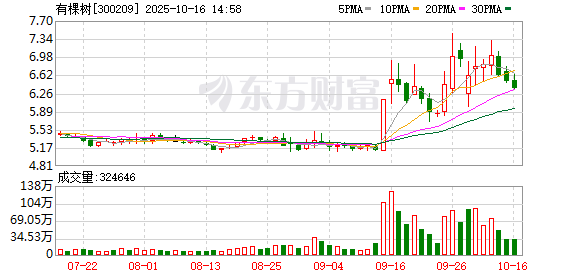
有棵树创始团队全员出局,跨境电商“初代大卖”权力战落幕
Nan Fang Du Shi Bao· 2025-10-16 06:58
Core Viewpoint - The power struggle within the cross-border e-commerce company Youkeshu Group has concluded with a complete management overhaul, marking the end of the founding team's era amid ongoing operational challenges and regulatory investigations [2][7][10]. Group 1: Control and Management Changes - The recent extraordinary general meeting resulted in the election of a new board of directors, with founder Xiao Siqing and former general manager Xiao Yan stepping down, indicating a significant shift in control [2][7]. - Wang Wei, the new largest shareholder with an 18% stake, emerged victorious in the power struggle against the founding team, whose shareholding was diluted to 3.28% [6][10]. - The new management team, led by Chairman Liu Hailong and General Manager Zhang Wen, aims to stabilize the company after a tumultuous transition period [7][10]. Group 2: Historical Context and Challenges - Youkeshu was founded in 2010 and became a prominent player in the cross-border e-commerce sector, achieving a notable merger and acquisition milestone in 2017 [8][9]. - The company faced severe operational difficulties, including a significant revenue drop due to the suspension of 340 Amazon accounts in 2021, leading to a restructuring process initiated in 2024 [9][10]. - The introduction of industry investors during the restructuring helped the company return to profitability in 2024, but internal conflicts persisted [9][10]. Group 3: Regulatory and Operational Risks - The company is currently under investigation by the regulatory authorities for failing to disclose significant information, which adds uncertainty to its future [10][12]. - The new management's immediate focus is on mitigating risks associated with the transition, including potential asset loss and operational disruptions [10][11]. - The first quarter of 2025 showed Youkeshu's revenue at less than 25 million yuan, with ongoing losses, highlighting the urgent need for strategic recovery in a highly competitive market [10][11]. Group 4: Industry Implications - The departure of Youkeshu's founding team reflects a broader trend among cross-border e-commerce companies that have gone public through mergers, facing similar governance challenges [12][13]. - The involvement of industry investors like Hangyun Group, which has a strong presence in digital trade, is seen as a potential catalyst for Youkeshu's recovery [11][12]. - The situation serves as a cautionary tale for other companies in the sector regarding the complexities of governance and the need for effective control mechanisms when engaging with capital [13].


有棵树创始团队全员出局,跨境电商"初代大卖"权力战落幕
Nan Fang Du Shi Bao· 2025-10-16 06:55
曾被圈内比作"华南城四少"之一的跨境电商企业有棵树集团(证券代码:300209),企业内斗风波落 幕。 近日,深圳跨境电商头部企业有棵树(300209.SZ)的临时股东大会现场,一场没有硝烟的权力更迭悄 然落幕。随着第七届董事会成员的选举产生,公司创始人肖四清、原总经理肖燕等核心管理层全员离 任,标志着这家曾名噪一时的跨境电商"大卖"正式告别创始团队时代。 然而,新老交替的背后,是持续半年的控制权争夺战、被立案调查的股东以及岌岌可危的经营现状,有 棵树的重生之路布满荆棘。 控制权争夺战落幕:18%股权对决3.28%的胜负局 这场权力更迭的种子早在2024年公司重整期间便已埋下。根据公司2025年3月发布的详式权益变动公 告,王维及其一致行动人(含深圳市天行云供应链有限公司)通过重整受让获得有棵树18%股份,一跃 成为第一大股东。而王维正是有棵树今年"摘帽"后、通过重整计划引入的产业投资人。 与此形成鲜明对比的是,创始人肖四清的持股比例因重整被动稀释至3.28%,其一致行动人无锡中住集 团仅持股0.009%,合计持股比例不足3.3%。 股权结构的失衡迅速演变为控制权的直接对抗。2025年5月,王维及其一致行动人 ...

赛维时代跌2.02%,成交额7413.82万元,主力资金净流出471.88万元
Xin Lang Cai Jing· 2025-10-16 06:48
Group 1 - The core viewpoint of the news is that Saiwei Times has experienced a decline in stock price and significant changes in shareholder structure, while also reporting mixed financial results for the year [1][2]. Group 2 - As of October 16, Saiwei Times' stock price decreased by 2.02%, trading at 22.80 yuan per share, with a market capitalization of 9.199 billion yuan [1]. - The company has seen a net outflow of 471.88 thousand yuan in principal funds, with significant selling pressure from large orders [1]. - Year-to-date, the stock price has increased by 1.29%, but it has declined by 5.32% over the last five trading days and 5.12% over the last twenty days [1]. - Saiwei Times, established on May 31, 2012, focuses on technology-driven cross-border e-commerce, with 92.32% of its revenue coming from this segment [1]. - As of September 30, the number of shareholders decreased by 15.28% to 15,200, while the average number of circulating shares per person increased by 18.03% [2]. - For the first half of 2025, Saiwei Times reported a revenue of 5.346 billion yuan, a year-on-year increase of 27.96%, but a net profit of 169 million yuan, a decrease of 28.18% [2]. - The company has distributed a total of 421 million yuan in dividends since its A-share listing [2].
做跨境电商真的很暴利吗?
Sou Hu Cai Jing· 2025-10-16 04:18
Group 1 - The core viewpoint is that cross-border e-commerce is profitable but not excessively lucrative, and success requires effort and investment [2] - Cross-border e-commerce consists of multiple platforms, each with different operational models, including full management, semi-management, and Y2 models [2] - The semi-management and Y2 models can yield higher profits, with investments starting at around 100,000 yuan, potentially earning 70,000 to 80,000 yuan per month, but they come with higher operational requirements and risks [2] Group 2 - The full management model is less profitable, requiring an investment of about 80,000 yuan, with monthly earnings of 20,000 to 30,000 yuan, but it does not require overseas warehouses or logistics resources [2] - Cross-border e-commerce is suitable for ordinary individuals, requiring minimal experience, education, or resources, and a small investment can lead to monthly earnings of 20,000 to 30,000 yuan after practical learning [3]

二连浩特口岸实现跨境电商商品“次日达”
Nei Meng Gu Ri Bao· 2025-10-16 03:40
Core Insights - The cross-border e-commerce platform in Erenhot City has streamlined logistics services for businesses, providing comprehensive support from package collection to final delivery in Mongolia, enhancing trade efficiency [1][2] - Since the establishment of the "China-Mongolia" cross-border e-commerce international transport link, foreign trade companies have saved over 50% in transportation time and costs [2] Group 1 - The platform offers full-process services including package collection, export declaration, international land transportation, customs clearance, and final delivery [1] - The daily average of cross-border e-commerce packages sent from Erenhot has reached 5,000, achieving next-day delivery for goods to Ulaanbaatar, Mongolia [2] - The logistics process involves immediate scanning and warehousing of goods upon arrival, followed by customs inspection to expedite delivery to customers [1] Group 2 - The establishment of the cross-border e-commerce transport link has significantly improved the efficiency of cross-border trade [2] - Goods are consolidated at the Erenhot distribution center before being dispatched to Ulaanbaatar, enhancing the overall logistics process [2]
速卖通正在成为更多亚马逊商家的第一阵地
Hua Er Jie Jian Wen· 2025-10-16 03:20
Core Insights - AliExpress's "Super Brand Going Global Plan" is reshaping the landscape of the cross-border e-commerce brand market [2][5] - Since the launch of the plan in September, several Amazon sellers have begun shifting their inventory to AliExpress, with at least 10 brands achieving higher global sales on AliExpress than on Amazon [2][5] - The plan aims to attract brands by offering lower costs and strong platform support, marking a new phase in brand competition within cross-border e-commerce [2][4] Group 1: Brand Performance - At least 10 brands with annual sales exceeding $1 million have surpassed Amazon in global sales on AliExpress since October [2] - A Shenzhen-based 3D printing brand reported a 30% increase in daily sales on AliExpress compared to Amazon since October [2] - The number of new brands on AliExpress increased by 70% year-on-year in the first half of the year, with over 500 brands doubling their sales [4] Group 2: Strategic Initiatives - The "Super Brand Going Global Plan" was launched on September 23, 2023, targeting Tmall brands and large Amazon sellers [3][4] - AliExpress aims to allow merchants to achieve higher sales in key markets at half the cost compared to Amazon [4] - The platform has introduced a "Brand Service Center" to provide real-time data and analysis for brands, facilitating refined operations [4] Group 3: Market Trends - The global cross-border e-commerce competition is shifting from aggressive growth to a focus on profitability and brand value [5] - The emergence of over 10 brands surpassing Amazon in sales indicates the initial success of the "Super Brand Going Global Plan" [5] - The industry consensus is that cross-border e-commerce is transitioning from a "selling goods era" to a "brand era" [5]