
国际贸易中心

Search documents
学习规划建议每日问答丨如何理解巩固提升香港国际金融、航运、贸易中心地位,支持香港建设国际创新科技中心
Xin Hua Wang· 2026-02-26 04:17
Core Viewpoint - The article emphasizes the importance of consolidating and enhancing Hong Kong's status as an international financial, shipping, and trade center, while also supporting its development as an international innovation and technology hub, in line with the 15th Five-Year Plan of China [1] Group 1: Economic and Social Development - The central government fully supports Hong Kong in maintaining its unique position and advantages, fostering a free and open business environment, and expanding international connections [2] - Hong Kong is ranked third globally as a financial center in 2024, with its fintech level ranked ninth worldwide, and it is the largest international asset management and private wealth management center in Asia [2] - Hong Kong handles approximately 80% of global offshore RMB settlements, reinforcing its status as the largest offshore RMB center [2] - The city has maintained its position as the world's top air cargo hub for several consecutive years and ranks fourth globally in registered shipping tonnage [2] - Hong Kong's free trade policy keeps it at the top of the list of the world's freest economies, with a projected global competitiveness ranking of third and second in Asia by 2025 [2] - The emerging startup ecosystem in Hong Kong is ranked third globally and first in Asia, with a talent influx of 220,000 individuals [2] Group 2: Strategic Positioning - The new era brings new connotations to Hong Kong's strategic position, focusing on deepening connectivity with the mainland and enhancing offshore RMB business [3] - There is an emphasis on optimizing the securities market and developing an international gold trading center in Hong Kong [3] - The strategy includes enhancing the shipping center's status through tax incentives and developing a high-value shipping service sector [3] - The trade center's status will be reinforced by establishing a high-value supply chain service center and expanding trade networks, particularly with Europe and the Belt and Road countries [3] - The support for building an international innovation and technology center aims to integrate deeply into the Guangdong-Hong Kong-Macao Greater Bay Area and focus on national strategic needs in technology [3] Group 3: Implementation Measures - The article outlines proactive measures to align with the national 15th Five-Year Plan, emphasizing cooperation within the Guangdong-Hong Kong-Macao Greater Bay Area [4] - It highlights the need for a dual-engine development approach for finance and innovation, enhancing Hong Kong's influence in global technology innovation [4] - The article calls for broader and closer international cooperation, including strengthening higher education and hosting high-level academic exchanges [4] - There is a focus on building Hong Kong as a world-class tourism destination and a cultural exchange center [4]
“四中心”引擎 制度型开放突破“十五五”启幕千年商都新纪元
Nan Fang Du Shi Bao· 2026-01-19 23:12
Core Viewpoint - The construction of an international consumption center city and high-quality foreign trade development are key supports for Guangzhou's economic stability and progress during the transition from the "14th Five-Year Plan" to the "15th Five-Year Plan" [4]. Group 1: Consumption Enhancement - Guangzhou's retail sales are projected to grow by 5.5% in 2025, following a 26% increase over the past five years [6]. - The "Yangcheng New Eight Scenic Spots" initiative aims to boost consumption through over 2,000 themed events, including international shopping festivals and gourmet weeks, generating over 900 billion yuan in sales [6][7]. - The city will continue to optimize the consumption environment by expanding the number of tax refund stores to 1,620 and enhancing cross-border payment options [7]. Group 2: Foreign Trade Growth - Guangzhou's foreign trade is expected to reach 1.2 trillion yuan in 2025, with a growth rate of 10.4%, driven by a 17.3% increase in trade with non-U.S. markets [8]. - The "New Three Samples" products have seen an export increase of nearly 70%, becoming a new growth engine for the economy [8][9]. - Key strategies for 2026 include diversifying markets, supporting leading enterprises, and enhancing new foreign trade formats [9]. Group 3: Open Upgrades - Guangzhou aims to enhance its high-level opening-up system, focusing on the Guangdong-Hong Kong-Macao Greater Bay Area and expanding the service industry [10]. - The city has established a robust open matrix, including one free trade zone and multiple national-level economic development zones [10][11]. - Future initiatives will include platform innovation, port upgrades, and leveraging the exhibition economy to stimulate industrial upgrades [11].

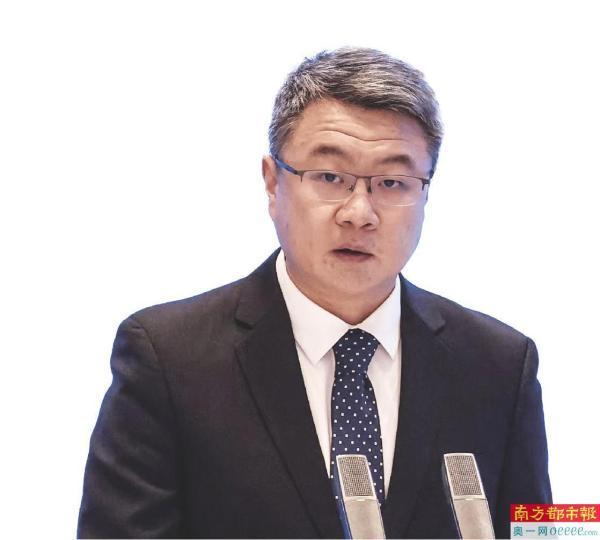
魏敏:消费提质、外贸增效、开放升级,千年商都开启新纪元
Nan Fang Du Shi Bao· 2026-01-19 16:00
Group 1 - The core viewpoint of the article emphasizes the importance of Guangzhou's economic development strategies during the "14th Five-Year Plan" and the transition into the "15th Five-Year Plan," focusing on enhancing domestic demand and building a modern industrial system [2][3] - The 2026 Guangzhou government work report outlines ten key areas for economic and social development, including deepening consumption potential, accelerating the construction of a modern industrial system, and promoting education and talent development [2] - The article highlights the role of the "International Consumption Center City" and high-quality foreign trade development as critical supports for Guangzhou's economic stability and growth [3][8] Group 2 - Guangzhou's retail sales and import-export indicators have shown growth rates exceeding national and provincial averages, contributing positively to the city's economic growth [6] - The city plans to implement special actions to boost consumption and enhance foreign trade quality, aiming to build a more resilient international trade center [7][8] - The "New Eight Scenic Spots of Consumption" initiative aims to stimulate new consumption trends through various promotional activities, with a projected retail sales growth of 5.5% in 2025 [9][10] Group 3 - In 2025, Guangzhou's foreign trade is expected to reach 1.2 trillion, with a growth rate of 10.4%, driven by strong performance in non-U.S. markets [11][12] - The city aims to diversify its market by expanding into non-U.S. markets and organizing procurement activities, while also supporting leading enterprises in the foreign trade sector [12] - Key measures for enhancing foreign trade include promoting new business models, improving export quality, and establishing national-level import trade innovation demonstration zones [12][13] Group 4 - Guangzhou is focusing on institutional openness to drive high-quality development, with plans to deepen service industry reforms and enhance connectivity with Hong Kong and Macau [13][14] - The city aims to upgrade its port facilities and improve the business environment to facilitate smoother internal and external circulation [14] - The article discusses the importance of the exhibition economy in promoting industrial upgrades and fostering a favorable ecosystem for trade and consumption [14]
2025年广州外贸进出口额超1.2万亿元
Xin Lang Cai Jing· 2026-01-16 16:01
Core Viewpoint - Guangzhou's foreign trade and economic indicators for 2025 show significant growth, with a focus on enhancing its role as an international trade and consumption center [1] Group 1: Foreign Trade - The city's foreign trade import and export volume is expected to exceed 1.2 trillion RMB in 2025, representing a year-on-year growth of 10.4% [1] - Guangzhou will organize over 400 foreign trade matching activities and support more than 5,000 enterprises to participate in domestic and international exhibitions [1] - The service trade import and export is projected to exceed 80 billion USD, with offshore service outsourcing execution amount expected to grow by 17.6% year-on-year [1] Group 2: Foreign Investment - The number of newly established foreign-funded enterprises in Guangzhou is expected to reach 10,900 in 2025, marking a year-on-year increase of 28.8% [1] - Actual utilized foreign investment is projected to be 25.19 billion RMB, reflecting a year-on-year growth of 9.1% [1] - The city aims to attract 50 projects with over 10 million USD and has added 6 new Fortune 500 companies, bringing the total to 368 [1] Group 3: Consumption and Economic Development - The total retail sales of social consumer goods in Guangzhou are expected to surpass 1.1 trillion RMB in 2025, with a year-on-year growth of 5.5% [1] - The city plans to implement a special action to boost consumption in 2026, focusing on creating a high-level open empowerment platform [1] - Future initiatives will include expanding bilateral investment cooperation and promoting market diversification and integration of domestic and foreign trade [1]
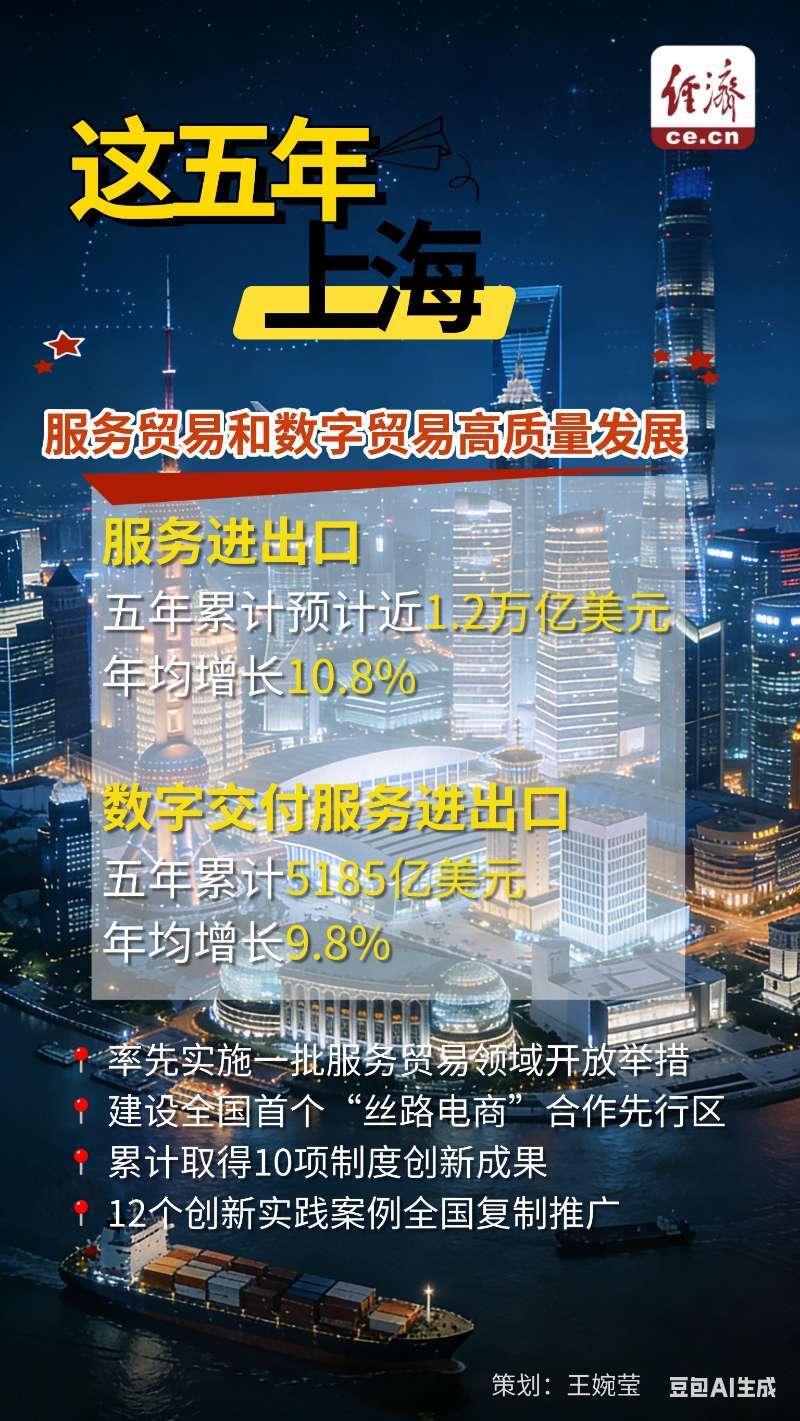
这五年,这个城市服务贸易创新高
Zhong Guo Jing Ji Wang· 2026-01-15 03:44
Group 1 - The core viewpoint is that Shanghai has made significant progress in enhancing its international trade center during the 14th Five-Year Plan period, improving its position in the global trade network and showcasing the effects of its open policy initiatives [1][4]. - The International Import Expo (CIIE) has been highlighted as a major platform for opening up, with its spillover effects continuing to expand [1][8]. - Shanghai's exhibition area is projected to reach 19.336 million square meters by 2025, with international exhibition space accounting for 80% [4][5]. Group 2 - The port trade scale has reached new heights, with total port trade volume increasing from 8.7 trillion yuan to over 11 trillion yuan, maintaining Shanghai's status as a leading global city [7]. - Shanghai's container throughput has ranked first in the world for 16 consecutive years, while its air cargo volume has jumped to third globally [7]. - The city is promoting the integration of culture, tourism, commerce, and sports, enhancing the international influence of large consumer festivals and continuously improving the capabilities of the international exhibition city [8].
一尾鱼,一座城!百年产业与千年商都的双向奔赴
Nan Fang Nong Cun Bao· 2026-01-11 04:04
Core Viewpoint - The article highlights the evolution and significance of Guangzhou's ornamental fish industry, showcasing its historical roots, current developments, and future potential as a global trade hub in the sector [7][12][88]. Historical Context - The ornamental fish industry in Guangzhou can be traced back to the late Qing Dynasty, where local flower farmers began cultivating koi in their gardens, inadvertently opening the door to commercialization [15][20]. - By the 1990s, the informal market in Fangcun evolved into a more organized industry, with Guangzhou's ornamental fish export volume leading the nation [30][32]. - The establishment of the Huadiwan Flower, Bird, Fish, and Insect Wholesale Market in 2001 marked a significant transition towards a more professional and centralized industry [33][39]. Current Industry Landscape - The Baiyi City, covering 150,000 square meters, has become a key trading hub for ornamental fish, housing over 2,000 merchants and offering a comprehensive range of products [54][55]. - The industry has adapted to digital trends, positioning itself as a "central kitchen" for online sales, effectively responding to market demands and leveraging live-streaming commerce [58][60]. - The demographic of fish enthusiasts has shifted, attracting younger consumers and families, which has led to new business models and services, such as personalized aquascaping workshops [64][71]. Internationalization and Future Outlook - The China International Pet and Aquatic Exhibition (Great Wall Exhibition) will be held in Guangzhou starting in 2024, enhancing the city's status as an international trade hub [73][76]. - Guangzhou aims to become a global center for ornamental fish trade by 2025, supported by strategic planning, technological advancements, and talent development [83][86]. - The ornamental fish industry is seen as a symbol of Guangzhou's cultural heritage and economic evolution, reflecting the city's transition from traditional agriculture to high-value agricultural service trade [88][90].

虹桥国际中央商务区纳入上海自贸试验区联动创新区
Zhong Guo Jing Ji Wang· 2025-10-16 08:59
Core Insights - The Shanghai Free Trade Zone has announced the establishment of the second batch of "8+1" innovative zones, including the Hongqiao International Central Business District, aimed at enhancing trade and investment facilitation [1][2] - The Hongqiao International Central Business District will serve as a key area for multiple national strategies, including the Belt and Road Initiative and the integration of the Yangtze River Delta region [1] - The focus will be on developing cross-border e-commerce and optimizing financial and data cross-border services, with a strong emphasis on high-quality development of new trade formats [2] Group 1 - The second batch of innovative zones includes eight key areas and five national economic and technological development zones [1] - The Hongqiao International Central Business District covers an area of 151.4 square kilometers, making it the only area selected in its entirety among the eight key zones [1] - The district aims to become an international trade center and a world-class transportation hub, enhancing the strategic role of the Free Trade Zone [1][2] Group 2 - The development plan includes four major reform tasks: enhancing investment and trade facilitation, optimizing cross-border financial and data services, deepening technological innovation reforms, and improving talent and land resource systems [2] - The district will leverage its advantages in transportation, exhibitions, and business to connect with international high-standard economic and trade rules [2] - The initiative aims to replicate and promote the innovative experiences of the Free Trade Zone, fostering high-quality development and creating a landmark area for reform and opening-up [2]
打破常规敢为人先闯出新天地 龚正在上海交通大学为师生代表作形势与政策报告
Jie Fang Ri Bao· 2025-09-29 01:32
Core Viewpoint - The Shanghai government is committed to advancing the construction of the "Five Centers" as a strategic direction for the city's development, emphasizing the importance of talent and innovation in achieving these goals [1][2][3]. Group 1: Five Centers Construction - The construction of the International Economic Center aims to expand the economic scale and build a modern industrial system while integrating more actively into the global economy [2]. - The International Financial Center will focus on enhancing security and controllability while promoting high-level financial openness to better serve the real economy and technological innovation [2]. - The International Trade Center will enhance trade hub functions and promote high-quality development of new trade formats, improving Shanghai's position in the international trade and investment network [2]. - The International Shipping Center will address shortcomings in high-end shipping services and enhance global resource allocation capabilities [2]. - The International Science and Innovation Center will focus on improving basic research levels and breaking through key core technologies to accelerate the transformation of scientific achievements [2]. Group 2: Talent Development - Talent is regarded as the most valuable strategic resource for the construction of the "Five Centers," with a focus on creating a high-level talent hub [3]. - Young university students are encouraged to engage in national strategic tasks and contribute to the construction of the "Five Centers," embodying the spirit of innovation and proactive learning [3]. - The Shanghai government will support the development of universities, including Shanghai Jiao Tong University, providing a platform for students and faculty to showcase their talents and achieve their aspirations [3].