
氢能

Search documents
燃料电池的“安全卫士” 这个新职业为绿色动力保驾护航
Yang Shi Xin Wen· 2025-08-01 07:02
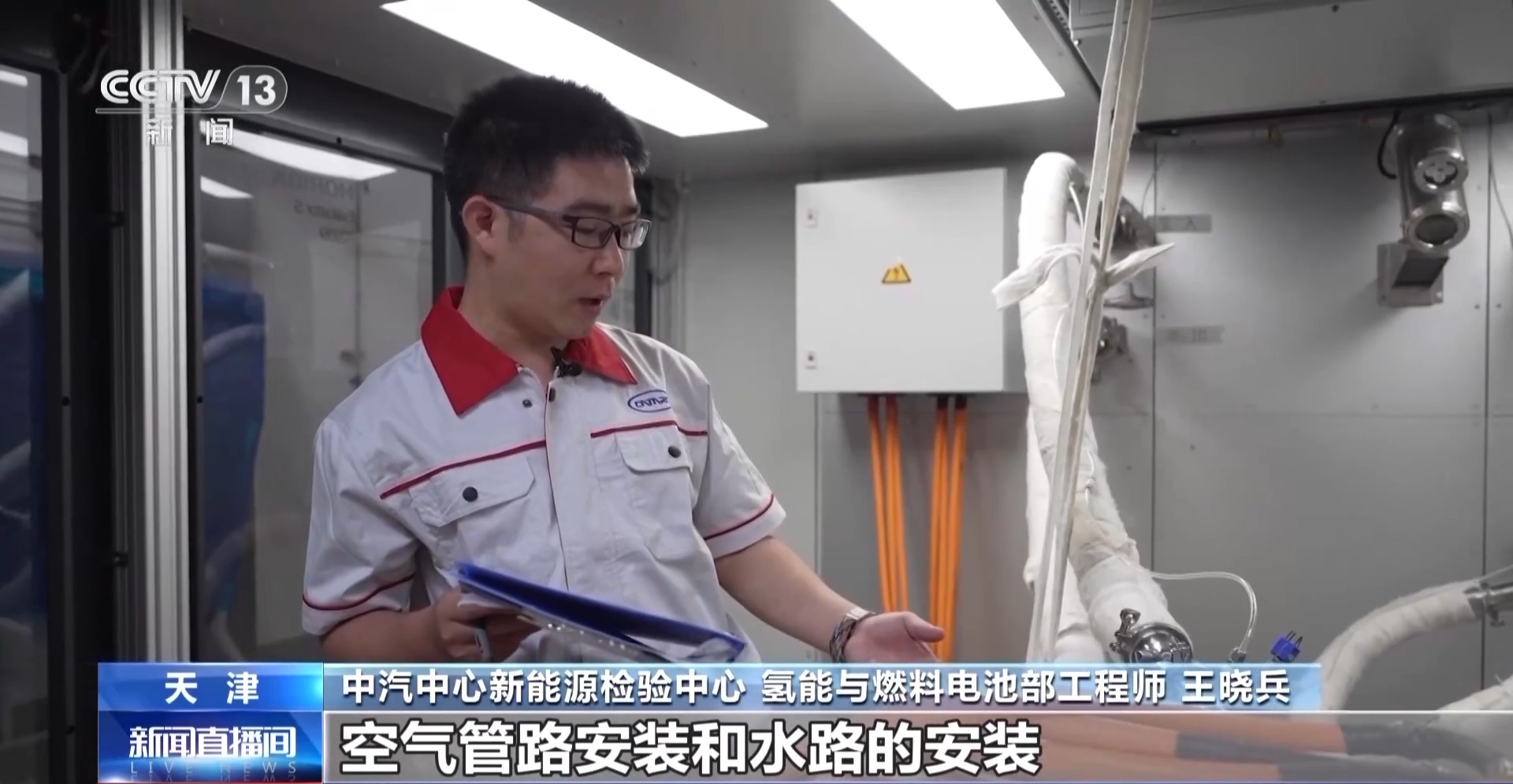
Core Viewpoint - The Ministry of Human Resources and Social Security has officially released the seventh batch of new occupational directories, adding 17 new professions and 42 new job types, including the hydrogen fuel cell tester, marking the establishment of the first new profession in the hydrogen energy sector in China [1] Group 1: New Profession Overview - The hydrogen fuel cell tester is not merely a testing role; they are involved throughout the entire hydrogen energy industry chain, focusing on safety and performance through testing and data analysis [1] - The core aspect of the hydrogen fuel cell tester's role is ensuring safety during the testing process, which includes checking for gas leaks and the integrity of various connections [3][11] Group 2: Testing Procedures - Prior to testing, samples undergo gas-tightness checks to ensure hydrogen does not leak, and all connections must be secure [3] - Fuel cells are subjected to extreme conditions such as high and low temperatures and humidity to assess their durability [5] - In laboratory settings, fuel cells are tested for their ability to continuously output electrical energy during simulated driving conditions [7] Group 3: Problem Diagnosis - If issues arise during testing, the fuel cell stack may need to be disassembled for microscopic analysis to identify the root cause of the problem [11] Group 4: Industry Impact - As hydrogen fuel cells gain traction in automotive and energy storage sectors, the role of hydrogen fuel cell testers is expanding from research and development to mass production, including stack testing and system integration verification [13] - The establishment of this new profession provides direction for talent development and enhances industry management [13]


氢储能转化效率仅35%,为何仍是长时储能的"必选项"?
势银能链· 2025-08-01 03:03
Core Viewpoint - Hydrogen energy is increasingly recognized as a crucial clean energy carrier in the context of China's "dual carbon" goals, supported by over 560 policies aimed at fostering the hydrogen industry [6][12]. Group 1: Hydrogen Energy Development - The establishment of hydrogen energy's status as an energy source in China's Energy Law has laid a solid foundation for the industry's growth [6]. - Hydrogen storage is highlighted as an efficient and environmentally friendly long-term energy storage solution, particularly suitable for large-scale and prolonged energy storage needs [6]. - The Ministry of Industry and Information Technology's action plan emphasizes the need for advanced hydrogen storage technologies to facilitate the green transition of the energy system [6]. Group 2: Hydrogen Storage Process - The narrow definition of hydrogen storage involves the "electric-hydrogen-electric" process, which includes water electrolysis to produce hydrogen, storage of hydrogen, and conversion back to electricity when needed [7][8][9]. - The broader concept of hydrogen storage encompasses "Power-to-X," which refers to converting electrical energy into various energy carriers, including hydrogen, ammonia, and alcohols for diverse applications [10]. Group 3: Applications and Efficiency - Hydrogen storage is applicable in transportation, industrial production, and building heating, providing zero-emission solutions and reducing carbon footprints in various sectors [10]. - Despite its unique advantages for large-scale and long-duration storage, hydrogen storage has a relatively low efficiency, with a conversion rate of about 35%, meaning three units of electricity are needed to produce one unit of usable energy [10]. Group 4: Case Studies and Innovations - Guohong Hydrogen Energy has implemented various projects demonstrating hydrogen storage applications, such as a 10kW fuel cell system replacing diesel generators in communication bases, and a 100kW fuel cell cogeneration system in a health innovation park [11][12]. - The company has also pioneered an industrial solid waste hydrogen generation project, showcasing a revolutionary solution for off-grid power supply with zero noise and emissions [11]. - In large-scale applications, Guohong's systems have achieved over 90% energy utilization efficiency, providing zero-carbon energy to significant venues like the Shaanxi Provincial Sports Village [12]. Group 5: Future Outlook - The combination of favorable policies, technological advancements, and successful case studies indicates a promising future for hydrogen storage [12]. - Guohong Hydrogen Energy aims to continue innovating and expanding its applications, contributing to the energy transition and leading the hydrogen era towards a zero-carbon future [12].

派瑞氢能/鹭岛氢能拟中标国家能源集团混联制氢项目
势银能链· 2025-08-01 03:03
Core Viewpoint - The article discusses the procurement of a 25MW hybrid hydrogen production system by the National Energy Group, emphasizing the importance of developing low-cost, high-reliability systems to support large-scale renewable energy hydrogen production, which aligns with China's carbon neutrality goals [2][3]. Group 1: Project Overview - The project aims to develop a hybrid alkaline (ALK) and proton exchange membrane (PEM) hydrogen production system that can adapt to wide power fluctuations [2]. - The project is part of a broader initiative to enhance the innovation level and product quality of hydrogen production systems in China, facilitating the large-scale application of green hydrogen [2]. Group 2: Procurement Details - The procurement includes two bidding sections, with Section 1 requiring three sets of hybrid hydrogen production systems, each consisting of various components such as ALK and PEM electrolyzers, gas-liquid separation devices, and hydrogen purification systems [3][4]. - The first candidate for Section 1 is China Shipbuilding (Handan) Pairui Hydrogen Energy Technology Co., with a bid of 54.063 million RMB, while the second candidate is Changchun Green Movement Hydrogen Energy Technology Co., with a bid of 44.94 million RMB [5]. Group 3: Additional Bidding Information - Section 2 also involves two sets of hybrid hydrogen production systems, with similar requirements as Section 1 [6]. - The first candidate for Section 2 is Luda Hydrogen Energy, with a bid of 35.6 million RMB, and the second candidate is Sunshine Hydrogen Energy, with a bid of 22.32 million RMB [6].

谁支撑了大安绿氨项目四项“全球之最”?设备供应商名单公布
势银能链· 2025-08-01 03:03
Core Viewpoint - The article highlights the successful launch of the Daan Wind-Solar Green Hydrogen Ammonia Integration Demonstration Project by State Power Investment Corporation, showcasing China's advancements in green hydrogen energy and its global leadership in this sector [4][6]. Group 1: Project Overview - The Daan project, located in Jilin, has a total installed capacity of 800,000 kW, consisting of 700,000 kW from wind power and 100,000 kW from solar power, along with 40 MW/80 MWh of energy storage and 60,000 standard cubic meters of hydrogen storage [4]. - The project is designed to integrate green electricity generation, green hydrogen production through water electrolysis, and green ammonia synthesis, with an annual production capacity of 32,000 tons of green hydrogen and 180,000 tons of green ammonia, resulting in a carbon reduction of approximately 650,000 tons per year [4]. Group 2: Technological Achievements - The project sets multiple global records, including the largest single green ammonia project with a capacity of 180,000 tons per year and the largest scale of alkaline and PEM mixed electrolysis for hydrogen production [4]. - The project features a proprietary "Electric-Hydrogen-Chemical" flexible control system that addresses the challenges of wind and solar variability, ensuring stable production [4]. Group 3: Key Equipment Suppliers - The project utilizes 39 sets of 1,000 Nm³/h alkaline electrolysis equipment supplied by Longi Hydrogen Energy, Sunshine Hydrogen Energy, Sany Hydrogen Energy, and Pairui Hydrogen Energy [8]. - Guohydrogen Technology provided the PEM hydrogen production equipment, successfully completing the installation and commissioning, marking a significant achievement in domestic industrial-grade PEM hydrogen production [9][11]. - In terms of hydrogen production power supply, 12 sets of IGBT hydrogen power supplies were successfully commissioned, with Sunshine Hydrogen Energy being the sole supplier for both the IGBT power supply and alkaline electrolysis systems [12][13]. Group 4: Hydrogen Storage Solutions - The project features the first large-scale application of titanium-based solid-state hydrogen storage technology in China, with a delivery of a 48,000 standard cubic meter solid-state hydrogen storage module [16]. - This technology offers several advantages over traditional high-pressure gas storage, including enhanced safety, higher hydrogen density, longer cycle life, and high purity suitable for ammonia synthesis [16].

三亚崖州湾科技城高新区助力企业“知产”变“资产”
Hai Nan Ri Bao· 2025-08-01 01:29
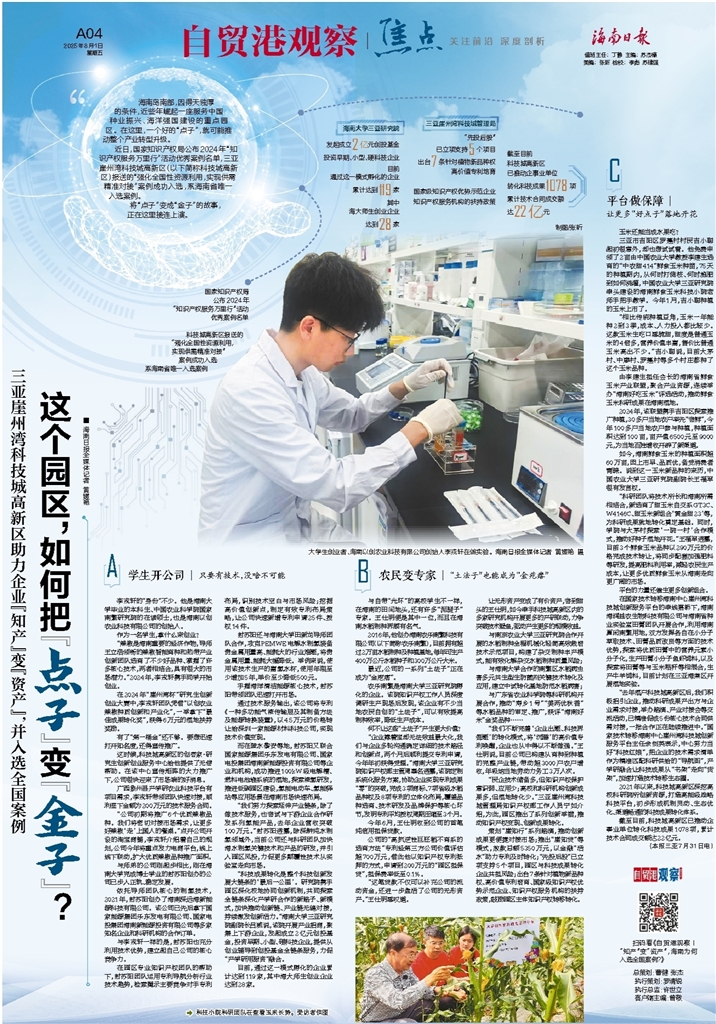
Core Viewpoint - The Sanya Yazhou Bay Science and Technology City High-tech Zone has been recognized for its successful transformation of intellectual property into assets, showcasing a model for resource utilization and precise supply-demand matching in the agricultural and marine sectors of China [5][6]. Group 1: Intellectual Property and Innovation - The Sanya Yazhou Bay Science and Technology City High-tech Zone was the only case from Hainan Province selected in the National Intellectual Property Administration's 2024 "Intellectual Property Service Journey" activity [5][6]. - The zone has successfully incubated 119 enterprises, including 28 founded by students and faculty from Hainan University [15]. - The zone's initiatives have led to the submission of multiple patents and trademarks, significantly reducing the average authorization period for invention patents to three months [18]. Group 2: Entrepreneurial Success Stories - Li Rongxuan, a graduate student, founded a company focusing on innovative chili pepper breeding, securing a technology service contract worth 2 million yuan [10][9]. - Feng Suyang, a PhD graduate, established a company specializing in hydrogen energy technology, achieving over 1 million yuan in revenue and filing 25 new patent applications [11][13]. - Wang Shiming, a farmer, transformed traditional farming methods into valuable intellectual property, securing a loan of 2 million yuan against his patents, which were valued at over 7 million yuan [19][20]. Group 3: Agricultural Innovations - The introduction of sweet corn varieties has led to increased income for local farmers, with planting areas expanding to over 60,000 acres [22][23]. - The Sanya Yazhou Bay Science and Technology City has facilitated partnerships between agricultural companies and research institutions, resulting in the development of new agricultural products and technologies [24]. - The zone has successfully facilitated the conversion of 1,078 technology achievements into practical applications, with a total transaction value of 2.2 billion yuan [25].
天海氢能首套橇装加氢站成功签约
Zheng Quan Shi Bao Wang· 2025-08-01 00:53
人民财讯8月1日电,近日,天海工业所属天海氢能成功签署首套橇装加氢站订单,实现商业化应用的重 要突破。 ...

吴江开发区“链”接氢能产业未来
Xin Hua Ri Bao· 2025-08-01 00:36
Core Insights - The hydrogen energy industry is gaining significant attention in China, with the Wujiang Economic and Technological Development Zone hosting a meeting to foster collaboration among 28 hydrogen enterprises from Suzhou, Shanghai, and Jiaxing, indicating a strategic focus on the hydrogen sector [1][2] - Hydrogen energy has been legally recognized in China as a key component of the energy transition strategy, with local government plans emphasizing its development as a priority area [1][2] - Wujiang Development Zone is positioned as a crucial growth hub for the hydrogen industry, housing nearly 100 hydrogen-related enterprises and achieving an industry scale close to 10 billion yuan [2][3] Industry Development - The hydrogen energy industry in Wujiang is characterized by a complete supply chain, from production to application, with significant advancements in technology and product offerings [3][4] - Companies like Suzhou Qingqi Technology are leading in catalyst production and have developed high-efficiency alkaline electrolyzers, showcasing the region's technological capabilities [3] - The integration of various hydrogen applications, such as hydrogen-powered bicycles and energy storage systems, is being facilitated through collaboration among local enterprises [4][5] Government Support and Policies - The Wujiang Development Zone has established a 2 billion yuan new energy fund to support the growth of hydrogen enterprises, with a focus on early-stage investments and technological innovation [5] - Talent attraction initiatives include financial support for startups and research facilities, demonstrating the local government's commitment to fostering the hydrogen industry [5] - The development of the hydrogen industry is seen as a strategic choice for Wujiang to enhance its production capabilities and secure a competitive edge in future markets [2][5]
紧抓发展契机 杭氧股份加强氢能业务布局
Zheng Quan Ri Bao· 2025-07-31 16:08
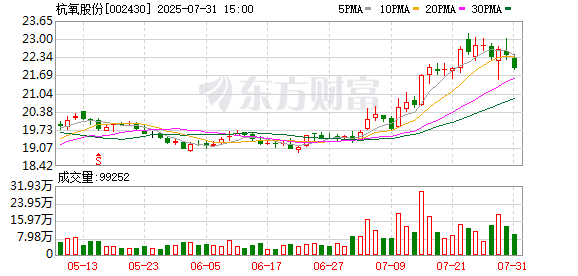
Core Viewpoint - The establishment of a joint venture, Luoyang Hangyang Longze Hydrogen Energy Co., Ltd., aims to enhance the hydrogen energy industry chain and improve the company's competitiveness in the hydrogen sector [2][3]. Group 1: Joint Venture Details - The joint venture will have a registered capital of 15 million yuan, with Hangyang Group contributing 7.65 million yuan (51%), Longze Energy 5.85 million yuan (39%), and Shanghai Hydrogen Maple 1.5 million yuan (10%) [2]. - The total investment for the project is approximately 45.5 million yuan, with additional funding to be secured through external financing [2]. Group 2: Strategic Implications - The collaboration is expected to significantly enhance Hangyang Group's technology in coke oven gas hydrogen production and expand hydrogen application scenarios [3]. - The joint venture will enable Hangyang Group to enter the fuel cell vehicle market, which is anticipated to see a continuous increase in hydrogen demand due to the rapid development of the fuel cell vehicle industry [3]. Group 3: Company Background and Achievements - Hangyang Group has a long-standing presence in air separation equipment manufacturing and industrial gas services, with applications across various sectors including energy, metallurgy, electronics, and healthcare [3]. - The company has made significant strides in the hydrogen energy sector, possessing mature hydrogen purification technology and comprehensive design capabilities for hydrogen liquefaction [3][4]. - Hangyang Group's first hydrogen industry project, a 4000m³/h industrial tail gas hydrogen production and 6000kg/d hydrogen refueling station, has set a benchmark for hydrogen applications in transportation [4].

铂钯行业研究系列报告:“铂”取大势,“钯”握微末(九):前路漫漫,铂钯氢能需求仍有瓶颈
Guo Tai Jun An Qi Huo· 2025-07-31 13:54
Report Industry Investment Rating No relevant content provided. Core Views of the Report - The hydrogen energy sector is a key focus in the platinum market. Platinum is a crucial catalyst in proton exchange membrane technology, while palladium is used in hydrogen purification but has low technology penetration due to high costs [1][2][63]. - The hydrogen energy industry is currently in a bottleneck period, facing challenges in technology, cost, safety, and infrastructure. These factors limit the growth of downstream hydrogen demand [2][26]. - By 2030, platinum demand in the hydrogen energy sector is expected to reach around 5.53 tons. In the next 5 years, this demand will remain small and unlikely to impact the overall platinum supply - demand balance. The growth of platinum demand is slower than expected due to the decline in fuel - cell vehicle sales, and proton exchange membrane electrolyzers may surpass fuel - cell vehicles as the main application scenario for platinum demand in the hydrogen energy sector [2][59][60]. Summary by Directory 1. Tracing the Origins: Physical and Chemical Properties of Platinum and Palladium and Their Applications in the Hydrogen Energy Industry - In 2024, global platinum demand in hydrogen - related fields was only about 44 thousand ounces, accounting for 0.53% of the total demand. There is no separate statistical data for palladium in the hydrogen - related field [6]. - Platinum is mainly used in hydrogen production and utilization, while palladium is mainly used in the purification stage of hydrogen production [10]. - Platinum is a catalyst material for proton exchange membranes. Proton exchange membranes are widely used in hydrogen production and utilization. Platinum has high catalytic activity and acid - resistance stability, making it suitable for this role [12][18][19]. - Palladium can selectively permeate hydrogen and is used in hydrogen purification. However, due to high costs, the palladium membrane method has low penetration compared to the PSA method [20][21][25]. 2. A Long Road Ahead: Analysis of the Hydrogen Energy Industry Development - **Current situation**: Electrolytic water hydrogen production is growing rapidly, but fuel - cell vehicles, the main application of hydrogen fuel cells, are facing difficulties in promotion, with a decline in new promotion numbers [2][27]. - **Advantages**: Hydrogen energy has excellent coupling with renewable energy, which can solve the mismatch between renewable energy power generation and power consumption [29][30]. - **Policy differences**: China views the hydrogen energy industry as an important means to achieve the dual - carbon goal. Japan and South Korea focus on fuel - cell vehicles, while EU countries represented by Germany emphasize environmental protection and energy supply [2][34][36]. - **Bottlenecks**: The hydrogen energy industry is restricted by technology, cost, safety, and infrastructure, which limit the growth of downstream hydrogen demand [2][26][38]. 3. Long - Term Strategy: Estimation of Platinum and Palladium Demand in the Hydrogen Energy Industry - **Single consumption of core applications**: In fuel - cell vehicles, the estimated platinum consumption per passenger car is about 25 grams, and per commercial vehicle is about 65 grams. For proton exchange membrane electrolyzers, the estimated platinum consumption per megawatt is about 700 grams. Reducing platinum loading is a major research direction in the proton exchange membrane industry [42][43][44]. - **Development prediction of related fields**: For proton exchange membrane electrolyzers, the maximum installed capacity of announced projects is about 520GW, but after excluding early - stage projects, the maximum installed capacity from 2025 - 2030 is 225GW. It is predicted that by 2030, the new installed capacity of proton exchange membrane electrolyzers will have a compound annual growth rate of 44% - 56%. For proton exchange membrane fuel cells, considering infrastructure challenges, it is predicted that by 2030, fuel - cell commercial vehicle sales will have a small compound annual decline of 1% - 5%, and passenger vehicle sales will have a larger decline of 23% - 27% [48][50][54]. - **Prediction results**: By 2030, platinum demand in the hydrogen energy sector is expected to reach around 5.53 tons. In the next 5 years, this demand will be small, the growth rate is slower than expected, and proton exchange membrane electrolyzers may become the main application scenario for platinum demand [59][60][61].
国家能源局:上半年我国能源领域民企完成投资额同比增长27.8%
Zheng Quan Ri Bao Wang· 2025-07-31 12:28
Core Insights - As of June 2025, the total number of electric vehicle charging facilities in China reached 16.1 million, with public charging facilities accounting for 4.096 million and private facilities for 12.004 million, achieving a county coverage rate of 97.08% and a town coverage rate of 80.02% [1] - In the first half of this year, the total charging volume for new energy vehicles in China reached 54.923 billion kilowatt-hours, with the annual charging volume expected to be comparable to the annual output of the Three Gorges Dam [1] - The National Energy Administration plans to enhance the charging network and improve service quality to better meet the needs of consumers purchasing and using new energy vehicles [1] Investment Trends - Investment in energy infrastructure projects exceeded 1.5 trillion yuan in the first half of the year, marking a year-on-year increase of 21.6%, with private enterprise investment growing rapidly [1][2] - Investment in renewable energy generation, particularly in onshore wind and distributed solar, saw significant growth, with distributed solar investment increasing by over 70% [2] - Investment in energy supply security, including coal and nuclear power, remained strong, with multiple key projects completed to ensure electricity supply during peak summer demand [2] New Energy Developments - Investment in hydrogen energy projects doubled in the first half of the year, and investment in charging infrastructure grew by nearly 70% [2][3] - The share of non-fossil energy generation capacity surpassed 60% for the first time, with wind and solar power installations doubling compared to the same period last year [3] - New energy storage capacity reached 94.91 million kilowatts (or 222 million kilowatt-hours), reflecting a growth of approximately 29% from the end of 2024 [3] Future Directions - The National Energy Administration aims to implement the "Four Revolutions, One Cooperation" energy security strategy, expanding new energy storage applications and enhancing market mechanisms for high-quality development [4]