
数字贸易

Search documents
第四届全球数字贸易博览会“数贸创投日”在杭州成功举办
3 6 Ke· 2025-09-28 00:04
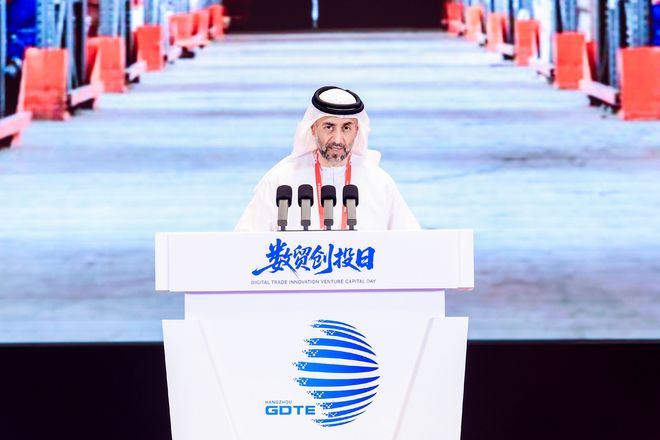
Core Insights - The short-term outlook for service trade is significantly better than that for goods trade, with digital delivery models becoming the core engine for global trade recovery [1] - Zhejiang has established a comprehensive digital trade ecosystem, leading to a notable increase in digital trade activities, evidenced by a 13.3% year-on-year growth in digital trade import and export value [1][3] - The Fourth Global Digital Trade Expo introduced the "Digital Trade Investment Day" to facilitate innovation and capital connection in the digital trade sector, attracting over 500 global participants [2][3] Digital Trade in Zhejiang - Zhejiang's digital trade foundation is built on a three-dimensional synergy of policy direction, capital support, and ecosystem development [3] - The province aims to become a global digital trade center, attracting high-quality capital and fostering an optimal business environment [3][6] - In 2024, China's digital service trade is projected to exceed 3 trillion yuan, with Zhejiang playing a pioneering role [6] Achievements and Initiatives - The "Digital Trade Investment Day" has resulted in significant collaborations across various sectors, with total cooperation amounts exceeding 50 million yuan and expected investments surpassing 200 million yuan [2][7] - The event showcased awards, financial solutions, and strategic partnerships, creating a comprehensive "results loop" that connects capital and industry [9][8] - The establishment of the Global Digital Trade Expo's Technology Innovation and Entrepreneurship Investment Committee aims to integrate resources for better collaboration [8] Capital and Industry Synergy - The event highlighted the need for capital to transition from merely providing funds to becoming enablers of technology and market access [16] - Discussions emphasized the importance of aligning capital with industry needs, focusing on long-term value rather than short-term gains [15][16] - Successful case studies from companies like Yushutech and Lingban Technology demonstrated how capital support can bridge gaps in production and supply chains [19] Future Outlook - Zhejiang is poised to enhance its digital trade ecosystem, focusing on quality improvements and aligning technological innovations with market demands [20] - The province aims to ensure that capital flows align with long-term value creation, benefiting a diverse range of stakeholders in the digital trade landscape [20][21]


陕西数字贸易国际合作对接会在杭州举行
Shan Xi Ri Bao· 2025-09-27 22:35
Group 1 - The conference held in Hangzhou on September 25 aimed to showcase the achievements of Shaanxi's digital economy and establish a high-level international cooperation platform for key digital industries [1] - The event attracted government representatives and key enterprise leaders from Shaanxi and Zhejiang, as well as companies from Hong Kong and other provinces, and foreign representatives [1] - Shaanxi focused on expanding its digital trade network, promoting key digital industry chains, and attracting quality enterprises for investment [1] Group 2 - Xi'an Zhongke Xiguang Aerospace Technology Co., Ltd. introduced the "Xiguang Series" hyperspectral constellation aimed at initiating aerospace information cooperation [2] - Ant Group shared innovations in AI technology across various fields, while Xiying Group discussed the integration of "AI+XR" technology in the film industry [2] - The Shaanxi Provincial Department of Commerce stated that the conference expanded the development space and cooperation channels for Shaanxi's digital trade, injecting new momentum into linking global resources [2]
第四届全球数字贸易博览会举办
Jing Ji Ri Bao· 2025-09-27 22:01
Group 1 - The fourth Global Digital Trade Expo is being held in Hangzhou from September 25 to 29, organized by the Zhejiang Provincial Government and the Ministry of Commerce, with the theme "Seeing Innovative Futures at the Digital Trade Expo" [1] - The exhibition covers a total area of 155,000 square meters, attracting participants from 154 countries and regions, 33 international organizations, and over 1,800 domestic and foreign enterprises, with more than 42,000 professional buyers attending [1] - The expo features a "1+5+7" structure, including one main exhibition area, five major subfields of digital trade, and seven specialized industry exhibition areas [1] Group 2 - The guest country, Indonesia, has expressed procurement intentions exceeding 5 billion yuan for new capital construction and digital transformation, with total expected procurement at the expo reaching 30 billion yuan [1] - The "Digital Trade Online" platform will be upgraded to include practical features such as business matching and global store openings, facilitating year-round trade connections [1]
经济观察:四度开启“数贸之约”,为何在浙江?
Zhong Guo Xin Wen Wang· 2025-09-27 13:57
Group 1: Event Overview - The fourth Global Digital Trade Conference in Hangzhou attracted 1,812 exhibitors, 33 international organizations, and 11,000 international guests, marking an increase in both scale and attendance compared to previous years [1] - The event showcased the integration of digital and real economies, highlighting the growth of Zhejiang's innovation capabilities over the past four years [1] Group 2: Technological Innovations - The "Hangzhou Six Little Dragons" exhibition featured impressive technologies, including humanoid robots and smart sports solutions, such as the "AI Little Ball" developed by Youqiu Zhixing Network Technology [2] - The conference introduced a "Digital Trade Venture Day," where seven high-quality companies from AI, healthcare, and new energy sectors presented their projects and engaged with investment institutions [2] Group 3: Infrastructure Development - The Hangzhou Data Group presented the country's first liquid-cooled intelligent computing cluster, which supports the training and inference of large AI models, emphasizing the importance of computing power in the digital economy [3] - A 250 million yuan computing voucher program was established to reduce innovation costs for enterprises, allowing eligible companies to receive up to 30% in computing subsidies [3] Group 4: E-commerce and Cross-border Trade - The "Silk Road E-commerce" exhibition area demonstrated renewed vitality in traditional e-commerce, enhanced by AI technologies [4] - A 3D AI design tool showcased at the event significantly improved efficiency and reduced costs for cross-border e-commerce sellers, indicating a trend towards digital solutions in global trade [5] Group 5: Trade Growth and Future Plans - Zhejiang's digital trade has consistently surpassed significant milestones, with a total trade volume of 4,150 billion yuan in the first half of the year, reflecting a 13.2% year-on-year growth [5] - Plans to accelerate the development of key trade hubs, such as the Hangzhou Global Digital Trade Port and Ningbo Cross-border Logistics Hub, aim to strengthen the integration of physical and digital trade [6]
第四届全球数字贸易博览会“数贸创投日”在杭州成功举办,直击数贸创投日,看产业与资本如何同频共振?
3 6 Ke· 2025-09-27 06:56
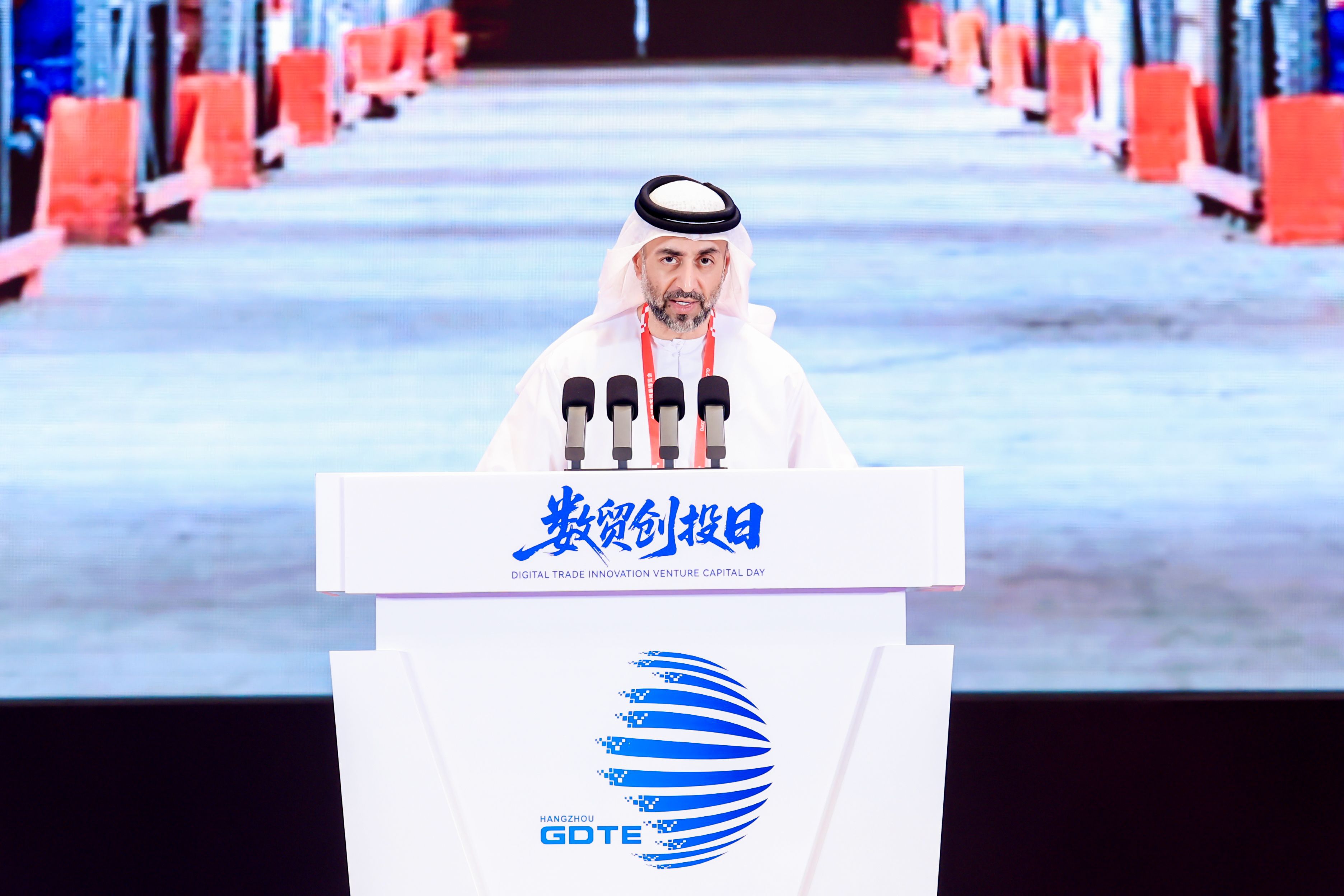
Core Insights - The short-term outlook for service trade is significantly better than that for goods trade, with digital delivery models becoming the core engine of global trade recovery [1] - Zhejiang province has seen a digital trade import and export value of 553.08 billion yuan from January to August 2025, marking a year-on-year growth of 13.3% [1] - The Fourth Global Digital Trade Expo introduced the "Digital Trade Investment Day" to facilitate innovation and capital connection in the digital trade sector [2] Group 1: Digital Trade in Zhejiang - Zhejiang's digital trade foundation is built on a three-dimensional synergy of policy direction, strong capital support, and ecological barriers [3] - The province aims to become a global digital trade center, attracting high-quality capital and creating an optimal business environment [3] - In 2024, China's digital service trade scale is expected to exceed 3 trillion yuan, with a year-on-year growth of 10.2%, positioning Zhejiang as a pioneer [8] Group 2: Investment and Collaboration - The "Digital Trade Investment Day" aims to match 100 innovative projects with 100 funds, resulting in a total cooperation amount exceeding 50 million yuan and expected to drive over 200 million yuan in investments [2] - The event has established a "results closed loop" through awards, rankings, financial solutions, and strategic partnerships, facilitating the integration of capital and industry [12] - Strategic agreements were signed on-site, with total credit exceeding 10 billion yuan, further bridging the gap between funding and industry implementation [11] Group 3: Challenges and Solutions - A key challenge remains the disconnect between capital seeking early-stage investments and industries needing resources for mass production and supply chain support [13] - Discussions at the event highlighted the need for capital to evolve from merely providing funds to becoming enablers that understand technology and resources [24] - The consensus emerged that both capital and industry must engage in open communication to leverage strengths and address weaknesses [24] Group 4: Future Outlook - The global competition in digital trade is entering a phase of technological breakthroughs, capital empowerment, and industry collaboration [28] - Zhejiang is expected to focus on upgrading its digital trade ecosystem, emphasizing long-term value and avoiding speculative investments [30] - The province aims to ensure that technological innovations align closely with market needs, benefiting a diverse range of stakeholders in the digital trade landscape [30]
与世界共享数字贸易发展红利
Jing Ji Ri Bao· 2025-09-26 21:49
近年来,数字贸易蓬勃发展,已成为国际贸易发展的新趋势和世界经济的新增长点。正在进行的第四届 全球数字贸易博览会发布报告显示,2020至2024年,全球数字贸易出口规模稳步提升,从4.59万亿美元 增至7.23万亿美元,年均增速达12.1%,高于同期全球贸易总额年均增长率。 我国高度重视数字贸易发展,专门出台《关于数字贸易改革创新发展的意见》。同时,丰富的数据资 源、庞大的国内市场、丰富的数字应用场景,为数字贸易的发展打下了坚实基础。我国数字贸易活力日 益充沛,成为在全球范围内数字服务贸易增长速度最快的经济体。今年上半年,我国可数字化交付的服 务贸易1.5万亿元,同比增长6%;跨境电商进出口1.32万亿元,同比增长5.7%,规模再创历史同期新 高。数字贸易蓬勃发展,不仅为国内经济增长注入了强劲动力,也为全球数字贸易的发展作出了中国贡 献。 要支持数字贸易细分领域和经营主体发展,积极发展数字产品贸易、持续优化数字服务贸易、大力发展 数字技术贸易、推进数据订购贸易高质量发展、培育壮大数字贸易经营主体,着力塑造我国数字贸易发 展新动能新优势;要推进数字贸易制度型开放,放宽数字领域市场准入、促进和规范数据跨境流动、打 ...
领域深化合作提速 中非数字贸易发展报告在杭州发布
Zhong Guo Xin Wen Wang· 2025-09-26 21:43
Core Viewpoint - Chinese enterprises have significantly contributed to the development of Africa's digital economy through infrastructure projects and digital center initiatives, enhancing internet access and facilitating economic growth [1][2]. Group 1: Digital Trade Development - The "China-Africa Digital Trade Development Report (2023-2025)" highlights that digital trade has become a crucial pillar in China-Africa economic relations, with African products like Ethiopian coffee and Kenyan tea entering the Chinese market via cross-border e-commerce platforms [1][2]. - The report indicates a shift in multilateral digital economic cooperation from mere goods exchange to higher-level integrations involving artificial intelligence, cloud ecosystems, and collaborative digital regulations [1][2]. Group 2: Key Areas of Cooperation - The report emphasizes cooperation in key areas such as small and medium-sized enterprise (SME) development, digital infrastructure, healthcare, education empowerment, women's empowerment, and capacity building, particularly focusing on rural, gender, and youth digital divides [2]. - Digital financial tools like mobile lending and digital payments are highlighted as crucial for increasing economic inclusivity, especially benefiting women and youth by lowering entrepreneurial barriers [2]. Group 3: Future Directions - The report suggests five key directions for deepening cooperation: improving digital trade regulatory frameworks, accelerating digital infrastructure development, enhancing trade facilitation, expanding digital trade and talent collaboration, and supporting the digital transformation of SMEs [2]. - It also features ten case studies showcasing successful examples of China-Africa digital cooperation across various sectors [2]. Group 4: Report Compilation - The report was compiled with guidance from the International Trade Centre (ITC) and various academic and research institutions in China, supported by the Global Development Fund project from the China International Development Cooperation Agency [3].
非洲代表谈非中合作新机遇:数字技术是关键
Zhong Guo Xin Wen Wang· 2025-09-26 21:43
Group 1 - The fourth Global Digital Trade Expo highlighted the launch of the "China-Africa Digital Trade Development Report (2023-2025)" and the establishment of the "China-Africa Digital Trade Talent Training Base" [1][2] - The "Belt and Road" China-Africa Cooperation Industrial Park was inaugurated, indicating a significant step forward in China-Africa digital economic cooperation [1][2] - African leaders emphasized the urgent need for digital infrastructure and the importance of tailored strategies for Africa's digital economy, rather than simply adopting models from other regions [1][2] Group 2 - The event showcased the necessity for scalable, efficient, and low-cost digital payment solutions and infrastructure in Africa to facilitate digital transformation [2] - Chinese enterprises are increasingly establishing a presence in Africa, providing services in digital payments, logistics, and digital living [2] - The "China-Africa Digital Trade Talent Training Base" will focus on areas such as digital trade, cross-border e-commerce, and fintech to enhance cooperation and exchange [2]
AI赋能数字贸易 数贸会架起开放合作桥梁
Zhong Guo Zheng Quan Bao· 2025-09-26 20:54
Core Insights - The Fourth Global Digital Trade Expo was held in Hangzhou from September 25 to 29, with over 1,800 exhibitors participating, highlighting the growing importance of artificial intelligence (AI) in global digital trade and the critical role of digital security in economic development [1] Group 1: Digital Trade Performance - Zhejiang Province's digital trade has shown remarkable growth, with trade volumes surpassing 600 billion, 700 billion, and 800 billion yuan from 2022 to 2024. In the first half of this year, the total digital trade volume reached 414.95 billion yuan, marking a year-on-year increase of 13.2% [2] - A report released during the expo indicated that China has established e-commerce cooperation mechanisms with 36 countries, creating over 120 online and offline national pavilions, thus fostering a multi-level cooperation model involving national coordination, local collaboration, and enterprise participation [2] Group 2: AI Enhancements in Digital Trade - AI is enhancing the efficiency of digital trade, with companies like Yaowang Technology showcasing their AI capabilities in the live e-commerce sector, creating AI industrial parks to provide comprehensive services that improve merchant and institutional efficiency [3] - Companies such as Qianxun are utilizing AI to analyze historical sales data and predict market trends, focusing on AI agents to enhance live e-commerce operations [3] - Alibaba's international digital commerce group is empowering over 500,000 merchants through AI technologies, covering more than 60 scenarios, providing technical references for global cross-border e-commerce digital transformation [3] - Experts emphasize that the integration of AI with digital trade can facilitate precise decision-making and market analysis, with the successful proliferation of AI industries dependent on the availability of large models, computing power, and high-quality data [3]

AI赋能数字贸易数贸会架起开放合作桥梁
Zhong Guo Zheng Quan Bao· 2025-09-26 20:48
Group 1 - The fourth Global Digital Trade Expo was held in Hangzhou from September 25 to 29, with over 1,800 exhibitors participating, highlighting the increasing role of artificial intelligence in global digital trade and the importance of digital security for economic development [1][2] - Zhejiang Province's digital trade performance is notable, with trade volumes expected to exceed 600 billion yuan in 2022, 700 billion yuan in 2023, and 800 billion yuan in 2024, and a total of 4,149.5 billion yuan in the first half of this year, representing a year-on-year growth of 13.2% [1][2] - A report released during the expo indicated that China has established e-commerce cooperation mechanisms with 36 countries, creating over 120 online and offline national pavilions, and fostering a multi-level cooperation model involving national coordination, local collaboration, and enterprise participation [1] Group 2 - Companies like China COSCO Shipping Group are developing fully digitalized supply chains, with six cross-border e-commerce products covering 63 countries, while YiwuPay serves trade relations across 233 countries and regions [2] - AI is enhancing efficiency in digital trade, with companies like Yaowang Technology showcasing AI capabilities in live e-commerce, and Zhansun leveraging AI to analyze historical sales data for market trend predictions [2] - Alibaba's international digital commerce group is empowering over 500,000 merchants through AI technologies, covering more than 60 scenarios, providing technical references for global cross-border e-commerce digital transformation [2]