
低空经济

Search documents
高德地图升空 深圳上线“空中高德”
Feng Huang Wang· 2025-07-31 03:24
龙岗区作为深圳发展低空经济的核心承载区,已具备坚实基础。据统计,全区已建成125个低空飞行器 起降平台,开通航线217条,累计飞行超30万架次,并聚集了150余家相关产业链企业。此次与高德的合 作,将进一步加速其低空产业高地的崛起,形成从政策、基建到场景、技术的完整创新生态。 据悉,双方的合作是全方位的,除了低空经济,还将深入智能驾驶、智慧交通、机器人及即时配送等多 个前沿领域,共同助力深圳打造全球创新标杆城市。 凤凰网科技讯 7月31日,高德地图将其业务版图从地面正式拓展至天空。昨日,高德与深圳市龙岗区联 合宣布"空中高德"项目正式启航,双方将共建一个覆盖全业务场景的低空经济示范区。此举标志着高德 地图全面进军万亿级的低空经济新赛道,致力于将地面交通的导航与管理经验复制到空中。 "空中高德"的核心是为城市低空领域构建一个数字化的时空基础设施。它不仅仅是一个简单的三维地 图,而是一个集成了海量实时数据的"活地图"。基于AI深度学习和三维重建技术,该系统能够低成本、 高效率地生成并每日更新城市(300778)三维模型,为无人机等飞行器提供孪生地图管理、空中路径智 能规划和实时的空间碰撞预警等关键功能。其目标是实 ...
2亿,长沙落地一支低空经济基金
Sou Hu Cai Jing· 2025-07-31 02:14
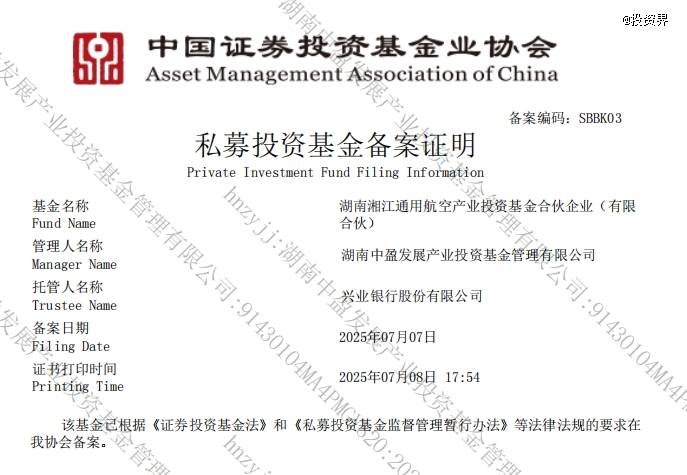
投资界7月31日消息,近日,湖南湘江通用航空产业投资基金合伙企业(有限合伙)(简称"湘江通航产 业基金")顺利通过中国证券投资基金业协会备案,总规模2亿元。该基金由湘江集团湘江通航公司和中 盈投资公司中盈基金共同发起设立,标志着湘江集团首支聚焦低空经济领域的产业投资基金正式进入投 资运作阶段。 据悉,湘江通航产业基金将充分发挥湘江新区的科技创新优势和产业基础,聚焦投资低空经济产业、航 空航天北斗产业等领域具备成长潜力的企业,积极践行"以投带引"战略部署,吸引低空经济产业链上下 游优质企业落地湖南湘江新区湘江智航新城低空经济产业园,通过投资与产业赋能,系统推进产业链生 态圈的构建与升级,助力湖南湘江新区湘江智航新城低空经济产业园成为"全国低空经济产业示范园 区"。 湘江集团相关负责人表示,湘江通航产业基金将为湖南乃至全国的航空航天产业发展提供有力的金融支 持。通过聚焦硬科技领域的投资,该基金有望推动一批具有核心竞争力的科技企业快速成长,进一步促 进本土产业链的完善和升级。 来源:长沙高新区 值得一提的是,湘江智航新城低空经济产业园(一期)开发项目整体规划面积约8平方公里,预计整体 投资157亿元。园区以"一心五 ...

无人机用上“空中高德”高密度飞行也不怕撞
Nan Fang Du Shi Bao· 2025-07-30 23:10
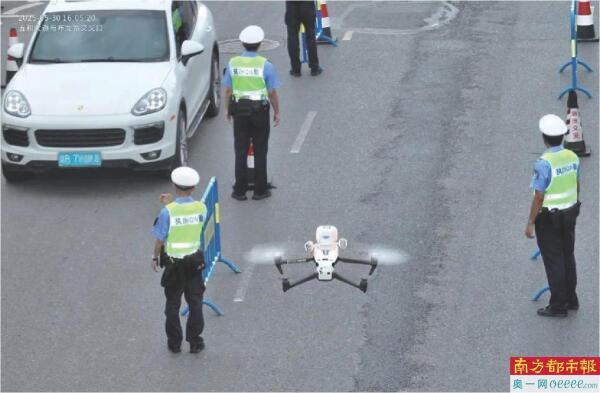
龙岗全面拓展低空场景应用,这是"空地联动"严查交通违法。 应急无人机对全区范围常态化飞巡。 董振宁介绍,在低空保障方面,"空中高德"通过提供低空空域、智能预判等信息,可支持管理部门基于 数据做出更合理的决策,完善低空飞行服务保障体系;在低空服务方面,"空中高德"面向低空核心商业 参与方,融合人地、通导监、气象、空域等10余类数据,提供数据服务、用户服务和产业服务,覆盖飞 行前、飞行中、飞行后的低空活动全链路需求;在低空空域方面,"空中高德"则能够支持低空管理部门 的空域规划和航路构建任务,形成可动态调整的公共航路体系。 当无人机等低空飞行器用上"高德地图",是怎样一种体验?当"空中高德"落地,又会对低空经济的发展 产生怎样的影响?7月30日,由龙岗区人民政府和高德软件有限公司联合主办的"空中高德·龙岗启 航"——深圳市龙岗区空中高德时空底座发布会在香港中文大学(深圳)举行,标志着覆盖全业务场景 的低空经济示范区——"空中高德"项目正式在龙岗落地启航。据悉,龙岗区将加快完善低空产业基础设 施,全面拓展低空场景应用,与高德地图等合作伙伴一起,围绕智慧交通、智能驾驶、即时配送、虚拟 社区等领域深化合作,打造更多创新 ...
广州开发区、黄埔区发布“低空与航天11条” “天空之城”全链条加码低空产业
Jing Ji Ri Bao· 2025-07-30 22:19
Core Insights - The Guangzhou Development Zone and Huangpu District are promoting the "Low Altitude Economy and Aerospace Industry" through a series of supportive measures aimed at high-quality development [1][2][3] Group 1: Policy Measures - The "Low Altitude and Aerospace 11 Measures" includes financial incentives, with individual clauses offering up to 30 million yuan for companies obtaining key aviation certifications [3] - Specific subsidies include up to 10 million yuan for project establishment, 600,000 yuan annually for infrastructure participation, and 300,000 yuan for operational support of demonstration projects [3][4] - The policies aim to enhance the entire low-altitude industry chain, focusing on project attraction, infrastructure, talent training, and technical breakthroughs [2][3] Group 2: Industry Development - The low-altitude economy has attracted over 50 key enterprises, generating an output value of approximately 15 billion yuan, covering the entire industry chain from R&D to operation [2][4] - The establishment of a dedicated office for low-altitude economy and aerospace development indicates a strategic focus on these emerging industries [2] - The region aims to gather over 100 low-altitude enterprises by the end of the year, leveraging a combination of new infrastructure and financial support [4] Group 3: Financial Innovations - A significant financial innovation is the listing of a low-altitude economic asset-backed securities (ABS) plan with a total issuance scale of 584 million yuan, aimed at supporting the development of the low-altitude economy [5] - This financial initiative is expected to enhance the region's ability to attract investment and support the growth of emerging companies in the low-altitude sector [5] Group 4: Application Scenarios - New application scenarios are being realized, such as the launch of bonded logistics air routes that reduce transportation time by 50% and save at least 10% in costs [4] - Companies like Guangzhou New Aviation Technology Co. and Jilei Electric Science and Technology are leading in their respective niches within the low-altitude economy, contributing to the sector's growth [4]
3000万重奖撬动万亿蓝海 广州黄埔冲刺“天空之城”
2 1 Shi Ji Jing Ji Bao Dao· 2025-07-30 11:53
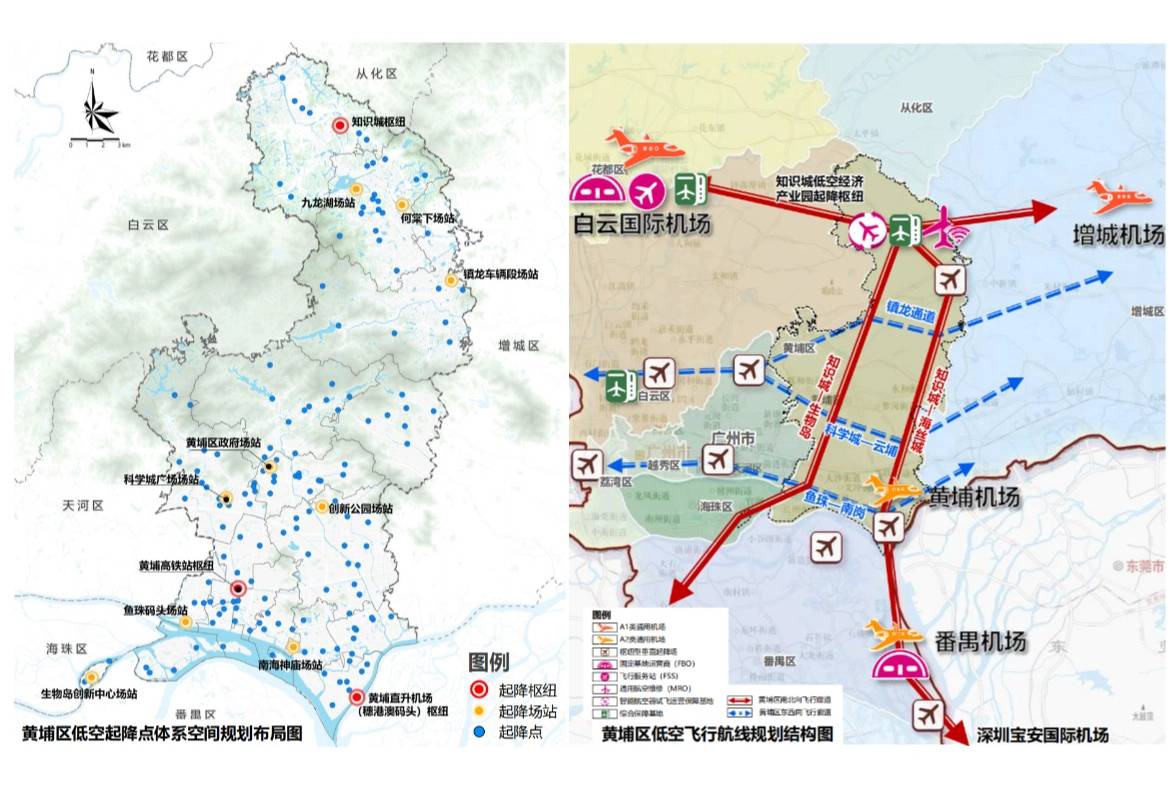
Core Points - The Guangzhou Development Zone and Huangpu District are promoting the low-altitude economy and aerospace industry through a series of policies and initiatives aimed at creating a comprehensive industrial ecosystem [1][2] - The "Low Altitude and Aerospace 11 Measures" policy offers substantial financial incentives, including a maximum reward of 30 million yuan for companies achieving key aviation certifications [2][3] - A new low-altitude takeoff and landing point and route planning system has been introduced, featuring a "3+9+N" layout to enhance infrastructure for low-altitude operations [3][4] Policy and Financial Support - The policy is set to inject approximately 200 million yuan into the low-altitude economy, with specific incentives for various stages of business development [2][3] - Key financial support includes up to 1 million yuan for project establishment, 600,000 yuan for infrastructure development, and 300,000 yuan for demonstration projects [2][3] - The initiative aims to enhance local core component supply rates and support training for drone operators and new aircraft pilots [2][3] Infrastructure Development - The district has unveiled a comprehensive low-altitude takeoff and landing point plan, which includes three hubs, nine stations, and numerous takeoff points [3][4] - A low-altitude equipment manufacturing park is under construction, designed to support advanced technology and testing facilities [4][5] - The establishment of a low-altitude management service platform and deployment of 31 5G-A base stations are part of the infrastructure enhancements [4][5] Application Scenarios and Market Opportunities - The district has launched 16 typical application scenarios and 55 specific opportunity lists across production, public services, and aviation consumption [6][7] - Successful implementations include drone-assisted agriculture, automated inspection services, and intelligent customs clearance for low-altitude logistics [7][8] - The area has conducted 1,923 flight activities with a total flight time of 243 hours, showcasing the active engagement in low-altitude operations [6][7] Industry Collaboration and Ecosystem - The establishment of the Low Altitude Economy Industry Association marks a new phase in collaborative development within the sector [8][9] - The association aims to integrate resources from enterprises, research institutions, and industry associations to foster innovation and cooperation [8][9] - The district has attracted over 50 companies, generating a total output value of 14.8 billion yuan, demonstrating the successful formation of a low-altitude economic cluster [9][10]
融资事件超去年同期,成都低空经济投融资事件居国内第二梯队
Sou Hu Cai Jing· 2025-07-30 10:37
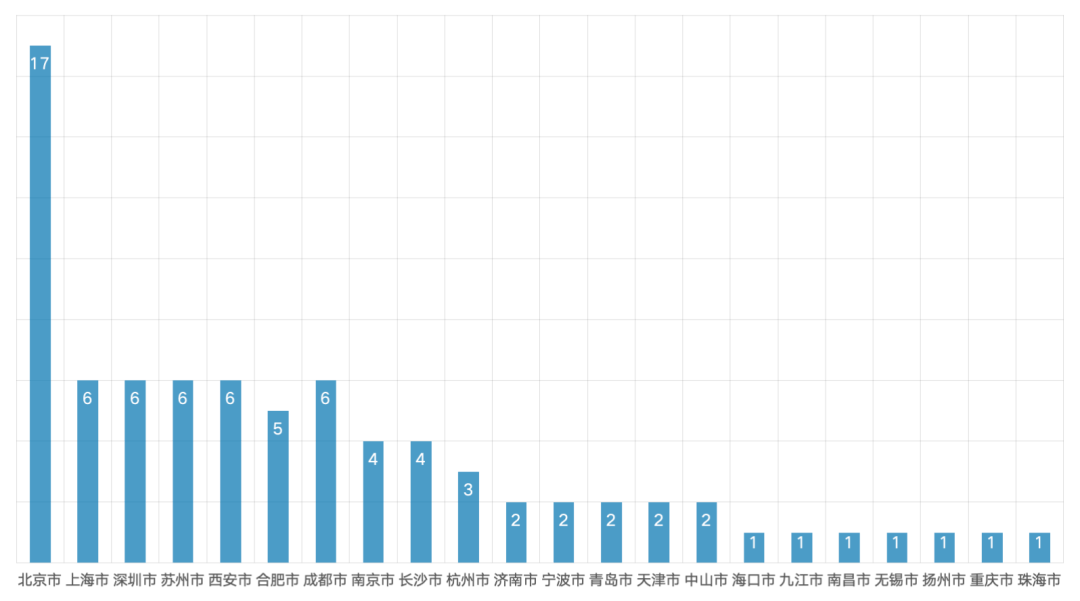
Core Insights - The low-altitude economy in China is experiencing significant growth, with 78 financing events reported in the first half of 2025, highlighting the sector's potential and investment interest [1][3][5] Financing Events - A total of 78 financing events occurred in the low-altitude economy sector nationwide in the first half of 2025, with Beijing leading at 17 events, followed by Chengdu, Suzhou, Shanghai, Shenzhen, and Xi'an with 6 each [2][3] - Chengdu stands out with 6 financing events, showcasing its prominence in the western region of China [3][12] - The financing rounds included 28 A-rounds, 21 angel rounds, 12 B-rounds, and 4 C-rounds or above, indicating a diverse range of investment stages [5] Investment Amounts - Among the disclosed financing events, 21 reported specific amounts, with 14 being in the tens of millions and 7 in the billion range [5] - Notable financing includes Sichuan Aosi Technology's nearly 200 million RMB in C-round financing, marking it as one of the seven billion-level financing events nationwide [13] Key Companies and Developments - Significant companies involved include Sichuan Aosi Technology, which received nearly 200 million RMB, and other firms like WeFly LongSky and Dream Sky Technology, which are making strides in eVTOL development and orders [6][11][13] - The 2025 International Low Altitude Economy Expo resulted in a record 1.75 billion USD in orders, including a landmark agreement for 500 eVTOL aircraft [7][11] Regional Development - Chengdu's low-altitude economy is characterized by a broad coverage of the industrial chain and diverse investment sources, with local and external investors participating [12][14] - The city has established itself as a crucial aviation manufacturing base, benefiting from its industrial foundation and technological innovation capabilities [14] Technological Advancements - The low-altitude economy is witnessing breakthroughs in technology, with companies like WeFly LongSky introducing innovative products such as the AE200 smart cabin, enhancing user experience in eVTOLs [9][11] - The sector is also focusing on various technological fields, including drone manufacturing, FPV technology, and low-altitude security [13]
新劲刚:凯际智能与深圳市智胜高技术研究院在低空经济领域的合作稳步推进
Zheng Quan Ri Bao Wang· 2025-07-30 09:46
证券日报网讯新劲刚(300629)7月30日在互动平台回答投资者提问时表示,凯际智能与深圳市智胜高 技术研究院于2024年10月签订战略合作协议后,双方在低空经济领域的合作稳步推进,公司正积极对接 深圳及周边地区的低空经济应用场景,推动相关技术与产品的商业落地,已有部分地区完成了产品测试 及站址确定,后续进展将按规定及时披露。 ...

培育低空经济产业,广州开发区加速软硬件配套供给
Di Yi Cai Jing· 2025-07-30 06:09
Core Points - The Guangzhou Development Zone is investing approximately 200 million yuan to support the low-altitude economy and aerospace industry, with a maximum single award of 30 million yuan for companies obtaining key aviation certifications [1] - The new policy aims to create a comprehensive ecosystem for the low-altitude economy, including a layout of low-altitude takeoff and landing points and flight routes [1][4] - The area has already attracted over 50 upstream and downstream enterprises, generating a total output value of 14.8 billion yuan, with 26 low-altitude projects signed in the past year totaling 18.3 billion yuan in investment [4] Investment and Infrastructure - The policy includes a "3+9+N" layout system for low-altitude takeoff and landing points, consisting of 3 hubs, 9 landing sites, and multiple takeoff points [1] - A low-altitude equipment manufacturing park covering 5 square kilometers is being planned, which will include advanced technology laboratories and multifunctional testing runways [4] - The area has conducted 1,923 flight activities with a total flight time of 243 hours and a flight distance of 3,760.57 kilometers, utilizing an airspace of 408.4 square kilometers [4] Application and Development - The local government is promoting 16 typical application scenarios and a list of 55 specific opportunities in the low-altitude economy [4] - Successful applications in the area include the use of drones for precision farming, which has increased operational efficiency by over 30% and reduced costs by 20% [4] - Plans are in place to deploy 100 government drones within three years, opening up 10 commercial application scenarios including smart logistics and emergency rescue [4]
科创板成长层投资机会全扫描
Zhong Guo Zheng Quan Bao· 2025-07-30 02:28
Core Viewpoint - The Sci-Tech Innovation Board's "Growth Layer" aims to support technology-driven companies that have significant breakthroughs, broad commercial prospects, and substantial R&D investments but are not yet profitable [2][3]. Group 1: Target Companies - The Growth Layer includes technology companies that are not yet profitable but have the potential to become future "tech giants" [3]. - Companies in the Growth Layer are characterized by high R&D investments and significant technological advancements [2]. Group 2: Upgrade Conditions - To exit the Growth Layer and upgrade to the Sci-Tech Innovation Board, companies must meet one of two conditions: either achieve profitability for two consecutive years with a cumulative net profit of 50 million or achieve profitability in the most recent year with a revenue of 100 million [4][5]. - The existing unprofitable companies will continue to follow the previous criteria for exiting the Growth Layer until the new policy is implemented [7]. Group 3: Policy Implications - The Growth Layer serves as a "testing ground" for new policies that can later be applied to other market segments, providing a controlled environment for reform [9][10]. - The establishment of a dedicated "observation zone" for unprofitable tech companies allows for better risk identification and investor protection [10]. Group 4: Investment Opportunities - Potential investment opportunities exist in emerging industries such as artificial intelligence, commercial aerospace, and low-altitude economy, but careful evaluation of company prospects is necessary [12]. - The introduction of experienced institutional investors in the Growth Layer can help identify high-quality tech companies, providing insights for potential investments [13]. - Companies nearing profitability or meeting revenue standards may present opportunities for investment as they are expected to exit the Growth Layer [14].

低空 +”赋能千行百业 中国低空经济“振翅高飞
Zhong Guo Chan Ye Jing Ji Xin Xi Wang· 2025-07-30 00:14
Core Insights - The low-altitude economy and commercial space have emerged as significant new industries driving new productive forces in China [1] - The integration of "low-altitude+" into various sectors has accelerated the development of the low-altitude economy across multiple applications, including urban governance, aerial transportation, emergency rescue, and low-altitude tourism [1] Group 1: Shenzhen's Initiatives - Shenzhen has launched a comprehensive drone testing center covering over 12,000 square meters, integrating drone technology testing, flight training, and event operations [2] - The city has introduced a "one network for unified low-altitude smart inspection service platform" that spans eight urban management areas, enhancing governance through smarter and more refined approaches [2] Group 2: Guangdong's Economic Scale - Guangdong has established a complete low-altitude economic chain, with the scale exceeding 100 billion yuan, and has attracted over 15,000 related enterprises [3] - The province has opened more than 700 drone flight routes, with nearly 800,000 drone logistics deliveries annually, and is developing a 30-minute aerial medical rescue network [3] Group 3: Hefei's Meteorological Support - Hefei, known as a "super experimental field" for low-altitude economy, has deployed mobile boundary layer meteorological observation stations to capture real-time weather data, enhancing flight safety and economic efficiency [4] Group 4: Xi'an's Industrial Ecosystem - Xi'an has established a drone industry chain with 106 upstream and downstream enterprises, facilitating high-frequency transportation of scientific samples and precision instruments via low-altitude logistics routes [5] Group 5: Market Potential - The low-altitude economy market in China is projected to reach 1.5 trillion yuan by 2025 and is expected to grow to 3.5 trillion yuan by 2035, driven by continuous policy improvements and technological innovations [6]