科创板成长层

Search documents
科创板成长层首批“退层”企业出炉!百济神州、寒武纪等在列
Shang Hai Zheng Quan Bao· 2026-03-11 08:44
Group 1 - The core viewpoint of the news is that the Sci-Tech Innovation Board (STAR Market) is witnessing the first batch of companies transitioning out of the growth tier, with significant revenue and profit growth expected for 2025 [2][3] - As of March 11, all companies on the STAR Market have disclosed their 2025 performance, projecting total revenue of 1.59 trillion yuan, a year-on-year increase of 10.3%, and net profit of 59.1 billion yuan, a year-on-year increase of 28.2% [2] - Six companies, including Cambricon and BeiGene, are expected to successfully turn profitable, with net profits ranging from 80 million yuan to 2.1 billion yuan, and are anticipated to remove the special "U" designation after the 2025 annual report [2][3] Group 2 - Among the six companies, BeiGene leads in revenue, expecting 2025 revenue of 38.205 billion yuan, a 40.4% increase, and a net profit of 1.422 billion yuan, driven by strong sales of its key products [3] - Cambricon achieved a revenue of 6.497 billion yuan in 2025, a substantial increase of 453.21%, marking its first annual profit since its IPO in 2020 [6][8] - Other companies like Orbbec and NIO also reported significant growth, with Orbbec's revenue reaching 941 million yuan (up 66.66%) and NIO's revenue at 2.726 billion yuan (up 108.93%) [8] Group 3 - The STAR Market's growth tier was established to support technology companies with significant breakthroughs and broad commercial prospects, particularly those that are not yet profitable at the time of listing [10] - Since the introduction of the "1+6" policy measures by the China Securities Regulatory Commission, several cutting-edge technology companies have accelerated their listing processes, with 39 companies now included in the growth tier [10] - The establishment of the growth tier enhances the market's inclusivity and attractiveness, catering to different risk preferences among investors [11]



寒武纪等6家企业将退出科创成长层
21世纪经济报道· 2026-03-10 12:17
Core Viewpoint - The first "delisting" wave of the Sci-Tech Innovation Board's growth tier marks a significant milestone in the capital market's service to technological innovation, indicating the effectiveness of the tiered mechanism from establishment to realization of results [3][10]. Summary by Sections Delisting Companies - A total of 39 companies in the Sci-Tech Innovation Board's growth tier have disclosed their 2025 performance data, with 6 companies successfully turning profitable and set to exit the growth tier [1][4]. - The companies include: - Zhongke Hanwuji (营业收入: 64.97 billion, 归母净利润: 20.59 billion) - Baiji Shenzhou (营业收入: 382.05 billion, 归母净利润: 14.22 billion) - Aobi Zhongguang (营业收入: 9.41 billion, 归母净利润: 1.27 billion) - Jingjin Electric (营业收入: 27.26 billion, 归母净利润: 1.62 billion) - Beixin Life (营业收入: 5.42 billion, 归母净利润: 0.81 billion) - Nuo Cheng Jianhua (预计营业收入: 23.65 billion, 预计归母净利润: 6.33 billion) [2][8]. Industry Impact - The delisting of these 6 companies reflects the successful implementation of the tiered mechanism, showcasing how technological breakthroughs can translate into market returns [5][11]. - The companies span key sectors such as innovative pharmaceuticals, high-end medical devices, semiconductors, and artificial intelligence [5][6]. Financial Performance - Zhongke Hanwuji reported a revenue increase of 453.21% to 64.97 billion, marking its first annual profit since its listing [6]. - Baiji Shenzhou achieved a revenue of 382.05 billion, a 40.4% increase, and turned a profit of 14.22 billion, recovering from a loss of 49.78 billion the previous year [7]. - Other companies also reported significant revenue and profit growth, indicating a trend of recovery and profitability in the growth tier [8]. Regulatory Framework - The growth tier's delisting process is governed by specific criteria, including a requirement for companies to achieve positive net profit and revenue thresholds [5][6]. - The establishment of the growth tier has provided a platform for unprofitable tech companies to access capital markets earlier, facilitating their transition from research and development to commercialization [11][12].


首批!“调出”科创板成长层,涉寒武纪、百济神州等
券商中国· 2026-03-06 01:12
Core Viewpoint - Several companies in the Sci-Tech Innovation Board's growth tier have reported turning losses into profits for the fiscal year 2025, indicating a positive trend in their financial performance and potential for exiting the growth tier [1][3]. Group 1: Company Performance - Cambrian Technology reported a revenue of 6.497 billion yuan for 2025, a year-on-year increase of 453.21%, and a net profit of 2.059 billion yuan, marking a turnaround from losses [3]. - BeiGene announced total revenue of 38.205 billion yuan for 2025, a 40.4% increase year-on-year, with a net profit of 1.422 billion yuan, also indicating a shift to profitability [3]. - North Chip Life achieved a revenue of 542 million yuan, a 71.23% increase from the previous year, and a net profit of 80.6219 million yuan, turning from losses to profits [3]. - Jingjin Electric reported a revenue of 2.726 billion yuan, a 108.93% increase year-on-year, with a net profit of 162 million yuan, recovering from a loss of 436 million yuan in the previous year [3]. - Obsidian Light announced total revenue of 941 million yuan, a 66.66% increase from the previous year, and a net profit of 127 million yuan, achieving profitability [3]. Group 2: Regulatory Framework - The China Securities Regulatory Commission (CSRC) has set clear criteria for companies to exit the Sci-Tech Innovation Board's growth tier, including achieving positive net profits for two consecutive years with a cumulative profit of at least 50 million yuan, or a positive net profit with revenue exceeding 100 million yuan in the most recent year [4]. - Among the five companies that turned profitable, North Chip Life, which was newly listed in February 2026, meets the criteria for exiting the growth tier [4]. - The other four companies that achieved profitability will also likely exit the growth tier following the formal disclosure of their annual reports [4]. Group 3: Industry Overview - The Sci-Tech Innovation Board's growth tier currently includes 39 companies, with over 90% concentrated in the new generation information technology and biomedicine sectors [5]. - These 39 companies are projected to see a revenue growth of 36.7% in 2025, while their net profits are expected to reduce losses by 56.9% [5].

随着科创板成长层揭开面纱 资本市场梯队建设进一步完善
Zheng Quan Ri Bao· 2025-09-15 16:29
Group 1 - The China Securities Regulatory Commission (CSRC) has introduced the "Opinions on Setting Up a Growth Tier in the Sci-Tech Innovation Board," aimed at enhancing the inclusiveness and adaptability of the system for technology-driven companies [1] - The first batch of 32 unprofitable companies has directly entered the Sci-Tech Innovation Growth Tier, showcasing high technical barriers and market potential, with a combined revenue growth of 37.79% year-on-year in the first half of 2025 [1] - Since the implementation of the "1+6" policy, 15 new IPO applications have been accepted on the Sci-Tech Innovation Board, including 4 from unprofitable companies [1] Group 2 - The second to fourth listing standards on the Sci-Tech Innovation Board do not set a "profit threshold," instead focusing on revenue scale combined with R&D intensity, cash flow, or market capitalization [2] - The first company to apply under the fifth listing standard, Wuhan Heyuan Biotechnology Co., Ltd., successfully passed the review, marking the official restoration of the listing channel for unprofitable tech companies [2] - The introduction of the growth tier is seen as a strong support for the national strategy of technological self-reliance and empowerment [2] Group 3 - The activity level of the Sci-Tech Innovation Board has significantly increased, with a 339.56% year-on-year growth in trading volume from June 18 to September 15, 2025 [3] - The average turnover rate reached 216.73%, an increase of 116.73 percentage points compared to the same period in 2024 [3] - The establishment of the growth tier is expected to lead to further improvements in the capital market's tiered structure and diversification of listing standards [3]
科创板成长层投资机会全扫描
Zhong Guo Zheng Quan Bao· 2025-07-30 02:28
Core Viewpoint - The Sci-Tech Innovation Board's "Growth Layer" aims to support technology-driven companies that have significant breakthroughs, broad commercial prospects, and substantial R&D investments but are not yet profitable [2][3]. Group 1: Target Companies - The Growth Layer includes technology companies that are not yet profitable but have the potential to become future "tech giants" [3]. - Companies in the Growth Layer are characterized by high R&D investments and significant technological advancements [2]. Group 2: Upgrade Conditions - To exit the Growth Layer and upgrade to the Sci-Tech Innovation Board, companies must meet one of two conditions: either achieve profitability for two consecutive years with a cumulative net profit of 50 million or achieve profitability in the most recent year with a revenue of 100 million [4][5]. - The existing unprofitable companies will continue to follow the previous criteria for exiting the Growth Layer until the new policy is implemented [7]. Group 3: Policy Implications - The Growth Layer serves as a "testing ground" for new policies that can later be applied to other market segments, providing a controlled environment for reform [9][10]. - The establishment of a dedicated "observation zone" for unprofitable tech companies allows for better risk identification and investor protection [10]. Group 4: Investment Opportunities - Potential investment opportunities exist in emerging industries such as artificial intelligence, commercial aerospace, and low-altitude economy, but careful evaluation of company prospects is necessary [12]. - The introduction of experienced institutional investors in the Growth Layer can help identify high-quality tech companies, providing insights for potential investments [13]. - Companies nearing profitability or meeting revenue standards may present opportunities for investment as they are expected to exit the Growth Layer [14].

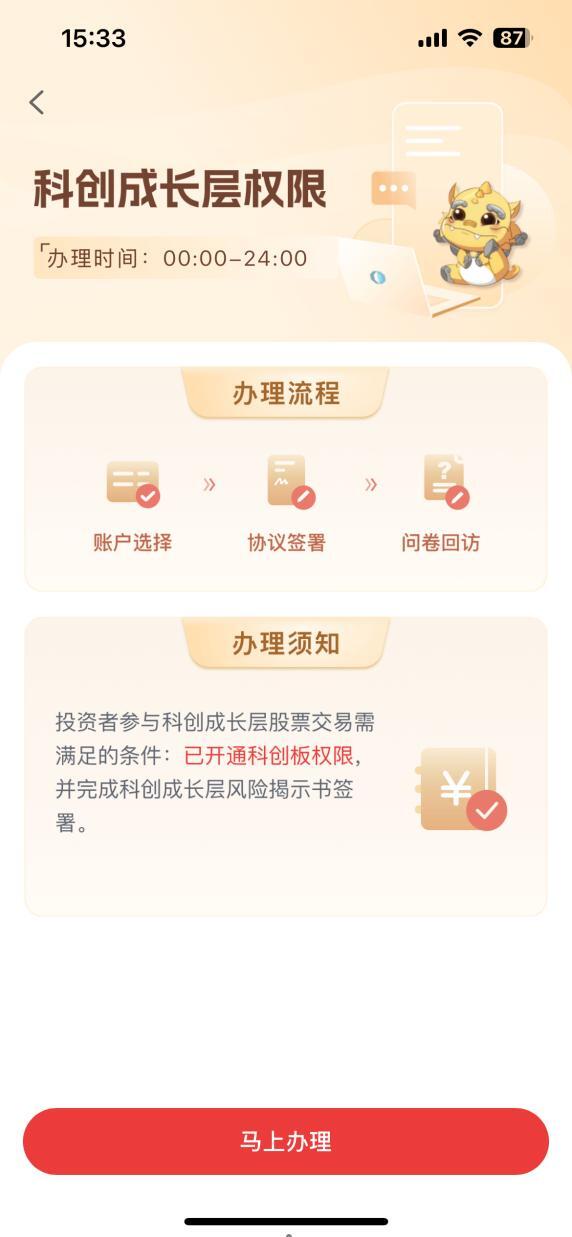
火速上线!多家券商开通“科创板成长层权限”
2 1 Shi Ji Jing Ji Bao Dao· 2025-07-16 13:44
Core Points - The Shanghai Stock Exchange officially launched the "Science and Technology Innovation Board Growth Layer" on July 13, allowing 32 existing unprofitable companies to enter this new tier immediately, while newly registered unprofitable companies will enter upon listing [1][8] - Several major securities firms, including Guotai Junan and Guojin Securities, have quickly implemented system upgrades to facilitate trading in the new growth layer, with functionalities available to investors starting July 14 [4][11] - The investment threshold for individual investors remains unchanged, requiring a minimum asset of 500,000 RMB and two years of trading experience, along with signing a risk disclosure document [5][6] Group 1 - The introduction of the growth layer aims to enhance the inclusivity and adaptability of the capital market, particularly benefiting technology companies facing financing challenges [12] - The growth layer will include both existing and newly registered unprofitable companies, with specific labels added to distinguish between them in trading systems [10] - The establishment of the growth layer is seen as a significant institutional innovation for capital markets, providing more investment opportunities and potentially stabilizing market expectations [12] Group 2 - The Shanghai Stock Exchange has mandated that securities firms report the signing status of the risk disclosure documents for the growth layer, enhancing investor suitability management [7] - The first company to register under the new growth layer is Heyuan Biotechnology, which is awaiting IPO approval [10] - The growth layer is expected to attract more institutional investors, which could help reduce irrational market fluctuations and improve pricing efficiency [12]
科创板成长层启幕!科创板指数基金投资,迎来哪些变革?
Sou Hu Cai Jing· 2025-07-14 10:45
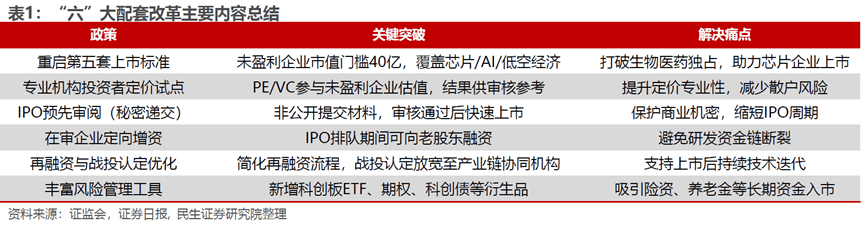
Core Insights - The launch of the "Science and Technology Innovation Board Growth Layer" aims to provide a tailored platform for unprofitable high-quality technology companies, facilitating their access to capital markets and addressing the challenges of financing [3][6][11] Policy Overview - The introduction of the fifth set of listing standards allows unprofitable companies with a market value threshold of 4 billion RMB to list, particularly benefiting sectors like chips, AI, and low-altitude economy [2][4] - A pilot program for professional institutional investor pricing will enhance valuation accuracy for unprofitable companies, reducing risks for retail investors [2][4] - The pre-IPO review process allows for confidential submission of materials, expediting the listing process while protecting business secrets [2][4] - Companies in the review process can raise funds from existing shareholders, ensuring continuity in R&D funding [2][4] - The optimization of refinancing and strategic investment recognition simplifies processes and encourages ongoing technological innovation post-listing [2][4] - New risk management tools, including ETFs and options, are introduced to attract long-term capital from insurance and pension funds [2][4] Growth Layer Characteristics - The Growth Layer is designed for unprofitable technology companies in critical R&D phases, requiring substantial funding for development and market expansion [3][4] - The entry conditions for the Growth Layer include all unprofitable technology companies, with specific exit criteria based on profitability and revenue thresholds [8][9] Market Impact - The Growth Layer is expected to fundamentally reshape the market structure and capital efficiency of the Science and Technology Innovation Board, benefiting technology companies and investors alike [6][11] - It addresses the financing challenges faced by unprofitable technology firms, enabling them to accelerate technological iterations and market expansion [7][11] - The introduction of the Growth Layer will enhance the overall revenue growth of indices, while also increasing volatility due to the high-risk nature of unprofitable companies [20][22] Index Fund Implications - The inclusion of Growth Layer companies will lead to a more balanced industry distribution within the indices, shifting towards more cutting-edge technology sectors [18][20] - The anticipated high growth of these companies will contribute to the overall performance of the indices, but will also introduce higher volatility [19][22] - Investors are encouraged to adopt a "core + satellite" strategy to balance risk and return, focusing on both stable and high-growth assets [21][22]
火速!券商已上线!“科创成长层”交易权限可办理
券商中国· 2025-07-14 10:40
Core Viewpoint - The article discusses the new requirements for investors wishing to participate in the subscription and trading of newly registered stocks in the Sci-Tech Innovation Board's growth tier, emphasizing the necessity of signing a risk disclosure agreement. Group 1: Trading Permissions and Requirements - Several brokerage apps, including Guojin Securities, now support online activation of trading permissions for the Sci-Tech Innovation Board's growth tier, requiring investors to sign a risk disclosure agreement [2] - The threshold for opening trading permissions in the growth tier remains consistent with the Sci-Tech Innovation Board, requiring an asset of 500,000 and two years of investment experience [7] - Investors must sign the "Sci-Tech Innovation Board Stock Investor Risk Disclosure Agreement" to open trading permissions, and an additional "Growth Tier Risk Disclosure Agreement" is required for participating in new registered stocks [7][10] Group 2: Regulatory Developments - The China Securities Regulatory Commission has accepted the IPO registration application of Heyuan Bio, which is expected to be the first stock in the newly registered growth tier [9] - The Shanghai Stock Exchange issued the "Mandatory Clauses for the Risk Disclosure Agreement for Stocks of Sci-Tech Innovation Board Growth Tier Enterprises" on July 13, requiring brokerages to inform investors of risks before they can participate in new stock subscriptions [10] - Existing investors trading stocks that were listed before this notice and have not yet achieved profitability do not need to sign the new risk disclosure agreement [11] Group 3: Investor Education and Risk Management - The exchange emphasizes the importance of comprehensive risk education for investors, urging brokerages to utilize multiple channels to inform investors about the risks associated with trading in the growth tier [11][12] - Brokerages are expected to coordinate and prepare their technical systems to facilitate the signing of the risk disclosure agreements in an orderly manner [12]


亏损企业上市,科创板第五套标准新规来了
Sou Hu Cai Jing· 2025-07-13 13:46
Group 1 - The core point of the news is the reintroduction of the fifth listing standard for the Sci-Tech Innovation Board, allowing companies with no profits or revenue to go public, particularly benefiting special industries [1][3][4] - The fifth listing standard requires a minimum market value of 4 billion yuan, and companies must have significant market potential and approved core products for certain industries, such as biomedicine [4][5] - The new regulations expand the eligible industries for the fifth standard to include artificial intelligence, commercial aerospace, and low-altitude economy, aiming to accelerate the establishment of typical cases [9][10] Group 2 - The introduction of a system for qualified professional institutional investors is part of the new regulations, which will help assess the reliability of companies applying under the fifth standard [10][11][17] - A pre-review mechanism has been established to protect sensitive information for technology companies, allowing them to apply for confidentiality during the listing process [18][19][20] - The establishment of a Sci-Tech Growth Layer is part of the new regulations, with specific criteria for companies to enter this layer, indicated by a "U" in their stock abbreviation [23][25][29]