
电影

Search documents
国产片集体发力!盘点2025暑期档电影如何与观众实现双向奔赴
Yang Shi Xin Wen Ke Hu Duan· 2025-09-01 23:26
Core Insights - The summer box office for 2025 reached 11.966 billion yuan, with 321 million admissions, marking year-on-year growth of 2.76% and 12.75% respectively, with domestic films accounting for 76.21% of the box office [1] - The summer season featured over 160 films, showcasing diverse genres, with historical dramas like "Nanjing Photo Studio" breaking box office records for historical films during summer [3] - Domestic animated films such as "Wang Wang Mountain Little Monster" and "The Legend of Hei 2" achieved both critical and commercial success, with "Wang Wang Mountain Little Monster" setting a record for the highest box office for 2D animated films in China [5] Box Office Performance - The summer box office was characterized by a strong performance from domestic films, with four out of the top five films being Chinese productions [1] - The average ticket price dropped to 37.2 yuan from 40.9 yuan last year, making it more attractive for audiences, aided by government subsidies [10] - The number of mid-tier films (5-10 billion yuan box office) increased year-on-year, indicating a healthier market structure less reliant on blockbuster films [7] Government Initiatives and Market Trends - Local governments actively issued viewing subsidies, significantly boosting audience turnout, with Zhejiang province alone distributing over 36.8 million yuan in film consumption vouchers [10] - Various "film+" initiatives, such as "travel with movies" and "dine with movies," have been implemented to enhance consumer engagement and stimulate the cultural tourism market [12] - The revenue from film-related merchandise grew by 120% year-on-year, highlighting a new growth point in the film industry [16] Accessibility Improvements - The introduction of "wheelchair-friendly" theaters has improved accessibility for disabled viewers, with facilities upgraded to provide better seating options and wider aisles [17][25] - The number of "wheelchair-friendly" theaters expanded from 60 in three cities to over 300 in nearly 80 cities by this summer [29]

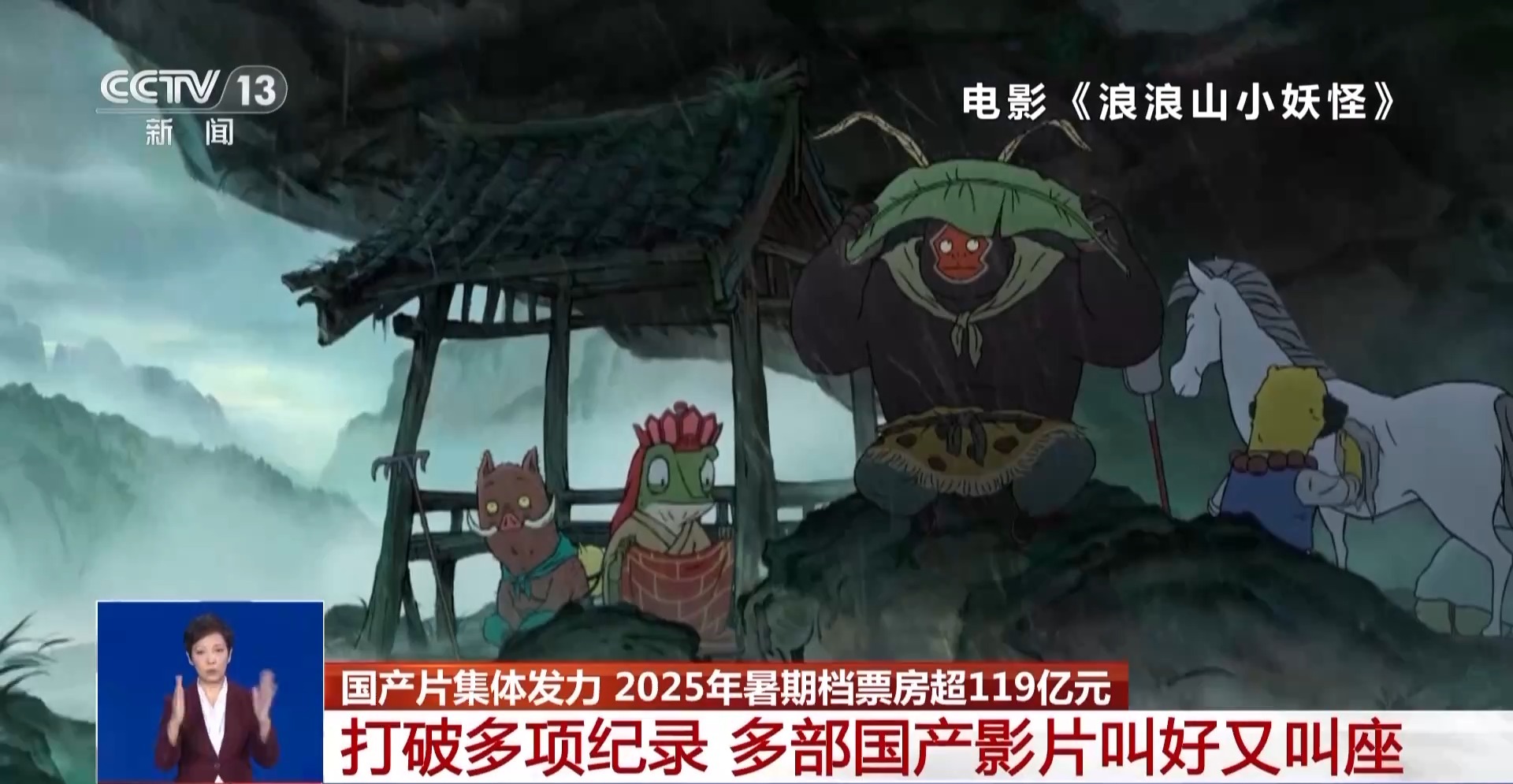
暑期档119.66亿元收官
Shen Zhen Shang Bao· 2025-09-01 23:19
Group 1 - The total box office for the 2025 summer season reached 11.966 billion yuan, with 321 million admissions, reflecting year-on-year growth of 2.76% and 12.75% respectively [1] - Domestic films accounted for 76.21% of the total box office, demonstrating the resilience and potential of the Chinese film market [1] - The summer season featured a healthy distribution of films, with the top film "Nanjing Photo Studio" leading at 2.89 billion yuan, followed by "Wang Wang Mountain Little Monster" at 1.455 billion yuan [1] Group 2 - The emergence of new-generation directors and screenwriters has been a highlight of this summer season, with innovative storytelling and animation techniques [2] - "Nanjing Photo Studio" successfully reconstructed historical narratives from the perspective of ordinary people, achieving a balance between thought-provoking content and emotional resonance [2] - The quality of films this summer was notably high, with six films in the top ten achieving Douban ratings above 8, indicating a strong correlation between quality and box office success [1][2]
暑期档票房出炉!消费力旺盛
Sou Hu Cai Jing· 2025-09-01 18:43
Group 1 - The service-oriented consumption is expected to experience explosive growth in the future, particularly in the second half of 2025, driven by significant foreign investment and an increasing public pursuit of spiritual enjoyment [1][6] - The box office revenue of China's domestic films reached 11.345 billion yuan as of August 27, 2025, surpassing the same period in 2024, indicating the industry's resilience and sustained growth momentum [3] - The total annual box office has exceeded 38.3 billion yuan, with over 300 million viewers and a domestic film market share of 89.2%, showcasing the leading position of domestic productions [3] Group 2 - A notable number of popular films, such as "Nanjing Photo Studio," "Little Monster of Langlang Mountain," "The Stage," and "Lychee of Chang'an," have significantly contributed to the box office increase, receiving enthusiastic public support [3] - The summer film season saw a large-scale release of approximately 150 films, leading to intense competition, with standout films demonstrating considerable strength and appeal [3][5] - The changing consumer mindset reflects a trend where going to the cinema with family or friends has become a common entertainment choice, further promoting the healthy development of the film industry [5]

多项“电影+”举措激发文旅市场消费活力
Yang Shi Wang· 2025-09-01 17:30
今年暑期,多地政府积极发放观影消费补贴。在此带动下,今年暑期档的平均票价降至37.2元,相 比去年40.9元更具吸引力。 央视网消息:今年暑期档票房的增长,离不开各地政府积极开展的惠民活动,同时,形式多样 的"电影+"联动举措,也进一步激发了文旅市场的消费活力。 其中,浙江省自7月10日启动发放总额超3680万元的2025年浙江电影消费券,创浙江省近年来电影 消费券发放金额新高,大大激发了观众的观影热情。数据显示,8月1日至8月15日,浙江省电影票房 2.75亿元,同比上升85.81%。 此外,今年暑期档各地也持续开展一系列"跟着电影去旅行""跟着电影品美食"等"电影+"联动活 动。在越来越多的城市,游客只需一张电影票的票根,就能享受餐饮、游玩等多重优惠。"可消费、可 体验、可社交"的电影新业态的出现,标志着中国电影市场的第二引擎正在被激活。 "电影+零售"的跨界联动,也成为电影产业新的增长点。《浪浪山小妖怪》在上映前,就与超30家 知名品牌达成合作,影片上映首日,其周边销售额破700万元,盲盒产品出售超300万只。《罗小黑战记 2》电影首映日当天,罗小黑盲盒的预售仅用时2秒就全部卖光,同时该IP在北京朝阳公 ...
暑期档票房超去年:国产片票房占比七成,上海连续三年获得票房冠军
第一财经· 2025-09-01 15:15
Core Insights - The 2025 summer box office in China reached a total of 11.966 billion yuan with 321 million admissions, marking a year-on-year increase of 2.76% and 12.75% respectively, showcasing the vitality of local film production [3][4][12] - Domestic films accounted for 76.21% of the total box office, indicating a strong preference for local content among audiences [3][4] - Shanghai maintained its position as the top city for box office revenue for three consecutive years, reinforcing its status as the "Movie City" of China [3][4] Box Office Performance - The top five films of the summer season were: "Nanjing Photo Studio" (2.89 billion yuan), "Wang Wang Mountain Little Monster" (1.455 billion yuan), "Chasing the Wind" (879 million yuan), "Lychee of Chang'an" (678 million yuan), and "Jurassic World: Rebirth" (567 million yuan) [5][6] - A total of 19 films surpassed 100 million yuan at the box office during the summer, contributing to an overall annual box office exceeding 39.3 billion yuan by the end of August [6][12] Audience Trends - The proportion of individual ticket purchases increased for the third consecutive year, with the largest growth this year, while the proportion of dual ticket purchases reached a five-year low [7] - The demographic of new users skewed older compared to previous years, with "Nanjing Photo Studio" attracting nearly 30% new viewers [7][12] Regional Box Office Distribution - Guangdong and Jiangsu provinces both surpassed 1 billion yuan in box office revenue, with Guangdong leading at 1.599 billion yuan, accounting for 13.4% of the national total [8] - The top ten provinces collectively contributed 79.05 billion yuan, with an average ticket price of 37.9 yuan [8] Animation Film Success - "Wang Wang Mountain Little Monster" set a record for the highest box office for a domestic 2D animated film, surpassing previous records with over 38 million admissions [13][14] - The increase in family audiences has led to a rise in the average viewing age, reflecting a growing interest in animated films [13][14] Industry Outlook - The quality of domestic films is improving, supported by policy adjustments that favor local productions over foreign imports, particularly from Hollywood [14][15] - The summer box office demonstrated resilience and adaptability, with notable highlights such as the success of animated films and the emergence of new audience demographics [15]
“2025俄罗斯电影节”在北京开幕
Xin Lang Cai Jing· 2025-09-01 15:04
Core Points - The "2025 Russian Film Festival" was inaugurated in China, co-hosted by the National Film Administration of China and the Ministry of Culture of the Russian Federation [1] - The festival is part of a cultural exchange initiative aimed at enhancing cooperation between China and Russia, as emphasized by officials during the opening ceremony [1] - The co-produced film "Red Silk" is set to be released in China on September 6, showcasing the collaborative efforts of filmmakers from both countries [1] Group 1 - The opening ceremony was attended by key figures from both countries, including the Deputy Minister of the Publicity Department of the CPC Central Committee and the Russian Minister of Culture [1] - Over 600 attendees, including representatives from the film industry and the audience, participated in the festival's opening [1] - The festival aims to deepen cultural ties and contribute positively to the comprehensive strategic partnership between China and Russia [1]
口碑与票房的双赢!这个暑期档如何激活银幕内外
Yang Shi Xin Wen· 2025-09-01 13:49
Core Insights - The summer box office for 2025 reached 11.966 billion yuan, with 321 million admissions, marking year-on-year growth of 2.76% and 12.75% respectively, and domestic films accounted for 76.21% of the box office [1][6][11] - The total box office for Chinese films in 2025 (including overseas) has surpassed 40 billion yuan [3] - The success of Chinese films extends beyond the box office, with significant sales of related merchandise and a boost in consumer spending [5] Group 1: Box Office Performance - The summer season featured over 100 films, with domestic films dominating the box office, including top earners like "Nanjing Photo Studio" at 2.89 billion yuan and "Wang Wang Mountain Little Monster" at 1.455 billion yuan [6][7] - The rise of domestic films is evidenced by their strong box office performance and high ratings, with five films scoring over 8 points on Douban [6][8] - The success of historical films like "Nanjing Photo Studio" reflects a growing interest in narratives that resonate with national history [7] Group 2: Supply and Demand Dynamics - The increase in quality domestic films indicates a shift away from reliance on imported films, with a strong cultural and technological foundation supporting this growth [9] - The demand for films is rapidly increasing, with 57.67% of respondents in a survey indicating movies as their preferred cultural entertainment option for 2024 [11] - The Chinese film market is now the second largest globally, following North America, and is a significant growth engine for the film industry [11] Group 3: Merchandise and IP Development - Revenue from film-related merchandise grew by 120% during the summer season, indicating a shift towards diversified revenue streams beyond box office sales [12] - The development of merchandise for films like "Wang Wang Mountain Little Monster" has become integral to the film's marketing strategy, with over 200 self-developed products launched [12][13] - Successful IP collaborations with over 30 companies across various sectors demonstrate the expanding commercial potential of film IPs [14] Group 4: "Ticket Root Economy" and Cross-Industry Collaboration - The "ticket root economy" has gained traction, with initiatives encouraging consumers to engage in various activities linked to film viewership, such as dining and tourism [15][16] - Events like "Follow the Movie to Travel" have enhanced the tourism market, with locations featured in films experiencing increased visitor numbers [17] - The integration of film with other sectors is creating a multi-dimensional consumption ecosystem, driving growth across industries [15][18]
2025暑期档电影市场洞察报告出炉,江苏贡献12.16亿票房
Yang Zi Wan Bao Wang· 2025-09-01 12:29
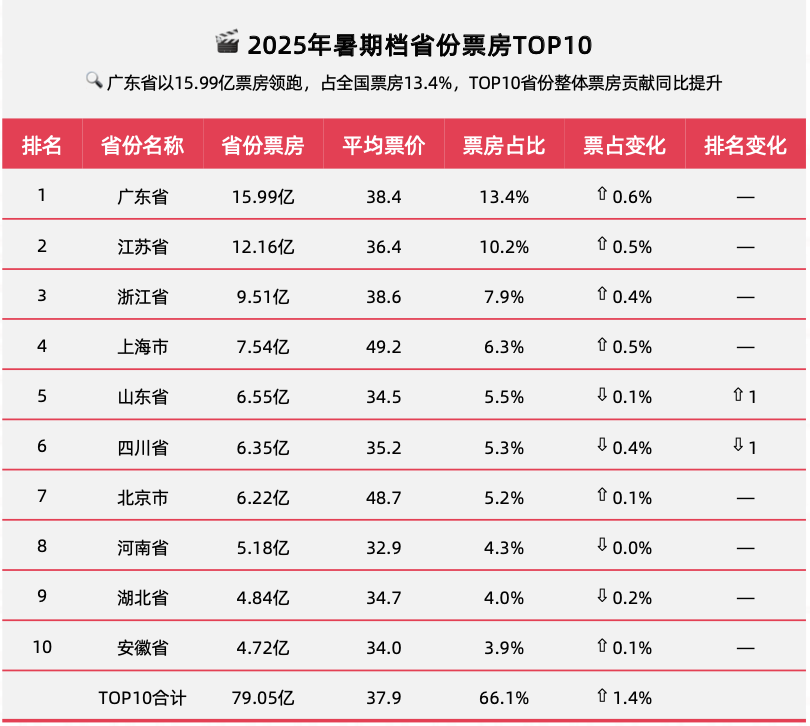
Core Insights - The summer box office for 2025 concluded with a total revenue of 11.966 billion yuan, marking a year-on-year increase of 2.76% [1] - Total audience attendance reached 321 million, reflecting a year-on-year growth of 12.75% [1] - The average attendance rate for films was 6.9%, which is an increase of 1.0% compared to the previous year [1] Provincial Box Office Summary - Guangdong province led with a box office of 1.599 billion yuan, accounting for 13.4% of the total, despite a slight decrease of 0.6% [3] - Jiangsu province followed with 1.216 billion yuan, representing 10.2% of the total, also down by 0.5% [3] - Zhejiang province ranked third with 951 million yuan, holding 7.9% of the total box office, down by 0.4% [3] - The top 10 provinces collectively generated 7.905 billion yuan, which is 66.1% of the total box office, with a decrease of 1.4% in market share [3] City Box Office Summary - The top city, A, achieved a box office of 754 million yuan, representing 6.3% of the total [5] - Beijing ranked second with 622 million yuan, accounting for 5.2% of the total [5] - Shenzhen followed with 439 million yuan, making up 3.7% of the total [5] - The top 25 cities combined contributed 5.945 billion yuan, which is 49.7% of the total box office, with a decrease of 0.7% in market share [6] Film Performance Insights - High-quality films have consistently driven box office performance, with top films contributing over 70% of the total revenue during the summer season [7] - Audience preferences indicate that storylines are the most critical factor in viewing decisions, with emotional resonance enhancing the viewing experience [7] - The film "Nanjing Photo Studio" set a record for the summer box office, attracting significant audience engagement [7] - Viewer demand for historical, war, and animated genres was notably satisfied during the summer season [7]
暑期档票房超去年:国产片票房占比七成,上海连续三年获得票房冠军
Di Yi Cai Jing· 2025-09-01 11:05
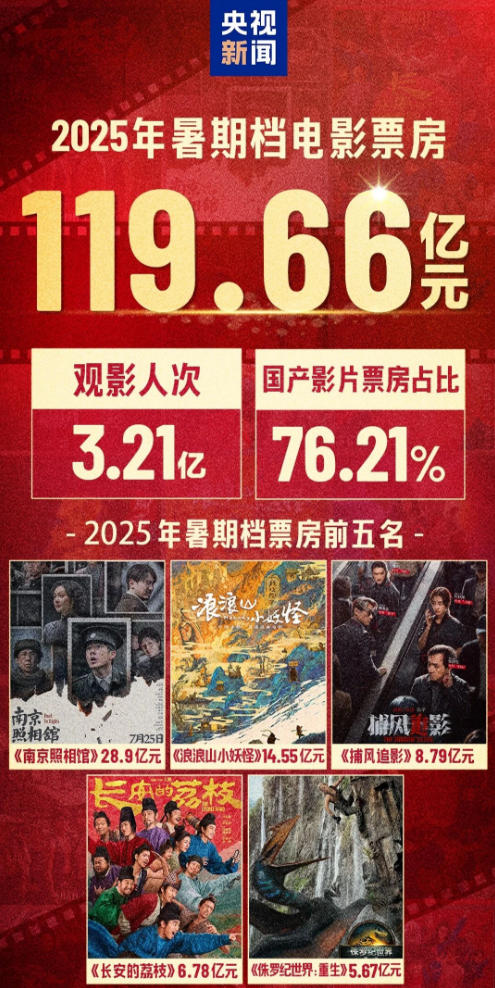
一方面,国产电影的质量在逐年上升,一方面,政策层面也在适应世界电影产业发展的新趋势。 暑期档刚刚落下帷幕。 2025年暑期档(6月1日至8月31日)以119.66亿元总票房和3.21亿观影人次的成绩落幕,同比分别增长2.76%和12.75%。其中,国产影片表现尤为亮眼,票房 占比高达76.21%,彰显了中国电影市场的本土创作活力。 上海连续三年稳居城市票房榜首,进一步巩固了其作为全国"电影之城"的地位。此外,今年暑期档的票房不仅实现了数字上的增长,更在内容结构、观影人 群和地域分布等方面展现出深刻变化。 总票房、总人次双双超去年同期 据国家电影局数据,2025年暑期档(6.1-8.31)票房前五名的影片分别为《南京照相馆》28.9亿、《浪浪山小妖怪》14.55亿、《捕风追影》8.79亿、《长安 的荔枝》6.78亿、《侏罗纪世界:重生》5.67亿。 整体来看,高票房的影片并不少。猫眼专业版数据则显示,档期内共有19部影片破亿,截至8月底,今年全年累计票房(含预售)已超393亿元。 虽然今年暑期档前半程表现平淡,多部重点影片票房未达预期造成大盘"慢热",而进口片则保持了相对稳定的发挥。后半程国产片开始集中发力,在 ...
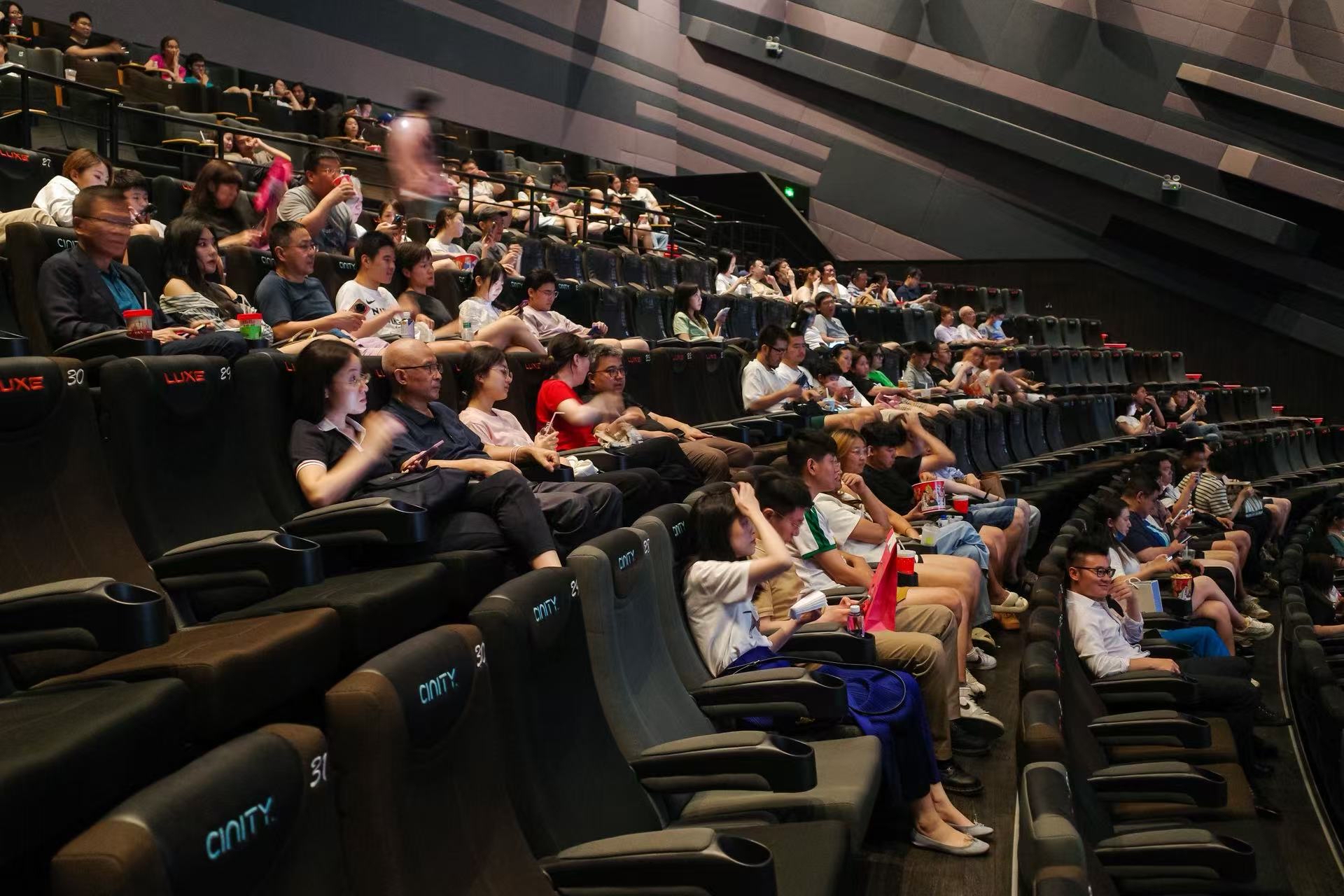
2025年暑期档电影总票房为119.66亿元,同比增长2.76%
Jing Ji Guan Cha Bao· 2025-09-01 10:46
Core Insights - The total box office revenue for the summer film season in 2025 reached 11.966 billion yuan, marking a year-on-year growth of 2.76% [1] - The number of moviegoers during this period was 321 million, reflecting a year-on-year increase of 12.75% [1] - Domestic films accounted for 76.21% of the total box office revenue [1] Box Office Performance - The top five films by box office revenue were: - "Nanjing Photo Studio" with 2.89 billion yuan - "Little Monster of Langlang Mountain" with 1.455 billion yuan - "Chasing the Wind" with 879 million yuan - "Lychee of Chang'an" with 678 million yuan - "Jurassic World: Rebirth" with 567 million yuan [1]