
服务型消费

Search documents
陕西旅游(603402):深度研究:坐拥秦川稀缺文旅资源,多元化产品历久弥新
East Money Securities· 2026-03-13 11:06
Investment Rating - The report assigns an "Accumulate" rating for the company, marking its first coverage [7]. Core Insights - The company, Shaanxi Tourism, is the first cultural tourism IPO in A-shares in the past five years and is the only listed tourism platform under the Shaanxi State-owned Assets Supervision and Administration Commission [6][20]. - The company primarily relies on its 5A scenic spots, Huaqing Palace and Mount Huashan, focusing on three main business segments: tourism performances, cable cars, and dining [6][15]. - The company is expected to achieve a net profit of 5.1 billion yuan in 2024, with a strong cash position as of Q3 2025 [6][7]. Summary by Sections 1. Company Overview - Shaanxi Tourism has established a full industry chain layout based on its 5A scenic resources, including performances, cable cars, dining, and project investments [15]. - The company was established in 1987 and has undergone several transformations, including a merger in 2016 that integrated key assets like the "Chang Hen Ge" performance and Taohua Cableway [15][16]. 2. Current Projects - The "Chang Hen Ge" performance is a significant revenue contributor, with a projected income of 6.8 billion yuan in 2024, maintaining a gross margin of 80% [6][57]. - The cable car segment, particularly the West Peak Cableway, is expected to generate 3.9 billion yuan in revenue in 2024, with a steady increase in passenger numbers [6][7]. 3. Fundraising Projects - The company plans to raise 1.555 billion yuan for projects including the second phase of Taishan Show City and the construction of the South Line Cableway at Shaohua Mountain, which could contribute an additional 1.0 to 1.4 billion yuan to profits [6][7]. 4. Market Trends - The report highlights a favorable environment for service consumption, with policies aimed at boosting tourism and consumer spending, which are expected to benefit the company significantly [6][7]. 5. Profit Forecast - The company forecasts a net profit of 4.1 billion yuan in 2025, with a recovery expected in 2026 to 6.2 billion yuan, corresponding to a P/E ratio of 18 times [7][8].
社服零售行业周报:地方落实带薪休假及春秋假,泡泡玛特预热新IP-20260302
HUAXI Securities· 2026-03-02 15:12
Investment Rating - Industry rating: Recommended [4] Core Views - The report highlights the implementation of staggered paid leave and spring and autumn breaks in various provinces, which is expected to boost service consumption, particularly in tourism and hospitality sectors [1] - The acceleration of new IP launches by Pop Mart, with the number of new IPs expected to double from 29 in 2024 to 57 in 2025, indicates a strong growth trajectory in the collectibles market [2] - The report suggests focusing on high-growth sectors supported by policy and technology, including service consumption, new consumption trends, retail innovation, and AI applications [3] Summary by Sections Industry Investment Rating - The industry is rated as "Recommended," indicating a positive outlook for the sector [4] Industry Dynamics - The implementation of paid leave and school breaks is seen as a significant driver for increasing domestic travel and service consumption, benefiting sectors like hotels, restaurants, and online travel agencies [1] - Pop Mart is rapidly increasing its IP launch frequency, with plans to release new IPs at a much faster pace, reflecting a robust demand for collectible toys [2] Investment Recommendations - The report recommends focusing on sectors poised for growth due to new policies and consumer demands, including duty-free shopping, senior tourism, and childcare consumption, with key beneficiaries identified [3] - New consumption trends are expected to maintain their growth momentum, with leading companies in sectors like trendy toys, tea drinks, and health products being highlighted as having attractive valuations [3] - Retail innovation and international expansion are seen as avenues for new growth, with specific companies identified as potential beneficiaries [3] - The report anticipates a flourishing of AI applications in 2026, with several companies positioned to benefit from this trend [3]




从春节看中国人消费新趋势
Xin Lang Cai Jing· 2026-02-28 03:44
Group 1: Consumption Trends - The core focus of the articles is on the significant transformation in China's consumption structure, highlighting the rise of service-oriented consumption, technology-driven purchases, and the activation of the silver economy during the Spring Festival [1][2][3] - Young Chinese consumers are increasingly willing to spend on emotional value, leading to a surge in service-oriented consumption that aligns with the International Monetary Fund's recent assessment of China's economy [1][2] - The integration of technology into holiday celebrations, such as drone performances and AI greetings, indicates a shift in technology consumption from niche to mainstream, reflecting China's manufacturing strength and the potential for a robust domestic market [2] Group 2: Silver Economy - The silver economy in China is showing clear momentum, with travelers aged 50 and above making up 20% of those flying to Beijing during the Spring Festival, and the number of travelers aged 60 and above increasing by 1.6 times compared to the same period in 2025 [2] - The current scale of China's silver economy is approaching 10 trillion yuan, with projections suggesting it will reach 30 trillion yuan by 2035, driven by policies prioritizing smart elderly care, silver tourism, and lifelong education [2] - The demographic shift in China's population structure is not a barrier to growth but is becoming a new engine for social stability and long-term economic vitality [2]
招银国际:26年春节消费景气度符合预期 品类分化持续
Zhi Tong Cai Jing· 2026-02-26 08:01
Group 1: Tourism and Travel - The tourism sector shows resilience with long-distance travel and family-oriented trips as key trends, with 596 million domestic trips taken during the 2026 Spring Festival, generating a total expenditure of 803.48 billion yuan, reflecting a year-on-year increase of 5.7% in daily travel volume and 5.5% in daily spending [2] - Long-distance travel orders accounted for 59.6% of bookings, with an average travel duration of 6.4 days, an increase of 0.5 days year-on-year [2] - Domestic travel orders on the Fliggy platform increased by 80% year-on-year, with average booking amounts rising by approximately 10% [2] Group 2: Offline Consumption - Key retail and catering enterprises saw a daily sales increase of 5.7% compared to the same period in 2025, with a 1.6 percentage point acceleration from the previous year's growth rate [3] - Foot traffic and sales in 78 key pedestrian streets increased by 6.7% and 7.5% year-on-year, respectively, showing an acceleration compared to the 2025 National Day holiday [3] Group 3: Online Consumption - The performance of beauty and skincare brands during the Spring Festival was mixed, with total sales on Douyin ranging from 250 million to 378 million yuan, reflecting a year-on-year growth of about 12%, but a daily sales figure that remained nearly flat [4] - Notable brand performances included a 114.3% increase for Maogeping, driven by category expansion, and a 58.6% increase for Proya, attributed to strong brand performance [4] Group 4: Jewelry Sector - The jewelry sector experienced a decline in sales, with total sales dropping to a range of 260 million to 309 million yuan, a year-on-year decrease of 8.5%, primarily due to high sales bases from the previous year and fluctuating gold prices [5] - Brands like Chow Tai Fook and Luk Fook achieved good growth rates of 100% and 66.7%, respectively, while mass-market brands saw significant declines [5] Group 5: Investment Recommendations - The company maintains a positive outlook on service-oriented and emotional consumption, particularly in travel and beauty sectors, recommending attention to companies like Trip.com and Tongcheng [6] - In the beauty sector, companies with superior category matrix layouts, such as Ying Tong Holdings, are highlighted for potential investment [6]



春节消费观察:景气度符合预期,品类分化持续
Zhao Yin Guo Ji· 2026-02-26 03:46
Core Insights - The overall consumption trend during the Spring Festival aligns with expectations, characterized by a continued differentiation between material and service consumption, with emotional consumption represented by "self-pleasure" showing greater resilience [1][3] - Key sectors such as tourism, offline consumption, and online consumption exhibit varied performance, with tourism showing robust growth and offline retail and dining experiencing a positive uptick [1][3] Tourism Sector - During the Spring Festival holiday (February 15-23, 2026), domestic travel reached 596 million trips, with total spending of 803.48 billion RMB, reflecting a year-on-year increase of 5.7% in daily travel volume and 5.5% in daily spending [3] - Long-distance travel and family-oriented trips are highlighted as key trends, with family groups accounting for 68% of orders on platforms like Mafengwo [3] - The number of domestic travel orders on platforms like Fliggy increased by 80% year-on-year, with average booking amounts rising by approximately 10% [3] Offline Consumption - Key retail and dining enterprises reported a daily sales increase of 5.7% compared to the same period in 2025, with foot traffic and sales in 78 key pedestrian streets growing by 6.7% and 7.5% respectively [3] Online Consumption - Brand marketing efforts during the Spring Festival were significantly weaker compared to major promotional events like 618 and Double 11, leading to relatively flat sales performance [2] - In the beauty and skincare sector, total sales during the Spring Festival ranged from 212 million to 348 million RMB, with a year-on-year growth of approximately 12% [2][5] Beauty and Skincare Brands - Notable brands such as Maogeping and Proya saw significant year-on-year sales increases of 114.3% and 58.6% respectively, attributed to category expansion and strong brand performance [2][5] - Conversely, brands like Juzi Biotechnology experienced a drastic decline in sales by 56.8%, likely due to prior negative publicity and strategic marketing adjustments during the off-season [2][5] Jewelry Sector - The overall sales performance in the jewelry sector was weaker, with total sales dropping from a range of 285 million to 390 million RMB in 2025 to 260 million to 309 million RMB in 2026, reflecting a year-on-year decrease of 8.5% [4][9] - Brands such as Chow Sang Sang and Luk Fook achieved growth rates of 100% and 66.7% respectively, while mass-market brands like Chow Tai Fook and China Gold saw declines of 12.5% and 72% [4][9] Investment Recommendations - The report maintains a positive outlook on service-oriented consumption and emotional spending, particularly in travel and beauty sectors, recommending companies like Trip.com and Yingtong Holdings for investment [4]
券商把脉节后投资主线
Jin Rong Shi Bao· 2026-02-25 02:52
Group 1 - The Spring Festival holiday saw a record-breaking cross-regional movement of over 5 billion people, indicating strong consumer activity [1] - The average daily inbound and outbound personnel at national ports during the holiday is expected to increase by 14.1% year-on-year, reaching over 2.05 million people, nearly five times the level of the previous year [1] - The first three days of the holiday showed a year-on-year increase of 4.5% in foot traffic and 4.8% in sales for monitored pedestrian streets, reflecting a robust consumption environment [1] Group 2 - Huatai Securities noted that domestic consumption data showed an overall increase in volume with stable prices, highlighting service consumption as a new growth point [2] - Data from Meituan indicated that leisure orders in lower-tier cities grew by nearly 30% year-on-year, with a notable shift towards younger consumers [2] - The "post-Spring Festival" market outlook suggests a focus on theme investments in sectors like the export chain and service consumption, while also considering geopolitical risks [2] Group 3 - Guosheng Securities identified four key variables that may influence market trends post-holiday, including uncertainties in U.S. tariff policies and the resilience of export chain enterprises [3] - The rise of AI and robotics, validated by sales data from platforms like JD.com, is expected to attract investment in related sectors [3] - The attractiveness of assets priced in RMB is increasing, particularly in the equity market, with a trend of foreign capital inflow into Chinese assets [3] Group 4 - China Galaxy Securities recommended focusing on two main lines post-holiday: sectors benefiting from improved supply-demand dynamics and industries with structural highlights like robotics and AI [4] - Guojin Securities emphasized the importance of the "global physical assets vs. Chinese assets" theme, suggesting investment in commodities and sectors with a competitive advantage in China [4]
券商分析师新春一线观察:服务消费领跑 新质生产力活力迸发
Shang Hai Zheng Quan Bao· 2026-02-24 17:49
Group 1: Consumer Trends - The core theme of consumer behavior during the Spring Festival is service-oriented consumption, with a noticeable trend towards rational spending [1][2] - Analysts observed that while dining and entertainment venues were busy, consumers preferred more affordable price points, indicating a shift towards rational decision-making in spending [2] - In Jiangsu's consumer market, there was a notable increase in both prices and consumption volume for service-related activities, reflecting a structural upgrade in consumer preferences [3] Group 2: Industrial Development - Analysts noted a surge in new productive forces, with traditional industries accelerating their transformation and upgrade [4] - In Hainan, the integration of commercial aerospace initiatives has led to a thriving local economy, with significant growth in tourism and hospitality linked to the aerospace sector [4] - In Shandong, advancements in energy storage technology and the establishment of a large-scale sodium-ion battery production line highlight the region's industrial evolution [5] Group 3: Overseas Opportunities - Analysts conducted field research overseas, providing valuable insights for Chinese companies looking to expand internationally [6] - In Australia, rising property prices driven by low interest rates and high immigration have become a significant social issue, impacting housing affordability [6] - In Indonesia, local market adaptation is crucial for success, with companies needing to navigate economic and cultural differences to establish a foothold [6]

分析师“春节见闻”!有何投资机遇?服务型消费成C位
Sou Hu Cai Jing· 2026-02-23 04:23
Core Insights - The annual analyst field survey during the Spring Festival reveals significant trends in China's economy, with a focus on consumer behavior and industrial developments [1] Consumer Insights - Service-oriented consumption has emerged as a key focus, with analysts noting a strong demand for service consumption during the Spring Festival, particularly in Shanghai, where logistics and service sectors thrived [3] - Observations from Jiangsu province indicate a structural upgrade in consumer behavior, shifting from product-centric to a balance of goods and services, with notable increases in prices and consumption levels in entertainment and dining [3] - The rise of new consumption patterns, such as KTV and cinema attendance, reflects a broader trend towards experiential and service-based spending [2][3] Industrial Insights - Analysts report a rise in new productive forces across various regions, with traditional industries undergoing significant upgrades [5] - In Dalian, the port's logistics advantages have fostered a traditional industrial cluster focused on petrochemicals and equipment manufacturing, with a shift towards refined production processes [5] - Shandong's industrial transformation is highlighted by significant investments in new energy storage technologies, indicating a growing focus on innovative industrial applications [6] Overseas Opportunities - Analysts emphasize the potential for Chinese companies to expand overseas, particularly in Southeast Asia, with Indonesia identified as a key market for Chinese enterprises [7] - The importance of localizing products for the Southeast Asian market is underscored, with successful examples like Mengniu and Mixue demonstrating effective market entry strategies [7] - Observations from Sydney indicate rising prices in consumer goods and housing, highlighting economic challenges in international markets [7]
月入4.5万元!春节27岁姑娘忙疯了,很多人正在加入……
Xin Lang Cai Jing· 2026-02-20 00:07
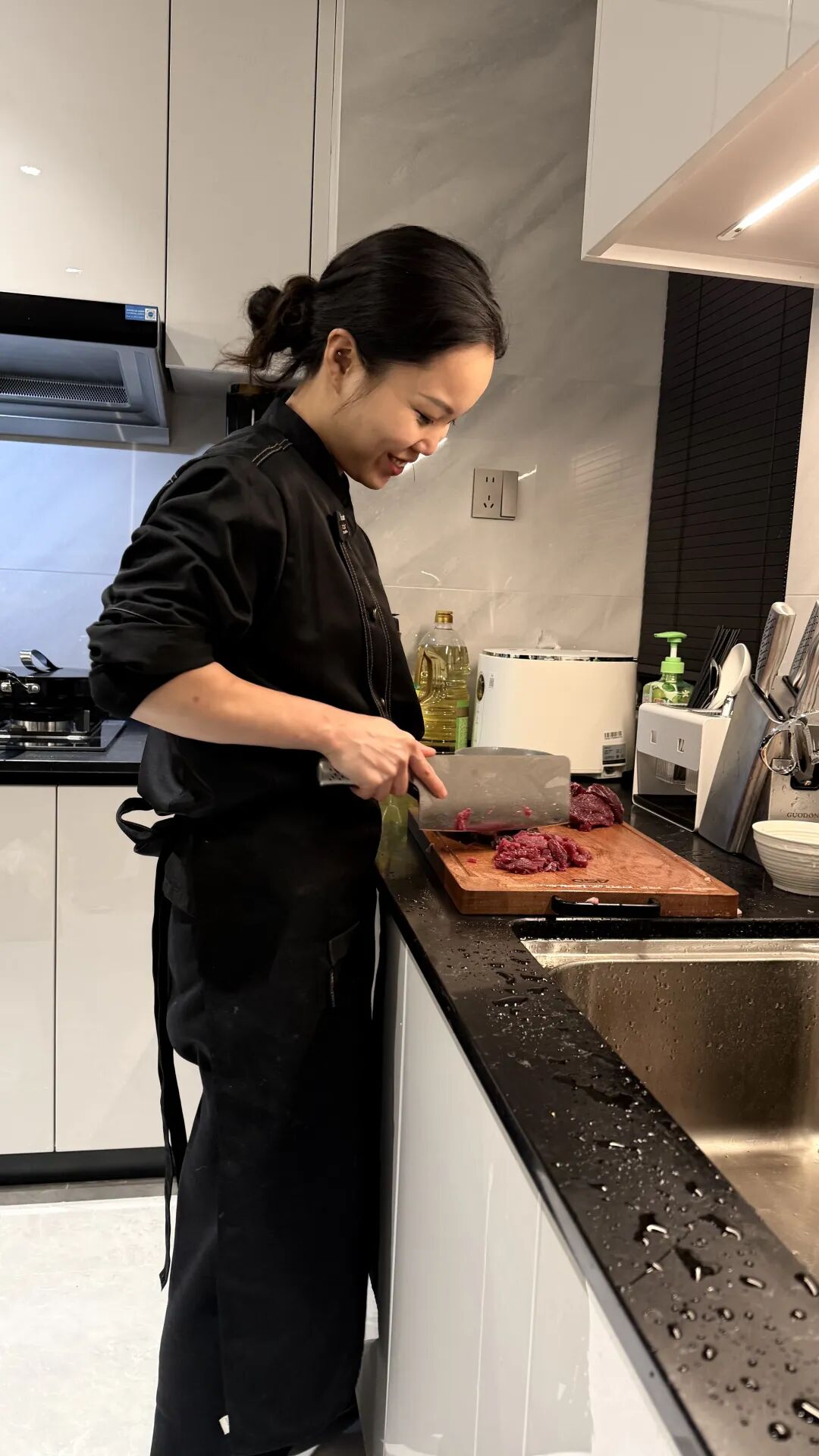
Core Insights - The article highlights the growing trend of private chefs offering home-cooked meals during the Chinese New Year, exemplified by a young chef in Changsha who anticipates earning approximately 45,000 yuan during the holiday period [1][2][9] Group 1: Business Model and Pricing - The private chef's pricing strategy includes a package for 10 dishes with ingredients at 1,888 yuan and without ingredients at 988 yuan, reflecting the increased costs of ingredients and labor during the holiday season [3][9] - The chef has built a stable client base over three years, leveraging social media to attract customers and secure bookings well in advance of the holiday [1][5] Group 2: Market Trends and Consumer Behavior - The private chef industry is characterized by flexible and diverse service models, with a notable increase in demand during the Chinese New Year, indicating a shift towards personalized dining experiences [9] - Experts suggest that the rise of private chefs is a reflection of upgraded consumer preferences and the growing value of family dining experiences, with potential for the industry to evolve into a more standardized and regulated sector [9]

私厨上门成年夜饭新潮流
Xin Lang Cai Jing· 2026-02-11 20:51
Group 1 - The core viewpoint of the articles highlights the rising trend of private chef services during the Chinese New Year, driven by consumers' desire for enhanced dining experiences and family gatherings [1][2] - The demand for private chefs has surged, with service fees increasing by 2 to 3 times, reaching between 1,500 to 2,000 yuan, yet the availability remains limited due to high demand [1] - The private chef service market offers flexible pricing models, starting from 200 yuan per person for basic packages to up to 10,000 yuan, catering to various consumer needs for personalized dining experiences [1] Group 2 - The private chef industry is characterized by a demand-driven service model, allowing chefs to customize menus based on customer preferences, thus addressing the limitations of traditional restaurant offerings [2] - The rise of private chef services reflects broader trends in consumer upgrading, the value of family dining experiences, and the ongoing growth of service-oriented consumption [2] - The private chef industry is still in its early stages and faces challenges such as a lack of standardized services; experts suggest that government regulation and industry self-discipline are necessary for future development [2]