乐器制造

Search documents
珠江钢琴:8月21日将召开2025年第一次临时股东大会
Zheng Quan Ri Bao Wang· 2025-08-04 10:11
证券日报网讯8月4日晚间,珠江钢琴(002678)发布公告称,公司将于2025年8月21日召开2025年第一 次临时股东大会。本次股东大会将审议《关于增加经营范围暨修订 <公司章程> 的议案》《关于修订 < 关联交易决策管理制度> 的议案》等多项议案。 ...

广州珠江钢琴集团发布对外担保管理制度,明确多项担保规定
Jin Rong Jie· 2025-08-04 09:02
Core Viewpoint - The announcement by Guangzhou Zhujiang Piano Group Co., Ltd. outlines its external guarantee management system, applicable to the company and its wholly-owned and controlling subsidiaries, detailing the conditions and procedures for providing guarantees [1][2]. Group 1: External Guarantee Management System - The external guarantee refers to various forms of guarantees provided by the company using its own assets or credit for other entities, including subsidiaries and associated companies [1]. - Conditions for the guaranteed party include good operational and financial status, and no adverse credit records [1]. - The application for guarantees must be submitted 15 working days in advance, including necessary documentation such as basic information, debt status, repayment plans, and counter-guarantee situations [1]. Group 2: Approval Process and Risk Control - The approval process requires that guarantees be reviewed by the board of directors or shareholders' meeting, with independent directors' opinions sought for guarantees to related parties [1]. - The financial management department, in conjunction with the legal affairs department, conducts investigations and evaluations of the relevant parties before the vice president in charge of finance reviews the application [1]. - The board of directors may hire external agencies to assess risks during the review process, and specific situations where guarantees cannot be provided are clearly defined [1]. Group 3: Contractual and Management Responsibilities - Written contracts must be established for guarantee and counter-guarantee agreements, signed by the chairman or an authorized agent, with content compliant with legal regulations [2]. - The financial management department is responsible for daily management and risk control of guarantees, including registration, tracking, and document preservation [2]. - Any extension of guaranteed debts requires re-approval, and the company must disclose guarantee information as per regulations, with confidentiality obligations for relevant personnel [2].
钢琴市场崩盘之后
投资界· 2025-08-04 07:28
Core Viewpoint - The Chinese piano industry is experiencing a significant downturn, with over 7,000 piano stores closing and annual sales plummeting to 190,000 units, a 50% drop from peak levels. The industry is facing a bleak future as it enters 2025, with many businesses struggling to survive [5][10]. Industry Overview - The piano boom in the late 1990s was driven by educational policies that incentivized music education, leading to a surge in demand for pianos and related services. At its peak, there were over 40 million piano students in China, accounting for 80% of the global total [7][9]. - The piano industry saw substantial growth, with major companies like Pearl River Piano and Helen Piano achieving significant market shares and revenues. By 2019, the annual sales of pianos in China exceeded 400,000 units, with the industry value approaching 2 trillion yuan [9][10]. Current Challenges - The cancellation of art examination policies in 2018 and a declining birth rate have led to a surplus of music graduates and a shrinking pool of piano students. This shift has resulted in a significant drop in income for piano teachers and a challenging job market for music graduates [11][12]. - By 2025, many piano training institutions are struggling to attract students, with some reporting zero enrollments for the first time. The industry is witnessing a wave of teachers transitioning to other fields due to unsustainable income levels [12][13]. Market Transition - The decline of the piano market is prompting a shift in parental investment towards more lucrative fields such as programming and artificial intelligence. The coding education market is experiencing rapid growth, with a projected market size of 1.4 trillion yuan by 2027 [16][17]. - The focus on STEM education is becoming more pronounced, with parents prioritizing subjects that align with job market demands, further diminishing interest in traditional music education [16][17].



创始人套现5亿离场,中产家庭抛弃上万元的“贵族玩具”
创业邦· 2025-08-04 03:35
Core Viewpoint - The piano industry in China is experiencing a significant downturn, with declining sales and financial losses for major companies like Hailun Piano, which reported a revenue drop of 46.47% in 2024 and a record net loss of 97.92 million yuan [9][27]. Group 1: Industry Background - The number of children learning piano in China peaked at 40 million in 2019, with a growth rate of 29.3% from 2008 to 2013 [6][9]. - Hailun Piano, founded in 2001, capitalized on the "piano craze" and became one of the leading companies in the industry, going public in 2012 [8][21]. - The piano was once seen as a symbol of cultural sophistication among middle-class families, with significant investments made in children's piano education [12][16]. Group 2: Market Changes - The "piano craze" began to decline in 2019, with a notable drop in demand due to changes in educational policies that reduced the emphasis on arts in school admissions [22][24]. - Piano sales in China fell from 356,000 units in 2018 to 128,000 units in 2023, representing a staggering decline of 64% [24][25]. - The economic downturn has led consumers to downgrade their spending, with pianos being seen as a luxury item that families can no longer afford [25]. Group 3: Company Performance - Hailun Piano's revenue for 2024 was 159 million yuan, down 46.47% year-on-year, and the company faced its largest loss in history [9][27]. - The company has been forced to increase its marketing expenses by 57.92% to maintain market share amid declining sales [27]. - The control of Hailun Piano is set to change hands, with founder Chen Hailun planning to transfer control to a new entity for 548 million yuan [30]. Group 4: Future Outlook - The industry consensus suggests a shift towards "music+" strategies, with companies exploring diversification into digital and smart pianos [32][34]. - The market for digital pianos is projected to grow from 1.072 billion USD in 2023 to 1.839 billion USD by 2033, indicating potential opportunities for innovation [34]. - There is a growing interest among older adults in learning piano, with their purchasing rate increasing from 10% in 2022 to 38% in 2023, suggesting a new demographic for market growth [35].

海伦钢琴19.96%涨停,总市值27.82亿元
Sou Hu Cai Jing· 2025-08-01 03:17
Group 1 - The stock price of Helen Piano surged by 19.96% on August 1, reaching 11.0 CNY per share, with a trading volume of 263 million CNY and a turnover rate of 10.35%, resulting in a total market capitalization of 2.782 billion CNY [1] - Helen Piano Co., Ltd. is located in Ningbo, China, and is a national-level enterprise that integrates high technology with traditional piano manufacturing, focusing on high-quality upright and grand pianos [1] - The company has successfully gained recognition and sales in both domestic and international markets, with products distributed across over 800 dealerships globally, and has received multiple industry awards [1] Group 2 - As of March 31, Helen Piano had 16,000 shareholders, with an average of 15,800 circulating shares per shareholder [2] - For the period from January to March 2025, Helen Piano reported operating revenue of 27.7583 million CNY, a year-on-year decrease of 39.96%, and a net profit attributable to shareholders of -9.6848 million CNY, a year-on-year decrease of 154.56% [2]
A股公司易主案例频现:产业与资本复杂共舞
Shang Hai Zheng Quan Bao· 2025-07-31 18:08
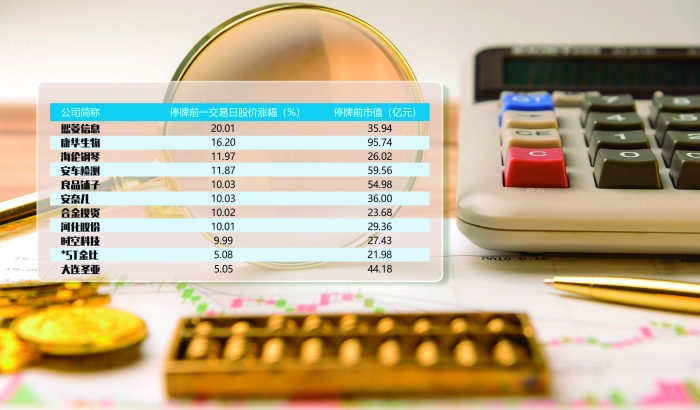
Core Viewpoint - The recent surge in ownership changes among A-share companies reflects a significant shift in the private sector, driven by generational transitions, regulatory relaxation, and capital market dynamics [3][4][6] Group 1: Ownership Changes in A-Share Companies - In June and July, 36 A-share companies announced ownership changes, with 31 being private enterprises, indicating a trend of ownership transitions in the private sector [3][4] - Many of these companies, primarily with market capitalizations between 2 billion to 5 billion yuan, are facing operational difficulties characterized by "increased revenue without increased profit" and shrinking core businesses [3][4] - The average age of founders of these private companies is over 60, leading to challenges in succession and prompting many to consider relinquishing control [4] Group 2: Market Dynamics and Capital Involvement - Unlike previous trends where industrial capital was the primary acquirer, this year has seen a rise in private equity (PE) firms taking over A-share companies, facilitated by relaxed regulations on control acquisition [5][6] - The new regulatory environment encourages PE firms to acquire listed companies, allowing them to integrate their investments and create industry synergies [6] - The involvement of PE firms is seen as a potential opportunity for struggling companies to undergo restructuring and transformation [8] Group 3: Stock Price Movements and Market Concerns - Prior to ownership change announcements, several companies exhibited significant stock price movements, raising concerns about potential insider trading [7][8] - The phenomenon of "warehouse-style reduction" in shareholding during ownership transitions has emerged, where original controllers transfer shares through multiple unrelated parties to circumvent regulatory scrutiny [8][9] - The interplay between capital and industry in ownership changes necessitates stringent regulatory oversight to ensure transparency and fairness in market transactions [9]
海伦钢琴“引智”转型:全拓卓戴5.48亿元入主
Zhong Guo Jin Rong Xin Xi Wang· 2025-07-31 10:21
Core Viewpoint - Helen Piano is undergoing a significant ownership change, with a share transfer agreement signed for approximately 5.48 billion yuan, marking a strategic partnership with Quanta Capital, which is expected to enhance the company's capabilities in digital and intelligent musical instruments [1][6]. Group 1: Ownership Change - Helen Piano's controlling shareholder, Helen Investment, and its associates are transferring 60.26 million shares, representing 23.83% of the total share capital, to Quanta Capital [1]. - The share transfer price is set at 9.09 yuan per share, totaling around 5.48 billion yuan [1]. Group 2: Strategic Partnership - The new major shareholder, Cui Yongqing, is the founder and chairman of Quanta Technology, which specializes in data flow and AI model development, indicating a strong technological background [2]. - Quanta Technology has developed a vast data system covering over 2.7 billion active devices and 1.035 billion active users, showcasing its capability in deep data analysis [2]. Group 3: Synergy and Opportunities - The partnership is seen as a fusion of traditional manufacturing and emerging digital technology, providing new momentum for innovation in the smart musical instrument sector [3][4]. - Helen Piano has a strong competitive advantage in manufacturing, brand recognition, and distribution channels, which can complement Quanta Technology's digital expertise [3]. Group 4: Challenges and Solutions - Helen Piano faces transformation pressures due to a slowing traditional piano market and lacks capabilities in AI application and online channel expansion [4]. - Quanta Technology's expertise in data flow and AI can address these gaps, enhancing product design and marketing strategies for Helen Piano [4][6]. Group 5: Expected Benefits - The integration is anticipated to lead to significant cost optimization and diversified revenue growth, enhancing Helen Piano's operational and profitability capabilities [6][7]. - The introduction of smart musical instruments is expected to become a core growth driver, with potential new revenue streams from value-added services and B-end market expansion [7].
钢琴教父,卖掉海伦钢琴
Sou Hu Cai Jing· 2025-07-30 23:29
Core Viewpoint - The piano industry is facing a significant decline in sales, leading to the transfer of control of Helen Piano, a company founded by the so-called "Piano Godfather," Chen Hailun, due to continuous poor performance and the risk of delisting [1][11][17]. Company Ownership and Control - Helen Piano has undergone a change in ownership, with Helen Investment and Four Seasons Hong Kong as the controlling shareholders, holding 27.41% and 16.98% of shares respectively [4]. - On July 24, a share transfer agreement was signed, where Helen Investment and Four Seasons Hong Kong sold a total of 60.83 million shares to Quantuo Zhuodai at a price of 9.09 yuan per share, totaling 548 million yuan [4][5]. - After the transfer, Quantuo Zhuodai will hold 23.83% of Helen Piano, while Helen Investment retains 20.56% [5]. - Following the transaction, Cui Yongqing will become the actual controller of Helen Piano, although Helen Investment remains the second-largest shareholder [7]. Financial Performance and Market Trends - Helen Piano's sales have drastically declined, with upright piano sales dropping from 30,904 units in 2020 to 9,452 units in 2024 [16]. - The company's financial situation has worsened, with a reported revenue of 27.76 million yuan in Q1 2023, a year-on-year decrease of 39.96%, and a net profit loss of 9.685 million yuan, a decline of 154.56% [17]. - The company faces a significant risk of delisting if it cannot maintain a revenue threshold of 100 million yuan [17]. Industry Context - The piano market in China has seen a decline in demand, attributed to the cancellation of educational policies that previously encouraged piano training, leading to many households with over 8 million pianos now having them as idle assets [16]. - The overall piano sales in China, which had averaged 400,000 units annually from 2017 to 2020, have sharply decreased, reflecting a broader trend of declining interest in piano education and ownership [16].
300329,董事长再表态,“接盘人”已先浮亏
Shang Hai Zheng Quan Bao· 2025-07-30 15:30
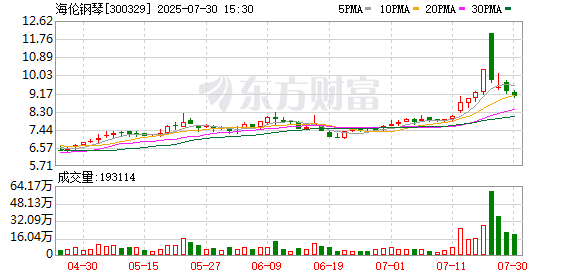
Core Viewpoint - The market has reacted negatively to the ownership change proposal of Helen Piano, resulting in a significant drop in its stock price, which fell from a peak of 12 yuan to around 9 yuan, representing a loss of one-fourth of its market value over four trading days [1][2]. Group 1: Stock Performance - The latest market price of 9.03 yuan is below the transaction price of 9.09 yuan per share for the ownership change, indicating that the new controlling shareholder, Cui Yongqing, is already facing a "floating loss" before officially taking control [2]. - On July 30, Helen Piano closed at 9.03 yuan, down 2.48% [1]. Group 2: Ownership Change Details - Helen Piano disclosed multiple equity change reports on July 29, highlighting Cui Yongqing's background, who has served as chairman and general manager of Quantuo Technology (Hangzhou) Co., Ltd. for the past five years [3][5]. - The announcement listed 10 other core enterprises controlled by Cui Yongqing, but did not mention his role in Quantuo Technology, where he holds only 13.64% of the shares, making him the second-largest shareholder [5][6]. Group 3: Financial Support and Future Prospects - Following the announcement of the ownership change, Helen Piano's chairman, Chen Hailun, stated that he would lend 200 million yuan to the company to improve cash flow, which exceeds the company's projected revenue for 2024 of 159 million yuan [9][10]. - Chen Hailun's comments did not lead to market confidence, as the stock continued to decline despite his assurances [10]. Group 4: Potential Shareholder Actions - Helen Investment, the current controlling shareholder of Helen Piano, indicated that there are no specific plans to increase or dispose of shares in the next 12 months, but it does not rule out the possibility of selling shares in the future [11][13].
300329 董事长疑再泄密 “接盘人”已先浮亏
Shang Hai Zheng Quan Bao· 2025-07-30 13:49
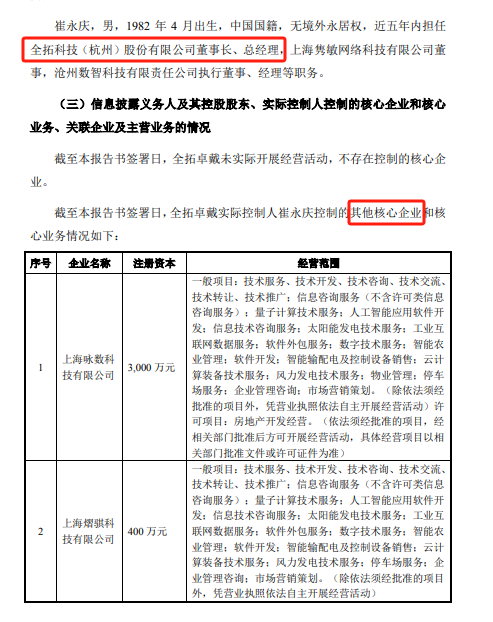
Core Viewpoint - Helen Piano's stock price has dropped significantly following the announcement of a change in control, indicating market skepticism about the new ownership and its potential impact on the company's future [2][16]. Group 1: Stock Performance - Over four trading days, Helen Piano's market value decreased by 25%, with the stock price falling from a peak of 12 yuan to around 9 yuan [2]. - As of July 30, the stock closed at 9.03 yuan, down 2.48%, which is below the transaction price of 9.09 yuan per share for the new controlling shareholder, Cui Yongqing [4][2]. Group 2: New Controlling Shareholder - Cui Yongqing, born in 1982, has held positions as chairman and general manager of Quantuo Technology (Hangzhou) Co., Ltd. for the past five years [6]. - However, Quantuo Technology does not appear to be one of Cui's core enterprises or businesses, raising questions about his actual influence and capabilities [7][9]. Group 3: Corporate Structure and Ownership - The detailed equity change report lists 10 other core enterprises controlled by Cui Yongqing, but does not mention Quantuo Technology, where he holds only 13.64% of the shares, making him the second-largest shareholder [9][11]. - The largest shareholder of Quantuo Technology is Qiang Min, who holds 27.28% of the shares, indicating that Cui does not have majority control [9]. Group 4: Market Reactions and Future Outlook - Following the announcement of the control change, Helen Piano's stock experienced high volatility, opening up 16.62% but closing down 4.76% on the same day, with a turnover rate of 23.64% [16]. - Chairman Chen Hailun's comments about the share transfer and a personal loan of 200 million yuan to improve cash flow have not reassured the market, as the company's stock continues to decline [16][18].