
半导体

Search documents
每周股票复盘:晶丰明源(688368)并购易冲科技获证监会批复
Sou Hu Cai Jing· 2026-02-14 18:07
截至2026年2月13日收盘,晶丰明源(688368)报收于139.25元,较上周的141.7元下跌1.73%。本周, 晶丰明源2月9日盘中最高价报146.29元。2月11日盘中最低价报134.6元。晶丰明源当前最新总市值 123.24亿元,在半导体板块市值排名114/171,在两市A股市值排名1705/5189。 公司公告汇总:晶丰明源收购易冲科技100%股权获证监会注册批复 公司公告汇总:交易价格为328,263.75万元,募集配套资金不超过18亿元 公司公告汇总:业绩承诺方承诺易冲科技2025至2027年充电芯片业务净利润分别不低于9,200万 元、12,000万元和16,000万元 公司公告汇总 本周关注点 业绩承诺方承诺标的公司充电芯片业务2025至2027年净利润分别不低于9,200万元、12,000万元和16,000 万元,其他电源管理芯片业务同期营业收入分别不低于19,000万元、23,000万元和28,000万元。相较此 前披露的草案注册稿,本次修订主要更新了本次交易已履行和尚需履行的决策程序及批准情况,并删除 了审批风险,更新了交易可能被暂停、中止或取消的风险。 以上内容为证券之星据公开信 ...

思佳讯2025年Q4业绩及2026年Q1展望引关注
Xin Lang Cai Jing· 2026-02-14 17:41
公司状况 客户集中度风险演变:公司披露苹果公司计划减少对思佳讯的依赖,这可能影响未来收入结构,需持续 关注后续进展。 行业政策与环境 行业与市场因素:半导体板块受AI算力需求增长和存储芯片价格回升支撑,思佳讯作为上游供应商可 能间接受益,但板块波动也可能带来影响。 以上内容基于公开资料整理,不构成投资建议。 经济观察网 基于公开信息,思佳讯(SWKS.US)作为射频芯片供应商,在2026年初有以下值得关注的 事件或动态: 业绩经营情况 2025年第四季度业绩发布:多家机构预测思佳讯2025年第四季度每股收益为1.52美元,同比增长 13.55%,营业收入预计达10.42亿美元,同比增长7.35%。该业绩可能于近期正式公布,市场关注其是否 符合预期。 2026财年第一季度业绩展望:在2025年11月的业绩电话会议中,思佳讯管理层对2026财年第一季度提出 展望,预计营收区间为9.75亿至10.25亿美元,每股收益预期为1.40美元。正式业绩可能在未来财季末发 布。 ...

芯科实验室被德州仪器收购,股价单日暴涨近50%
Xin Lang Cai Jing· 2026-02-14 17:13
Recent Events - Texas Instruments announced a cash acquisition of Silicon Labs for $7.5 billion, with a purchase price of $231 per share, aimed at integrating Silicon Labs' technology in the IoT wireless connectivity sector, expected to be completed in the first half of 2027 [1] - Following this announcement, Silicon Labs' stock surged by 48.89% on February 4, with trading volume reaching $1.716 billion [1] Financial Performance - Silicon Labs is set to release its Q4 2025 earnings report on February 10, 2026, with analysts predicting revenue of $207.6 million, representing a year-over-year growth of 25.27%, which could further impact the stock price if expectations are met [2] Stock Performance - After the acquisition announcement, the stock exhibited volatility; as of February 11, 2026, the stock closed at $206.51, reflecting a year-to-date increase of 58.00% [3] - Benchmark downgraded its rating to "Hold," with a target price of $215.00 [3]


凌云半导体股价年内涨超20%,机构上调目标价至163美元
Xin Lang Cai Jing· 2026-02-14 17:13
Group 1 - The core stock price of Lingyun Semiconductor (CRUS.us) is reported at $143.37 as of February 11, 2026, with a year-to-date increase of 20.99% [1] - Analyst Tore Svanberg from Stifel maintains a buy rating on the stock and raises the target price from $150 to $163 as of February 5, 2026 [1] Group 2 - The company expects third-quarter revenue for 2026 to be $531.4 million and fourth-quarter revenue to be $378.3 million, although the specific date for the earnings report has not been announced [1] - The overall dynamics of the semiconductor industry are noteworthy, with major storage manufacturers planning to commence production in 2026, which may indirectly impact the industry ecosystem [1]

艾马克技术股价回调7.97%,财报后获利了结与板块调整成主因
Jing Ji Guan Cha Wang· 2026-02-14 16:48
行业板块情况 经济观察网根据截至2026年2月15日的公开信息,艾马克技术(AMKR)股价在2月13日出现显著回调,单 日下跌7.97%至47.48美元,主要受以下因素影响: 股价异动原因 公司在2月9日盘后发布超预期的2025年第四季度财报后,股价连续三个交易日累计上涨13.98%(2月11日 收盘至56.26美元)。快速上涨后部分投资者选择获利了结,导致2月13日成交额放大至6.11亿美元,换手 率达5.16%,抛压显著。尽管财报显示第四季度净利润同比增长62.58%,毛利率提升至16.66%,但股价 短期涨幅较大后估值升至市盈率(TTM)31.65倍,引发资金对短期估值偏高的谨慎情绪。 资金面与技术面 回调当日量比达1.94,显示成交活跃度骤增,但资金流向以卖出为主导。尽管Needham于2月10日将目 标价上调至65美元(基于先进封装业务增长潜力),市场在连续上涨后仍需消化短期涨幅。此外,股价在 2月11日触及57.09美元高点后出现技术性回落,部分技术性卖盘加剧波动。 以上内容基于公开资料整理,不构成投资建议。 2月13日美股半导体板块下跌0.33%,纳斯达克指数下跌0.22%,行业情绪偏弱对个股形 ...

超科林半导体股价大幅震荡,多重因素共同作用
Jing Ji Guan Cha Wang· 2026-02-14 16:48
资金面与技术面2月10日成交量放大至261万股,换手率5.75%,推动股价冲高;但2月12日成交额骤降 至5576万美元,换手率2.31%,资金参与度快速下降引发获利盘了结。低流通市值(约25.14亿美元)使得 少量资金即可引发大幅波动。 股价情况机构目标均价38.75美元低于当前股价,市场对估值分歧较大。同时,美股科技股整体情绪谨 慎,纳斯达克指数近5日下跌2.10%,放大了个股波动。 以上内容基于公开资料整理,不构成投资建议。 经济观察网超科林半导体(UCTT.OQ)股价近期大幅震荡,是行业景气、公司基本面、资金情绪及技术面 等多重因素共同作用的结果。 股票近期走势截至2026年2月13日收盘,超科林半导体股价报55.39美元,单日上涨5.59%,振幅达 6.71%。近5个交易日(2月9日至13日)累计上涨14.70%,但区间振幅高达38.81%,其中2月10日股价触及 58.70美元的阶段高点后,2月12日单日下跌6.20%,显示波动剧烈。 股价异动原因行业政策与环境全球半导体零部件市场预计保持增长(2025-2032年复合增长率7.8%),三 星2纳米芯片技术突破、日月光投控扩产等产业动态提振需求预期 ...
纳微半导体股价波动显著,业务转型聚焦高功率市场
Jing Ji Guan Cha Wang· 2026-02-14 16:48
Group 1 - The stock price of Nanjing Micro Semiconductor (NVTS.OQ) has shown significant volatility in the past week, influenced by sector sentiment and macroeconomic data, with a recent closing price of $8.30, reflecting a cumulative decline of 6.32% over five days [1] - On February 10, 2026, the stock dropped by 4.66% to close at $8.79, primarily due to pressure on the semiconductor sector and market caution ahead of U.S. non-farm payroll and CPI data releases [1] - The trading volume surged to 25.12 million shares on February 10, indicating active short-term trading [1] Group 2 - Nanjing Micro Semiconductor is focusing on a transition to the high-power market, collaborating with Powerchip Semiconductor Manufacturing Corp to advance the mass production of 8-inch silicon-based gallium nitride products, with plans for 100V series production in the first half of 2026 [2] - The partnership with NVIDIA is deepening, involving 800V high-voltage direct current architecture for AI server power solutions, which may present new opportunities in high-power applications [2] - The company continues to receive attention for its 3300V/2300V ultra-high voltage silicon carbide product lineup, targeting high-end markets such as smart grids and AI data centers [2] Group 3 - Market sentiment towards Nanjing Micro Semiconductor remains cautious, with only 22% of the nine institutions covering the company rating it as buy or hold, while 67% rated it as hold [3] - The average target price for the stock is $8.28, with a range from a high of $13.00 to a low of $4.20 [3] - For Q4 2025, the expected earnings per share is projected at -$0.053, reflecting a year-on-year improvement of 13.11%, but revenue forecasts indicate a significant decline of 63.51% year-on-year, with institutions focusing on order fulfillment and improvements in profitability [3]
韩政府决定改变实施60多年的KS认证体系
Shang Wu Bu Wang Zhan· 2026-02-14 15:50
(原标题:韩政府决定改变实施60多年的KS认证体系) 据韩国《KBS WORLD》2月4日报道, 韩国政府决定根据当前产业结构,对KS(韩国工业标准)认证制度进行全面调整。KS认证自1961年实 施以来,主要以制造全过程为审查对象,但随着产业分工细化,现行制度已难以适应研发、设计与生产分离的现实需求。为此,产业通商部将推 进制度改革,使KS认证更贴近当下产业生态。 根据新方案,仅负责研发和设计、将生产外包的企业也可申请KS认证。制度完善后,半导体设计专业公司、机器人开发与设计企业等此前难 以取得认证的主体,将被纳入认证范围。政府表示,此举有助于生产设备有限的初创企业加快产品商业化,同时将认证续期周期由现行的3年延长 至4年,以减轻企业的行政和审核负担。 在具体认证方式上,风力发电设备的KS认证也将更具灵活性。今后,塔架等结构性部件规格变更时无需重新进行整机验证即可获得认证。同 时,政府将强化事后监管,与关税厅协作防止不合格KS产品流入市场,并在接到盗用认证举报时立即调查;若企业被查实故意生产不符合标准的 产品,将适用"一次撤销"制度,立即取消其认证资格。 ...

聊一聊刚刚曝光参数的摩尔线程S5000
傅里叶的猫· 2026-02-14 15:13
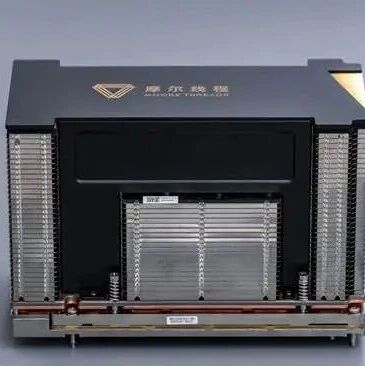
Core Viewpoint - The MTT S5000, developed by Moore Threads, is positioned as a competitive GPU for large model training and inference, showcasing performance that rivals international flagship products, marking a significant advancement in domestic computing power capabilities [1][3]. Group 1: MTT S5000 Performance - The MTT S5000 features a single card AI computing power of 1000 TFlops with liquid cooling and 920 TFlops with air cooling, alongside 80 GB of memory and a memory bandwidth of 1.6 TB/s [4]. - The S5000's performance has been reported to match or even exceed that of NVIDIA's H100 in certain multi-modal large model fine-tuning tasks [4][6]. - The architecture utilizes the fourth-generation MUSA architecture, optimized for large-scale AI training, and supports full precision calculations from FP8 to FP64 [6]. Group 2: Cluster Performance - The Kua'e Wan Card cluster built on the S5000 achieves a floating-point operation capability of 10 Exa-Flops, with an MFU of 60% in Dense model training and around 40% in MoE models, maintaining over 90% effective training time [8]. - The S5000 employs unique ACE technology for communication tasks, allowing for zero-conflict parallel computing and significantly enhancing model computing power utilization [10]. Group 3: Training and Inference Cases - In January 2026, the Zhiyuan Research Institute completed end-to-end training and alignment verification of the RoboBrain 2.5 model using a thousand-card cluster based on the S5000, achieving a training loss difference of only 0.62% compared to NVIDIA's H100 cluster [10]. - In December 2025, Moore Threads, in collaboration with Silicon-based Flow, conducted performance testing on the DeepSeek-V3 671B model using the S5000, achieving a record-breaking inference throughput of over 4000 tokens/s for Prefill and over 1000 tokens/s for Decode [12].
Aster Labs(ALAB):FY25Q4 业绩点评及业绩说明会纪要:业绩增长强劲,继续开拓高速互联领域:
Huachuang Securities· 2026-02-14 14:58
Investment Rating - The report assigns a strong buy rating for Astera Labs, expecting it to outperform the benchmark index by over 20% in the next six months [53]. Core Insights - Astera Labs reported a strong revenue growth of 92% year-over-year for FY2025Q4, with total revenue reaching $270.6 million. The full-year revenue for 2025 was $852.5 million, reflecting a 115% increase [3][8]. - The company is focusing on expanding its presence in the high-speed connectivity sector, particularly in AI deployment and emerging technologies [5][6]. - The strategic emphasis includes significant growth opportunities in AI, with expectations of a tenfold market increase over the next five years, reaching approximately $25 billion [5]. Revenue Overview - For FY2025Q4, Astera Labs achieved total revenue of $270.6 million, a 17% quarter-over-quarter increase and a 92% year-over-year increase. The full-year revenue for 2025 was $852.5 million, up 115% year-over-year [3][8]. - The Non-GAAP gross margin for Q4 was 75.7%, with a Non-GAAP operating profit of $108.8 million, resulting in an operating margin of 40.2% [3][8]. Business Segment Performance - Signal Conditioning Business: The Aries product line saw nearly 70% year-over-year growth, with the Aries Gen 6 being the only PCIe 6 DSP retimer solution available for mass delivery [4][9]. - Intelligent Cable Module Business: The Taurus series experienced over fourfold revenue growth in 2025, driven by the mass delivery of 400G design solutions [4][10]. - Switching Matrix Business: The Scorpio P series exceeded the target of 10% of total revenue for the year, remaining the only PCIe 6 switching architecture product available for mass shipment [4][11]. - Emerging Products: The Leo CXL memory expansion product made significant progress in 2025, with collaborations with Microsoft, Intel, and SAP, expecting initial mass production in the second half of 2026 [4][12]. FY26Q1 Guidance - Astera Labs expects FY2026Q1 revenue to be between $286 million and $297 million, representing a quarter-over-quarter growth of approximately 6% to 10%. The Non-GAAP gross margin is projected to be around 74%, with earnings per share estimated at $0.53 to $0.54 [5][13].