
稀土

Search documents
A股五张图:新凯来概念股,都是怎么凑出来的?
Xuan Gu Bao· 2025-10-13 10:33
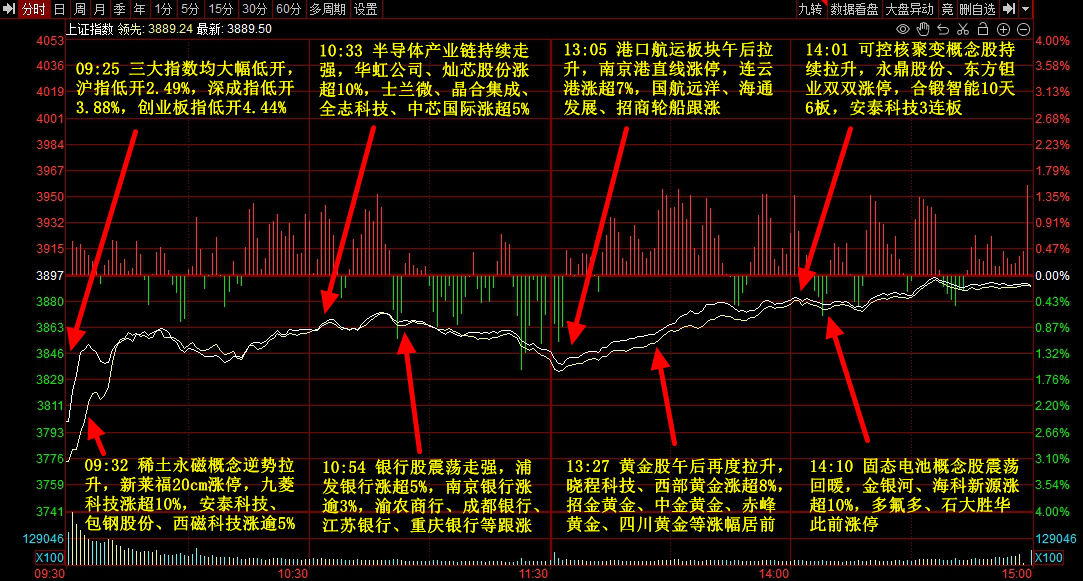
Market Overview - The market experienced a low opening but rebounded throughout the day, with significant gains in various sectors, particularly in new energy and semiconductor stocks [3][10][21] - The Shanghai Composite Index, Shenzhen Component Index, and ChiNext Index closed down by 0.19%, 0.93%, and 1.11% respectively, with over 3,600 stocks declining and more than 1,600 stocks rising, while total trading volume exceeded 2.3 trillion [4] New Energy Sector - New energy stocks, particularly those related to the "New Kai Lai" concept, saw substantial gains, with stocks like Zhichun Technology and Tonghui Electronics hitting the daily limit [10][12] - The "New Kai Lai" concept stocks benefited from a weekend event that reinforced buying logic, leading to a strong performance without facing significant market tests [12][21] Semiconductor Sector - The semiconductor sector experienced two rounds of upward movement, with stocks like Huahong Semiconductor hitting the daily limit, while others like Zhaoxin Technology and Jiangfeng Electronics also performed well [3][18] - However, the market faced a significant downturn with the announcement of restrictions on the core semiconductor assets of Wentai Technology, leading to a one-sided drop in its stock price [18] Rare Earth Sector - The rare earth sector saw a strong rally following a weekend catalyst, with multiple stocks such as Antai Technology and Baogang Co. hitting the daily limit, and the sector overall rising nearly 10% [21][22] - The rise in rare earth stocks also positively impacted related sectors like graphite electrodes and superhard materials, which rebounded after previous declines [22] Other Notable Sectors - The port and shipping sectors saw afternoon gains, with stocks like Nanjing Port hitting the daily limit [3] - Solid-state battery stocks also rebounded, with companies like Shida Shenghua and Tianji Co. achieving significant price increases [3]

外媒:中国此次的稀土新规在学美国的长臂管辖,但有没有这个能力存在很大问号?
Sou Hu Cai Jing· 2025-10-13 10:32
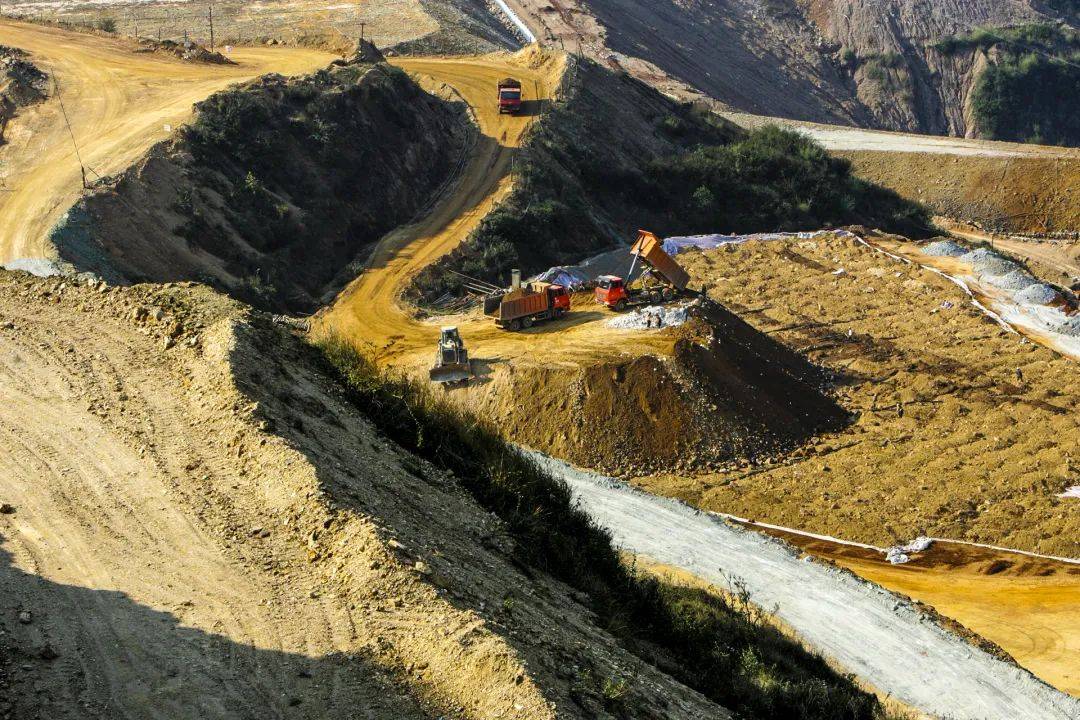
Core Viewpoint - China's new regulations on rare earths are seen as an attempt to emulate the U.S. long-arm jurisdiction, but there are significant doubts about China's capability to enforce such measures [1] Group 1: Impact on China's Rare Earth Industry - Long-term implications suggest that China's rare earth industry may face setbacks, leading to a reduction in its international market share [1] - The immediate concern is the potential disruption in rare earth supply, which could have significant repercussions for various industries reliant on these materials [3] Group 2: Perception and Response - Singapore's perspective reflects a belief that the U.S. maintains superiority over China, indicating a tendency to align with U.S. views [3] - There is skepticism regarding China's ability to effectively manage its rare earth resources in the face of international pressures, with historical examples cited where China’s assertiveness led to significant consequences for other nations [3]
巨震之下!乱世“稀土+黄金”
格隆汇APP· 2025-10-13 10:27
Group 1: Rare Earths - The strategic value of rare earths is highlighted as an irreplaceable "countermeasure" in geopolitical conflicts, particularly in the context of US-China trade tensions [8][14]. - The recent announcement of strict export controls on rare earths by the Chinese government has significantly increased market expectations for potential export restrictions to the US, driving up the prices and interest in rare earth stocks [16][39]. - Demand for rare earths is expected to surge due to global energy transitions and technological advancements, particularly in electric vehicles, wind energy, and military applications [20][23][31]. - China dominates the global rare earth supply chain, controlling over 60% of production and 85% of refining capacity, creating a significant barrier for other countries attempting to establish their own supply chains [25][27]. - Recent price increases for rare earths have been substantial, with prices for certain elements like dysprosium and praseodymium skyrocketing, reflecting the supply-demand imbalance [32][34]. Group 2: Gold - Gold prices have reached historical highs, driven by increased demand for safe-haven assets amid geopolitical tensions and economic uncertainty [43][45]. - Factors supporting gold price increases include expectations of interest rate cuts by the Federal Reserve and a global trend towards "de-dollarization," leading central banks to diversify their reserves [44]. - The performance of gold ETFs, particularly the gold ETF (518680), has been strong, with significant net inflows and a high annual growth rate, making it an attractive investment option [48][50]. - The strategic role of gold in investment portfolios is emphasized, with recommendations for a substantial allocation to hedge against risks associated with credit assets [46]. Group 3: Investment Opportunities - Both rare earths and gold are identified as key strategic assets in the current market environment, offering unique investment opportunities amid ongoing geopolitical and economic uncertainties [51][53]. - The contrasting roles of rare earths as a growth asset and gold as a defensive asset provide investors with a balanced approach to navigating market volatility [51][52].



龙虎榜 | 稀土股狂飙!毛老板扫货中国稀土超5亿,炒股养家等扎堆梅雁吉祥
Ge Long Hui A P P· 2025-10-13 10:21
Market Overview - On October 13, the trading volume of the Shanghai and Shenzhen stock markets reached 2.35 trillion yuan, a decrease of 160.9 billion yuan compared to the previous trading day [1] - Sectors such as rare earth permanent magnets, precious metals, photolithography machines, semiconductors, small metals, and military equipment saw significant gains, while automotive parts, gaming, consumer electronics, cultural media, and weight loss drugs experienced declines [1] High-Performing Stocks - Bluefeng Biochemical achieved a 9.98% increase, marking its 8th consecutive trading day of gains [3] - Controlled nuclear fusion concept stock Hezhong Intelligent rose by 10.01%, with 6 consecutive days of gains [3] - Tianji Co., a lithium hexafluorophosphate concept stock, increased by 9.99%, with 5 days of gains [3] - Other notable stocks include Shida Shenghua (+9.99%), Shen Zhenye A (+9.97%), and Antai Technology (+9.99%) [4] Trading Dynamics - The top three net purchases on the daily leaderboard were China Rare Earths (267 million yuan), Duofluor (262 million yuan), and Wangzi New Materials (238 million yuan) [6] - The top three net sales were Ganfeng Lithium (165 million yuan), Baiyin Nonferrous Metals (153 million yuan), and Guanzhong Ecology (88.9 million yuan) [6] Sector Highlights - China Rare Earths saw a significant increase in its stock price following the announcement of export controls on certain rare earth equipment and materials, which is expected to enhance supply chain management [13] - Baogang Group and Northern Rare Earth raised the trading price of rare earth concentrates to 26,205 yuan per ton, a 37.13% increase, boosting industry profitability expectations [13] - Duofluor, involved in lithium hexafluorophosphate and solid-state batteries, reported a trading volume of 33.62 billion yuan with a 9.98% increase [14] - Wangzi New Materials, focusing on controlled nuclear fusion and military electronics, also saw a trading volume of 12.31 billion yuan with a 9.98% increase [17] Institutional Activity - Institutional net purchases were significant in stocks like Duofluor (177 million yuan), Wangzi New Materials (139 million yuan), and Northern Long Dragon (113 million yuan) [8] - Conversely, net sales were observed in Ganfeng Lithium, Tianji Co., and China Rare Earths, indicating a shift in institutional sentiment [9]




A股,大反弹!多股尾盘涨停!
Zheng Quan Shi Bao· 2025-10-13 10:20
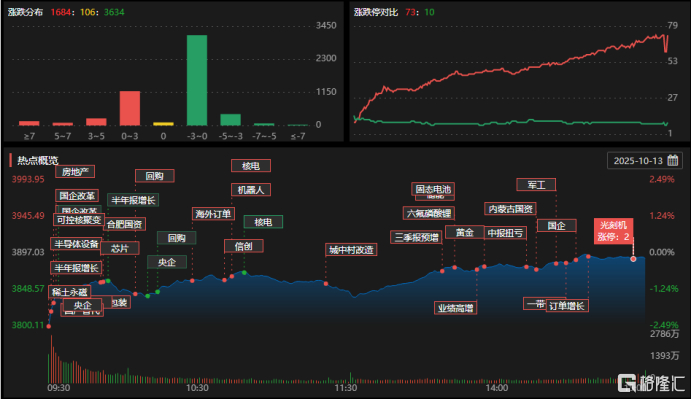
Market Overview - A-shares experienced a significant decline in the morning session but rebounded in the afternoon, with the Sci-Tech Innovation 50 Index showing strength [1] - The Shanghai Composite Index closed down 0.19% at 3889.5 points, while the Shenzhen Component Index fell 0.93% to 13231.47 points, and the ChiNext Index dropped 1.11% to 3078.76 points [1] - The total trading volume in the Shanghai and Shenzhen markets was 23,745 billion yuan, a decrease of 1,600 billion yuan from the previous trading day [1] Sector Performance - Over 3,600 stocks declined, with sectors such as automotive, oil, liquor, and pharmaceuticals experiencing losses [1] - The rare earth sector saw a resurgence, with stocks like China Rare Earth and Northern Rare Earth hitting the daily limit [2] - The banking sector rose, with China Construction Bank increasing by over 5% [1] - The semiconductor sector rebounded, with Huahong Semiconductor and other companies reaching their daily limits [1][6] Rare Earth Sector - The rare earth sector exploded, with stocks like Jiuling Technology rising nearly 27% and several others hitting the daily limit [2] - The Ministry of Commerce announced new export controls on rare earth-related items, expanding the scope to include technologies and equipment related to rare earth recycling [2] - Citic Securities indicated that the rare earth industry is expected to enter a new era of high-quality development, with prices likely to stabilize and improve [4] Semiconductor Sector - The semiconductor sector rebounded after a significant pullback, with companies like Luwi Optoelectronics and Huahong Semiconductor both hitting the daily limit [6] - The market is reacting to potential export controls from the U.S. on key software types, which could impact domestic industries [6] Company News - Yao Cai Securities surged by 34.5% after receiving approval from the Hong Kong Securities and Futures Commission for an acquisition by Ant Group [8] - The acquisition process is ongoing, with necessary approvals being pursued [8]



A股,大反弹!多股尾盘涨停!
证券时报· 2025-10-13 10:16
Market Overview - A-shares experienced a significant decline in the morning session, with the Shanghai Composite Index opening down over 2% and the ChiNext Index down over 4%, before stabilizing in the afternoon [1] - The Shanghai Composite Index closed down 0.19% at 3889.5 points, the Shenzhen Component Index down 0.93% at 13231.47 points, and the ChiNext Index down 1.11% at 3078.76 points, while the Sci-Tech Innovation 50 Index rose by 1.4% [1] - Total trading volume in the Shanghai and Shenzhen markets was 23.745 billion yuan, a decrease of 1.6 billion yuan from the previous trading day [1] Sector Performance - Over 3600 stocks in the market were in the red, with declines in sectors such as automotive, oil, liquor, and pharmaceuticals [1] - The rare earth sector saw a strong performance, with stocks like China Rare Earth, Northern Rare Earth, and Western Gold hitting the daily limit [4][6] - The banking sector also saw gains, with China Construction Bank rising over 5% [1] - The semiconductor sector rebounded, with companies like Huahong Semiconductor and Zhaoxin Semiconductor nearing their daily limits [1][7] Rare Earth Sector - The rare earth sector experienced a significant surge, with stocks such as Jiuling Technology rising nearly 27% and several others hitting the daily limit [4] - The Ministry of Commerce announced new export controls on rare earth-related items, which is expected to enhance the strategic position of China's rare earth industry and potentially lead to price increases [6] - Analysts predict that the rare earth industry chain's performance may improve sequentially in the third and fourth quarters of this year [6] Semiconductor Sector - The semiconductor sector showed signs of recovery, with notable gains in stocks like Huahong Semiconductor, which closed at a 20% increase [7][8] - The sector's rebound is attributed to market dynamics and potential shifts in supply chains due to geopolitical factors [9] Company Highlights - Yao Cai Securities saw a significant increase of over 34% following the approval of an acquisition by Ant Group, with a closing price increase of 34.5% and a trading volume of 2.06 billion HKD [10][11] - The acquisition process is ongoing, with necessary approvals being sought from relevant authorities [12]

十余股涨停!稀土永磁逆市掀涨停潮,银河磁体20CM强势封板
2 1 Shi Ji Jing Ji Bao Dao· 2025-10-13 10:04
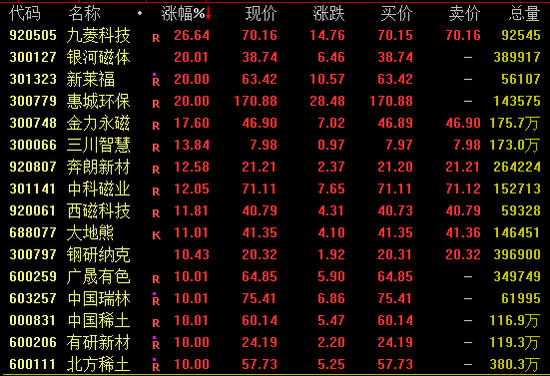
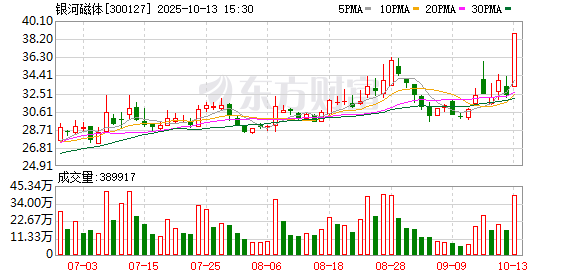
中信建投证券指出,中国稀土战略地位进一步得以强化,预计海外备库动作加强,稀土价格有望进一步 上涨;长周期看,中国对稀土开采-冶炼分离-磁材制造-磁材回收全产业链的技术、设备、软辅材料管 控,无疑将增加海外稀土自主可控产业链建成的难度,时间周期也将延长,长期强化中国稀土的壁垒优 势,利好稀土价格中枢上移。 (文章来源:21世纪经济报道) 10月13日,A股市场全天震荡回升,三大指数低开高走,科创50指数低开近3%,午后翻红大涨逾1%。 板块上,稀土永磁板块今日逆市大涨,银河磁体、惠城环保、新莱福斩获20CM涨停,广晟有色、中国 稀土、北方稀土、有研新材等多股涨停,金力永磁、中科磁业等多股涨幅超10%。 消息面上,10月9日,商务部联合海关总署等部门发布多项公告,对稀土相关物项、技术、设备及原辅 料实施出口管制,管制范围从境内扩展至境外,新增稀土二次资源回收利用相关技术及生产线装配、调 试、维护等技术的出口管制,基本覆盖稀土全产业链,并首次涉及半导体及人工智能领域。 ...


巴基斯坦向美国赠送稀土?中方回应:捕风捉影、挑拨离间、缺乏根据
Zhong Guo Ji Jin Bao· 2025-10-13 09:46
Core Viewpoint - The Chinese government has responded to reports of Pakistan exporting rare earths to the U.S., emphasizing the strong strategic partnership between China and Pakistan and denying any negative impact on their cooperation [1][2]. Group 1: China-Pakistan Relations - China and Pakistan are described as "all-weather strategic partners" with a long-standing friendship and high levels of strategic mutual trust [1]. - Pakistan has assured that its interactions with the U.S. will not harm China's interests or the cooperation between China and Pakistan [1]. Group 2: Rare Earths Export Control - The recent export control measures on rare earths by China are unrelated to Pakistan and are part of China's legal and regulatory framework to enhance its export control system [2]. - The measures aim to maintain world peace and regional stability while fulfilling international obligations [2]. Group 3: Market Reaction - On October 13, A-share rare earth and rare earth permanent magnet sectors experienced a surge, with multiple stocks hitting the daily limit [2]. - Notable stocks included Galaxy Magnetic Materials, which rose by 20.01%, and Northern Rare Earth, which had a trading volume of 21.456 billion yuan, leading the A-share market [2][3]. Group 4: Industry Outlook - The rare earth industry chain is undergoing an upgrade in control measures, which is expected to enhance the valuation of listed companies in the sector [4]. - A significant increase in rare earth prices is anticipated, with improved profits for rare earth and magnetic material companies expected in the third and fourth quarters of this year [4].

热搜!巴基斯坦向美国赠送稀土?中方回应:捕风捉影、挑拨离间、缺乏根据
Zhong Guo Ji Jin Bao· 2025-10-13 09:36
Core Viewpoint - The recent reports about Pakistan exporting rare earths to the U.S. have been dismissed by China, emphasizing the strong strategic partnership between China and Pakistan and clarifying that the export control measures on rare earths are unrelated to Pakistan's actions [2][3]. Group 1: China-Pakistan Relations - China and Pakistan are described as "all-weather strategic partners" with a long-standing friendship and high levels of strategic mutual trust [2]. - Pakistan has assured that its interactions with the U.S. will not harm China's interests or the cooperation between China and Pakistan [2]. Group 2: Rare Earths Export Control - China's recent export control measures on rare earths are a legitimate action to enhance its export control system and are not connected to Pakistan [3]. - The U.S. Geological Survey (USGS) estimates that global rare earth oxide reserves will be approximately 90 million tons in 2024, with China being the largest holder of these reserves [3]. Group 3: Market Reaction - On October 13, the A-share market saw a surge in rare earth and rare earth permanent magnet stocks, with several companies hitting the daily limit up [3]. - Notable stocks include Northern Rare Earth, which had a trading volume of 21.456 billion yuan, leading the A-share market [3]. Group 4: Industry Outlook - According to a report from招商证券, the control over the rare earth industry chain has been upgraded, which is expected to enhance the valuation of listed companies in this sector [5]. - A significant increase in rare earth prices is anticipated for the third and fourth quarters, leading to improved profits for rare earth and magnetic material companies [5].

ETF基金周报:战略金属与新兴产业的双重驱动,稀土板块仍具备投资价值-20251013
Dongguan Securities· 2025-10-13 09:21
基 金 ETF 基金周报(20251006-20251010): 战略金属与新兴产业的双重驱动 稀土板块仍具备投资价值 2025 年 10 月 13 日 投资要点 分析师:李荣 SAC 执业证书编号: S0340521010001 基金从业资格证书编号: F4520000001431 电话:0769-26628039 邮箱:lirong@dgzq.com.cn 研 究 本报告的风险等级为中高风险。 本报告的信息均来自已公开信息,关于信息的准确性与完整性,建议投资者谨慎判断,据此入市,风险自担。 请务必阅读末页声明。 证 券 研 究 报 告 资料来源:东莞证券研究所,Wind 资讯 各类ETF基金周度平均收益及资金流动概览:本周全球大类资产显著分 化。日经指数在高市早苗大概率当选女首相等消息影响下跳空涨超5%, 而美国市场受政府停摆影响及贸易摩擦升级的影响,三大指数均跌超2%, 港股市场同步调整,而传统避险资产黄金一度再创出历史新高。国内权 益市场方面,价值风格优于成长风格。在ETF基金方面,商品型ETF和货 币型ETF基金周度平均收益为正,其他类型ETF基金均录得负收益。本周 ETF基金资金流动情况并不显著, ...