
Investment Banking

Search documents
高盛:美国经济分析:贸易战与生产中断风险
Goldman Sachs· 2025-04-29 02:39
Investment Rating - The report does not explicitly provide an investment rating for the industry Core Insights - The report forecasts a soft GDP growth of 0.5% for 2025 Q4/Q4, primarily due to the negative impacts of tariffs, which are likened to a tax hike, tightening financial conditions, and increasing business uncertainty [3][6] - It identifies three main risks: higher production costs due to tariffs, high foreign retaliatory tariffs, and loss of access to rare earth elements, all of which could disrupt production and employment [3][34] Summary by Sections Economic Impact of Tariffs - The report estimates that tariff-driven cost increases could raise US production costs by 5-15% in some industries, significantly affecting their competitiveness [11][17] - It highlights that tariffed US exports to China account for approximately 0.5% of US GDP and support over 750,000 jobs across various sectors [28][30] Risks from Retaliatory Tariffs - China's 125% tariff on US exports is expected to block most exports, posing a significant risk to industries reliant on the Chinese market [26][28] - The report notes that while other countries have been restrained in retaliating against US exports, the high tariff rates could lead to further economic disruptions if not addressed [30][43] Rare Earth Element Restrictions - The report discusses the potential impact of China's restrictions on rare earth exports, which could disrupt production in industries that rely heavily on these materials [34][35] - It estimates that disruptions could affect between 200,000 to 500,000 jobs depending on the severity of the restrictions [35] Sector Analyst Insights - A survey of sector analysts indicates that about half expect trade-war related production disruptions and layoffs, with concerns primarily centered around retaliatory tariffs [39][41] - The report emphasizes the uncertainty surrounding how companies will adapt to these risks, with potential responses including halting production or seeking alternative markets [39][41] Monitoring Trade War Risks - The report introduces trade war trackers to monitor industrial production and payrolls in the most affected industries, providing a framework to assess ongoing impacts [44][47] - It suggests that the current high tariff rates could lead to unintended consequences, further risking GDP forecasts if not mitigated [43][44]

摩根士丹利:解答您关于关税、贸易及贸易紧张局势的疑问
摩根· 2025-04-29 02:39
Investment Rating - The report does not explicitly provide an investment rating for the industry Core Insights - The report addresses key investor questions regarding tariffs, trade, and trade tensions, focusing on high-frequency indicators and their implications for growth outlook [3][5][8] Current Status of Trade and Tariffs - High-frequency indicators show a significant decline in US-China trade activity, while broader trade activity is starting to recover after a sharp deceleration [5][9] - Tariffs on China have risen sharply, with effective rates increasing from 11% in January 2025 to 107% by April 2025 [36][40] - The overall effective tariff rate on US imports has increased by 23 percentage points year-to-date, reaching 25% [42][44] High-Frequency Indicators - Daily port calling data indicates that port callings in China have softened to 4.0% year-on-year from a mid-March peak of 10.6% [10][12] - The number of cargo-carrying container ships departing from China to the US has contracted by 33% year-on-year [13][14] - Scheduled blank sailings in the US have risen 14-fold compared to the previous month, indicating significant disruptions in shipping [11][19] Future Outlook - Talks between the US and China are expected to begin, potentially leading to a gradual reduction in tariff rates, but tariffs are likely to remain higher than January 2025 levels [46][48] - For Asia excluding China, reaching trade deals before the tariff pause expires is challenging, with some economies more likely to secure agreements than others [55] - Elevated uncertainty from tariffs is expected to weigh on capital expenditures and trade, leading to a potential synchronous slowdown in growth [56][58] Growth Implications - The report anticipates a sharp deceleration in growth for China, projecting 2Q25 growth below 4.5%, significantly weaker than 1Q25 [58] - Trade-exposed economies in Asia, such as Korea and Taiwan, are expected to experience a sharper deceleration in growth compared to less exposed economies like India and Australia [59][60]

高盛:中国-美国关税上调对劳动力市场的影响
Goldman Sachs· 2025-04-29 02:39
Investment Rating - The report does not explicitly provide an investment rating for the industry Core Insights - The heightened US tariffs are expected to significantly impact the Chinese economy and labor market, with a focus on labor market stability as a critical concern for policymakers [2][3] - The report estimates that approximately 16 million jobs are involved in the production of goods exported to the US, with significant vulnerabilities in sectors such as wholesale and retail sales, communication equipment, apparel, and chemical products [2][4][30] - The outlook for US-China tariffs and Chinese exports remains uncertain, with potential for a significant contraction in exports if high tariffs persist [4][38] Summary by Sections Economic Impact - The Trump administration's tariff increases have led to a reduction in the GDP growth forecasts for China, with projections for 2025 and 2026 lowered by 0.5 percentage points to 4.0% and 3.5% respectively [3] - Historical data indicates that during the 2008-09 global financial crisis, a similar decline in exports resulted in substantial employment pressures, particularly among low-skilled migrant workers [2][7] Labor Market Analysis - The report utilizes input-output analysis to quantify the impact of US tariffs on the labor market, highlighting that labor market pressures are expected to increase if exports decline sharply [2][27] - The labor intensity of US-bound goods exports is higher than that of the overall manufacturing sector, indicating that job losses could be significant in affected industries [20][26] Policy Responses - In response to potential unemployment pressures, the Chinese government has indicated plans to enhance unemployment insurance rebates and implement a comprehensive employment stabilization package [3][39] - Historical trends suggest that the People's Bank of China (PBOC) typically cuts policy rates in response to labor market weaknesses, with expectations for monetary easing in the near future [39][40]
高盛:每周资金流向:流向美国国债的资金持续为正
Goldman Sachs· 2025-04-29 02:39
Investment Rating - The report indicates a positive investment sentiment towards US Treasuries, with strong inflows observed in this segment [2][4]. Core Insights - Global fund flows showed a net inflow into equities of $9 billion for the week ending April 23, an increase from $8 billion the previous week, driven by reduced outflows from US equity funds [4]. - In fixed income, net outflows were significantly reduced to $0.8 billion from $21 billion in the prior week, with government bond funds continuing to attract inflows [4]. - Emerging markets saw positive flows into mainland China funds, while Taiwan maintained strong net inflows [4]. - Cross-border FX flows turned positive, indicating an improved risk appetite among investors, favoring currencies such as USD, EUR, GBP, and CNY [4]. Summary by Category Equity Flows - Total equity inflows amounted to $68,079 million over four weeks, with a weekly inflow of $9,164 million [10]. - Developed markets saw inflows of $34,063 million, while emerging markets recorded inflows of $27,140 million, with mainland China leading at $24,686 million [10]. - Sector-wise, technology funds experienced the largest inflows of $14,845 million, while financials and healthcare saw significant outflows [10]. Fixed Income Flows - Total fixed income experienced outflows of $32,369 million, with government bonds attracting inflows of $29,366 million [10]. - High yield bonds faced substantial outflows of $23,488 million, while short-duration bonds saw inflows of $29,804 million [10]. FX Flows - Total FX flows recorded a net outflow of $4,751 million, with G10 currencies showing mixed results [12]. - The USD faced outflows of $3,440 million, while the EUR and GBP saw inflows of $2,880 million and $799 million respectively [12]. Fund Positioning - The report highlights a shift in fund positioning, with an increasing share of equity assets in total assets, indicating a growing preference for equities over fixed income [20][27]. - The share of money market fund assets as a percentage of global mutual fund assets has also seen fluctuations, reflecting changing investor sentiment [20].
高盛:中国本地客户如何看待经济-2025 年 4 月本地营销要点
Goldman Sachs· 2025-04-29 02:39
Investment Rating - The report does not explicitly provide an investment rating for the industry Core Insights - Local investors express heightened concerns regarding the US-China trade war, leading to a limited risk appetite in the near term due to rising market volatility and uncertainty [2][3] - There is optimism regarding China's resilience in the trade war, with expectations that the US may lower tariffs on China within three months [3][8] - Local investors have low expectations for upcoming policy easing measures in China, anticipating that significant easing will only occur if clear signs of economic slowdown appear [9] - Long-term economic reforms are deemed more important than short-term stimulus, with a focus on enhancing the social safety net and supply-side reforms to support consumption growth [10] Summary by Sections Concerns Over US-China Trade War - Onshore clients are exploring game theory frameworks to assess US-China economic competitiveness and the Trump administration's goals [2] - Key concerns include the potential for coordinated tariffs blocking Chinese exports and escalation beyond a trade war [2] Optimism on China's Resilience - Local clients believe that US importers have limited short-term flexibility to find alternative sources under tariff pressure [3] - Many expect the US to lower China-focused tariffs and grant firm-level tariff exemptions to stabilize the market [3][8] Expectations for Policy Easing in China - Onshore investors have lowered expectations for aggressive fiscal stimulus, with many anticipating the next round of easing after the July Politburo meeting [9] - Local clients think that rate and RRR cuts may only occur if there are clear signs of economic slowdown [9] Importance of Long-term Economic Reform - Most local clients emphasize the need for long-term reforms over short-term stimulus, focusing on policies that enhance the social safety net and support domestic demand [10] - Structural monetary policies are considered more important than broad-based easing, with expectations for targeted easing for companies and households affected by tariffs [10]
投资业务增长显著!中金公司Q1营收同比增长47.69%,净利润同比增64.85% | 财报见闻
Hua Er Jie Jian Wen· 2025-04-28 10:45
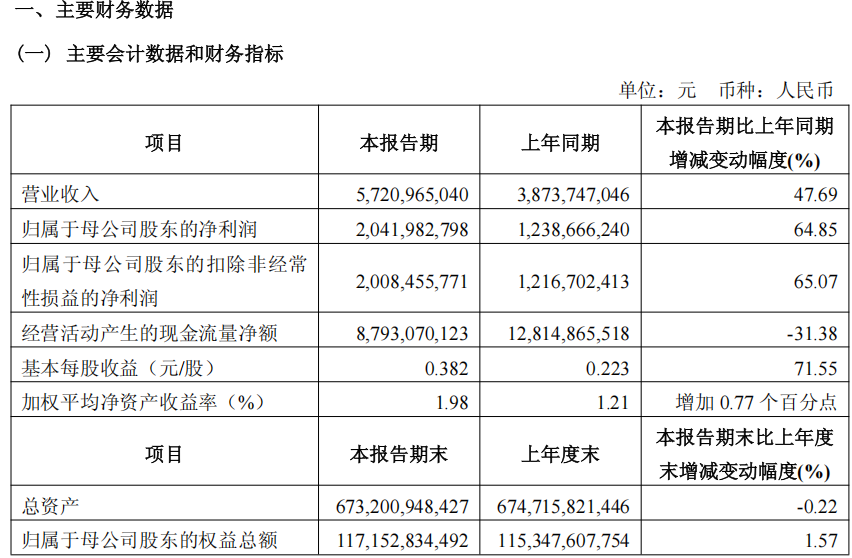
Core Insights - The company reported significant growth in both revenue and profit, driven primarily by investment and brokerage businesses [1][3] Revenue and Profit Performance - Q1 revenue reached 5.72 billion yuan, representing a year-on-year increase of 47.69% [2][5] - Net profit attributable to shareholders was 2.04 billion yuan, up 64.85% compared to the same period last year [2][5] - Basic earnings per share increased by 71.55% to 0.382 yuan [2][5] Business Segment Performance - Investment income and fair value changes surged by 84.44% to 3.41 billion yuan, becoming the main driver of growth [1][3] - Brokerage business net commission income rose by 56.3% to 1.30 billion yuan, indicating increased market trading activity [3] - Investment banking and asset management fees showed mixed results, with investment banking fees down 10.47% to 403 million yuan, while asset management fees increased by 15.24% to 308 million yuan [3] Financial Position - Total assets at the end of Q1 were 673.20 billion yuan, a slight decrease of 0.22% from the beginning of the year [2][3] - Total equity attributable to shareholders increased by 1.57% to 117.15 billion yuan [2][3] Risk Management Metrics - The company's net capital stood at 47.53 billion yuan, down 3.86% from the end of the previous year, but the risk coverage ratio improved to 219.10%, up 30.56 percentage points [3] - Liquidity coverage ratio increased from 224.00% to 371.61%, and the net stable funding ratio rose from 137.25% to 149.40% [4] - Credit impairment losses decreased by 58.53% to 124 million yuan compared to Q1 of the previous year [4]


“深圳商行+香港投行”有何想象空间 跨境“商投联动”直指这些企业丨跨境新金融①
2 1 Shi Ji Jing Ji Bao Dao· 2025-04-28 06:53
南方财经全媒体记者 黄子潇 深圳报道 深港金融业的优势互补,正在成为深圳打造产业金融中心的重要引擎。 近期,深圳提出的 "深圳商行+香港投行"模式引起关注。深圳四部门印发《深圳市促进风投创投高质量 发展行动方案(2025-2026)》("深圳创投十九条"),提出畅通企业境内外上市渠道、丰富并购重组 支付和融资工具、加强风投创投与银行等金融机构的协同联动等要求。其中,推动深圳市大中型银行机 构与香港风投创投机构联动,通过"深圳商行+香港投行"模式,为科技型企业提供"股权+债权"相结合的 融资服务。 南方财经全媒体记者了解到,"深圳商行+香港投行"提法首次出现于2023年深圳出台的相关文件中。该 文件还指出,推动该市大中型银行机构与其集团旗下的香港股权投资机构联动。2025年的"深圳创投十 九条"则在此基础上有所优化。 最新数据显示,深圳专精特新"小巨人"企业已达到1025家,催生了更大的科技金融需求,"投贷联动"则 是一个突破口。 分析人士向记者表示,此举旨在结合深圳在间接融资上和香港在直接融资上的优势,通过两地金融业的 优势互补,形成支持深圳科技企业的综合金融方案。 谁是"商投联动"主力军 对于"深圳商行+香 ...
摩根士丹利:日本央行和泰国央行维持政策不变;中国制造业采购经理人指数(PMI)将走弱
摩根· 2025-04-28 04:59
Investment Rating - The report does not explicitly provide an investment rating for the industry discussed [2][3]. Core Insights - The NBS Manufacturing PMI for China is expected to decline to 49.6 in April from 50.5 in March, indicating a contraction in manufacturing due to US tariffs and trade uncertainties [3][7]. - Private sector credit in Australia is projected to increase by 0.6% month-on-month in March, leading to an annual growth rate of 6.6% year-on-year [7]. - The Consumer Price Index (CPI) in Australia is anticipated to rise by 0.9% quarter-on-quarter in Q1, maintaining an annual rate of 2.4% year-on-year [7]. - House prices in Australia are expected to see a slight increase in April, supported by expectations of further rate cuts [7]. - Korea's exports are forecasted to decline by 3.6% year-on-year in April, reflecting the impact of steel and auto tariffs [8]. - Taiwan's GDP is projected to rebound to 3.1% year-on-year in Q1, driven by pre-tariff export orders, although a slowdown is expected in Q2 [9]. Summary by Sections Australia - The report anticipates a trade surplus of A$3.8 billion in March, with exports partially rebounding [7]. - Retail sales are expected to increase by 0.1% month-on-month and 4.0% year-on-year in March, marking the strongest annual rate since December 2024 [7]. China - The NBS Manufacturing PMI is expected to soften to 49.6 in April, indicating challenges in production and new orders due to external trade pressures [3][7]. Korea - Exports are expected to show a significant slowdown, with a year-on-year decline of 3.6% in April due to tariff impacts [8]. Taiwan - GDP growth is forecasted to rebound to 3.1% year-on-year in Q1, driven by strong export orders ahead of tariffs [9]. Japan - The Bank of Japan (BOJ) is expected to maintain its current monetary policy stance, with labor market conditions remaining tight [11].
摩根士丹利:中国经济-关税影响乍现
摩根· 2025-04-28 04:59
Investment Rating - The report indicates a downward adjustment in GDP growth forecast for China, expecting a decline from 5.4% in Q1 to below 4.5% in Q2 2025 due to tariff impacts and reduced trade volume with the US [2][9]. Core Insights - The report highlights that the high tariffs imposed have significantly affected trade, with a 64% month-on-month decrease in container bookings from China to the US in April 2025 [2][3]. - Consumer confidence in real estate and overall spending is weakening, with survey data showing increased concerns about income and employment among consumers [3][20]. - The report anticipates a potential reduction in tariffs in the coming months, with expectations of a 60% average reduction by the end of June 2025, and a further 34% reduction by the end of the year, although achieving a comprehensive and lasting resolution remains challenging [4][9]. Summary by Sections Economic Impact - The report projects a significant economic downturn in Q2 2025, with the GDP growth rate expected to drop below 4.5% due to the adverse effects of tariffs and declining domestic demand [9][2]. - It notes that the high tariffs have led to a contraction in trade volume, particularly with the US, impacting various sectors including consumer electronics and automotive [2][3]. Consumer Sentiment - Consumer confidence has been notably affected, with a marked decline in sentiment regarding real estate and consumer spending, as evidenced by survey results indicating fears of job loss and reduced income [3][20]. - The report mentions that the sales growth of online appliances and passenger vehicles has slowed, reflecting the broader economic concerns [3][25]. Trade Relations - The report discusses the complexities of US-China trade relations, indicating that while there is a window for tariff reductions, the path to a comprehensive agreement is fraught with difficulties [4][9]. - It emphasizes that a significant portion of Chinese exports to the US (30-40%) are less elastic to tariffs, particularly in sectors where the US has a high dependency on Chinese imports [3][15].
摩根士丹利:中国情绪追踪 -修正关税冲击开始显现影响
摩根· 2025-04-27 03:56
Investment Rating - The report maintains a cautious outlook on the industry, with GDP growth tracking below 4.5% year-on-year for 2Q 2025, down from 5.4% in 1Q 2025, primarily due to escalating tariffs impacting trade with the US [1][10]. Core Insights - The report highlights significant trade impacts from the 125% reciprocal US tariffs on China, leading to a sharp decline in shipments to the US and a notable drop in China's container throughput and freight shipping prices [2][10]. - Consumer sentiment is weakening, with rising household concerns over jobs and salaries, resulting in reduced consumption appetite and a cooling property market [3][10]. - The report suggests that while tariff de-escalation may occur in the next 1-2 months, achieving a durable resolution remains challenging due to the complexity of bilateral issues [5][8]. Summary by Sections Economic Impact - 2Q GDP growth is projected to slow significantly, with a forecast below 4.5% year-on-year, attributed to the adverse effects of US tariffs [1][10]. - The logistics data indicates a 64% week-on-week decline in ocean container bookings from China to the US in early April 2025 [2]. Consumer Sentiment - The AlphaWise Consumer Pulse Survey indicates initial signs of a secondary hit from US tariffs, with increased household concerns over job security and reduced consumption [3][19]. - Year-on-year sales of online home appliances and passenger cars have softened, and secondary housing sales have moderated more than seasonal trends would suggest [3][27]. Tariff Analysis - The report identifies low tariff elasticity for 30-40% of China's export products to the US, particularly in consumer electronics, which constitute 22% of China's exports to the US [4][21]. - The expectation is that US tariffs on China could be reduced to 60% by the end of June 2025, contingent on successful trade negotiations [5][8]. Policy Response - The report anticipates that Beijing will implement a front-loaded Rmb2 trillion stimulus package in 2Q 2025, with an additional Rmb1-1.5 trillion supplementary fiscal package expected in the second half of the year [10][32]. - As of April 2025, 36% of this year's government bond quota has been utilized, compared to an average of 20% in the past five years, indicating a proactive policy approach [10][29].