医疗卫生

Search documents
浙江建德:织密基层健康网
Huan Qiu Wang· 2025-12-18 01:32
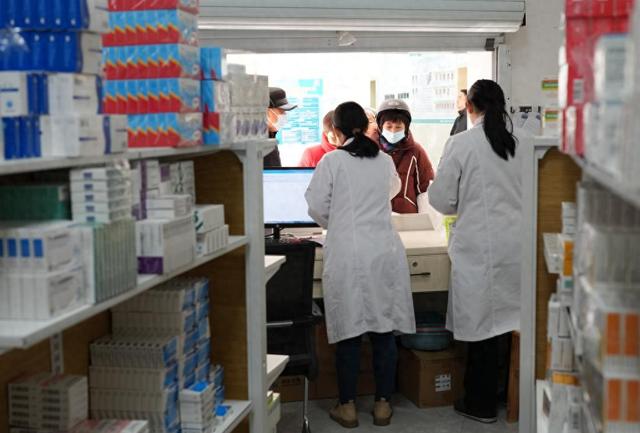
Core Points - The local government in Jiande City, Hangzhou, has allocated special funds to address the healthcare challenges faced by residents in mountainous areas, specifically the issues of "difficult access to medical care" [2][3][5] Group 1: Healthcare Infrastructure Development - The initiative includes the construction of 15 rural regional medical centers in central villages where medical resources are scarce and populations are relatively concentrated [2][3][5] - The establishment of smart health stations and the launch of mobile medical vehicles are part of the strategy to create a "15-minute healthcare service circle" for residents [2][3][5] Group 2: Community Health Services - The regional medical centers have been upgraded from ordinary village clinics, with one center reporting over a 70% increase in patient visits after its transformation [11] - Services offered at these centers include traditional Chinese medicine treatments, such as acupuncture and cupping, which have been well-received by the community [7] Group 3: Accessibility and Quality of Care - The mobile medical vehicles provide essential services, including chest X-ray examinations, directly to remote villages, enhancing healthcare accessibility for the local population [12] - The overall goal is to ensure that residents can access high-quality health services conveniently within their local areas [2][3][5]

山东中医药大学第二附属医院与成武县公立中医医院达成战略合作
Qi Lu Wan Bao· 2025-12-17 10:46
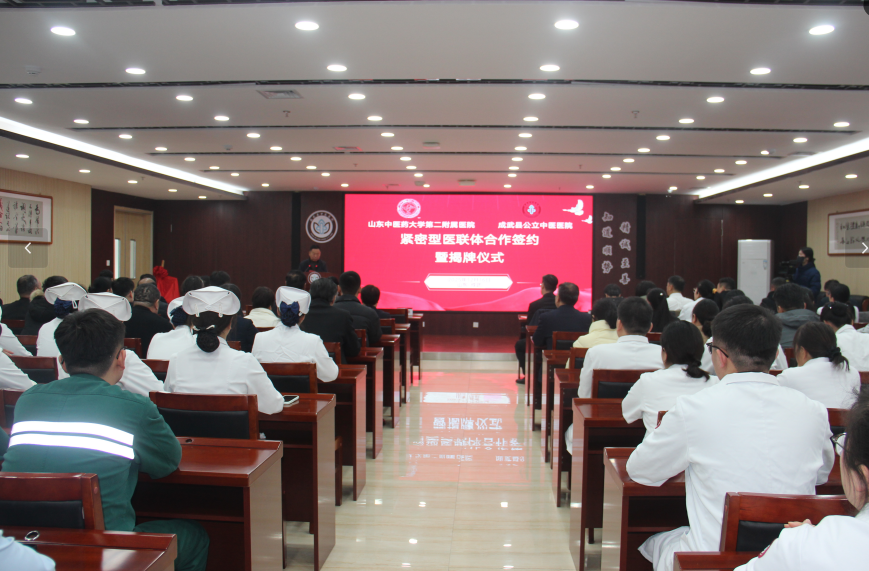
Core Viewpoint - The establishment of a close-knit medical alliance between Shandong University of Traditional Chinese Medicine Second Affiliated Hospital and Chengwu County Public Traditional Chinese Medicine Hospital aims to enhance the quality of medical resources and promote the high-quality development of traditional Chinese medicine in county areas [1][19]. Group 1: Event Overview - The signing and unveiling ceremony for the medical alliance took place on December 16 at the Chengwu County Public Traditional Chinese Medicine Hospital [1]. - Key officials from both institutions attended the event, including the Secretary of the Discipline Inspection Commission of Shandong University of Traditional Chinese Medicine Second Affiliated Hospital and various leaders from Chengwu County [3][5]. Group 2: Significance of the Alliance - The alliance is seen as a rare opportunity for the development of Chengwu County's healthcare system, combining medical, teaching, research, prevention, and rehabilitation services [5]. - The collaboration is expected to enhance the regional healthcare service system, optimize resource allocation, and promote the balanced distribution of quality medical resources [7]. Group 3: Goals and Expectations - The leadership of Chengwu County Public Traditional Chinese Medicine Hospital expressed hopes that the collaboration will effectively improve the hospital's service capabilities, allowing local residents to access high-quality medical services conveniently [9]. - The successful signing of the cooperation agreement is viewed as a new bridge for the interaction between provincial quality medical resources and county-level traditional Chinese medicine hospitals [19].
医药板块窄幅震荡,恒生创新药ETF(159316)和医药ETF(512010)受资金关注
Sou Hu Cai Jing· 2025-12-17 04:56
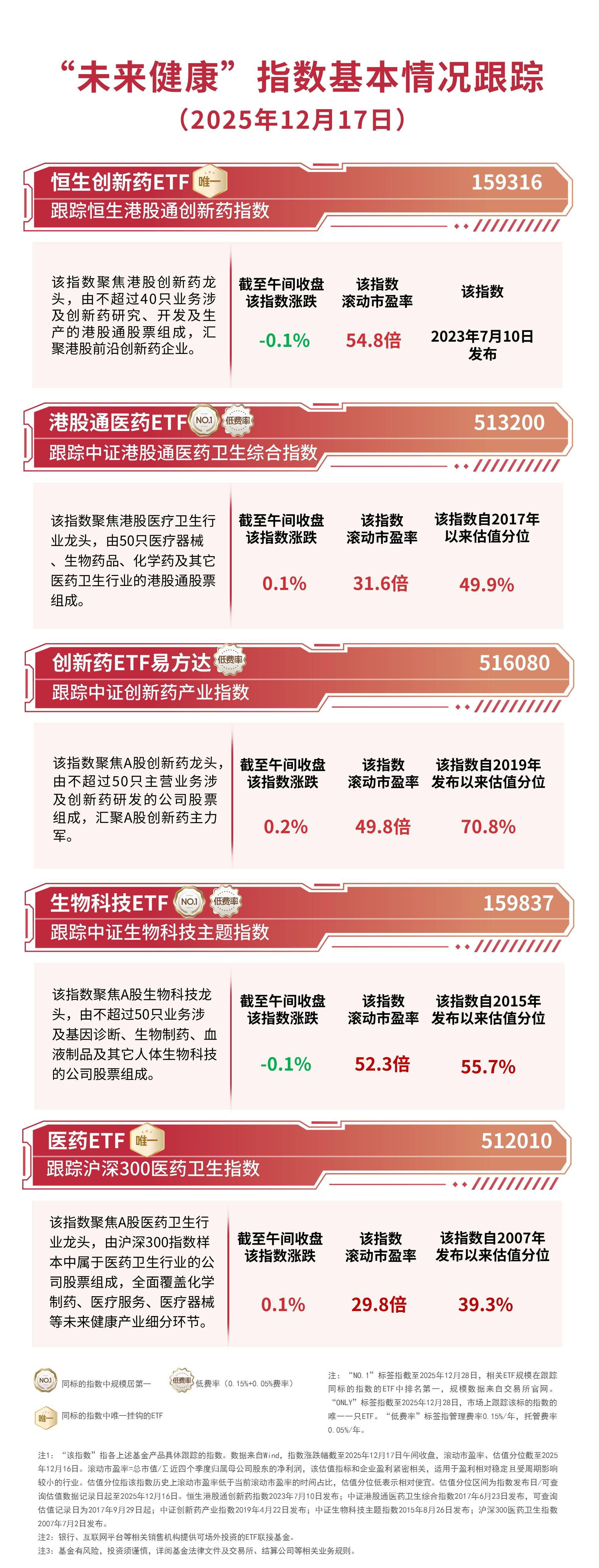
Group 1 - The pharmaceutical sector experienced narrow fluctuations, with the Hang Seng Innovative Drug Index down by 0.1%, while other indices such as the CSI Hong Kong Pharmaceutical and Health Comprehensive Index and the CSI Biotech Theme Index both rose by 0.1% [1] - The CSI Innovative Drug Industry Index saw an increase of 0.2%, indicating a positive trend in innovative drug stocks [1] - Recent fund inflows into ETFs indicate continued investment interest, with the Hang Seng Innovative Drug ETF and Pharmaceutical ETF receiving net inflows of 97 million yuan and 370 million yuan respectively over the past week [1] Group 2 - The index focuses on leading stocks in the Hong Kong medical and health industry, comprising 50 stocks from medical devices, biopharmaceuticals, chemical drugs, and other pharmaceutical sectors [3] - The Innovative Drug ETF tracks the CSI Innovative Drug Industry Index, which includes no more than 50 companies primarily engaged in innovative drug research and development [4][5] - The Biotech ETF tracks the CSI Biotech Theme Index, which consists of up to 50 companies involved in gene diagnostics, biopharmaceuticals, blood products, and other human biotechnology [6][8] Group 3 - The CSI Biotech Theme Index recorded a slight increase of 0.1% at midday [7] - The CSI Pharmaceutical and Health Industry Index, which includes companies from the CSI 300 Index in the pharmaceutical sector, also rose by 0.1% [12][13]
六部门:加强基层医疗卫生机构特色科室建设
Jing Ji Guan Cha Wang· 2025-12-17 02:47
Core Viewpoint - The document outlines the guidelines for strengthening the construction of specialized departments in grassroots medical and health institutions, emphasizing the need to enhance service quality and meet diverse health service demands of the population [1] Group 1: Policy Implementation - The National Health Commission and five other departments issued guidelines to implement the medical and health strong foundation project, focusing on improving grassroots medical services [1] - The guidelines promote the integration of medical prevention and treatment, developing a comprehensive service chain for prevention, treatment, and health management [1] Group 2: Development Principles - The development of specialized departments should adhere to principles such as "maintaining positioning, adapting to needs, rational layout, and differentiated development" [1] - There is a focus on strengthening the construction of general practice, traditional Chinese medicine, preventive health, and other medical technology departments based on local health needs and demographic factors [1] Group 3: Future Goals - By 2030, at least one specialized department meeting service capacity standards should be established in grassroots medical and health institutions [1] - Other grassroots medical institutions are encouraged to develop specialized departments based on their specific circumstances [1]
六部门发布指导意见 加强基层特色科室建设
Zheng Quan Shi Bao Wang· 2025-12-17 02:27
Core Viewpoint - The document outlines the guidelines for strengthening the construction of specialized departments in grassroots medical and health institutions, emphasizing the need to enhance service quality and meet diverse health service demands of the population [1] Group 1: Policy Implementation - The National Health Commission and five other departments issued guidelines to implement the medical and health strong foundation project, aiming to enhance grassroots medical services [1] - The guidelines promote the integration of medical prevention and treatment, developing comprehensive health management services [1] Group 2: Development Principles - The development of specialized departments should adhere to principles of positioning, demand adaptation, reasonable layout, and differentiated development [1] - The focus is on strengthening the construction of general practice, traditional Chinese medicine, preventive health care, and other medical technology departments [1] Group 3: Health Needs and Resource Allocation - The guidelines consider factors such as local health needs, population aging, and regional healthcare resource distribution in the development of specialized departments [1] - There is an emphasis on establishing departments that leverage grassroots advantages and characteristics to facilitate convenient access to healthcare for the community [1] Group 4: Future Goals - By 2030, it is targeted that at least one specialized department meeting service capacity standards will be established in grassroots medical and health institutions [1] - Other grassroots institutions are encouraged to develop specialized departments based on their specific circumstances [1]
美国11月失业率升至4.6% 录得4年来新高
Xin Hua She· 2025-12-17 01:31
Group 1 - The core point of the article is that the unemployment rate in the United States rose to 4.6% in November, marking the highest level since October 2021 [1] - The total number of unemployed individuals reached approximately 7.83 million, significantly higher than the 7.12 million reported in the same month last year [1] - The number of individuals unemployed for less than 5 weeks increased by 316,000 from September, totaling 2.5 million [1] Group 2 - Long-term unemployed individuals accounted for 1.9 million, representing 24.3% of the total unemployed population [1] - In November, the non-farm sector added 64,000 jobs, primarily in healthcare, construction, and social assistance [1] - Employment in transportation, warehousing, and federal government sectors saw a month-on-month decrease [1] Group 3 - The non-farm employment figure for October was revised downwards, showing a significant decrease of 105,000 jobs [1] - The federal government employment saw a sharp decline of 162,000 jobs in October due to some federal employees leaving after accepting delayed resignation offers [1] - The Labor Department was unable to collect and publish the October unemployment rate data due to the previous federal government shutdown [1]
青海:“十四五”期间优质医疗资源持续扩容下沉
Zhong Guo Xin Wen Wang· 2025-12-16 14:48
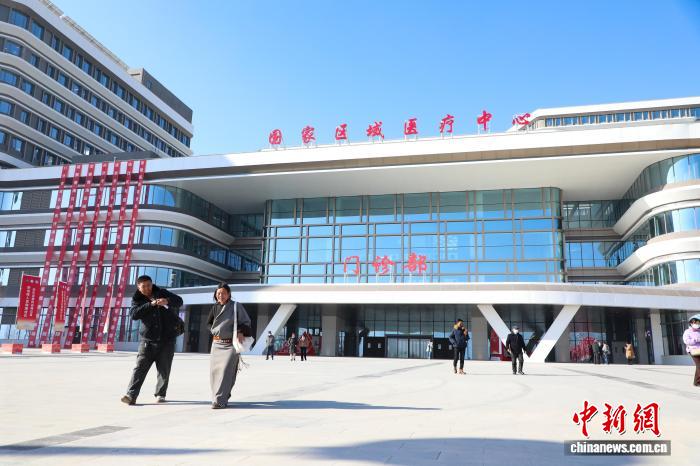
Group 1 - The core viewpoint of the article highlights the continuous expansion and sinking of quality medical resources in Qinghai Province during the "14th Five-Year Plan" period, with a county-level consultation rate reaching 59.32% and the proportion of grassroots diagnosis and treatment increasing to 45% [1][3] - Qinghai Province has invested a total of 44.1 billion RMB in the healthcare sector since the beginning of the "14th Five-Year Plan," establishing significant projects such as the National Regional Medical Center (Qinghai Hospital of Xi'an Jiaotong University First Affiliated Hospital) to enhance the treatment level of critical and complex diseases [1][3] - The province has achieved full coverage of tertiary general hospitals in all eight cities and states, forming 46 tightly-knit county medical communities, with 39 counties (cities, districts) fully covered [1][3] Group 2 - Over 280 high-level medical experts have been dispatched to support Qinghai Province through various assistance mechanisms, training 1,758 local talents in a "pass-on" manner, and sending 283 medical personnel annually to the six states in the Qingnan Lake area [3] - A telemedicine and education platform covering provincial, municipal, county, and township levels has been established, conducting 2,963 remote consultations and 8,340 two-way referrals [3] - 71.14% of township health centers and community health service centers in the province have met national service capacity standards, with 537 newly recruited rural doctors integrated into the system, alongside improved treatment guarantee policies for rural doctors [3]
上海已进入年度季节性流感阶段 将加强医疗救治力量配备应对高峰
Zhong Guo Xin Wen Wang· 2025-12-16 13:26
据悉,对于下一步可能出现的就医高峰,上海将加强医疗救治力量配备。上海二级以上医院发热门诊将 保证应设尽设、应开尽开;市级、区级医院将做好重症医疗资源储备,加强门急诊医护人员配置,动态 调整班次,通过及时增开诊室数量、延长服务时间、扩容补液区域等提升接诊能力,减少患者排队等候 时间。 上海已进入年度季节性流感阶段 将加强医疗救治力量配备应对高峰 中新网上海12月16日电(记者 陈静)近期,上海流感病例明显增多。上海市卫健委方面16日介绍,目前上 海医疗服务监测数据显示,各级公立医疗机构急诊、发热门诊就诊量呈逐步上升趋势,其中儿科急诊日 均就诊人数已接近去年峰值水平。 上海市疾控中心副主任吴寰宇16日对记者介绍,上海已经进入年度季节性流感阶段,较去年提前两周。 上海将在本月下旬至一月上旬进入季节性流感高峰时期。 在当天上海市卫生健康委组织召开的冬春季呼吸道传染病防治新闻通气会上,记者了解到,今年至今监 测出的优势毒株为甲型H3N2,网上流传的"K型病毒"仅是甲型H3N2的一个变异分支。吴寰宇表示:"流 感病毒是RNA病毒,本身就特别容易变异。但变异≠变危险,'K毒株'变异幅度很小,不是颠覆性的新 型病毒。民众不用 ...
我省发布健康体重管理服务地图
Liao Ning Ri Bao· 2025-12-16 00:59
想咨询减重,不知该去哪家医院?饭后想散步,不清楚最近的健康步道在哪儿?这些曾困扰百姓的 日常健康需求,如今有了"一键导航"。日前,省卫生健康委与省疾病预防控制局正式发布"辽宁省健康 体重管理服务地图",将全省专业的体重管理资源与身边的健康环境整合至指尖,为群众提供了一份精 准、便捷的健康生活指南。 截至目前,全省14个地市已有135家医疗卫生机构开设了健康体重管理或减重门诊,同时累计建成 各类健康支持性环境点位3795个,其中包括健康步道148条、健康主题公园118个、健康管理小屋281 个。从三甲医院的多学科减重团队,到基层社区的特色门诊,从饭后散步的步道到周末休闲的主题公 园,一个立体化、便捷触达的健康支持网络已初步织就。 省疾病预防控制中心相关负责人介绍,这份地图的核心优势是"精准导航、资源全景呈现""便捷易 用"。居民无须额外下载应用,只需通过微信搜索"每日预健"小程序,输入所在位置,即可一键查询周 边所有相关资源。无论是查找距离最近的减重门诊及其服务特色,还是定位健康步道、健康主题公园乃 至社区健康小屋,都能实现快速导航。地图还同步关联了科学减重知识,帮助居民在寻找服务的同时树 立正确理念,真正做到 ...
医院开起“文化超市”
Ren Min Ri Bao Hai Wai Ban· 2025-12-15 23:04
北京中医药大学东直门医院工作人员展示该院推出的药食同源糕点。 什么文创产品能同时唤起兴趣和食欲?什么样的展厅,进入前首先要过"身材检验"关?日前, 以"仁心文脉 医艺融合"为主题的首都卫生健康系统文化建设工作交流会在北京小汤山医院举行,同步 拉开帷幕的"文化超市"主题展览成为亮点—— 要进入"文化超市"展厅,先得通过北京小汤山医院设置的互动装置"身材挑战墙"——多根色彩鲜亮 的立柱搭建起宽窄不一的"门",参观者侧身穿行时,便能对应上"纸片人""该补一补了""标准体型""该减 肥了"等趣味标签,在轻松互动中提醒自己关注体重管理。贴心的是,挑战墙专门设置了"折翼天使"通 道与"绿色通道",让行动不便人士也能参与其中,感受互动乐趣。 在人头攒动的展览现场,各类文创产品不仅有新意、有颜值,更具有实用性或食用性。这里俨然成 为各医疗卫生机构直观展示自身文化软实力的平台,更构筑起一个开放、互动、充满活力的行业文化交 流空间。 在中国中医科学院西苑医院的展位前,刺绣精巧的四季系列香囊引人注目。"我们按季节选取主 花,调配香料:春季的玫瑰疏肝解郁,夏季的栀子花泻火除烦,秋季的菊花清肝明目,冬季的合欢花理 患儿周周在中国康复研 ...