
城市轨道交通

Search documents
今天,地铁17号线永安里站2小时换乘量人次破万
Bei Jing Ri Bao Ke Hu Duan· 2025-12-29 02:59
Core Points - The opening of the middle section of the Beijing-Hong Kong Metro Line 17 has been completed, achieving full line connectivity [1] - On the first working day of the new stations, the transfer volume at Yong'anli Station between Line 17 and Line 1 reached 11,000 passengers during the morning peak [1] - The total entry and exit volume for Line 17 during the morning peak was 66,200 passengers, indicating a significant increase in commuter convenience [1] Summary by Sections - **Operational Details**: Line 17 operates according to a weekday timetable, with a minimum interval of 6 minutes during peak hours and 8 minutes during off-peak hours [2] - **Passenger Flow Management**: The Beijing-Hong Kong Metro has implemented passenger flow management strategies across its lines, including Lines 4, 14, and 16, to ensure safety and smooth travel for passengers during high traffic periods [2]
17号线中段开通后首个早高峰永安里站2小时换乘量人次破万
Bei Jing Ri Bao Ke Hu Duan· 2025-12-29 02:29
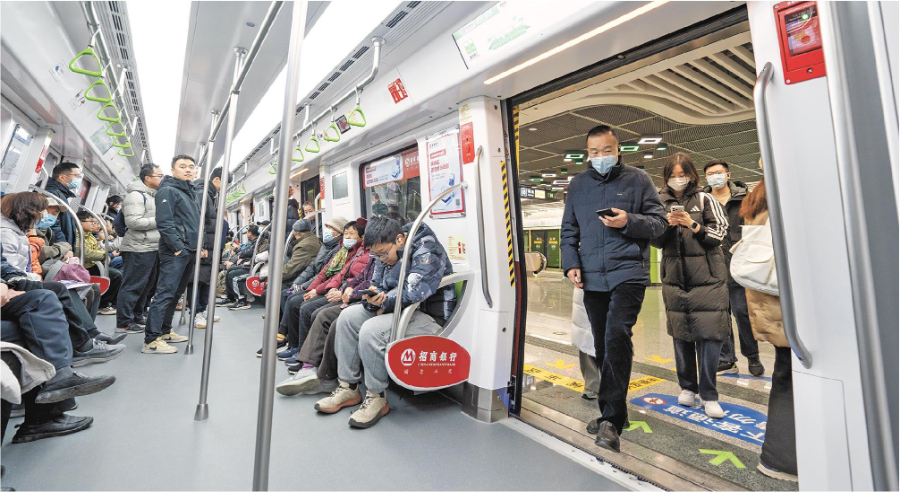
【#17号线中段开通后首个早高峰##永安里站2小时换乘量人次破万# 】上周六,京港地铁17号线中段开 通,17号线实现全线贯通。今天是东大桥站、永安里站、潘家园西站三座新站开通首个工作日,早高峰 期间永安里站17号线与1号线换乘量达1.1万人次,方便了通勤人员出行。今日7时至9时早高峰期间,17 号线全线总进出站量6.62万人次。其中,东大桥站进出站量0.28万人次,与6号线换乘量6084人次;永安 里站进出站量0.14万人次,与1号线换乘量1.1万人次;潘家园西站进出站量0.29万人次,客运组织总体 平稳有序。17号线按照平日时刻表组织行车,早晚高峰最小行车间隔6分钟,平峰最小行车间隔为8分 钟。此外,京港地铁所辖4号线-大兴线、14号线及16号线也提前制定客运组织方案和客流疏导措施,在 大客流车站及换乘车站的闸机、换乘通道、站台等位置,加强人员值守及乘客引导,保障乘客安全、顺 畅出行。(@北京日报 记者 孙宏阳;视频:BRTV生活这一刻) ...
北京新开3条(段)地铁线,城市轨道交通运营总里程超900公里
Zhong Guo Xin Wen Wang· 2025-12-29 00:42
Core Viewpoint - The opening of three new subway lines in Beijing enhances the city's public transportation network, improving connectivity and commuting efficiency for residents in various districts [1][2][3]. Group 1: New Subway Lines - The new lines include the middle section of Line 17 (8.2 km), Line 18 (19.8 km), and the southern extension of Line 6 (2.0 km), adding approximately 30 kilometers to the subway network [1][3]. - Line 17 connects major residential and business areas, reducing travel time from the southern end to the northern end to 66 minutes, effectively alleviating traffic pressure on existing lines [2][3]. - Line 18 serves as a crucial east-west corridor in northern Beijing, linking key areas and easing traffic congestion in the "Huitian" region [3]. Group 2: Operational Details - The operational hours for the new lines are set, with first and last trains scheduled for various stations, ensuring accessibility for commuters [4]. - The integration of bus services with the new subway lines has been optimized, with adjustments made to existing routes and the introduction of new ones to facilitate seamless transfers [5][6]. Group 3: Infrastructure and Facilities - Parking facilities have been developed around the new stations, including motor vehicle and non-motor vehicle parking spaces, to support commuter needs [7]. - The new lines feature enhanced passenger amenities, such as mother-baby rooms, accessible restrooms, and real-time information displays, improving the overall travel experience [8].
济南地铁三线贯通,城市发展可“乘”东风
Xin Lang Cai Jing· 2025-12-28 18:23
Core Viewpoint - The opening of three new metro lines in Jinan has significantly enhanced the city's transportation efficiency and is expected to reshape urban spatial development and coordination by 2025, marking a pivotal year for the city's rail transit system [2][4][8]. Group 1: Transportation Efficiency - The new lines have alleviated traffic pressure on major thoroughfares, improving commuting experiences for residents and professionals [2][3]. - The 4th line, spanning 40.3 kilometers, serves as a crucial corridor connecting key areas such as the West Railway Station and the CBD, effectively reducing congestion on the main roads [2][3]. - The operational capacity of a single metro line is equivalent to that of 60 bus lanes, indicating a substantial structural relief for surface traffic [3]. Group 2: Urban Spatial Restructuring - The metro lines are expected to redefine urban growth boundaries and functional layouts, transitioning Jinan from a linear to a networked urban development model [4][5]. - The 4th line connects previously isolated urban functional areas, facilitating a "half-hour economic circle" that enhances connectivity across the city [4][5]. - The integration of metro lines is anticipated to create "rail micro-centers," promoting mixed-use developments and a more compact urban structure [5]. Group 3: Regional Development and Coordination - The new metro lines are breaking down regional development barriers, fostering deep integration between the main city and surrounding areas, as well as between industries and talent [6][7]. - The 8th line enhances accessibility to the Qilu Innovation Corridor, facilitating collaboration between enterprises and research institutions [6]. - The metro network's expansion supports balanced regional development, allowing residents in various areas to share in the benefits of urban growth [6][7]. Group 4: National Context and Future Outlook - Jinan's metro system is rapidly catching up with other major cities in China, with a projected total operational mileage of approximately 248 kilometers and an expected daily ridership exceeding 1 million by 2025 [8][9]. - The city has faced unique challenges in metro construction due to its complex geological conditions, particularly in areas sensitive to water resources, necessitating innovative engineering solutions [9]. - The development of the metro network is seen as a catalyst for transforming Jinan's urban landscape, integrating disparate city segments into a cohesive whole and promoting a new era of urban development [9].


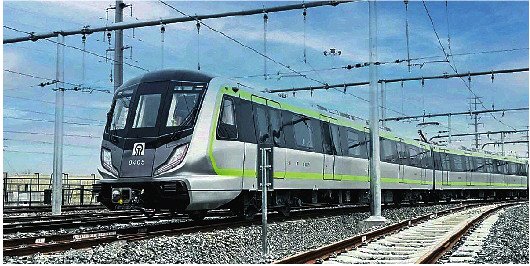
一条“动脉”串西东 何惧“横穿半个城”
Qi Lu Wan Bao· 2025-12-28 18:04
Core Insights - The opening of Jinan Metro Line 4 on December 27 marks a significant transformation in urban commuting, connecting various districts and enhancing the city's infrastructure [2][3][5] Group 1: Impact on Commuting - The new metro line spans 40.3 kilometers with 33 stations, covering 80% of the high passenger flow areas along Jinan's main thoroughfare, Jingshi Road [3][5] - Commuters report a reduction in travel time, with some gaining nearly five hours of free time each week, allowing for improved work-life balance [4][5] - The metro's punctuality alleviates commuting stress, enabling residents to reclaim control over their daily schedules [4][5] Group 2: Urban Development and Economic Growth - Line 4 serves as a vital link for key development areas, enhancing connectivity and potentially boosting the GDP of surrounding regions by over 20 billion [6] - The line integrates with existing metro lines and new transport options, promoting a networked transit system that enhances accessibility across the city [6][9] - The development aligns with Jinan's urban strategy, facilitating the integration of commercial, cultural, and healthcare facilities along the route [5][6] Group 3: Cultural and Aesthetic Enhancements - The design of the metro stations reflects local culture and natural landmarks, creating an immersive experience for passengers [7][8] - The metro system is evolving beyond transportation, becoming a cultural space that enhances residents' connection to the city [7][9] - The introduction of diverse commercial offerings at metro stations fosters a vibrant urban lifestyle, contributing to a more dynamic city atmosphere [9][10]
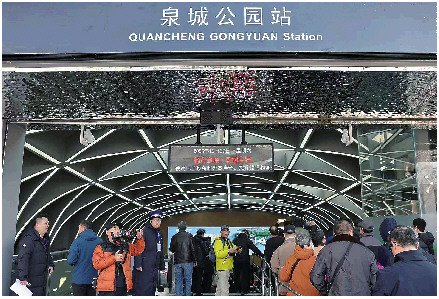
北京三条地铁新线串联元旦跨年系列活动
Xin Lang Cai Jing· 2025-12-28 17:21
Core Insights - Beijing's subway network expands with the opening of three new lines on December 27, increasing the total operational lines to 30 [1][2] Group 1: New Subway Lines - The newly opened lines include the middle section of Line 17, Line 18, and the southern extension of Line 6, enhancing connectivity across the city [1][2] - Line 17 connects directly to the Workers' Stadium, a key area for the New Year's Eve event, facilitating access for visitors [1] - Line 18 provides rapid transit from the "Huitian area" to central Haidian, allowing passengers to reach popular New Year destinations within 30 minutes [2] Group 2: Cultural and Recreational Impact - The opening of these lines coincides with the "Chime Bells and Drums, Beijing Colorful Journey" New Year event, which runs until January 3, 2026, featuring various activities across the city [1] - Line 6's southern extension improves access to the city’s sub-center, enhancing cultural engagement and connectivity to new cultural landmarks and ecological spaces [2] - The new lines are designed to support the influx of visitors during the New Year celebrations, with measures in place for efficient crowd management and transportation [1][2]
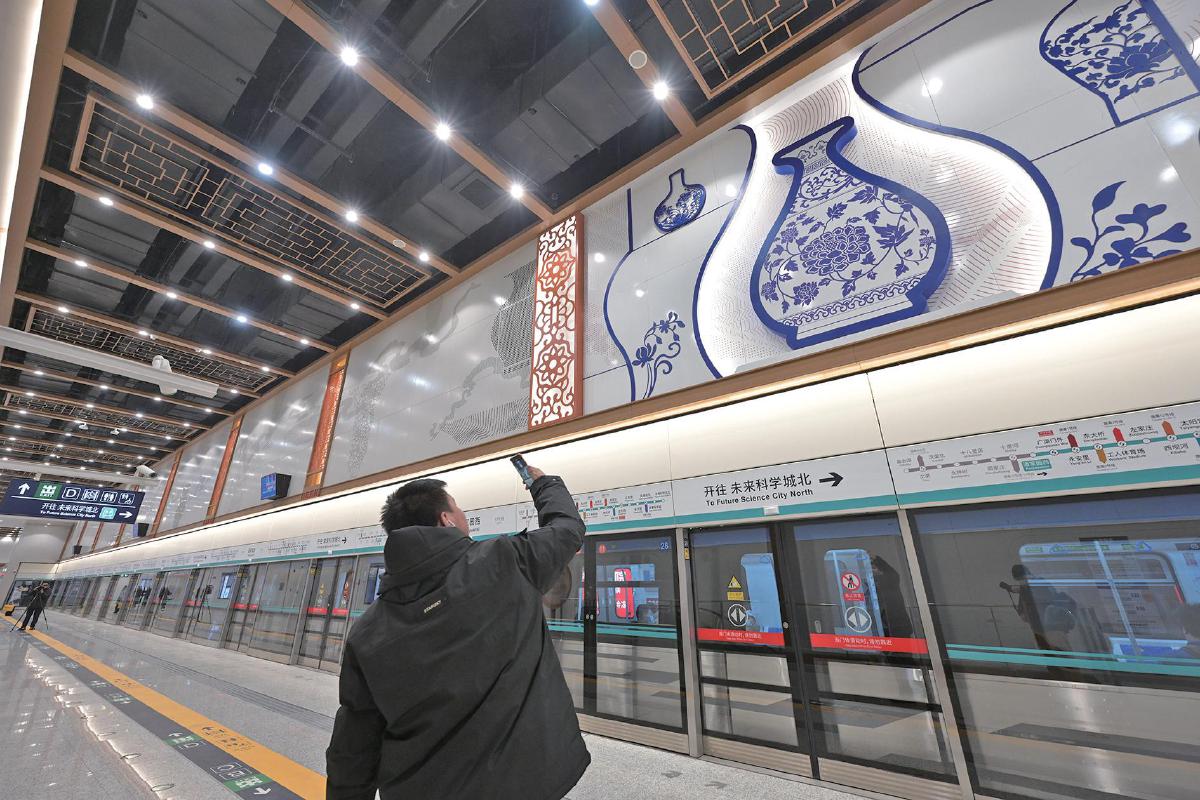
二十二号线后通段明日开通!广州南站到芳村仅17分钟
Xin Lang Cai Jing· 2025-12-28 11:09
Core Viewpoint - The Guangzhou Metro Line 22's southern extension (Chentougang-Fangcun) is set to officially open on December 29, 2025, increasing the total operational mileage of the Guangzhou Metro network to 779.9 kilometers and the number of stations to 397 [1]. Group 1: Line Details - Line 22 has a total length of 29.7 kilometers, designed as a fast line with a speed of 160 kilometers per hour. The southern extension measures 11.5 kilometers and includes four stations: Nanpu West, Nanzhou, Xilang, and Fangcun, with transfer options available at Xilang and Fangcun stations [3]. - After the opening of the southern extension, Line 22 will connect with the initial segment (Panyu Square-Chentougang), utilizing 8-car D-type trains with a maximum capacity of 2,600 passengers. The full journey from Panyu Square to Fangcun will take approximately 27 minutes, significantly improving commuting efficiency between Liwan and Panyu [5]. Group 2: Operational Adjustments - Starting December 31, 2025, the Guangzhou Metro will extend service hours by 1.5 hours on the eve of New Year's Day, with additional service extensions on January 1 and January 3, 2026, to accommodate increased passenger flow during the holiday period [12][14]. - The metro network will deploy up to 42 reserve trains daily during the New Year period to enhance operational flexibility and manage passenger flow effectively [11].
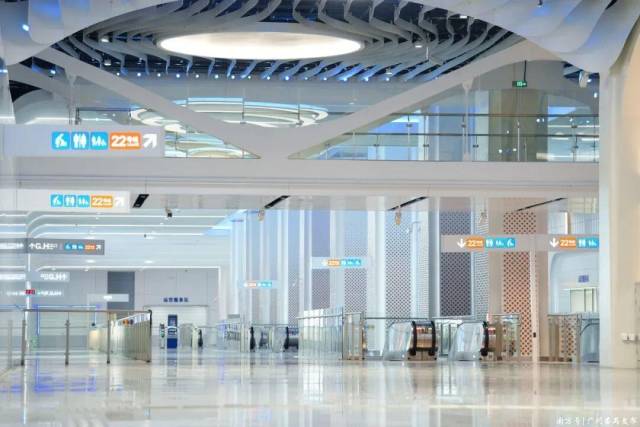
地铁5号线东四站A口投用
Xin Lang Cai Jing· 2025-12-28 07:01
东四站A出入口在建设过程中下穿既有5号线车站结构,紧邻老旧建筑群,施工空间有限。京投轨道公 司采取微扰动开挖和实时监测等精细化工艺,最大限度降低了对周边环境的影响。 京投轨道公司相关负责人介绍,东四站A口自取得规划许可以来,历经多轮方案调整。最终根据客流预 测及便民需求,优化为两座扶梯、一座楼梯的配置,并新增商业连通接口,建筑规模相应扩大。此次东 四站A出入口新建了地下建筑500多平方米,通道宽达5米,配备上下行自动扶梯及2.2米宽楼梯,总提升 高度9.4米。 本报讯(记者任珊)12月26日,位于东四路口西北角的北京地铁5号线东四站A出入口(西北口)正式 投用。该口新建地下建筑面积500多平方米,还与隆福寺二期隆福寺东院实现了"交通+商业"深度融合。 ...
三线齐发 济南轨道交通网络骨架成型
Xin Hua Wang· 2025-12-28 01:56
Core Viewpoint - The opening of Jinan Metro Line 4, Line 6 East Section, and Line 8 on December 27 has significantly improved public transportation, with over 80,000 passengers using the new lines within the first two hours of operation [2] Summary by Sections Operational Details - The new metro lines primarily run in an east-west direction and interconnect with Lines 1, 2, and 3, creating a comprehensive network [2] - The operational mode of Lines 4 and 8 is a "Y"-shaped route, facilitating seamless transit for passengers traveling long distances quickly [2] Passenger Experience - A journey from Qingyuan Street to Shandong First Medical University via the new lines took 102 minutes, covering a distance of approximately 65 kilometers [2] - In comparison, the same route by car would take around 100 minutes, potentially longer during peak hours [2]
元旦前一天广州地铁线网延迟1.5小时收车
Xin Lang Cai Jing· 2025-12-28 00:57
Group 1 - The core viewpoint of the article highlights the expected surge in passenger flow for the Guangzhou Metro during the New Year holiday, with daily ridership potentially exceeding 10 million on December 31, 2025, and January 1, 2026 [1] - On December 31, 2025, the Guangzhou Metro will extend its operating hours by 1.5 hours, focusing on key lines for additional service [1] - On New Year's Day and the last day of the holiday (January 3, 2026), several metro lines, including Line 1, Line 2, Line 3 (including the northern section), Line 5, Line 7, and the western section of Line 12 (Xunfenggang to Guangzhou Sports Center), as well as Line 22, will have their service extended by 1 hour [1]