
智能交通

Search documents
万集科技:9月29日召开董事会会议
Mei Ri Jing Ji Xin Wen· 2025-09-29 12:02
Group 1 - The core point of the article is that Wanjie Technology (SZ 300552) announced a board meeting to discuss the establishment of a joint venture in Shanghai, reflecting its strategic investment initiatives [1] - For the first half of 2025, Wanjie Technology's revenue is entirely derived from the intelligent transportation sector, indicating a focused business model [1] - As of the report, Wanjie Technology has a market capitalization of 6 billion yuan, highlighting its financial standing in the market [1] Group 2 - The article mentions a competitive landscape where Nongfu Spring's new green bottle product has led to a significant decline in market share for Yibao, dropping nearly 5 percentage points [1] - The competition between Nongfu Spring and Yibao illustrates the dynamic nature of the beverage industry, where market share can shift rapidly due to new product launches [1]
智能汽车未来或可“上天下水”?多专家建言全球智慧交通发展
Xin Lang Ke Ji· 2025-09-29 08:25
Group 1 - The core viewpoint of the articles emphasizes China's leadership in the global automotive industry, particularly in electric vehicles and smart transportation systems, highlighting its position as the largest producer, consumer, and exporter of new energy vehicles [1][2][3] - The "2025 Car Road Cloud 50 Annual Forum" in Chongqing discussed the rapid innovation in China's automotive industry, with a focus on the development of intelligent connected vehicles and the establishment of a trillion-level industry cluster for smart connected new energy vehicles [1][3] - Experts at the forum noted the importance of integrating vehicle and road cloud technologies to enhance safety, reliability, and efficiency, particularly for high-level autonomous driving [3][4] Group 2 - The forum highlighted the need for a unified approach to transportation development that balances safety and growth, advocating for a collaborative ecosystem involving all stakeholders [2][3] - Predictions for the future of intelligent transportation systems (ITS) suggest a significant reduction in traffic accidents by over 70%, an increase in road capacity by 3 to 5 times, and a decrease in energy consumption by 15-20% [4] - The transition from single vehicle intelligence to a collaborative vehicle-road cloud ecosystem is seen as a critical path for the advancement of smart connected vehicles, requiring systemic innovation and supportive policies [3][4]
通达电气(603390.SH):不涉及机器人产品的研发或生产
Ge Long Hui· 2025-09-29 08:24
Core Viewpoint - The company is focusing on developing three main product lines in the smart transportation sector and enhancing its capabilities in mobile healthcare services while planning to increase R&D investment for sustainable growth [1] Group 1: Smart Transportation - The company has established three main product lines in the smart transportation sector: intelligent connected systems, electric vehicle motors and thermal management systems, and vehicle-mounted components [1] - The company also offers specialized vehicle modification design and production services [1] Group 2: Mobile Healthcare - In the mobile healthcare sector, the company provides health screening and wellness services through mobile medical vehicles, integrated with a cloud-based platform for remote diagnosis [1] Group 3: Future Plans - By 2025, the company aims to continue focusing on its core business, increasing R&D investment, enhancing product intelligence, and driving technological innovation [1] - The company plans to continuously improve its industrial chain layout in mobile healthcare, passenger vehicles, and specialized vehicles to promote sustainable development of its main business [1]

佳都科技递表港交所拟于港交所主板上市
Xin Lang Cai Jing· 2025-09-28 06:02
Core Viewpoint - The Hong Kong Stock Exchange has officially accepted the listing application of Jiadu Technology Group Co., Ltd., a leader in AI-driven smart city transportation solutions in China [1] Group 1: Company Overview - Jiadu Technology focuses on providing a comprehensive range of products and services, including theoretical innovation, technology research, product development, solution application, and integrated services [1] - The company has developed extensive technical capabilities and accumulated vast amounts of real urban traffic data through years of strategic investment and specialized technology and solution development [1] Group 2: Industry Context - The acceleration of global urbanization has led to multiple challenges for traditional transportation systems, including fragmented system construction resulting in data silos, outdated management methods, low management efficiency, high construction and maintenance costs, and insufficient safety and reliability [1] - Traditional transportation products are increasingly unable to meet the demands of modern urban environments, highlighting the need for innovative solutions [1]

佳都科技递表港交所 加速推动全球化战略
Zhong Zheng Wang· 2025-09-27 08:41
Group 1 - The core point of the article is that Jiadu Technology has submitted an application for H-share listing on the Hong Kong Stock Exchange, aiming to enhance its research and development capabilities and expand its global presence in the intelligent transportation sector [1][2] - Jiadu Technology focuses on the urban transportation industry, utilizing advanced technologies such as artificial intelligence, big data, and digital twins to drive intelligent upgrades in urban traffic systems [1] - The company has established two main business systems: smart rail transit and smart city transportation, positioning itself as a leading provider of AI-driven intelligent urban transportation products and solutions [1] Group 2 - The company plans to use the funds raised from the listing to enhance R&D, address customer pain points, and expand into high-value niche markets within the transportation industry [1] - Jiadu Technology aims to strengthen its localized customer management network and promote an integrated construction and operation model [1] - The company is committed to pursuing a global expansion strategy and seeking strategic cooperation and investment opportunities to support its internationalization efforts in AI technology and smart transportation [2]
聚焦客运出行、货运物流等 智能运输系统标准体系将完善
Di Yi Cai Jing· 2025-09-27 04:40
Core Viewpoint - The transportation sector in China is advancing the development of a standardized intelligent transportation system to support the construction of a strong transportation nation [1][2]. Group 1: Standardization Efforts - The Ministry of Transport has released a draft for the "Intelligent Transportation System Standard System (2025)" for public consultation, aiming to establish a comprehensive framework for standardization in the intelligent transportation sector [1]. - The standardization efforts will focus on various applications, including passenger transport, freight logistics, electronic toll collection, vehicle-road collaboration, autonomous driving, traffic operation monitoring, and smart water transport [1][2]. - The standard system will address key issues in the intelligent transportation field, such as providing information services for safe and convenient travel and monitoring traffic operation status for government and management departments [2][4]. Group 2: Technological Integration - The integration of big data, the internet, artificial intelligence, and blockchain technologies is accelerating within the transportation industry, becoming a significant driver for high-quality development [3]. - Recent years have seen the establishment of standards by domestic and international organizations in areas such as autonomous driving, information interaction, and sustainable development, supporting the expansion of intelligent transportation applications [3][4]. - The rapid development of smart transportation during the "14th Five-Year Plan" period is supported by national policies, emphasizing the need for timely updates to standards in line with technological advancements [3][4]. Group 3: Future Directions - The standardization demand in the intelligent transportation sector is urgent due to the rapid technological iterations, with new technologies and applications requiring timely standard updates [4]. - Future efforts will focus on enhancing the application of advanced information technologies like big data and artificial intelligence in areas such as smart travel, smart logistics, and information security [4].
聚焦客运出行、货运物流等,智能运输系统标准体系将完善
Di Yi Cai Jing· 2025-09-27 04:40
Core Viewpoint - The article emphasizes the strengthening of advanced information technology applications, such as big data and artificial intelligence, in the transportation sector to support the construction of a strong transportation nation in China [1][4]. Group 1: Standardization in Intelligent Transportation - The Ministry of Transport has released a draft for the "Intelligent Transportation System Standard System (2025)" for public consultation, aiming to establish a comprehensive standardization framework for intelligent transportation systems [1][2]. - The standardization efforts will focus on various areas including passenger travel, freight logistics, electronic toll collection, vehicle-road collaboration, autonomous driving, traffic operation monitoring, and smart water transport [1][2][4]. - The standard system will address key issues in the intelligent transportation sector, such as providing information services for safe and convenient travel and monitoring traffic operation status for government management [2][5]. Group 2: Integration of Advanced Technologies - The integration of technologies like big data, the internet, artificial intelligence, and blockchain is accelerating within the transportation industry, becoming a crucial driver for high-quality development [4][5]. - The standardization organizations are developing standards related to automated driving, information services for travelers, electronic toll collection, and traffic data management, among others [4][5]. - The urgency for standardization in the intelligent transportation field is highlighted due to the rapid technological advancements and the need for timely updates to standards [5]. Group 3: Future Focus Areas - Future efforts will prioritize the standardization of smart travel, smart logistics, digitalization of infrastructure, vehicle-road collaboration, and information security [5]. - The article notes that the average technology iteration cycle in this field is less than 3 to 5 years, indicating a pressing need for updated standards to keep pace with technological advancements [5].

大消息!超级赛道,利好来了
中国基金报· 2025-09-27 00:42
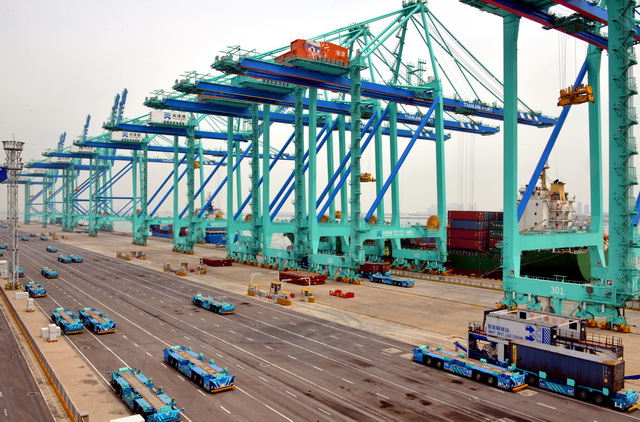
Core Viewpoint - The article discusses the implementation opinions on "Artificial Intelligence + Transportation" issued by the Ministry of Transport and six other departments, aiming to accelerate the innovative application of AI in the transportation sector by 2027 and 2030 [1][4]. Summary by Sections Overall Requirements - By 2027, AI will be widely applied in typical scenarios within the transportation industry, with a comprehensive transportation model system deployed and a number of landmark innovative projects established. By 2030, AI will be deeply integrated into the transportation sector, promoting a smart, comprehensive transportation network [6][7]. Increasing Key Technology Supply - The focus will be on overcoming common technologies such as dynamic scene perception, real-time positioning, and autonomous decision-making. There will be an emphasis on developing smart driving systems and remote driving cockpits, as well as encouraging the development of new equipment like drones and all-terrain vehicles [8][9]. Accelerating Innovation Scene Empowerment - The initiative includes supporting intelligent driving models and enhancing service scenarios in regions like Beijing-Tianjin-Hebei and the Yangtze River Delta. It also covers smart railways, smart shipping, and smart logistics, with specific requirements for optimizing standards and enhancing service quality [10][11][12]. Strengthening Core Element Guarantees - The plan emphasizes optimizing computing power supply, accelerating the construction of high-quality data sets, and promoting the integration of AI with new communication technologies and the Internet of Things [14]. Optimizing Industrial Development Ecology - The document outlines the need to enhance the incubation capacity of the industrial ecosystem, promote the establishment of innovation alliances, and support the development of key laboratories and testing platforms in the AI transportation sector [15][16]. Assurance Measures - The strategy includes government guidance and market leadership, establishing a coordinated development mechanism for AI in transportation, and enhancing safety management and regulatory frameworks [17].

利好!超级赛道再迎重磅!七部门最新部署!
Zheng Quan Shi Bao Wang· 2025-09-26 13:06
Core Viewpoint - The implementation of artificial intelligence in the transportation sector is being accelerated, with a goal for widespread application by 2027 and deep integration by 2030, aiming to establish a leading position globally in smart transportation and logistics technologies [1]. Group 1: Key Deployments - Accelerate the research and development of intelligent driving systems and remote driving cockpits, particularly in regions like Beijing-Tianjin-Hebei and the Yangtze River Delta [2]. - Encourage the development of new equipment such as drones and all-terrain vehicles [3]. - Promote the opening of urban scenarios and road networks to facilitate the large-scale application of new delivery devices and intelligent delivery services [4][8]. - Establish high-quality datasets, algorithm libraries, and toolchains for the "AI + Transportation" initiative to support the construction of an intelligent comprehensive transportation network [4]. Group 2: Innovation Empowerment - Focus on enhancing key technology supply, accelerating innovation in smart products, and building a comprehensive transportation model to improve the intelligence level of the transportation system [6]. - Deploy seven key tasks across various transportation scenarios, including smart railways and logistics, to create replicable and scalable application cases [7]. - Utilize existing infrastructure like highway ETC gantries to explore multi-sensor integration for improved public travel experiences [7]. Group 3: Optimizing the Innovation Environment - Optimize computing power supply, accelerate the construction of high-quality datasets, and promote the development of ubiquitous network facilities to support AI applications in transportation [9][10]. - Strengthen the integration of computing resources and enhance data sharing among industry, academia, and research institutions [9]. - Establish a transportation big model innovation and industry alliance to foster collaboration among leading AI companies, industry players, and educational institutions [10].
利好!超级赛道,再迎重磅!七部门,最新部署!
Zheng Quan Shi Bao· 2025-09-26 13:00
Core Viewpoint - The implementation of artificial intelligence in the transportation sector is being accelerated, with a focus on innovation and application by 2027 and 2030, aiming for a comprehensive integration of AI technologies in transportation systems [2]. Group 1: Key Deployments - Accelerate the research and development of intelligent driving systems and remote driving cockpits, particularly in regions like Beijing-Tianjin-Hebei and the Yangtze River Delta [3]. - Encourage the development of new equipment such as drones and all-terrain vehicles [4]. - Promote urban scenarios and road network openness to facilitate the large-scale application of new delivery devices and intelligent delivery services [5]. Group 2: Enhancing Innovation Scenarios - Leverage the diverse application scenarios in transportation to deploy seven key tasks, including smart railways and intelligent logistics, to create replicable and scalable application cases [11]. - Support the aggregation of innovation resources in key regions and cautiously advance the demonstration application of intelligent driving technologies [11]. - Upgrade postal and express delivery infrastructure to establish an intelligent and efficient delivery network [11]. Group 3: Optimizing the Innovation Environment - Optimize computing power supply capabilities and accelerate the construction of high-quality datasets to support AI applications in transportation [12]. - Promote the integration of AI, next-generation communication, and IoT technologies to develop a comprehensive transportation data transmission network [13]. - Enhance the industrial ecosystem by improving incubation capabilities and establishing a multi-level talent training system [13][14].
