核聚变能源

Search documents
中国启动聚变领域国际科学计划
Zhong Guo Xin Wen Wang· 2025-11-24 06:19
Group 1 - The international scientific program in the field of nuclear fusion was launched in Hefei, China, on November 24, with the signing of the "Hefei Fusion Declaration" by scientists from over 10 countries including France, the UK, Germany, Italy, Switzerland, Spain, Austria, and Belgium [1][3] - The BEST (Burning Plasma Experimental System) project aims to further integrate international cooperation resources in the fusion field and promote collaborative research on frontier issues in fusion physics [3] - The successful installation of the heaviest component of the BEST system, the vacuum component known as the Dewar base, marks a significant milestone in China's domestic fusion research [3] Group 2 - Nuclear fusion, which simulates the fusion reactions of the sun to release energy, is regarded as humanity's "ultimate energy" [3] - The international fusion community has made significant breakthroughs over decades but still faces major challenges, necessitating closer and more open international collaboration [3] - The initiative includes establishing an open research fund, organizing international academic conferences, and building joint experimental platforms to facilitate cooperation [3]

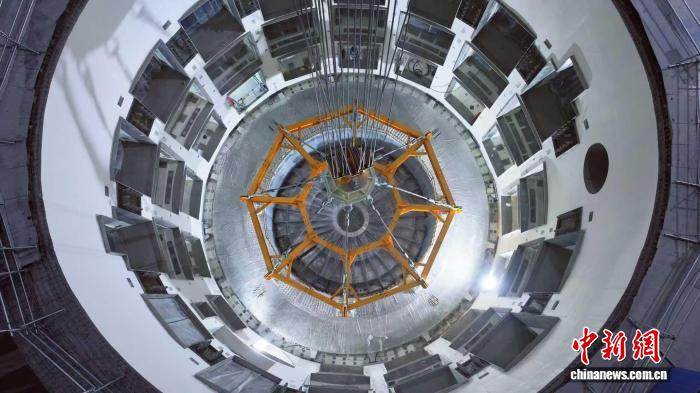
我国启动聚变领域国际科学计划
证券时报· 2025-11-24 03:57
Core Insights - The article discusses the launch of the "Burning Plasma" international scientific program by the Chinese Academy of Sciences, aimed at advancing nuclear fusion research and demonstrating fusion energy generation [1][2] - The BEST (Broadly Enhanced Superconducting Tokamak) device is positioned as China's next-generation "artificial sun," with plans to achieve net energy gain by 2027 [1] - The program emphasizes international collaboration, inviting global scientists to participate in fusion research and sharing resources [2] Group 1 - The BEST device will conduct deuterium-tritium burning plasma experiments, targeting a fusion power output of 20 to 200 megawatts [1] - The research aims to achieve conditions where the energy produced by the fusion reaction exceeds the energy consumed, marking a significant milestone in fusion energy [1] - The program is expected to address critical challenges in plasma physics, such as the transport of alpha particles essential for maintaining the high-temperature conditions required for fusion [2] Group 2 - The international scientific program will open multiple fusion research platforms, including BEST, to global collaboration and will establish a research fund to support frequent expert exchanges [2] - Scientists from over ten countries, including France, the UK, and Germany, have signed the "Hefei Fusion Declaration," promoting a spirit of openness and cooperation in fusion research [2]
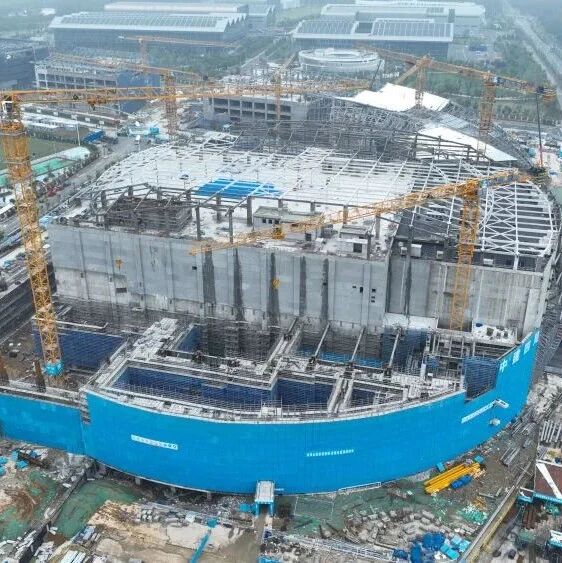
A股可控核聚变板块走强,斯瑞新材涨超9%,哈焊华通涨超5%
Ge Long Hui· 2025-11-24 03:55
Core Viewpoint - The A-share market's controllable nuclear fusion sector experienced a collective rise, driven by the launch of the "Burning Plasma" international scientific program by the Chinese Academy of Sciences, which aims to ignite the "artificial sun" [1] Company Performance - Srei New Materials (688102) saw a significant increase of 9.13%, with a total market capitalization of 18.5 billion and a year-to-date increase of 172.94% [2] - Ha Welding Huaton (301137) rose by 5.78%, with a market cap of 7.62 billion and a year-to-date increase of 140.51% [2] - Si Chuang Electronics (600990) increased by 5.47%, with a market cap of 6.948 billion and a year-to-date increase of 20.44% [2] - He Dung Intelligent (603011) rose by 4.88%, with a market cap of 9.982 billion and a year-to-date increase of 194.74% [2] - Yongding Co., Ltd. (600105) increased by 3.95%, with a market cap of 20.8 billion and a year-to-date increase of 188.55% [2] - Snowman Group (002639) rose by 3.82%, with a market cap of 10.9 billion and a year-to-date increase of 106.13% [2] - Changfu Co., Ltd. (920396) increased by 3.62%, with a market cap of 2.214 billion and a year-to-date increase of 132.43% [2] - Aerospace Morning Light (600501) rose by 3.61%, with a market cap of 8.852 billion and a year-to-date increase of 14.06% [2] - Lanshi Heavy Equipment (603169) increased by 3.39%, with a market cap of 14.3 billion and a year-to-date increase of 101.28% [2]


事关“人造太阳”,我国启动重大计划!
中国能源报· 2025-11-24 03:05
Core Viewpoint - China has officially launched an international scientific program in the field of nuclear fusion, focusing on plasma physics research and aiming to achieve energy output greater than energy consumption, with the goal of demonstrating fusion energy generation [1][2]. Group 1: Nuclear Fusion Research - The international scientific program will leverage China's superconducting tokamak team to address the challenges of fusion combustion physics, emphasizing the importance of collaboration among global scientists [2]. - The BEST (Broadly Enhanced Superconducting Tokamak) device is set to become China's next-generation "artificial sun," with plans to conduct deuterium-tritium combustion plasma experiments by the end of 2027, targeting fusion power output between 20 megawatts and 200 megawatts [1][2]. Group 2: Global Collaboration - The program will open multiple nuclear fusion scientific platforms, including BEST, to global researchers, establishing an open research fund to facilitate frequent expert exchanges [2]. - Scientists from over ten countries, including France, the UK, and Germany, have signed the "Hefei Fusion Declaration," promoting the spirit of open sharing and collaborative win-win cooperation in fusion research [2].

这一板块,盘中拉升
Di Yi Cai Jing Zi Xun· 2025-11-24 02:57
Core Insights - The controllable nuclear fusion sector experienced a significant short-term surge on November 24, with multiple companies seeing notable stock price increases, including Zhongtian Rocket reaching its daily limit up [1] Group 1: Stock Performance - Zhongtian Rocket (003009) saw a price increase of 10.00%, with a market capitalization of 85.62 billion and a current price of 55.10 [2] - Srey New Materials (688102) increased by 9.45%, with a market capitalization of 185.47 billion and a current price of 23.97 [2] - Yongding Co., Ltd. (600105) experienced a rise of 5.34%, with a market capitalization of 210.417 billion and a current price of 14.43 [2] - Other companies such as Hahwa Huadong (301137), Changfu Co. (920396), and Hezhu Intelligent (603011) also saw increases ranging from 3.46% to 5.25% [2] Group 2: International Collaboration - The Chinese Academy of Sciences officially launched the International Scientific Program on Combustion Plasma in Hefei, coinciding with the global release of the research plan for the compact fusion energy experimental device BEST [1][2] - Scientists from over ten countries, including France, the UK, Germany, and Italy, gathered in Hefei to sign the "Hefei Fusion Declaration," calling for enhanced international cooperation to advance fusion energy research [2]


个股纷纷异动!核聚变,大消息
Shang Hai Zheng Quan Bao· 2025-11-24 02:32
Group 1 - The controlled nuclear fusion sector experienced a significant upward movement, with Srei New Materials rising over 10%, and companies like Changfu Co., Hahai Huaton, and Shanghai Electric also seeing gains [1] - On November 24, the "Burning Plasma" international scientific program initiated by the Chinese Academy of Sciences was officially launched at the compact fusion energy experimental device (BEST) in Hefei, Anhui, marking a step towards the development of a "man-made sun" [2] Group 2 - The international scientific program will open multiple nuclear fusion large scientific device platforms, including BEST, to global collaboration, establishing an open research fund to support frequent expert exchanges [3] - Scientists from over ten countries, including France, the UK, and Germany, signed the "Hefei Fusion Declaration," promoting the spirit of openness, sharing, and win-win cooperation, encouraging researchers worldwide to engage in fusion research in China [3]

我国启动聚变领域国际科学计划 聚变能源被视为未来清洁能源的终极目标
Yang Shi Xin Wen· 2025-11-24 02:17
Core Viewpoint - The launch of the International Scientific Program for Combustion Plasma by the Chinese Academy of Sciences in Hefei marks a significant step towards global collaboration in fusion energy research, with the BEST experimental device's research plan being announced globally [1][2]. Group 1: Global Collaboration in Fusion Energy - Fusion energy is regarded as the ultimate goal for clean energy, often referred to as "artificial sun," and despite breakthroughs in the past decades, it still faces numerous technical challenges [2]. - The declaration signed by fusion scientists from over 10 countries emphasizes the need for open sharing and cooperative spirit to encourage more international researchers to conduct fusion-related experiments in Hefei [2][3]. Group 2: Advancement of Fusion Research - The initiation of the International Scientific Program for Combustion Plasma, alongside the ITER and BEST projects, signifies a new phase in fusion research focused on "combustion plasma" [3]. - The program aims to integrate global resources through the establishment of open funds, international conferences, collaborative experimental platforms, and the recruitment of foreign experts [3]. Group 3: China's Contributions to Global Fusion Research - The EAST superconducting tokamak and other major scientific facilities in Hefei have become crucial platforms for international fusion research, with stable collaborations established with over 120 research institutions from more than 50 countries [4]. - China actively participates in the ITER project, receiving high praise for its independently developed key technologies and components, contributing significantly to the advancement of global fusion engineering [4].
我国启动聚变领域国际科学计划
财联社· 2025-11-24 02:08
Core Viewpoint - The article discusses the launch of the "Burning Plasma" international scientific program by the Chinese Academy of Sciences, aimed at advancing nuclear fusion research and demonstrating fusion energy generation through the BEST experimental device [1][2]. Group 1: Nuclear Fusion Research - Nuclear fusion energy, which simulates the fusion reactions of the sun, is regarded as humanity's "ultimate energy" source [1]. - The BEST device is set to be China's next-generation "artificial sun," with a mission to achieve "burning" plasma, which is essential for sustainable energy production [1]. - By the end of 2027, the BEST device aims to conduct deuterium-tritium burning plasma experiments, targeting a fusion power output between 20 megawatts and 200 megawatts, with the goal of producing more energy than consumed [1]. Group 2: International Collaboration - The international scientific program aims to leverage China's superconducting tokamak research team's advantages and foster global collaboration to tackle frontier physics challenges in fusion burning [2]. - The program will open multiple nuclear fusion large scientific device platforms, including BEST, to global researchers, establishing an open research fund to support frequent expert exchanges [2]. - Scientists from over ten countries, including France, the UK, and Germany, have signed the "Hefei Fusion Declaration," promoting a spirit of openness, sharing, and cooperative win-win outcomes in fusion research [2].
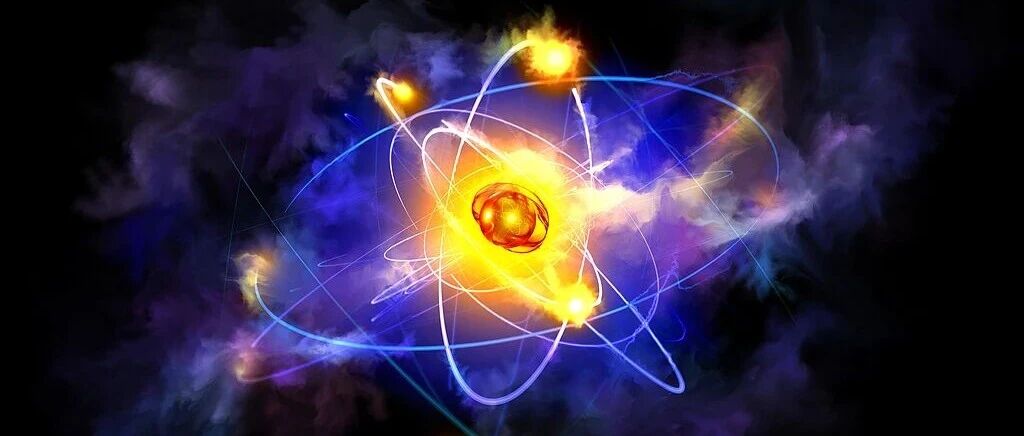
新一代聚变装置等离子体压力创纪录
Ke Ji Ri Bao· 2025-11-19 06:59
Core Insights - Zap Energy announced a significant achievement in its latest fusion energy technology, the "Fusion Z-Pinch Experiment 3" (FuZE-3), reaching an electron pressure of 830 MPa, corresponding to a total plasma pressure of approximately 1.6 GPa, setting a new record for shear flow-stabilized Z-pinch devices [1] Group 1: Technical Achievements - The achievement of high pressure is crucial for controlled nuclear fusion, as higher pressure leads to more frequent fusion reactions, moving closer to the goal of energy output exceeding input [1] - The team utilized "optical Thomson scattering" technology to measure the plasma electron pressure, which is approximately double the total pressure due to contributions from both electrons and ions [1] - The high-pressure state achieved can be maintained for about 1 microsecond [1] Group 2: Experimental Data - In the recent FuZE-3 experiments, repeated discharge measurements showed electron density ranging from 3×10^24 m^-3 to 5×10^24 m^-3, with electron temperatures exceeding 1 keV (approximately 11.67 million degrees Celsius) [1] - The design goal of the FuZE-3 is to reach new heights in the "triple product" (density × temperature × confinement time), which is a critical indicator of fusion performance [1]
【机械】聚变新能发布采购项目超20亿元,行业招标提速——可控核聚变行业系列报告之三(陈佳宁/汲萌/夏天宇)
光大证券研究· 2025-11-18 23:05
Core Viewpoint - The recent surge in procurement projects in the fusion energy sector indicates a significant acceleration in capital expenditure, with a focus on key components and systems essential for the BEST project and other related initiatives [4][5][6]. Group 1: Procurement and Project Updates - The BEST project has seen a notable increase in procurement activities, with over 2 billion yuan in recent tenders, covering critical components such as power systems and low-temperature systems [4][5]. - Key procurement items include: 1. Low-temperature system components: approximately 728 million yuan 2. ECRH helical tube for the BEST project: 440 million yuan 3. Magnetic power supplies for the BEST system: 189 million yuan 4. Total assembly engineering for the BEST annular system: 180 million yuan 5. Ion cyclotron wave source system for the BEST: 170 million yuan 6. Stainless steel shielding blocks for the BEST shielding system: 139 million yuan - The opening date for these tenders is scheduled between December 4-9, 2025 [5]. Group 2: Industry Trends and Future Outlook - The fusion industry is entering a phase of intensive bidding, with significant procurement announcements from various organizations, including a recent 1.3 billion yuan project from the Chinese Academy of Sciences [6]. - The fusion energy sector is expected to see continued growth in capital expenditure as multiple projects progress, with a focus on initiatives like BEST, "Spark One," "China Circulation Four," and CFEDR [6]. - The strategic value of fusion energy is highlighted by its potential to meet the increasing electricity demands driven by AI and other technologies, with major companies like Microsoft and Google entering into agreements for fusion power [7][8]. - Predictions indicate that by 2050, data centers could account for 5%-9% of global electricity consumption, underscoring the importance of fusion energy as a sustainable solution [8].