
全超导托卡马克装置EAST

Search documents
可控核聚变进入向商业化转型关键时期
Zhong Guo Dian Li Bao· 2026-01-29 03:01
Core Insights - Fusion energy is becoming a global competitive hotspot, transitioning from 'science' to 'energy' with significant breakthroughs in controllable nuclear fusion technology [1] - The industry is entering a critical phase of commercialization, supported by collaboration among academia, research, and industry [1] Investment Trends - Financial capital is rapidly entering the controllable nuclear fusion sector, acting as a crucial lever for technological breakthroughs and industry incubation [2] - The Hefei Future Fusion Energy Venture Capital Fund has been established with an initial investment of 1 billion yuan to support core technology research in the fusion field [3] Fund Management and Selection Criteria - The fund will focus on the comprehensive quality of enterprise teams, emphasizing market insight, financial management, and strategic planning alongside technical capabilities [4] Investment Duration and Strategy - The fund's duration is set at 15 years to align with the long-term development needs of projects, as the industry is still in its infancy and requires substantial funding for research and project implementation [6] - Investment opportunities will vary based on the type of capital, with long-term funds focusing on device companies and short-term funds targeting equipment and materials for quicker returns [6] Technological Developments - Multiple countries are accelerating the commercialization of fusion power, with the goal of achieving fusion electricity generation by 2040 [6] - China is positioned among the leading nations in fusion energy research, with significant achievements such as the EAST device reaching over 1 million degrees Celsius for 1066 seconds [7] Educational Initiatives - The establishment of the "Future Energy College" at the University of Science and Technology of China aims to cultivate talent in controllable nuclear fusion, supported by the Ministry of Education and the Chinese Academy of Sciences [7] Technological Diversity - The controllable nuclear fusion sector is characterized by multiple parallel technological routes, including Tokamak and stellarator, which helps mitigate risks associated with a single technology path [9] - The industry is expected to converge towards a few mainstream technological routes in the future, despite the current diversity [9]
直击2026核聚变能科技与产业大会:从实验室走向产业化 为全球能源转型注入中国力量
Zheng Quan Ri Bao Wang· 2026-01-18 12:25
Core Insights - The 2026 Nuclear Fusion Energy Technology and Industry Conference was held in Hefei, Anhui Province, showcasing the progress of nuclear fusion from laboratory research to industrial application, emphasizing China's role in global energy transition [1] Technological Breakthroughs - The EAST superconducting tokamak achieved over 1 billion degrees Celsius for 1066 seconds in steady-state high-confinement plasma operation, marking a significant milestone in fusion technology [2] - The BEST project has made notable advancements, including the completion of the first PF magnet and the operation of a superconducting linear plasma device, indicating a rapid acceleration in fusion device manufacturing [2][3] - The future of the BEST project will see an increase in the self-sufficiency rate of core components, with 100% proprietary rights for the CRAFT ion cyclotron heating system and the development of high-strength low-temperature steel CHSN01 [3] Industry Development - The nuclear fusion industry has evolved from a conceptual stage to a comprehensive ecosystem encompassing basic research and result commercialization [4] - Significant contracts were signed at the conference, including major procurement agreements for the BEST device, with planned procurement projects exceeding 120 items and a total budget of nearly 10 billion yuan for 2026 [4] - The establishment of the Fusion Financial Institutions Alliance, comprising 130 Chinese financial and investment entities, aims to integrate finance with the nuclear fusion industry, facilitating the transition from research breakthroughs to industrial applications [5] Global Collaboration - China is enhancing international cooperation in fusion research through initiatives like the global release of the BEST project research plan and the signing of the Hefei Fusion Declaration [7] - Multiple countries have expressed interest in participating in the CFETR (China Fusion Engineering Test Reactor) construction, indicating the formation of a global fusion cooperation network [7] - The next five years are expected to see an expansion in global fusion financing, attracting more capital into the sector [7] Ecosystem Development - Hefei has attracted over 60 companies related to the nuclear fusion industry, creating a complete innovation ecosystem from basic research to engineering validation [6] - The conference highlighted the establishment of a new ecosystem for collaborative development among technology, industry, and capital [8]
2025绘梦天工开物——大国工程,见证中国重塑山河
Huan Qiu Wang Zi Xun· 2025-12-31 04:12
Group 1: Renewable Energy - In the first three quarters of 2025, China's renewable energy generation reached 2.89 trillion kilowatt-hours, a year-on-year increase of 15.5% [2] - Wind and solar power generation totaled 1.73 trillion kilowatt-hours, growing by 28.3% year-on-year, accounting for 22% of total electricity consumption [2] - The combined generation from wind and solar exceeded the total increase in national electricity consumption by 241 billion kilowatt-hours [2] Group 2: Aerospace Industry - By December 24, 2025, China completed 87 space launches, with 23 conducted by private commercial rocket companies [3] - China has conducted over 10 vertical landing recovery tests and 2 sea splash recovery tests, making it the country with the most rocket recovery solutions globally [3] Group 3: Infrastructure Development - The national comprehensive three-dimensional transportation network's main framework has been completed by over 90% [4] - It is projected that by 2025, transportation fixed asset investment will exceed 3.6 trillion yuan, with over 2,000 kilometers of new high-speed railways and approximately 8,000 kilometers of new highways [4] - The construction of the Tian Mountain Victory Tunnel has been completed, enhancing transportation infrastructure [4] Group 4: Bridge Construction - The completion of the Li River Grand Bridge has established a monitoring network for large bridges, incorporating 696 bridges, making China the country with the most bridges [5] Group 5: Island Construction - The "island-building fleet" has created over 1,000 square kilometers of new land, with operations in various locations including Shanghai and overseas in over 15 countries [6] Group 6: Robotics Industry - In the first eight months of 2025, the financing amount in China's robotics sector reached 38.624 billion yuan, 1.8 times that of the entire year of 2024, with over 150 humanoid robot companies existing [7] - The robotics industry is growing at an annual rate exceeding 50%, with the market expected to reach 100 billion yuan by 2030 [7] Group 7: Nuclear Fusion Research - The "International Scientific Program on Burning Plasma" was officially launched in Hefei, with the BEST research plan for compact fusion energy devices also announced globally [8] - The EAST superconducting tokamak device has become an important platform for international fusion research, collaborating with over 120 research institutions from more than 50 countries [8] Group 8: Transportation Infrastructure - The completion of the Xiamen-Jinmen Bridge will create a new integrated transportation network connecting Xiamen International Airport and the Xiamen-Jinmen shipping route, significantly contributing to cross-strait development [9]
“人造太阳”研究加速!我国启动聚变领域国际科学计划
Huan Qiu Wang Zi Xun· 2025-11-24 10:39
Core Insights - The Chinese Academy of Sciences has officially launched the "Burning Plasma International Science Program" and announced the global research plan for the compact fusion energy experimental device BEST, with scientists from over ten countries signing the "Hefei Fusion Declaration" to promote the development of "artificial sun" fusion energy [1][3]. Group 1: Fusion Energy Development - The concept of "artificial sun" refers to creating controllable nuclear fusion conditions on Earth by simulating the energy release from hydrogen nuclei fusing into helium in the sun, aiming to provide clean, safe, and unlimited energy for future human development [1]. - Fusion energy is viewed as the ultimate direction for future clean energy, with current advancements in international thermonuclear experimental reactors and devices like BEST marking a new phase in fusion research [1]. Group 2: International Collaboration - The challenge of achieving burning plasma physics under strong magnetic confinement in tokamaks, specifically utilizing deuterium-tritium fusion, is recognized as a significant hurdle that requires global scientific collaboration to address the scientific and engineering issues faced by fusion energy [3]. - China is acknowledged as one of the leading countries in the field of fusion and a key partner in the International Thermonuclear Experimental Reactor (ITER) project, with deepening cooperation between China and Europe being crucial for advancing fusion science [5]. Group 3: Research Partnerships - China has established stable collaborations with over 120 research institutions from more than 50 countries, leveraging major scientific platforms like the fully superconducting tokamak EAST, and actively participating in the ITER project to contribute to global fusion research [7].

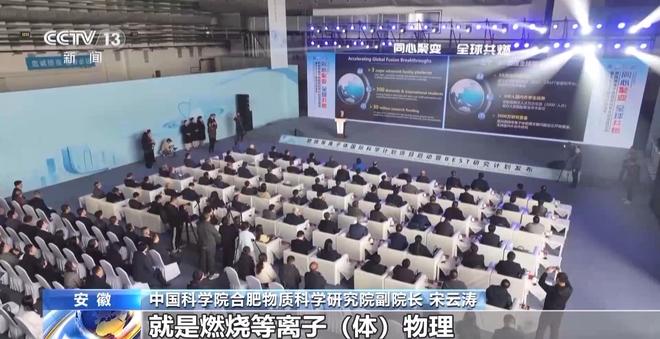
我国启动聚变领域国际科学计划 聚变能源被视为未来清洁能源的终极目标
Yang Shi Xin Wen· 2025-11-24 02:17
Core Viewpoint - The launch of the International Scientific Program for Combustion Plasma by the Chinese Academy of Sciences in Hefei marks a significant step towards global collaboration in fusion energy research, with the BEST experimental device's research plan being announced globally [1][2]. Group 1: Global Collaboration in Fusion Energy - Fusion energy is regarded as the ultimate goal for clean energy, often referred to as "artificial sun," and despite breakthroughs in the past decades, it still faces numerous technical challenges [2]. - The declaration signed by fusion scientists from over 10 countries emphasizes the need for open sharing and cooperative spirit to encourage more international researchers to conduct fusion-related experiments in Hefei [2][3]. Group 2: Advancement of Fusion Research - The initiation of the International Scientific Program for Combustion Plasma, alongside the ITER and BEST projects, signifies a new phase in fusion research focused on "combustion plasma" [3]. - The program aims to integrate global resources through the establishment of open funds, international conferences, collaborative experimental platforms, and the recruitment of foreign experts [3]. Group 3: China's Contributions to Global Fusion Research - The EAST superconducting tokamak and other major scientific facilities in Hefei have become crucial platforms for international fusion research, with stable collaborations established with over 120 research institutions from more than 50 countries [4]. - China actively participates in the ITER project, receiving high praise for its independently developed key technologies and components, contributing significantly to the advancement of global fusion engineering [4].