Food Delivery

Search documents
Delivery Hero: The Undervalued Giant Waiting For A Catalyst
Seeking Alpha· 2025-11-20 11:34
Core Insights - Delivery Hero is one of the largest food delivery companies globally, operating in Asia, EMEA, and Latin America [1] Group 1: Company Overview - Delivery Hero has successfully reduced its debt levels, positioning itself favorably in the market [1] Group 2: Market Position - The company maintains a significant presence across multiple regions, indicating a diversified operational strategy [1]


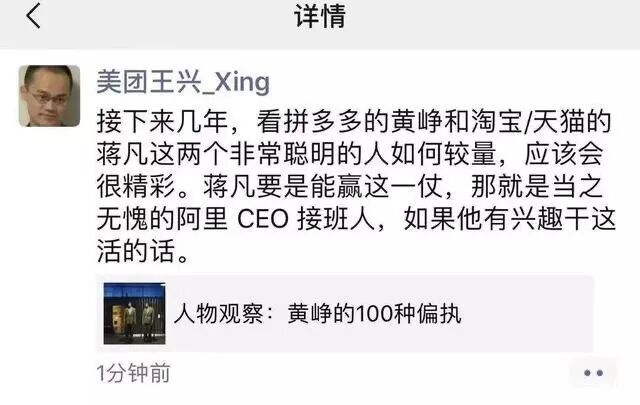
蒋凡重整「旧阿里」
3 6 Ke· 2025-11-20 08:24
Core Insights - The article discusses the strategic shift within Alibaba, particularly focusing on the integration of Ele.me into the Taobao ecosystem, reflecting a broader trend of consolidation in the face of competition from Meituan and Douyin e-commerce [3][11][19] Group 1: Company Strategy - Alibaba is restructuring its operations under the leadership of Jiang Fan, who is tasked with ensuring the stability of the "old Alibaba" while supporting the "new Alibaba" focused on cloud and AI [5][11] - The integration of Ele.me into Taobao reflects a shift in strategy, where the brand is being downplayed in favor of Taobao's established presence, indicating a belief that the Ele.me brand has limited utility [3][17] - The decision to rebrand Ele.me as "Taobao Flash Purchase" signifies a move towards a more unified platform aimed at enhancing user engagement and driving sales [11][19] Group 2: Market Dynamics - The competitive landscape has shifted, with Meituan establishing a stronghold in the local delivery market, making it difficult for Ele.me to gain market share despite Alibaba's resources [15][19] - The article highlights the challenges faced by Alibaba in adapting its e-commerce model to the realities of local delivery, where operational efficiency and supply chain management are critical [9][15] - The rise of Douyin e-commerce has further complicated Alibaba's position, as it has drawn users away from Taobao, increasing customer acquisition costs significantly [10][19] Group 3: Financial Implications - Alibaba's investments in the "new retail" concept have not yielded the expected returns, leading to significant financial losses, particularly with Ele.me, which has become a financial burden rather than an asset [9][12] - The article notes that Alibaba has engaged in asset divestitures, including the sale of Intime Retail and Gome Retail, to streamline operations and reduce losses [12][19] - The financial performance of Taobao Flash Purchase is under scrutiny, with projections indicating that its contribution to revenue may fall short of the substantial investments made [19]


DoorDash Stock Nabs Analyst Upgrade After Sell-Off. Food-Delivery Leader 'Underappreciated.'
Investors· 2025-11-19 15:14
Group 1 - DoorDash stock has been upgraded from hold to buy by Jefferies analysts following a recent post-earnings decline, indicating potential for recovery [1] - The company's third-quarter report included a warning about plans to increase investments, which contributed to the stock's decline [1] - Analysts believe that DoorDash has the right to invest in its growth despite the short-term negative market reaction [4] Group 2 - Other companies such as Robinhood, AppLovin, and ARM have also been highlighted for their earnings performance, indicating a broader market focus on key players [2] - Tesla shareholders are set to vote on Elon Musk's $1 trillion pay deal, which is generating significant attention in the market [2] - The overall market sentiment is mixed, with banks rebounding while concerns about other sectors persist [4]

China's Corporate Pivots: Alibaba's Food Delivery Gambit and WuXi AppTec's Geopolitical Hedge
Benzinga· 2025-11-19 13:21
Group 1: Alibaba's Strategic Shift - Alibaba is retiring the Ele.me brand, which has been synonymous with food delivery in China, and is transitioning to a broader "instant commerce" strategy under the Taobao brand [3][4] - This rebranding aligns Alibaba with competitors like JD.com and Meituan, which have unified their delivery services under a single brand, enhancing customer navigation within Alibaba's ecosystem [4] - The shift acknowledges past shortcomings, as Ele.me has lagged behind Meituan in market share since its acquisition by Alibaba in 2018, indicating a renewed focus on the delivery business [5][6] Group 2: WuXi AppTec's Move to Saudi Arabia - WuXi AppTec is pivoting towards the Middle East, planning to build a new facility in Saudi Arabia while selling off non-core assets, driven by U.S.-China trade tensions [7][8] - The move is motivated by financial incentives from Saudi Arabia, which is diversifying its economy away from oil and gas, and is actively attracting high-tech and biotechnology industries [8] - Establishing a manufacturing base in Saudi Arabia allows WuXi AppTec to mitigate risks associated with U.S.-China relations and label its products as made in Saudi Arabia, creating a separation from Beijing [10]

DoorDash users hit by data breach. What to do if you’re affected.
Yahoo Finance· 2025-11-18 22:19
Core Insights - DoorDash has confirmed a significant data breach affecting personal information of users, Dashers, and merchants, marking the first major breach of the holiday season [1][2] Company Summary - The breach involved the theft of names, phone numbers, physical addresses, and email addresses, but not Social Security numbers or credit card information [2] - DoorDash has not disclosed the number of affected users but stated there is no current indication of data misuse for fraud or identity theft [2] - The breach was caused by an employee falling victim to a social engineering scam, which can include various fraudulent tactics [2][3] - An external firm has been hired by DoorDash to assist in the investigation, and affected users have been notified as required [3] Industry Summary - Experts suggest that while the breach may seem low-level, it poses risks as stolen data can be combined with other information to create synthetic identities [4][5] - The holiday season is particularly vulnerable to scams, with Experian reporting that 31% of consumers fear identity theft during this period [11] - Key concerns for consumers include identity theft (68%) and stolen credit card data (61%), with significant sources of fraud being credit card use at retail stores (26%) and online shopping (22%) [11]
淘宝“合体”VS 京东“分家”,你看好谁?
3 6 Ke· 2025-11-18 11:04
Core Insights - JD.com has launched its independent food delivery app, addressing user pain points regarding accessibility to its delivery services [2][10] - The strategic divergence between JD.com and Alibaba is evident, with JD.com opting for a "separation" strategy while Alibaba integrates its food delivery service into its broader ecosystem [8][10] - JD.com aims to build consumer trust through its new initiatives, focusing on authenticity and reliability in local services [12][15] Summary by Sections JD.com’s New Initiatives - JD.com has officially launched the JD Delivery app and JD Review, featuring five sub-channels for food, hotels, products, activities, and home services [4] - The JD True List initiative aims to recruit 100,000 reviewers for blind testing, utilizing an AI model to analyze millions of reviews for authenticity [4][9] Market Reactions - Public opinion is divided; some users appreciate the additional platform for convenience, while others criticize issues like customer service and delivery accuracy [4][6] - Concerns have been raised about the objectivity of the blind testing results and potential manipulation of reviews [4] Competitive Landscape - JD.com’s decision to separate its food delivery service contrasts with Alibaba's integration of Ele.me into the Taobao ecosystem, which aims to leverage Taobao's large user base for enhanced traffic and customer retention [8][10] - JD.com is betting on its established trust in product quality and logistics to differentiate itself in the food delivery market [12][15] Timing and Strategy - The launch coincides with Alibaba's efforts to merge its services, presenting a strategic opportunity for JD.com to capture market share during a potential period of competitor distraction [10][11] - JD.com is positioning itself as a trustworthy alternative in a market saturated with unreliable reviews, aiming to attract consumers seeking genuine recommendations [12][15]


America’s labor market is cooling, and workers are quietly turning to Uber and DoorDash to fill the income gap
Yahoo Finance· 2025-11-18 10:00
Core Insights - The labor market in America is cooling, with the gig economy absorbing some of the employment strain as traditional payroll growth slows [1][2] - Approximately 20% of individuals who experienced job loss or reduced hours turned to gig platforms for income support [2] - The gig economy is becoming a backstop for workers, with 15% of those classified as unemployed or "not in the labor force" actually engaged in gig work [6] Labor Market Trends - Over 153,000 job cuts were announced in October, marking the worst reading for that month since 2003 [3] - Private employers reported an average loss of 11,250 jobs per week for the four weeks ending October 25, a decline from earlier reports indicating job gains [4] - Companies have announced over 1.1 million layoffs in 2024, a 44% increase compared to the previous year, with significant reductions in tech and retail sectors [5] Gig Economy Dynamics - Gig hours have increased in cities where traditional payroll growth has slowed, indicating that workers are taking on extra shifts to compensate for lost income [2] - Gig workers earn only 50%-65% of what they made in traditional jobs, despite some marginal wage increases due to a decline in immigration [8] - Many gig workers face lower pay, instability, and lack of benefits, leading to a feeling of financial squeeze among Americans [7]


哪些投诉方式更容易获得回应?教你找到最合适的维权渠道
Xin Lang Cai Jing· 2025-11-17 08:38
Core Viewpoint - The effectiveness of consumer complaints largely depends on choosing the right channels rather than the willingness of companies to address issues [1][2][15]. Group 1: Types of Issues - Consumer problems can be categorized into two main types: 1. Routine issues that are easy to resolve, such as delivery delays and missing items [4]. 2. More complex issues requiring stronger intervention, such as refusal to return large items and warranty disputes [5][6]. Group 2: Recommended Channels for Complaints - For simple issues, the fastest resolution is typically through the app's internal customer service [7][8]. - For complex issues involving high-value items, stronger channels such as official regulatory platforms (e.g., 12315) or social complaint platforms (e.g., Black Cat Complaints) should be utilized [9][11][12]. Group 3: Specific Strategies for Different Scenarios - Service-related complaints (e.g., dining, beauty, education) should follow a structured approach, starting from the service provider to regulatory bodies if necessary [14]. - Using multiple channels simultaneously can enhance the efficiency of complaint resolution [13][17]. Group 4: Tips for Effective Complaints - Key strategies for ensuring complaints receive timely responses include having complete evidence, maintaining objectivity in complaint content, and selecting the appropriate platform based on the issue's nature [15][17].
DASH Accelerates After Post-Earnings Sell-Off
Youtube· 2025-11-14 21:00
Core Viewpoint - DoorDash shares have seen fluctuations, with a recent price target cut by NEM from 300 to 275 while maintaining a buy rating, indicating continued confidence in the company's performance despite recent volatility [1][11]. Financial Performance - DoorDash's stock is down 18% this month but remains up 20% year-to-date, reflecting a mixed performance in the short term while showing overall growth for the year [2]. - The company reported strong earnings on November 6, beating expectations on both revenue and earnings per share, yet experienced a significant one-day drop of 17.4% post-earnings [3][4]. Market Sentiment - Analysts noted that the market reaction to DoorDash's earnings was influenced by executives' announcements of substantial investment plans, which may have raised concerns among investors [4]. - Despite the recent selloff, some analysts view the current price levels as a buying opportunity, suggesting that the market overreacted to the earnings report [11][12]. Technical Analysis - Technical indicators show a potential reversal pattern, with a recent formation of a price floor near 195 and a downward sloping trend line that may be breaking [8]. - The 252-day exponential moving average is identified as a potential resistance level around 215, while the RSI shows signs of improvement, indicating a possible bullish divergence [8][9]. Options Activity - Options trading activity has been moderate, with about 26,000 contracts changing hands, indicating a balanced interest between puts and calls [13]. - Notable trades included a significant position involving the sale of 1,500 November 21st 240 puts and the purchase of 3,000 November 21st 210 puts, suggesting strategic positioning by traders [15].
Top Stock Movers Now: StubHub, DoorDash, Netflix, and More
Investopedia· 2025-11-14 18:26
Core Insights - StubHub shares fell nearly 25%, marking the worst day since its IPO in September, due to the company's decision not to provide guidance for the current quarter [2][3] - Bristol-Myers Squibb's stock declined by 3.4% after the company announced it would halt a trial for a heart drug developed in collaboration with Johnson & Johnson [2] - Netflix shares dropped about 3% following reports that the company is preparing bids to acquire Warner Bros. Discovery [3] Stock Movements - DoorDash stock rose nearly 7%, recovering some losses after its earnings report [4] - Cidara Therapeutics saw its stock more than double in value after Merck announced a deal to acquire the company for $221.50 per share, valuing it at approximately $9.2 billion [3] - Major U.S. equity indexes showed mixed results, with the Dow Jones down 0.3%, S&P 500 up 0.5%, and Nasdaq climbing 0.8% [1]