
数字金融

Search documents
万和财富早班车-20250731
Vanho Securities· 2025-07-31 01:27
Core Insights - The report highlights the ongoing development and commercialization of humanoid robots, supported by industrial funds for innovative breakthroughs, with related stocks including Zhongdali De (002896) and Industrial Fulian (601138) [8] - The implementation of stablecoin regulations in Hong Kong is accelerating the global layout of digital financial infrastructure, with related stocks such as Sifang Jingchuang (300468) and Hengsheng Electronics (600570) [8] - The first intelligent storage scheduling platform in the country has been launched to promote the integration of computing and networking, with related stocks including Unisplendour Corporation (000938) and Zhongke Shuguang (603019) [8] Company Focus - Redick (300652) has completed the development of planetary roller screw products, covering all types and achieving mass production [10] - Jinyi Culture (002721) has collaborated with several banks on digital RMB products through its subsidiary Kaike Weishi, and is also involved in AI large model-related projects [10] - Wantong Intelligent Control (300643) has signed an exclusive sales and cooperation contract with Shanghai Shenming Aosi Semiconductor Technology Co., Ltd. for the production and sale of boards based on the Fellow 1 model chip [10] Market Review and Outlook - On July 30, the total trading volume in the two markets was 1,844.3 billion yuan, with 1,632 stocks rising and 3,376 stocks falling, indicating an increase of 41.1 billion yuan compared to the previous day [12] - The major indices opened flat and experienced wide fluctuations, with the exception of the Shanghai Composite Index, which closed slightly higher, while other important indices closed with small losses [12] - Market hotspots included significant gains in sectors such as film, oil and gas, and dairy, while sectors like digital currency and diversified finance saw declines [12][13]
狮腾控股(02562.HK)推出数字金融集团打造亚洲首个多货币、互通稳定币及真实世界资产代币化解决方案生态系统
Ge Long Hui A P P· 2025-07-30 06:03
Core Viewpoint - Lion Group (02562.HK) announced the creation of a new flagship business unit, the Synagistics Digital Finance Group (SDFG), aimed at developing multi-currency, interoperable stablecoin and real-world asset (RWA) tokenization solutions, facilitating growth and adoption across Asia upon obtaining regulatory approvals [1] Group 1 - The SDFG aims to connect traditional financial systems with blockchain-based frameworks by providing compliant tokenization of real-world assets, including trade receivables, inventory, and future cash flows [1] - The tokenized assets will be paired with interoperable multi-currency stablecoins, such as Hong Kong dollars, offshore renminbi, Singapore dollars, and other applicable fiat currencies, to achieve efficient, programmable settlements and enhance liquidity [1] - The initiative is designed to enable seamless interoperability between decentralized financial systems [1]
香港证券市场下调最低上落价位;美国公司AIWB递表港交所丨港交所早参
Mei Ri Jing Ji Xin Wen· 2025-07-28 16:22
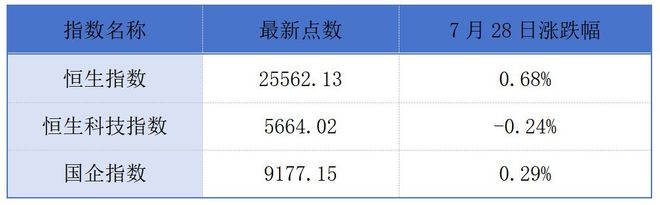
Group 1 - Hong Kong Securities Market will lower the minimum price fluctuation levels starting August 4, aiming to reduce trading costs and enhance efficiency [1] - The minimum price fluctuation for stocks priced between HKD 10 to 20 will decrease from HKD 0.02 to HKD 0.01, and for those priced between HKD 20 to 50, it will drop from HKD 0.05 to HKD 0.02 [1] - This adjustment applies to various securities including stocks, real estate investment trusts, and equity warrants, potentially attracting more capital to the Hong Kong stock market [1] Group 2 - Jiangsu Zhonghui Yuantong Biotechnology Co., Ltd. has passed the listing hearing for the Hong Kong Stock Exchange, with Citic Securities and CMB International as joint sponsors [2] - The company specializes in vaccine production, with its only commercialized product being a quadrivalent influenza virus subunit vaccine, projecting revenues of HKD 52.168 million in 2023 and HKD 260 million in 2024 [2] - Despite the potential in vaccine development, the company has reported continuous losses, with projected losses of HKD 425 million in 2023 and HKD 259 million in 2024, highlighting challenges in achieving profitability [2] Group 3 - Lion Group Holdings announced the establishment of a new flagship division, Synagistics Digital Finance Group, focusing on multi-currency solutions and asset tokenization [3] - The initiative aims to enhance liquidity and programmable settlement through stablecoin interoperability, targeting the Asian market [3] - However, the company faces regulatory uncertainties and challenges in technology implementation, raising questions about balancing innovation with compliance [3] Group 4 - AIWB INC from the United States has submitted its prospectus to the Hong Kong Stock Exchange for a main board listing [4] - The company provides comprehensive smart property building solutions, primarily serving the residential market in Texas, with a growing operational scale [4] - In the first five months of 2025, AIWB has serviced 31 project companies and completed 131 residential units, but its high regional dependency may pose challenges in gaining acceptance from Hong Kong investors [4] Group 5 - The Hang Seng Index closed at 25,562.13, reflecting a 0.68% increase, while the Hang Seng Tech Index decreased by 0.24% to 5,664.02, and the National Enterprises Index rose by 0.29% to 9,177.15 [6]

2025国际货币论坛:稳定币推动香港数字金融发展,人民币国际化再迎机遇
Jing Ji Guan Cha Bao· 2025-07-28 09:34
Core Insights - The forum highlighted the role of stablecoins in promoting digital finance in Hong Kong and the internationalization of the Renminbi [1][2][8] - Experts discussed the dual nature of stablecoins, emphasizing their potential for financial innovation while also acknowledging systemic risks [3][6] Group 1: Stablecoins and Financial Innovation - Stablecoins are emerging as a significant force in the global financial system, impacting cross-border payments and the internationalization of the Renminbi [2][8] - The forum emphasized that Hong Kong should leverage stablecoins to connect China with the global market, potentially easing restrictions on cross-border capital flows [3][4] Group 2: Hong Kong's Role - Hong Kong is positioned as a key player in exploring advanced digital financial infrastructure, benefiting from a favorable regulatory environment and a history of financial innovation [4][7] - The introduction of the "Stablecoin Regulation" in Hong Kong marks a significant step in establishing a clear compliance framework for the stablecoin market [7][8] Group 3: Technological Evolution - The evolution of financial infrastructure has undergone three major revolutions, with distributed ledger technology (DLT) being a pivotal development that enhances transaction efficiency [5][6] - The emergence of stablecoins signifies a trend towards "digital twins," allowing real-world assets to circulate on blockchain platforms [5][6] Group 4: Risks and Regulatory Considerations - The need for stringent regulatory measures regarding anti-money laundering for stablecoins was emphasized by industry leaders [1][6] - The balance between efficiency and security, as well as the importance of international regulatory cooperation, is crucial for the successful implementation of stablecoins [8]
狮腾控股在港交所公告,公司将创建全新旗舰业务单位,即推出Synagistics Digital Finance Group,其旨在为开创多货币、互通稳定币及真实世界资产代币化的解决方案,并在获得监管及许可批文后,促进亚洲各地的发展及采用。
news flash· 2025-07-28 00:20
Core Viewpoint - The company announced the creation of a new flagship business unit, the Synagistics Digital Finance Group, aimed at developing multi-currency, interoperable stablecoin solutions and tokenization of real-world assets, with plans to promote adoption across Asia upon obtaining regulatory approvals [1] Group 1 - The new business unit will focus on providing solutions for multi-currency and stablecoin interoperability [1] - The initiative includes the tokenization of real-world assets, indicating a strategic move towards digital finance [1] - The company plans to facilitate development and adoption across various regions in Asia, contingent on receiving necessary regulatory and licensing approvals [1]
7月28日电,狮腾控股在港交所公告,推出数字金融集团打造亚洲首个多货币、互通稳定币及真实世界资产代币化解决方案生态系统。
news flash· 2025-07-28 00:16
Group 1 - The core viewpoint of the article is that Lion Group has announced the launch of a digital financial group aimed at creating Asia's first multi-currency, interoperable stablecoin and real-world asset tokenization solution ecosystem [1] Group 2 - The initiative signifies a strategic move towards enhancing digital finance capabilities in Asia [1] - The focus on multi-currency and interoperability indicates a response to the growing demand for flexible and integrated financial solutions in the region [1] - The development of real-world asset tokenization solutions could potentially open new avenues for investment and asset management [1]
香港稳定币监管:构建安全、灵活、开放的数字金融生态
2 1 Shi Ji Jing Ji Bao Dao· 2025-07-25 22:27
Core Viewpoint - The Hong Kong Monetary Authority (HKMA) is warning about the risks of over-speculation in stablecoins as the Stablecoin Regulation comes into effect on August 1, indicating a commitment to a balanced development of stablecoins [1][2]. Group 1: Regulatory Framework - The Stablecoin Regulation, passed on May 21, 2025, aims to create a risk-based regulatory environment that aligns with international standards, enhancing the regulatory framework for virtual asset activities while promoting financial innovation and sustainable development [1][2]. - The regulation follows the principle of "same activity, same risk, same regulation," requiring issuers of fiat-backed stablecoins to obtain licenses and adhere to strict asset management and redemption requirements [1][2]. Group 2: Market Dynamics - Stablecoins serve as a crucial link between traditional finance and decentralized finance (DeFi), enhancing market efficiency and accelerating the adoption of Web3.0 technologies, which could attract international capital and innovation to Hong Kong [3]. - As of now, the global cryptocurrency market is valued at approximately $3.35 trillion, with stablecoin supply around $250 billion and trading volume projected to exceed $20 trillion in 2024, indicating a significant market presence [3]. Group 3: Internationalization of Currency - The internationalization of currencies is a long-term process influenced by the overall strength of an economy and the development of financial markets, with Hong Kong positioned to leverage its financial market advantages to support the internationalization of other fiat currencies [4].
Mercurity Fintech(MFH.US)股价单日暴涨53% 加密财务战略布局点燃市场热情
智通财经网· 2025-07-25 01:44
Group 1 - Mercurity Fintech's stock surged over 53%, marking its largest single-day increase recently, with a trading volume of $40.63 million, the highest in 8 months, reflecting strong retail investor enthusiasm and a rebound from previous price declines [1] - The company's robust performance is linked to its strategic actions in the cryptocurrency and blockchain finance sectors, indicating market confidence in its long-term plans [1] - In June, Mercurity Fintech announced an $800 million fundraising plan aimed at establishing a long-term Bitcoin reserve, utilizing institutional-grade custody solutions and on-chain liquidity protocols to create an income-generating digital asset reserve framework [1] Group 2 - In July, the company entered into a $200 million equity credit agreement with Solana Ventures to advance its funding strategy, planning to generate returns through staking, validation nodes, and Solana DeFi protocols [1] - To accelerate its cryptocurrency financial strategy, Mercurity Fintech raised $43.7 million through a direct issuance, with funds allocated for ecosystem staking, tokenized yield tools, and institutional-grade on-chain financial infrastructure [2] - The board approved a share repurchase plan of up to $10 million over the next 12 months, signaling strong confidence in the company's long-term value and commitment to enhancing shareholder returns [2]

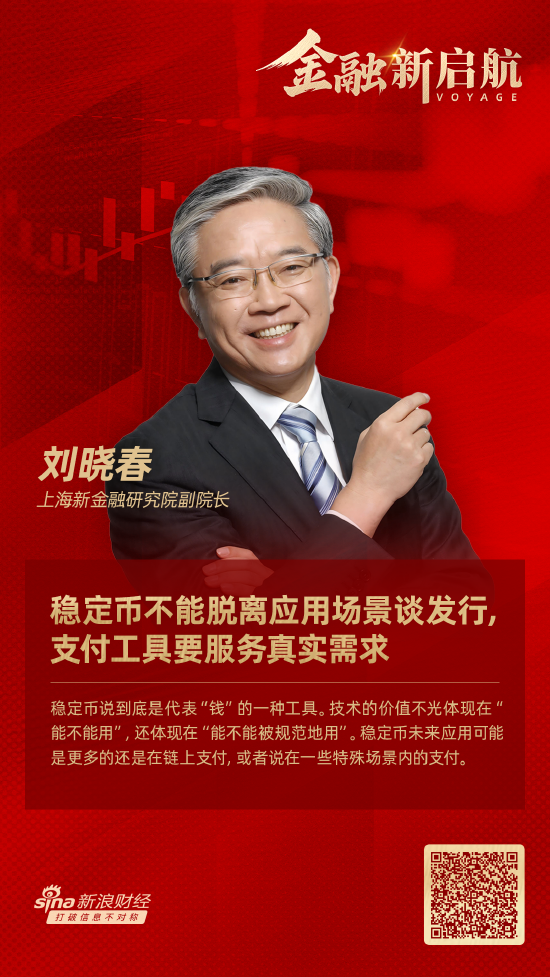
上海新金融研究院刘晓春:稳定币不能脱离应用场景谈发行,支付工具要服务真实需求
Xin Lang Cai Jing· 2025-07-25 00:14
Core Insights - The signing of the "Stablecoin Innovation Act" by President Trump marks the establishment of a regulatory framework for stablecoins in the U.S. [2] - Hong Kong is also accelerating its regulatory measures, with the "Stablecoin Regulation" set to take effect on August 1 [3][5] - The total market capitalization of stablecoins has reached approximately $255 billion, with over 170 different types available since 2023 [3] Regulatory Developments - The legislation aims to clarify which stablecoins are compliant and which are not, establishing a clear boundary in the stablecoin sector [3][14] - The focus of the legislation is on strengthening regulation rather than legalizing stablecoins, indicating their growing influence and associated risks [14] Market Dynamics - Stablecoins serve as a tool representing "money," facilitating the growth of cryptocurrency trading by anchoring to fiat currencies [3][9] - The demand for stablecoins is particularly pronounced in regions with unstable currencies, such as Africa and Turkey, where they provide a means to bypass local currency restrictions [6][7] Application Scenarios - Use cases for stablecoins include payroll for global tech companies, where they offer faster and cheaper transactions compared to traditional banking methods [7] - The potential for stablecoins to enter mainstream society hinges on their ability to find practical applications beyond niche markets [10] Financial Infrastructure - The development of stablecoins is seen as a necessary component of the broader digital financial ecosystem, which requires robust payment methods to support trading activities [9][12] - The importance of a unified regulatory approach in the currency sector is emphasized, as multiple regulatory bodies could lead to inconsistencies [15]
德林控股(01709.HK)公布有关集团于数字金融业务发展方面最新规划与战略布局
Ge Long Hui· 2025-07-23 15:00
Group 1 - The core announcement from Derlin Holdings (01709.HK) outlines the company's latest plans and strategic layout in the digital finance sector, aiming to strengthen its competitive advantage in digital financial infrastructure and asset tokenization [1] - The company is actively positioning itself in blockchain, stablecoins, and real-world assets (RWA) as part of its strategy to establish Hong Kong as a global Web 3.0 hub, focusing on compliance, security, and forward-looking strategies [3] Group 2 - The development strategy consists of three phases: 1. Establishing a licensed virtual asset over-the-counter (VAOTC) and prime brokerage business to provide compliant trading services for institutional and ultra-high-net-worth clients [3] 2. Creating an RWA tokenization and asset management platform to enhance liquidity and optimize asset management efficiency using existing client resources and technology [4] 3. Building a compliant cross-border digital asset fund ecosystem, leveraging a hybrid model that combines local regulatory advantages with international investor demand [5] Group 3 - In the next six months, the company plans to accelerate the implementation of its digital finance strategy, focusing on core capabilities in the virtual asset market and optimizing fund structures [7] - The company aims to expand its coverage of existing licenses related to securities trading, advisory, and asset management within the virtual asset domain, with an expected completion of regulatory approval processes by October 2025 [7] - Plans include applying for a virtual asset OTC operating license to provide flexible and transparent trading solutions for institutional investors and high-net-worth clients, as well as preparing for stablecoin applications [7]