
口岸物流

Search documents
视频丨今年前10个月阿拉山口口岸进出口货运量近2500万吨
Yang Shi Xin Wen Ke Hu Duan· 2025-11-25 14:50
Core Insights - The total import and export cargo volume at the Alashankou railway and road ports in Xinjiang reached 24.792 million tons in the first ten months of this year, representing a year-on-year increase of 5.2%, indicating a new trend of "dual-driven" foreign trade growth [2] - The ports have optimized customs clearance services, implementing a "smart railway port + local rapid customs clearance" system, which has improved inspection efficiency by over 40% through a combination of machine inspection and manual review [2] - Currently, 128 China-Europe (Central Asia) freight train routes have been opened from the Alashankou port, covering 21 countries including Germany and Poland, providing strong support for China's Belt and Road Initiative [4]


新疆霍尔果斯“云港·霍数通”发布会暨智慧口岸合作交流会成功举办
Xin Hua Ri Bao· 2025-11-12 22:27
Core Insights - The "YunGang.HuoShuTong" platform marks a significant advancement in the construction of the Horgos smart port, facilitating the digital transformation of ports and regional collaborative development [1][2]. Group 1: Platform Development - The "YunGang.HuoShuTong" platform focuses on public services for smart ports, integrating core functions such as customs clearance, logistics, trade, and finance into a unified service portal [2]. - The platform has served over 730 enterprises, achieving a coverage rate of 90% in the port trade information service sector [2]. - The implementation of the platform has led to a 60% reduction in the outbound cargo operation process at road ports, an 80% increase in efficiency, and a 50% decrease in costs [2]. Group 2: Regional Collaboration - Agreements were signed between Horgos and cities including Lianyungang, Xi'an, Lanzhou, Xining, and Urumqi to establish a land-sea intermodal data corridor [3]. - The collaboration aims to leverage each party's strengths to explore new models and pathways for logistics data sharing, enhancing technical innovation and application [3]. - The series of agreements signifies substantial progress in regional collaborative development for Horgos's smart port construction, laying a solid foundation for future cross-regional port cooperation [3]. Group 3: Strategic Goals - The launch of the "YunGang.HuoShuTong" platform and the series of cooperation agreements are practical measures to implement the concepts of "smart customs, intelligent borders, and shared connectivity" [3]. - Horgos aims to continuously deepen strategic cooperation with partners, enhancing the functionality of the smart port system to create an efficient, convenient, and intelligent international logistics channel [3].
“智”汇边关 广西凭祥加速“链”接东盟
Zhong Guo Xin Wen Wang· 2025-11-03 12:07
Core Viewpoint - The Guangxi Pingxiang city is accelerating the construction of smart ports to enhance trade connections with ASEAN countries, leveraging advanced technologies for automation and efficiency in customs clearance processes [1][2]. Group 1: Smart Port Development - The "Puzhai-New Qing" smart port project utilizes technologies such as 5G communication and Beidou navigation to achieve 24/7 automated customs clearance through systems like unmanned vehicle dispatch and intelligent inspection platforms [1]. - The daily customs clearance capacity of the Puzhai-New Qing freight dedicated channel is expected to increase to 2,000 vehicles after the project becomes operational, significantly improving efficiency [2]. Group 2: Infrastructure and Automation - At the Friendship Pass port, the number of vehicle lanes has increased from 6 to 12, with a daily traffic volume exceeding 1,500 vehicles. The smart port features remote-controlled lifting equipment and autonomous vehicles for efficient cargo transfer [4]. - The Friendship Pass smart port project aims to simplify customs processes by reducing required documentation and minimizing manual operations, thereby lowering costs and enhancing efficiency [4]. Group 3: Cross-Border E-commerce and Logistics - Pingxiang is innovating in cross-border e-commerce, collaborating with domestic and international e-commerce and manufacturing sectors to leverage its logistics advantages for rapid delivery to ASEAN markets [5]. - Future plans include improving multi-modal transport networks and developing cross-border logistics hubs, as well as exploring cross-border data flow cooperation to establish a smart port system between China and Vietnam [5].
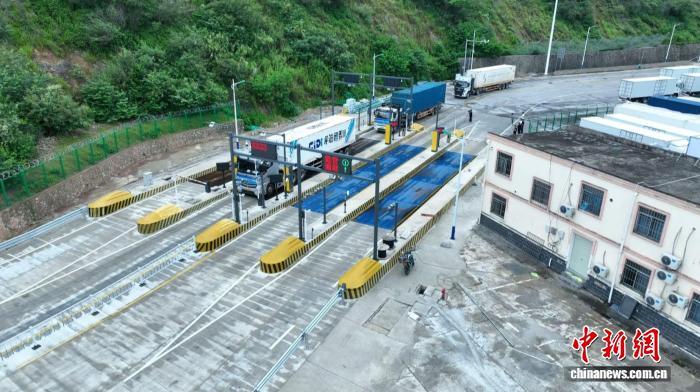
浦寨—新清通道智慧口岸 打造智慧化智能化边境口岸通关示范
Jing Ji Ri Bao· 2025-10-29 22:04
Core Viewpoint - The project in Pingxiang City aims to enhance the efficiency and automation of cross-border trade between China and Vietnam through the development of a smart port and autonomous driving systems, significantly improving customs clearance capabilities and reducing transportation costs [1][2][4]. Group 1: Project Overview - The smart port project covers an area of approximately 176.48 acres with an investment of about 760 million yuan, focusing on the construction of dedicated autonomous driving lanes and a smart port command and dispatch system [1]. - The dedicated lane for the Chinese section is approximately 2395 meters long, consisting of roads, bridges, and tunnels, facilitating a seamless cross-border transport experience [1]. Group 2: Technological Integration - The project utilizes advanced technologies such as 5G communication, Beidou navigation, and cloud integration to enable 24/7 automated customs clearance, significantly enhancing clearance capacity and efficiency [2]. - The autonomous vehicles are equipped with intelligent driving systems to navigate complex scenarios, ensuring safety during operations [2]. Group 3: Operational Efficiency - During the trial phase, the project has streamlined the business processes for freight forwarding companies, allowing all operations to be conducted online, thus saving time and resources [3]. - Once fully operational, the channel's daily clearance capacity is expected to reach 2000 vehicles, improving the smart and convenient level of border ports between China and Vietnam [3]. Group 4: Future Goals - The project aims to achieve the "two 24-hour" goals, enabling 24-hour automated customs clearance and ensuring that goods from industrial parks around Hanoi can be delivered within 24 hours [4]. - The initiative is set to create an efficient and convenient cross-border logistics system, establishing a model for smart and automated customs clearance at border ports [4].
守护香港 “菜篮子” 文锦渡口岸加速验放鲜活供港物资
Zhong Guo Xin Wen Wang· 2025-09-26 07:08
Core Points - The article highlights the proactive measures taken by the Wenjindu Customs to ensure the smooth passage of fresh products to Hong Kong ahead of Typhoon Haikashan, which is crucial for maintaining the supply of fresh vegetables to the city [1][2] - Wenjindu Customs has facilitated the clearance of approximately 970,000 tons of fresh products for Hong Kong in the first eight months of this year, including vegetables, fruits, and live poultry [1] - The customs authority has implemented a 24/7 consultation service and has made arrangements for emergency response and equipment checks to ensure efficient operations during the typhoon [1] Group 1 - Wenjindu Customs is a major channel for fresh product supply to Hong Kong, with over 80% of the city's fresh vegetables passing through this port [1] - The customs has prioritized the inspection and rapid clearance of fresh products during peak hours, particularly from 7 PM to 10 PM, to meet the demand before the typhoon [2] - The customs has established direct communication with enterprises to guide them on customs procedures and to prepare for adverse weather conditions [1][2] Group 2 - The customs authority has set up dedicated inspection stations for fresh products to ensure priority handling and quick release [2] - Continuous monitoring and coordination efforts are in place to manage the flow of goods and ensure that Hong Kong residents have access to fresh produce [1][2] - Technical maintenance personnel are on standby to address any equipment issues that may arise during the typhoon [1]
进一步发挥口岸枢纽作用
Jing Ji Ri Bao· 2025-08-20 23:11
Core Viewpoint - China has become one of the countries with the highest port clearance efficiency in the world, continuously optimizing border inspection and implementing smart clearance channels during the 14th Five-Year Plan period [1] Group 1: Port Development and Efficiency - The construction of ports in China has shown significant results, with an optimized layout of open ports and accelerated construction of key corridors such as the China-Europe Railway Express and the China-Laos Railway [2] - The application of new technologies like IoT, big data, and AI has led to rapid inspection and release of goods, significantly shortening clearance times and reducing costs [2] - The business environment at ports has improved, with the "single window" function becoming more refined, making it easier for companies to operate and lowering institutional transaction costs [2] Group 2: Challenges and Shortcomings - Despite advancements, some ports still face challenges such as outdated infrastructure and uneven development across regions, particularly between eastern and western areas [2] - There is a need for better information sharing and business collaboration across regions and departments to enhance the hub role of port economies [2] Group 3: Reform and Innovation - The establishment of mechanisms for integrated development of ports, industries, and cities is being promoted, along with reforms to simplify approval processes and improve clearance convenience [3] - Investment in traditional infrastructure is necessary to enhance port throughput and service levels, especially in important inland ports [3] Group 4: Differentiated Development Strategies - Ports are encouraged to focus on their unique geographical advantages to create differentiated development patterns, such as enhancing international competitiveness in coastal ports and promoting regional economic integration through border ports [4] - Inland ports should strengthen connectivity with their hinterlands, fostering deep integration in industry, logistics, information sharing, and talent development [4]
壮美广西·全面深化改革调研行丨智慧口岸提效能
Guang Xi Ri Bao· 2025-07-13 01:39
Core Insights - The Guangxi Pingxiang Friendship Pass is enhancing its logistics capabilities with the introduction of automated container handling systems, which can meet a daily demand of 2,880 standard containers [1] - The daily vehicle traffic at the port has significantly increased, reaching an average of 1,600 vehicles, with a peak of 2,100 vehicles this year, compared to the traditional capacity of 800-900 vehicles [2] - The implementation of a smart customs clearance system has streamlined the process, allowing vehicles to pass through in just 15 seconds, improving efficiency by 75% [3] Group 1 - The automated container handling area is set to begin trial operations by the end of the year, facilitating efficient connections between social trucks and intelligent guided transport vehicles [1] - The port has seen a surge in traffic due to the seasonal influx of tropical fruits from ASEAN countries, alongside the export of Chinese electronic products and machinery [1] - The upgraded customs clearance system incorporates advanced technologies such as artificial intelligence and biometric identification, allowing for a quick three-step verification process [2] Group 2 - The logistics monitoring platform enables real-time tracking of vehicle movements and customs clearance status, enhancing operational efficiency [3] - The smart customs system has been recognized as part of the national "smart port" construction standards, reflecting its significance in modernizing border control [2] - The reforms have led to a clustering effect in cross-border e-commerce and bonded logistics, with new business opportunities emerging in tax-free exports and imports [3]
【东盟专线】中越边境智慧口岸进入联调联试 为跨境贸易注入新动能
Zhong Guo Xin Wen Wang· 2025-07-12 14:56
Core Viewpoint - The construction of the Friendship Pass Smart Port is entering the joint debugging and testing phase, which is expected to inject strong momentum into cross-border trade between China and Vietnam [1][2]. Group 1: Project Overview - The Friendship Pass Smart Port project aims to enhance cross-border trade efficiency by overcoming customs clearance capacity bottlenecks and improving the connection of cross-border industrial and supply chains [2]. - The project is expected to achieve trial operation by the end of 2025, with a capacity to handle 2,880 standard containers daily, operating 24 hours a day, which is approximately double the volume of traditional methods [1]. Group 2: Technological Advancements - The project utilizes advanced intelligent facilities and new-generation digital technologies, including satellite navigation and 5G, achieving centimeter-level positioning accuracy for automated guided vehicles (IGVs) [1]. - A logistics control platform and a full-process logistics node system have been established to monitor vehicle entry and exit in real-time, ensuring smooth vehicle dispatch [1]. Group 3: Future Developments - The construction of the Smart Port is part of a broader initiative, with the Guangxi region also advancing the Smart Port project at the Puzhai-Xinquan channel and signing a cooperation framework agreement for the pilot construction of the Dongxing-Mang Street Smart Port with Vietnam's Quang Ninh Province [2].
上半年突破116万吨 满洲里公路口岸进出口货运量再创新高
Nei Meng Gu Ri Bao· 2025-07-12 00:07
Core Insights - The Manzhouli highway port achieved a cargo throughput of 1.167 million tons in the first half of the year, marking a 6% year-on-year increase and setting a new historical record for the same period [1] Group 1: Port Performance - The Manzhouli highway port serves as a crucial hub for Sino-Russian and Sino-European trade [1] - The port has implemented various facilitation measures such as advance declaration, arrival release, and fingertip declaration to enhance efficiency [1] - The use of smart checkpoints and a "single window" system has significantly improved the information management and intelligence level of port inspections [1] Group 2: Customs Measures - Targeted customs supervision measures have been implemented based on cargo types to maximize throughput efficiency [1] - A "green channel" for fresh fruits and vegetables has been established, utilizing a combination of manual and machine inspections to ensure the freshness of exports [1] - For imported liquefied petroleum gas, measures such as document verification and port inspection have been adopted to reduce the clearance time for transport vehicles [1] Group 3: Future Outlook - The Manzhouli Eighteen Li Customs plans to enhance border customs cooperation and further optimize the port clearance environment [1] - The goal is to drive the cargo throughput of the Manzhouli highway port to new heights [1]
西藏加速建设智慧通关体系
Ke Ji Ri Bao· 2025-06-05 11:46
Group 1 - The core viewpoint of the articles highlights the significant improvements in customs clearance efficiency in Tibet, transitioning from traditional manual processes to a smart customs clearance system that leverages IoT and data collaboration [1][2] - The "zone-coast linkage" smart customs clearance system has reduced the customs clearance time for goods from several days to within 24 hours, demonstrating a 70% reduction in time for the first batch of 1,022 tons of goods [1] - The daily processing capacity of the customs clearance area at the Shigatse International Land Port has reached 300 vehicles, with a 35% reduction in logistics costs for enterprises [1] Group 2 - The development of a vehicle feature database and non-intrusive inspection methods has enabled a 3-second information verification process at the Gyirong Port for new energy vehicles [2] - The "one declaration, multiple vehicles" system in the Lhasa Comprehensive Bonded Zone allows companies to dispatch multiple transport vehicles with a single declaration, reducing individual vehicle clearance time to 15 minutes [2] - In 2024, the expected export of new energy vehicles through this channel is projected to exceed 11,000 units, positioning Tibet as a key hub for China's new energy exports to Nepal [2]