孵化器

Search documents
《2025上海市孵化器生态白皮书》发布 构建区域科创“核爆点”
Xin Hua Cai Jing· 2025-09-22 07:41
Core Insights - The 2025 Shanghai Incubator Ecosystem White Paper was released, highlighting Shanghai's efforts in high-quality incubator development and its impact on innovation and entrepreneurship [1][2] Group 1: Incubator Ecosystem Development - Shanghai has established 580 incubator entities with a total incubation space of 4.356 million square meters by the end of 2024 [1] - Approximately 21% of incubated enterprises are focused on the three leading industries: biomedicine, artificial intelligence, and integrated circuits, while nearly 30% are in the technology service sector [1] - New incubation investment models such as "招商科创REIT" and "认股权" are emerging, enhancing the incubation investment linkage [1] Group 2: High-Quality Incubator Initiatives - Since November 2023, Shanghai has initiated the construction of 12 high-quality incubators, focusing on new tracks and regional clustering [2] - Over 50% of the incubated enterprises in seven high-quality incubators belong to the three leading industries, with their new investment accounting for over 20% of the city's total in technology innovation carriers [2] - High-quality incubators like Puyue Shanghai and XNode are actively engaging in cross-border acceleration cooperation to facilitate technology enterprises' internationalization [2] Group 3: Regional Innovation Clusters - Shanghai is building incubator clusters to create regional innovation "nuclear explosion points," with each district adopting differentiated paths to enhance the incubator ecosystem [2] - The Pudong New Area is focusing on the Zhangjiang Science City to develop a high-quality incubator ecosystem cluster [2] - Other districts like Xuhui, Yangpu, and Minhang are also developing their unique industry ecosystems, such as artificial intelligence and hard technology enterprises [2]
开幕在即!解码2025顶尖孵化器大会6大看点
Zhong Guo Jin Rong Xin Xi Wang· 2025-09-21 07:40
Core Insights - The 2025 Top Incubator Conference, themed "Technology Empowerment: Innovating the Future," aims to explore the relationship between technological innovation and humanity's future, reflecting the evolving nature of incubation in a rapidly changing world [3] Group 1: Event Overview - The conference will take place in Shanghai on September 22, 2025, as part of the 2025 Pujiang Innovation Forum series, aiming to build a global platform for technological innovation exchange [2] - The event will feature over 500 global guests, including prominent figures such as academicians and industry leaders, who will share insights and experiences [8] Group 2: Global Participation - The conference has attracted over 30 countries and regions, featuring notable speakers from various international incubators and innovation organizations [4] - The "International Innovation Collaborative Incubation Alliance" has expanded from 13 to 24 members since its establishment in 2023, with further expansions expected during the conference [7] Group 3: Activities and Awards - The conference will host eight key activities over three days, including the release of the "2025 Shanghai Incubator Ecosystem White Paper" and various thematic forums focusing on technology and innovation [8][9] - The "WTIC Awards 2025" will showcase over 60 projects from 16 countries and regions, highlighting top global innovation projects in fields such as digital technology and life sciences [10] Group 4: Resource Connectivity - The conference will introduce the "Global Link Lab," designed to connect global resources and facilitate cross-border opportunities for local governments, incubators, and technology projects [11]

北京海淀发布高质量孵化器新政 最高单体支持1亿元
Zhong Guo Xin Wen Wang· 2025-08-30 08:49
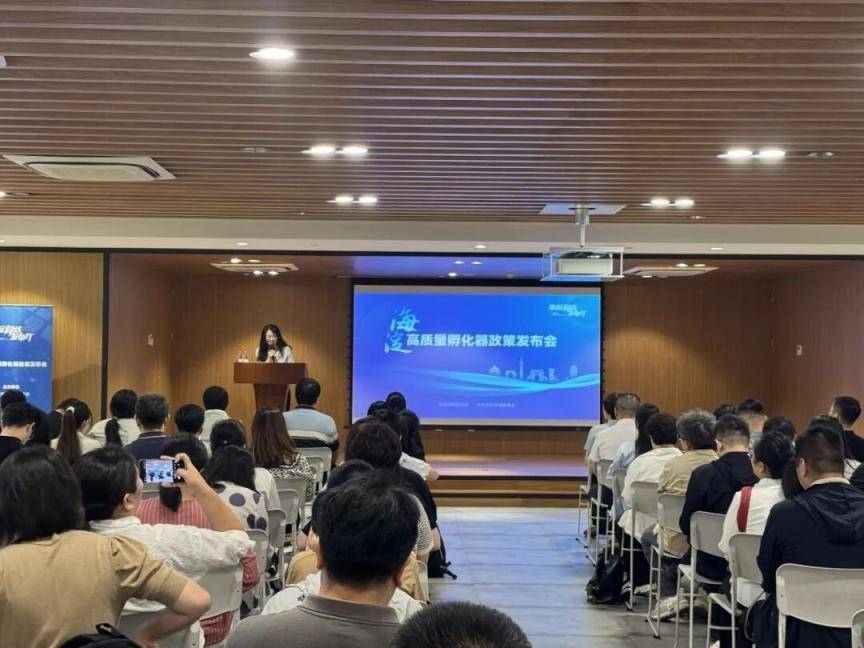
Core Viewpoint - Beijing Haidian District has introduced a new policy to support high-quality incubators, with a maximum single support of 100 million yuan, aimed at enhancing the incubator capabilities and building a globally leading innovation and entrepreneurship ecosystem [1] Group 1: Policy Overview - The policy categorizes incubators into two types: "High-Quality Leading Incubators" focused on attracting and nurturing high-level domestic and international incubators, and "High-Quality Cultivating Incubators" aimed at improving existing incubators' efficiency and their ability to nurture high-tech and specialized enterprises [2] - The policy encourages incubators to engage in source innovation, identifying cutting-edge technologies and nurturing early disruptive projects through a "creation project" approach [2] Group 2: Funding and Support Mechanism - High-Quality Leading Incubators will receive upfront support, with expert qualification assessments, annual funding of up to 20 million yuan per incubator, over a support period of 3-5 years, totaling a maximum of 100 million yuan per incubator [3] - High-Quality Cultivating Incubators will receive post-support based on previous operational performance, with the top 20 scoring institutions receiving up to 2 million yuan each [3] Group 3: Focus Areas and Goals - The policy emphasizes support for hard technology sectors such as artificial intelligence, healthcare, embodied intelligence, optoelectronics, and quantum technology, while also promoting "advanced incubation" in future industries like commercial aerospace [2][3] - Haidian District aims to become a key hub for global sci-tech talent exchange, encouraging diverse entities to establish high-quality incubators with a global perspective and strengthen connections with international innovation centers [2]
最高单体支持1亿元!海淀发布高质量孵化器新政
Sou Hu Cai Jing· 2025-08-30 07:00
Core Viewpoint - The "Haidian High-Quality Incubator Policy" aims to foster a world-class innovation incubation ecosystem by providing targeted support to incubators, enhancing their capabilities, and promoting technological innovation and talent attraction [1][4]. Group 1: Policy Features - The policy introduces a tiered support mechanism for incubators, categorizing them into "High-Quality Leading Incubators" and "High-Quality Cultivating Incubators" with different funding structures [3][4]. - High-Quality Leading Incubators can receive up to 20 million yuan annually for a support period of 3-5 years, with a maximum cumulative support of 100 million yuan per cycle [3]. - High-Quality Cultivating Incubators will receive post-support based on their operational performance, with a maximum of 2 million yuan per incubator [3]. Group 2: Support Focus Areas - The policy emphasizes innovation in incubation models and comprehensive support across the entire innovation chain, encouraging incubators to engage in early-stage disruptive projects and enhance their service capabilities [4][5]. - It promotes the incubation of hard technologies and future industries, focusing on areas such as artificial intelligence, healthcare, and quantum technologies, aligning with national strategic needs [5][6]. - The policy aims to attract global talent and create a key hub for international innovation collaboration, enhancing the flow of innovative resources [6]. Group 3: Implementation and Current Landscape - The Haidian District currently hosts 193 quality incubators, leading in both national and municipal benchmark incubator numbers, contributing to a vibrant innovation and entrepreneurship atmosphere [7]. - A clear plan for funding allocation and implementation processes has been established, with application deadlines set for September 24, 2025, and funding disbursement expected by the end of the year [6].
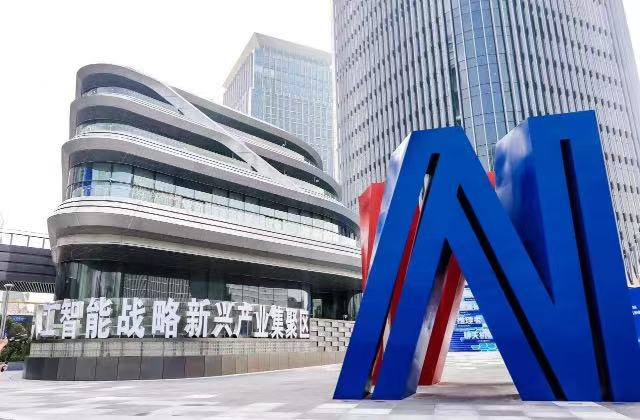
打造千亿规模“科创核爆点”,上海如何培育科技“新秀”|上海高质量孵化器调研
Di Yi Cai Jing· 2025-07-24 12:12
Group 1 - As of May 2025, Shanghai has 12 high-quality incubators covering over 120,000 square meters, with more than 300 companies incubated, including 36 high-tech enterprises and 18 specialized and innovative small and medium-sized enterprises [1][3] - High-quality incubators focus on hard technology incubation, supporting the rapid transformation of disruptive technological achievements and accelerating the growth of hard tech companies [3][15] - The "Xinzhe Zhixing Port" incubator has successfully incubated companies that have gone public, including five on the Sci-Tech Innovation Board and two on the US stock market [3][4] Group 2 - Since the launch of high-quality incubator construction in November 2023, Shanghai has initiated 12 incubators focusing on emerging industries such as AI, quantum optics, and gene therapy [2][10] - The "Mosu Space" innovation ecosystem has attracted over 100 AI model companies, creating a significant cluster effect in the AI industry [5][8] - The Shanghai government aims to cultivate a batch of globally competitive local hard tech companies and establish 2-3 "innovation nuclear explosion points" with a scale of hundreds of billions by 2025 [15] Group 3 - The Pudong New Area has established a cluster of high-quality incubators, including the "Dart Innovation R&D Center" and "Xinzhe Zhixing Port," which collectively support over 30 quality innovation carriers in the biomedicine sector [4][10] - The human-robot incubator focuses on the entire industry chain and employs a selective approach to project incubation, ensuring that companies are specialized in specific fields [12][15] - Shanghai's high-quality incubators are supported by policies that provide tax reductions, talent points, and innovation vouchers, tailored to the unique characteristics of each incubator [15]
给AI创业者的出海指南:45家美国孵化器详细介绍
锦秋集· 2025-05-08 14:35
Core Viewpoint - The article discusses how entrepreneurs can select the most suitable incubators for their ventures, focusing on the diverse ecosystem of incubators in the United States and providing insights into their operational models and characteristics [1]. Group 1: Overview of the U.S. Incubator Ecosystem - The U.S. incubator ecosystem is diverse, including VC-backed, corporate-affiliated, academic-affiliated, vertical industry, and independent incubators, all offering comprehensive support such as funding, mentorship, market resources, and financing connections [2]. Group 2: Types of Incubators - **VC-backed Incubators**: Operated by venture capital firms, these incubators provide quick funding to early-stage teams but may lead to dilution of equity and pressure for rapid growth [3]. - **Corporate-affiliated Incubators**: Initiated by large tech companies, these incubators leverage their core resources to support promising startups, enhancing their technological moat but often lacking direct cash investment [4][5]. - **Academic-affiliated Incubators**: Linked to universities or research institutions, these incubators offer access to research facilities and government funding but may have limited financial support and longer commercialization cycles [6]. - **Vertical Industry Incubators**: Focused on specific sectors like biotech or clean energy, these incubators provide specialized mentorship and networking but may limit market opportunities [7]. - **Mixed Model Incubators**: Combine various support forms, offering broad resource coverage but potentially lacking depth in industry-specific support [8]. Group 3: Active Incubator Representatives - A rigorous selection process identified top incubators based on their establishment date, geographic focus on major entrepreneurial hubs, and specialization in seed or early-stage investments [10][11].