家居家电

Search documents
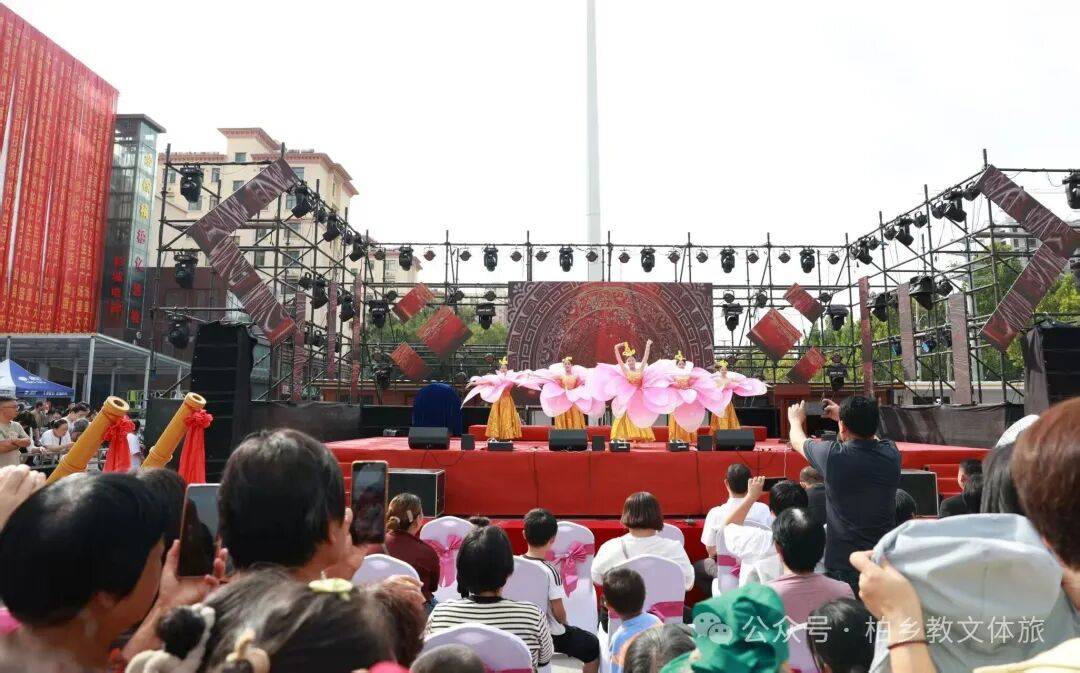
柏乡县“十一”黄金周发力“四个一批” 激活消费活力
Sou Hu Cai Jing· 2025-10-10 16:07
Core Insights - During the "Golden Week" holiday, Baitang County launched a series of initiatives to enhance consumer experience and promote local tourism, focusing on community engagement and festive activities [1][3]. Group 1: Events and Activities - Baitang County organized various sports and cultural events to cater to different age groups and interests, with over 3,600 participants and benefiting more than 10,000 people [3]. - Events included a cycling activity, table tennis and badminton competitions, roller skating contests for students, and a community dance showcase, all aimed at fostering a festive atmosphere [3][12]. Group 2: Consumer Promotions - The county collaborated with local businesses to offer multiple promotional activities, including dining and sports equipment discounts, to lower consumer spending barriers [7]. - The opening of the "Baiyi Life Plaza," a large commercial complex, introduced new brands and promotional events, contributing to a 20.2% year-on-year increase in retail sales during the holiday period [7][9]. Group 3: Tourism and Hospitality - Baitang County provided free access to two major tourist attractions and implemented a first-time parking violation waiver to enhance visitor experience, resulting in over 15,000 tourist visits during the holiday [9]. - The hospitality sector saw a 5.7% year-on-year increase in sales, while the restaurant industry experienced a 2.8% growth during the same period [9]. Group 4: Cultural and Creative Exhibitions - A special exhibition featuring local delicacies and cultural products was held, showcasing traditional foods and attracting significant visitor interest, particularly for the "Baitang Ice Sweet Potato" [12][16]. - The holiday celebrations included a vibrant night party and an art exhibition commemorating the 76th anniversary of the People's Republic of China, drawing over 1,300 attendees [16].

湖北金秋消费季火热启幕
Sou Hu Cai Jing· 2025-09-28 03:14
Core Points - The "2025 Buy Hubei Autumn Consumption Season" has been launched, featuring over 1,000 promotional activities across six major sectors including automotive, home appliances, and dining services [3][4] - A total of 2 million "Hubei Consumption Coupons" will be distributed, along with over 100 million yuan in subsidies for automotive purchases [3][4] - The event aims to enhance traditional consumption while fostering new business models and scenarios, particularly through cross-border e-commerce initiatives [4][5] Group 1 - The consumption season is designed to provide a one-stop shopping experience for consumers, showcasing local delicacies and cultural events [3] - The event includes a diverse range of activities such as car exhibitions and food festivals, promoting local cuisine and products [3][4] - The initiative is supported by the Hubei provincial government, which emphasizes the importance of boosting consumer spending [3][5] Group 2 - Hubei's social retail sales exceeded 1.7 trillion yuan from January to August, reflecting a year-on-year growth of 5.7%, surpassing the national average growth rate by 1.1 percentage points [5] - The launch event also introduced a "Hubei Departure Tax Refund Consumption Map," covering 115 tax refund stores across 15 cities, enhancing shopping convenience for tourists [4] - The cross-border e-commerce sector is being developed to create a global online shopping portal, with significant logistics capabilities established through Hubei's international airport [4]
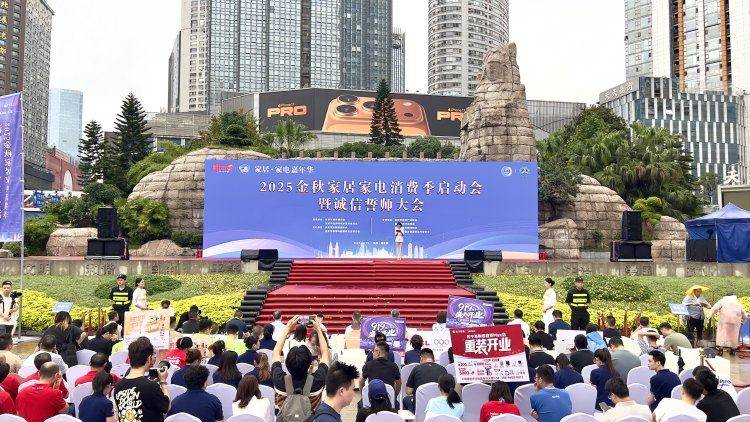
10亿让利+百企参与!2025金秋家居家电消费季开幕
Sou Hu Cai Jing· 2025-09-19 21:49
Core Viewpoint - The "2025 Autumn Home and Appliance Consumption Season" in Chongqing aims to stimulate the local home and appliance market through significant discounts and promotional activities, with a total of over 1 billion yuan in benefits provided by factories, merchants, platforms, and financial institutions [3][4]. Group 1: Event Overview - The event is themed "Home and Appliance Carnival" and is guided by the Chongqing Municipal Commerce Commission and the Municipal Housing and Urban-Rural Development Committee, co-hosted by various industry associations [3]. - The initiative is part of Chongqing's implementation of the "Buy in China, Love Chongqing" consumption season strategy, focusing on enhancing consumer engagement in the home and appliance sectors [3]. Group 2: Promotional Activities - The promotional activities include various discount policies on home appliances and home decoration products, aiming to provide tangible benefits to consumers and stimulate growth in the home and appliance industry [3][4]. - The event features a collaboration between the UnionPay Chongqing branch and local home appliance and furniture associations to organize diverse promotional activities on the "Cloud Quick Payment" platform [4]. Group 3: Industry Commitment - A "Integrity Oath Conference" was held where industry leaders committed to adhering to laws and regulations, ensuring the quality of goods and services, and promoting consumer trust [4]. - The focus is on creating a reliable shopping environment for consumers, thereby contributing to market vitality and high-quality economic development [4].
深度:如何构建品牌稀缺性?
Hu Xiu· 2025-06-12 01:42
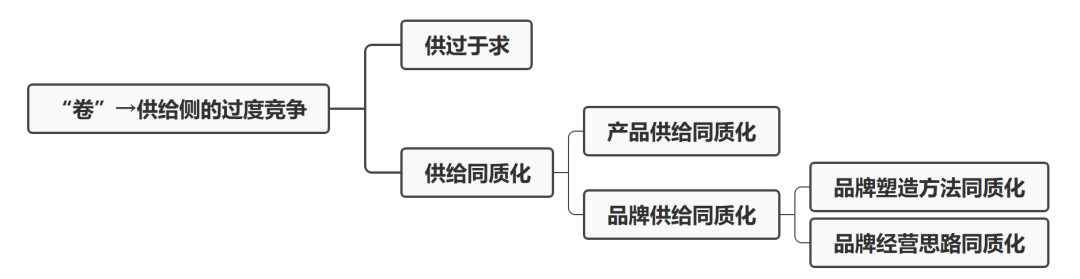
Core Viewpoint - The concept of "competition" in the consumer goods sector has intensified, evolving from mere growth to a survival mode, affecting even niche categories that were previously less competitive [1][4]. Group 1: Nature of Competition - The essence of "competition" is characterized by oversupply and supply homogenization, driven by excessive competition on the supply side [4]. - Two main factors contribute to this phenomenon: oversupply due to a high number of competitors and the homogenization of supply, where many brands follow similar paths, leading to a crowded market [4][6]. Group 2: Brand Homogenization - The trend of brand homogenization has become more pronounced in recent years, with brands increasingly adopting similar strategies and methods, resulting in a lack of differentiation [8][9]. - The rise of e-commerce has lowered the barriers for brand creation, leading to an explosion of brands and consequently, a homogenization of brand offerings [8][9]. Group 3: Building Brand Scarcity - To escape the cycle of homogenization, brands need to focus on creating scarcity through unique brand positioning and innovative strategies [10][11]. - The differentiation of brands can be achieved by understanding the dual nature of branding: as a tool for business strategy and as a result of consumer perception [12][14]. Group 4: Positioning Theory - The essence of consumer goods business is rooted in "concept" and the competition for consumer mindshare through effective positioning [20]. - Many brands tend to adopt a simplistic approach to positioning, focusing solely on product categories, which can lead to a lack of differentiation in a saturated market [21][22]. Group 5: Multi-Dimensional Brand Image - A multi-dimensional brand image is more difficult to replicate and can provide a competitive edge, as seen in successful brands like Apple [37][38]. - Building a multi-dimensional brand requires a cohesive narrative and alignment with business strategies to create a strong brand identity [38].
单身经济产业全景图
Sou Hu Cai Jing· 2025-05-04 17:44
Group 1: Core Concept - The article discusses the emergence and evolution of the "single economy," highlighting its impact on various industries and consumer behavior in China, particularly among the 20-40 age group, which has over 300 million single individuals [2][4][5]. Group 2: Characteristics of the Single Economy - The single economy encompasses various sectors, including food, housing, transportation, and mental consumption [5]. - Single individuals exhibit high income levels, with over half earning between 3,000 to 5,000 yuan monthly, and a significant portion willing to spend more on personal enjoyment [6]. - A notable trend is the "one-person meal" phenomenon, with 68.1% of singles frequently dining alone, leading to a rise in demand for convenient food options [11]. Group 3: Industry Trends - The single economy is characterized by a shift from basic needs to emotional and experiential consumption, with increasing demand for social, entertainment, and self-improvement services [25][28]. - Companies are transitioning from offering single products to creating comprehensive ecosystems that cater to the lifestyle of single individuals, such as smart home solutions and integrated pet care services [26]. - The rise of emotional economy is evident in sectors like pet care, virtual idols, and dating apps, which focus on providing emotional fulfillment [28]. Group 4: Future Outlook - The development of the single economy may lead to increased social atomization, raising concerns about social connections and relationships [29]. - Companies need to understand the diverse needs of single individuals and innovate in product offerings, service experiences, and emotional connections to gain a competitive edge [29].