
康复医疗器械

Search documents
康复器械企业翔宇医疗增收不增利,脑机接口与助浴机器人推进中
Cai Jing Wang· 2025-11-25 10:32
Core Viewpoint - The company is cautiously advancing its investment and acquisition efforts in the rehabilitation medical device industry, focusing on external growth through integration and partnerships, despite recent declines in revenue and profit [1][2][3] Group 1: Financial Performance - Since its listing in 2021, the company's revenue and net profit peaked in 2023 but began to decline thereafter, with a projected revenue of 744 million yuan in 2024, down 0.17% year-on-year, and a net profit of 103 million yuan, down 54.68% year-on-year [2] - For the first three quarters of 2025, the company reported a revenue of 537 million yuan, a year-on-year increase of 6.00%, but a net profit of 44 million yuan, down 40.09% year-on-year, primarily due to increased sales and R&D expenses [3] Group 2: Research and Development Focus - The company is increasing its R&D investment, with a total of 140 million yuan in R&D for the first three quarters of 2025, a year-on-year increase of 34.69%, representing 26.11% of revenue, up 5.56 percentage points year-on-year [3] - The company is focusing its R&D efforts on rehabilitation robots and brain-computer interface technologies, with significant projects approved in the field of elderly care, including a specialized bathing robot [4][5] Group 3: Strategic Projects - The company is leading a project for the development and application of a specialized bathing robot for home care, aiming to improve safety, comfort, and cleanliness for bedridden elderly individuals [4] - The company has established a brain-computer interface laboratory and is integrating this technology into its rehabilitation products, which is expected to enhance recovery outcomes for patients [5]

刘宁到漯河市临颍县源汇区调研时强调:推动党的二十届四中全会精神落实落细 不断开创高质量发展高效能治理新局面
He Nan Ri Bao· 2025-11-15 10:56
Group 1: Industry Development - The food industry in Linying County is well-developed with distinct characteristics, particularly in the health sector, as exemplified by Wo Health (Henan) Industry Group Co., Ltd., which focuses on rehabilitation medical devices and functional foods [3] - The emphasis on the "Healthy China" initiative aligns with the development of the health industry, providing new opportunities for enterprises [3] - The company Henan Zhongda Hengyuan Biotechnology Co., Ltd. is a pioneer in the application of natural pigments in the food sector, highlighting the importance of innovation and market expansion in the food industry [3] Group 2: Cultural and Tourism Integration - The need to strengthen the protection and utilization of cultural relics while developing rural tourism and leisure agriculture is emphasized, promoting the integration of agriculture, culture, and tourism [3] Group 3: Grassroots Governance and Community Engagement - The grassroots governance in the Ma Lu Street community is noted for its unique characteristics, with a focus on effective governance and community service [5] - The integration of "Party building + grid + big data" governance methods is encouraged to resolve conflicts and improve community services [5] - The development of new e-commerce models, such as "live streaming + culture + food," is promoted to leverage the digital economy and enhance local brand strength [5]

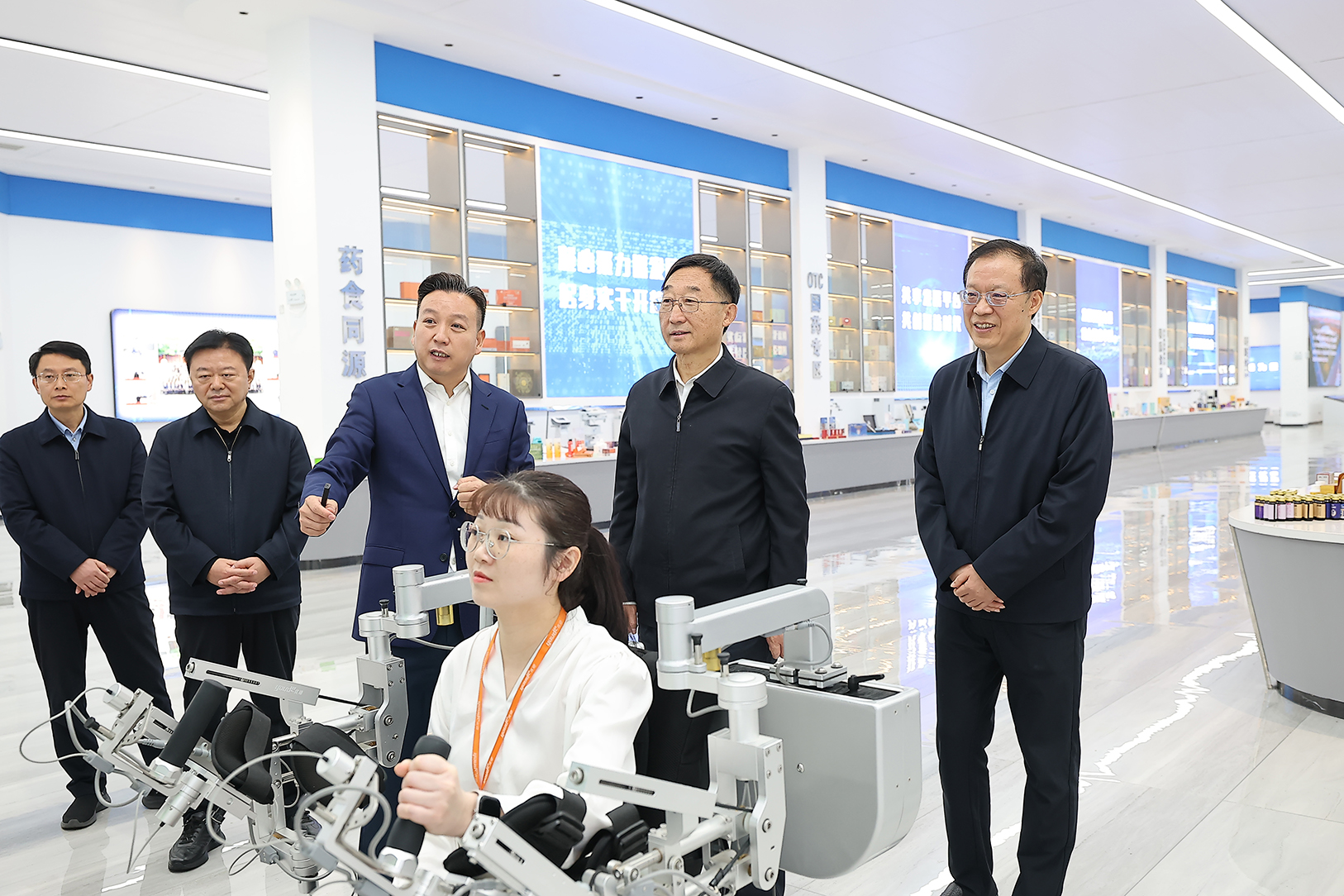
何永正:“脑机接口+”重塑康复新格局
Xin Hua Cai Jing· 2025-10-31 15:38
Group 1 - The 2025 Silver Economy High-Quality Development Forum was held in Chengdu, focusing on "Technology Empowering Senior Life," highlighting the growing importance of the silver economy [1] - Xiangyu Medical has established a research and development center and an intelligent manufacturing demonstration base in Chengdu's Wenjiang District, aiming to deepen its involvement in the rehabilitation medical market for the elderly [1] Group 2 - The global brain-computer interface (BCI) market is experiencing rapid growth, projected to reach $3.3 billion by 2027, with a compound annual growth rate (CAGR) of approximately 13.5% [2] - The domestic BCI market in China is expected to reach 3.2 billion yuan in 2024, with an annual growth rate of 18.8%, and is anticipated to exceed 3.8 billion yuan in 2025 and 5.5 billion yuan by 2027, maintaining an average growth rate of around 20% [2] - There is significant rehabilitation demand among patients with conditions such as stroke, spinal cord injuries, traumatic brain injuries, Parkinson's disease, Alzheimer's disease, and swallowing disorders, indicating a vast potential market for BCI applications in medical rehabilitation [2] Group 3 - Xiangyu Medical has established the Sun-BCI Lab in 2015, integrating five platforms for brain signal acquisition, decoding algorithms, and multimodal interaction, making it one of the leading companies in the practical application of BCI technology in China [3] - The company emphasizes a "clinical demand-oriented" research and development approach, collaborating closely with clinical experts in various medical fields to ensure that products effectively address clinical pain points [3] - The forum was organized by several associations and institutions, aiming to create a platform for industry resources and wisdom to support the high-quality development of the silver economy in China [3]

翔宇医疗何永正:以脑机接口为钥 开启主动康复蓝海市场
Shang Hai Zheng Quan Bao· 2025-09-18 18:59
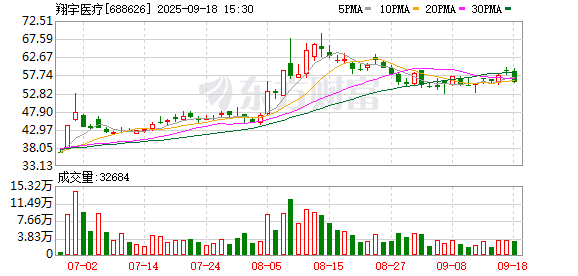
Core Insights - The implementation of the "Implementation Opinions on Promoting the Innovation and Development of Brain-Computer Interface Industry" injects new momentum into the rehabilitation medical sector, with Xiangyu Medical focusing on brain-computer interface technology to transition from passive treatment to active rehabilitation [2][5]. Company Overview - Founded in 2002, Xiangyu Medical has been dedicated to the rehabilitation sector, emphasizing non-invasive therapies to protect patient health [3]. - The company has developed a comprehensive product system in rehabilitation medical devices, covering 10 categories, 55 series, and thousands of products, making it a versatile player in the industry [4]. Research and Development - Xiangyu Medical invests over 20% of its main business revenue into R&D annually, which has previously impacted profit margins but is expected to improve with the launch of high-margin new products [4]. Brain-Computer Interface Technology - Since 2015, Xiangyu Medical has been developing brain-computer interface technology to address the contradiction between active rehabilitation and passive treatment, achieving significant results in stroke patient rehabilitation [5][6]. - The company focuses on non-invasive brain-computer interfaces, which are becoming more affordable and marketable, facilitating wider adoption in hospitals [6]. Market Potential - The rehabilitation medical market in China is projected to reach a trillion-level scale, driven by an aging population and increasing health demands, with ample room for growth as no absolute market leader currently exists [7]. - Xiangyu Medical aims to become a leader in the rehabilitation medical industry by providing integrated rehabilitation solutions and enhancing its technological capabilities [7][8]. Future Goals - The company plans to optimize its industrial structure and cultivate new business growth points to enhance its core competitiveness and value creation, aiming to become a world-class rehabilitation medical enterprise [8].
政策力挺+技术领跑!翔宇医疗脑机接口叩开千亿康复蓝海
Zheng Quan Shi Bao Wang· 2025-08-31 10:45
Core Viewpoint - Xiangyu Medical (688626.SH) has shown significant growth in the rehabilitation medical device industry, with a focus on brain-computer interface technology and a strong commitment to research and development [1][2][4]. Financial Performance - In the first half of 2025, the company achieved total revenue of 359 million yuan, with 173 million yuan in the second quarter, and a net profit attributable to shareholders of 35.39 million yuan [1]. Industry Position - Xiangyu Medical is one of the few comprehensive enterprises in China's rehabilitation medical device sector, providing products, integrated clinical rehabilitation solutions, and professional technical support [1]. - The company is recognized as one of the first "little giant" enterprises in the national specialized and innovative category [1]. Technological Development - The company has made early investments in brain-computer interface technology, focusing on non-invasive applications in rehabilitation [2]. - In the first half of 2025, the company invested 91.15 million yuan in research and development, accounting for 25.39% of total revenue, with a year-on-year increase of 38.8% [4][5]. - The company has filed for 117 new patents, bringing the total to 1,933, including 22 new invention patents [5]. Market Outlook - The rehabilitation medical device industry is projected to exceed 220 billion yuan in total revenue by 2025, indicating strong market demand [7]. - The brain-computer interface market is expected to reach 3.8 billion yuan by 2025 and 5.58 billion yuan by 2027, with a compound annual growth rate of 20% [7]. - Long-term projections suggest that the brain-computer interface market in China could surpass 120 billion yuan by 2040, with a compound annual growth rate of 26% [7]. Strategic Collaborations - The company has established partnerships with universities and research institutions for the development and transformation of brain-computer interface technologies [3]. - Xiangyu Medical has launched 13 brain-computer interface devices at recent industry forums, gaining significant attention [6].
诚益通:8月26日召开董事会会议
Mei Ri Jing Ji Xin Wen· 2025-08-26 23:09
Group 1 - The core point of the article is that Chengyitong (SZ 300430) announced the results of its board meeting held on August 26, 2025, where the 2025 semi-annual report and its summary were reviewed [1] - For the first half of 2025, Chengyitong's revenue composition was 71.11% from intelligent manufacturing and 28.89% from rehabilitation medical devices [1]

康道医疗加强技术创新 智能设备升级用户体验
Jing Ji Ri Bao· 2025-08-12 00:43
Core Viewpoint - 康道医疗专注于康复医疗领域,通过技术创新和AI算法提升下肢外骨骼设备的功能,满足患者的个性化康复需求 [1][2][3] Group 1: Product Innovation - 康道医疗自主研发的KD9下肢外骨骼步态训练系统能够帮助下肢运动功能障碍患者独立行走,内置患者管理系统可实时记录和分析训练数据 [1] - 该公司推出的AI智能镜像步态学习功能能够生成个性化训练方案,突破传统设备依赖固定程序的局限 [2] - 采用六轴协同机械臂结构的康复机器人提供更高的自由度,能够模拟复杂运动,满足不同患者的康复需求 [2] Group 2: Research and Development - 康道医疗组建了由资深算法工程师组成的研发团队,通过分析大量训练数据优化算法模型,提升AI算法的准确性和稳定性 [1][2] - 公司与知名高校和科研机构合作,引入先进算法和技术手段,确保研发始终紧扣临床需求 [3] - 康道医疗已申请数十项发明专利,在人工智能康复领域建立技术优势 [2] Group 3: Market Position and Strategy - 康道医疗的产品已应用于部分三甲医院的康复科,并与30多个国家和地区的医疗机构签署合作协议 [3] - 随着全球人口老龄化加速,康复医疗行业呈现快速发展态势,康道医疗将持续以技术创新为引擎,推动康复医疗技术和服务向标准化、规范化、国际化迈进 [3]
康道医疗加强技术创新——智能设备升级用户体验
Jing Ji Ri Bao· 2025-08-11 22:06
Core Viewpoint - 康道医疗 is leveraging advanced technology to develop innovative rehabilitation solutions, particularly focusing on AI-driven exoskeleton systems for patients with lower limb mobility impairments [1][2][3] Group 1: Product Development - 康道医疗 has developed the KD9 lower limb exoskeleton gait training system, which allows patients to independently control their movements and provides various training options such as walking and sitting [1] - The company has introduced a range of high-tech rehabilitation products, including AI rehabilitation robots and multifunctional treatment beds, showcasing its commitment to innovation in the rehabilitation medical field [1] - The company has applied for dozens of invention patents in the field of artificial intelligence rehabilitation, establishing a technological advantage [2] Group 2: Technological Innovation - 康道医疗's rehabilitation robots utilize AI dynamic optimization algorithms, enabling them to create personalized training programs based on patients' gait data, moving beyond traditional fixed programs [2] - The company employs a six-axis collaborative robotic arm structure, providing higher degrees of freedom compared to traditional three-axis devices, allowing for more complex movements and personalized rehabilitation training [2] - The lightweight exoskeleton developed by the company weighs under 2 kilograms, making it nearly imperceptible for users [2] Group 3: Collaborative Ecosystem - 康道医疗 has established a strong interdisciplinary research and development system, collaborating with rehabilitation medicine experts to ensure that product development aligns with clinical needs [3] - The company's products are already being utilized in several top-tier hospitals, facilitating big data management in patient treatment and rehabilitation [3] - 康道医疗 has signed cooperation agreements with medical institutions in over 30 countries and regions, indicating its international outreach and collaboration efforts [3] Group 4: Market Outlook - The global rehabilitation medical industry is experiencing rapid growth due to the accelerating aging population, presenting significant opportunities for 康道医疗 [3] - The company aims to drive technological innovation and international collaboration to standardize and enhance rehabilitation medical technology and services [3]
机械手“读心术”:一位香港教授和他的百亿康复市场“新抓手”
2 1 Shi Ji Jing Ji Bao Dao· 2025-08-01 14:47
Core Insights - Stroke is becoming a significant global health threat, with 12.42 million patients aged 40 and above in China, and a new case occurring every 10 seconds [2] - The rehabilitation medical device market is rapidly growing, with the Chinese rehabilitation robot market expected to reach approximately 4.74 billion yuan in 2024 [2] - The company, LEXI Robotics, founded by Dr. Tong Qiyu, aims to address the limitations of traditional rehabilitation robots by developing a second-generation rehabilitation hand that utilizes flexible actuators and 3D printing technology [4][5] Company Overview - LEXI Robotics was established in 2021 by Dr. Tong Qiyu, who has a strong background in biomedical engineering and has published over 320 high-quality academic papers [2][4] - The company focuses on creating rehabilitation devices that enhance the recovery process for stroke patients, emphasizing the importance of active rehabilitation [5] Product Development - The first-generation rehabilitation hand was developed in 2010 but faced limitations in terms of commercialization and patient accessibility [3] - The second-generation rehabilitation hand features a soft robotic design that mimics natural hand movements, making it more comfortable and effective for patients [4][5] - The product is available in both home and professional versions, with the professional version incorporating electromyographic (EMG) technology to assist in patient rehabilitation [5] Market Strategy - LEXI Robotics initially targeted hospitals and rehabilitation centers for product adoption, recognizing the need for clinical validation to gain trust from medical professionals [6] - The company has collaborated with volunteer organizations to build a positive reputation among patients, which in turn has attracted the attention of healthcare providers [6][8] - As of now, LEXI Robotics has partnered with multiple rehabilitation centers and hospitals, generating over one million Hong Kong dollars in revenue [8] Future Plans - The company plans to introduce a brain-machine interface version of the rehabilitation hand and aims to expand its product line to include a full-body exoskeleton system for comprehensive rehabilitation [8] - LEXI Robotics is preparing for a Pre-A round of financing, targeting 8 million yuan to support product development and market expansion [8] - The company intends to enter the mainland Chinese market, starting with Guangdong, Shanghai, and Beijing, capitalizing on the vast market potential [8]
国产全球首款“肌肉外甲”在江苏无锡量产
Zhong Guo Chan Ye Jing Ji Xin Xi Wang· 2025-07-24 23:23
Core Insights - The world's first "muscle exoskeleton" wearable robot has officially entered mass production in Wuxi, developed by Dr. Ding Ye, a scientist returned from Harvard University, aimed at providing precise assistance for individuals with mobility impairments such as stroke patients [1] - Clinical studies have shown that patients using this device can significantly improve their walking distance by 47% and walking speed by 60% compared to traditional rehabilitation methods [1] Group 1 - Dr. Ding Ye proposed the innovative concept of "assisting muscles rather than merely supporting bones" in 2012, which revolutionized the design paradigm of traditional exoskeletons that relied on rigid frameworks [2] - The new wearable robot technology focuses on intelligent collaboration rather than mechanical load-bearing, utilizing over 30 sensors to collect multidimensional data and provide real-time assistance [2] - The device has achieved a 40% reduction in net energy consumption, marking a significant breakthrough in energy efficiency for wearable devices [2] Group 2 - In 2023, Dr. Ding Ye established a 2,000 square meter intelligent production base in Wuxi, ending reliance on outsourced core components by achieving 100% domestic production of key parts [3] - The company plans to scale up production of the world's lightest power knee joint device, weighing only 670 grams, with an initial batch of 3,000 units set for global supply [3] - Collaborations with hospitals aim to shorten the product development cycle for wearable robots and related medical devices, addressing challenges posed by an aging society [3] Group 3 - A case study of a stroke patient, Mr. Chen, illustrates the transformative impact of the technology, enabling him to walk independently for an average of 18,000 steps daily after six months of training with the muscle exoskeleton [4] - The global wearable robot market is projected to reach $5.8 billion by 2028, with Chinese companies capturing the technological high ground at an annual growth rate of 50% [4] - The company plans to lead the establishment of ISO international standards for muscle exoskeletons, aiming to enhance China's international influence in this technology sector [4]