
脑电采集装置

Search documents
全链条布局领跑新赛道!翔宇医疗董事长何永正:“脑机接口+”重塑康复新生态
Zhong Guo Zheng Quan Bao· 2026-01-21 04:44
Core Viewpoint - The rehabilitation industry is viewed as a "golden track" with significant growth potential, driven by brain-computer interface (BCI) technology, which is expected to reshape the industry landscape [1] Group 1: Technological Innovation - The company focuses on three cutting-edge areas: brain-computer interfaces, rehabilitation robots, and AI medical technology, with BCI technology accelerating commercialization [2] - A comprehensive product matrix for rehabilitation robots has been established, with plans to launch 5-6 new products by 2026, including various specialized robots [2][4] - The company has initiated a brain science laboratory and developed five technical platforms to enhance its BCI technology, achieving compatibility between EEG devices and rehabilitation equipment [4] Group 2: Research and Development Investment - The company plans to maintain R&D investment at over 20% of revenue for the next 3-5 years, with more than 30% allocated to frontier technology research [5] - In the first three quarters of 2025, R&D investment reached approximately 49.09 million yuan, a year-on-year increase of 27.67%, accounting for 27.58% of quarterly revenue [5] Group 3: Market Transformation - The company has partnered with over 600 leading hospitals to establish BCI rehabilitation treatment and clinical research centers, enhancing treatment precision and effectiveness [6] - The company is transitioning from passive to active rehabilitation models, leveraging BCI technology to empower various rehabilitation products [6] Group 4: International Expansion - The company is accelerating its international market strategy, with overseas sales expected to double in 2024 compared to 2023, aiming for international revenue to account for over 30% by 2030 [7] - The company is pursuing compliance certifications such as EU CE and US FDA to facilitate international market entry and is exploring partnerships and acquisitions to enhance its global presence [7] Group 5: Ecosystem Development - The company is focused on building a comprehensive rehabilitation ecosystem, emphasizing the integration of BCI technology into rehabilitation devices, which is seen as essential for future products [8] - The trend towards lightweight, portable, and home-based rehabilitation devices is expected to drive significant growth in the home rehabilitation market [8] Group 6: Industry Integration - The company plans to strengthen its supply chain for core components and aims to execute 3-5 mergers and acquisitions between 2026 and 2030 to integrate high-growth startups [9] - The company targets to establish chain rehabilitation hospitals featuring BCI and rehabilitation robots, with a goal of achieving over 20% of service revenue by 2030 [9]


“脑机接口+”重塑康复新生态 全链条布局领跑新赛道
Zhong Guo Zheng Quan Bao· 2026-01-20 21:05
Core Insights - The rehabilitation industry is viewed as a "golden track" with significant growth potential, driven by brain-computer interface (BCI) technology, which is expected to reshape the industry landscape [1][4]. Group 1: Technological Innovation - The company focuses on three cutting-edge areas: brain-computer interfaces, rehabilitation robots, and AI medical technology, with BCI technology accelerating commercialization [1][2]. - A comprehensive product matrix for rehabilitation robots has been established, with plans to obtain medical device registration for 5-6 products by 2026, including various types of therapeutic robots [1][2]. - The company has initiated a dedicated research platform to enhance compatibility between rehabilitation equipment and BCI algorithms, emphasizing the importance of technical collaboration [2]. Group 2: Research and Development Investment - The company plans to maintain R&D investment at over 20% of revenue for the next 3-5 years, with more than 30% allocated to frontier technology research [3]. - In the first three quarters of 2025, R&D investment reached approximately 49.09 million yuan, a year-on-year increase of 27.67%, accounting for 27.58% of quarterly revenue [3]. Group 3: Market Expansion and Strategy - The company has established partnerships with over 600 leading hospitals in China to create centers for BCI rehabilitation treatment and clinical research, enhancing its market penetration [3]. - A dual strategy of deepening relationships with medical institutions while expanding into outpatient markets is being employed, targeting private hospitals, elderly care facilities, and specialized sectors [3][4]. Group 4: International Market Development - The international business of rehabilitation equipment is experiencing rapid growth, with plans to double sales in 2024 compared to 2023 and aim for over 30% of revenue from international markets by 2030 [4]. - The company is working on compliance certifications such as EU CE and US FDA to facilitate international market entry and is exploring partnerships for overseas expansion [4]. Group 5: Ecosystem Development - The company is focused on building a comprehensive rehabilitation ecosystem, leveraging BCI technology as a core driver for industry transformation [4][5]. - There is a shift towards lightweight, portable, and home-based rehabilitation devices, with a vision to integrate rehabilitation equipment into everyday household items [5]. - The company plans to enhance its supply chain for core components and aims to execute 3-5 mergers and acquisitions between 2026 and 2030 to consolidate industry resources [5].
医疗器械专题:脑机接口行业深度专题二:三个维度看脑机接口行业发展趋势
Southwest Securities· 2025-11-06 06:56
Investment Rating - The report indicates a positive outlook for the brain-computer interface (BCI) industry, driven by technological advancements and market demand, with specific investment recommendations for various segments [5][46]. Core Insights - The brain-computer interface industry is experiencing rapid innovation across different technological paths, including invasive, semi-invasive, and non-invasive methods, each with distinct performance and risk profiles [2][3]. - The global BCI market is projected to reach approximately $2.6 billion by 2024, with a compound annual growth rate (CAGR) of about 13% from 2023 to 2027, while the domestic market in China is expected to reach around 3.2 billion RMB, with a CAGR of approximately 19% from 2024 to 2027 [3][33]. - Non-invasive methods currently dominate the market, accounting for 82% of the total market share due to their safety, ease of use, and diverse application scenarios [41][43]. Summary by Sections Technology Comparison - Invasive BCIs provide the best signal quality but involve significant surgical risks, while non-invasive BCIs are safer and more widely applicable, albeit with lower signal quality [14][15]. - Semi-invasive methods balance signal quality and surgical risk, showing potential for future medical applications [22][26]. Market Dynamics - The BCI industry is characterized by a complex supply chain where upstream components like electrodes and chips are critical for performance, midstream focuses on system integration, and downstream applications are expanding from healthcare to consumer markets [44][45]. - The report highlights the urgent demand for rehabilitation solutions in the medical field, particularly for stroke and disability recovery, which presents a substantial market opportunity [40][41]. Policy and Regulatory Environment - The Chinese government has issued clear policies to support the BCI industry, including the "Implementation Opinions on Promoting the Innovative Development of the BCI Industry," which outlines development goals for 2027 and 2030 [46][48]. - The establishment of reimbursement policies for BCI projects is expected to alleviate financial barriers and promote industry growth [46][48]. Investment Recommendations - The report suggests focusing on leading companies in the invasive segment, particularly those innovating in flexible electrodes and specific algorithms, such as JieTi Medical and Brain Tiger Technology [5][6]. - For semi-invasive methods, attention should be given to companies that enhance data reading and patient enrollment, such as BoRuiKang and SanBo Neuroscience [5][6]. - In the non-invasive sector, companies that integrate medical and consumer applications, like QiangNai Technology and WeiSi Medical, are recommended for investment [5][6].
何永正:“脑机接口+”重塑康复新格局
Xin Hua Cai Jing· 2025-10-31 15:38
Group 1 - The 2025 Silver Economy High-Quality Development Forum was held in Chengdu, focusing on "Technology Empowering Senior Life," highlighting the growing importance of the silver economy [1] - Xiangyu Medical has established a research and development center and an intelligent manufacturing demonstration base in Chengdu's Wenjiang District, aiming to deepen its involvement in the rehabilitation medical market for the elderly [1] Group 2 - The global brain-computer interface (BCI) market is experiencing rapid growth, projected to reach $3.3 billion by 2027, with a compound annual growth rate (CAGR) of approximately 13.5% [2] - The domestic BCI market in China is expected to reach 3.2 billion yuan in 2024, with an annual growth rate of 18.8%, and is anticipated to exceed 3.8 billion yuan in 2025 and 5.5 billion yuan by 2027, maintaining an average growth rate of around 20% [2] - There is significant rehabilitation demand among patients with conditions such as stroke, spinal cord injuries, traumatic brain injuries, Parkinson's disease, Alzheimer's disease, and swallowing disorders, indicating a vast potential market for BCI applications in medical rehabilitation [2] Group 3 - Xiangyu Medical has established the Sun-BCI Lab in 2015, integrating five platforms for brain signal acquisition, decoding algorithms, and multimodal interaction, making it one of the leading companies in the practical application of BCI technology in China [3] - The company emphasizes a "clinical demand-oriented" research and development approach, collaborating closely with clinical experts in various medical fields to ensure that products effectively address clinical pain points [3] - The forum was organized by several associations and institutions, aiming to create a platform for industry resources and wisdom to support the high-quality development of the silver economy in China [3]

翔宇医疗:构建“脑机接口+”康复产业生态
Zheng Quan Ri Bao· 2025-09-25 17:14
Core Viewpoint - The rapid development of brain-computer interface (BCI) technology in China is driven by policy support, industry promotion, and capital assistance, injecting new momentum into the innovation of the rehabilitation medical industry [1] Group 1: Company Overview - Xiangyu Medical Equipment Co., Ltd. is a leading player in the rehabilitation equipment industry, located in Anyang, Henan Province, which is known for its concentration of over 60 related enterprises [1] - The company has been proactive in BCI technology research and development since 2015, making it one of the earliest entrants in the rehabilitation medical field [2][3] Group 2: Technological Innovation - Xiangyu Medical has launched 13 BCI devices covering various fields such as upper and lower limb rehabilitation training and cognitive impairment assessment, attracting significant market attention [1] - The company aims to transition rehabilitation from passive treatment to active intervention, with BCI technology being a key enabler of this shift [2] Group 3: Research and Development - In the first half of this year, Xiangyu Medical invested 91.147 million yuan in R&D, a year-on-year increase of 38.8%, accounting for 25.39% of its total revenue [4] - The company has established a brain science laboratory and independently develops core components such as chips, electrodes, and algorithms, allowing for integrated control over product development [3][4] Group 4: Market Position and Strategy - Xiangyu Medical has achieved independent development in five key areas of BCI technology, becoming one of the companies with the widest application scenarios in the country [4] - The company is focusing on high-end product development to overcome the challenges of low-end product homogenization and foreign brand dominance in the rehabilitation equipment market [5] Group 5: Future Outlook - By the end of this year, Xiangyu Medical expects to have over 20 BCI products certified, with plans to integrate these products into comprehensive solutions for various clinical scenarios [6] - The company aims to build a "BCI+" rehabilitation industry ecosystem and actively participate in setting industry standards and clinical application norms [8]
出海并购“双轮”驱动 科创板医疗器械企业二季度业绩增速明显回升
Xin Hua Cai Jing· 2025-09-19 02:22
Core Insights - The export value of China's medical devices reached $24.1 billion in the first half of 2025, showing a year-on-year growth of 5.0% [1] - The revenue and net profit growth rates for Sci-Tech Innovation Board medical device companies were 9% and 3% respectively, with significant quarter-on-quarter increases in Q2 [1] - Nearly 30% of Sci-Tech Innovation Board medical device companies have over 30% of their business from overseas markets, indicating a trend towards internationalization [1] Group 1: Industry Growth and Internationalization - Sci-Tech Innovation Board medical device companies are focusing on high-value consumables and medical equipment, supported by capital market resources to build global marketing networks [2] - The industry is characterized by a strong emphasis on innovation, international expansion, and mergers and acquisitions, with approximately 18,000 invention patents held by these companies [2] - Leading companies like United Imaging and Mindray have made significant advancements in global markets, with United Imaging's overseas revenue increasing from less than 10% at the time of listing to nearly 20% in the first half of 2025 [3] Group 2: Mergers and Acquisitions - The medical device industry is seeing deep integration through mergers and acquisitions, with companies like Sanyou Medical successfully acquiring international firms to enhance their product lines and market reach [4] - Sanyou Medical's acquisition of the French company Implanet has significantly boosted its overseas revenue, with a reported 41.10% year-on-year growth in Q2 2025 [4] - The trend of mergers and acquisitions is supported by national policies aimed at fostering high-quality development in the medical device sector [6] Group 3: Performance of Key Players - Huatai Medical, a leader in electrophysiology and vascular intervention consumables, has seen increased market penetration and product coverage following the introduction of Mindray Medical as a major shareholder [5] - Companies like Sanyou Medical, Weigao Orthopedics, and Chuangli Medical reported net profit growth rates exceeding 40%, while micro-electrophysiology and Bairen Medical saw growth rates over 90% [5] - Nanwei Medical's acquisition of a Spanish company has further deepened its penetration into the European market, with overseas revenue increasing by 45% to 898 million yuan in the first half of 2025 [5]


“创新、出海、并购”出实效 科创板医疗器械企业迎发展良机
Zheng Quan Ri Bao Wang· 2025-09-18 12:12
Core Viewpoint - The medical device export sector in China is experiencing growth, with a notable increase in revenue and profit among companies listed on the STAR Market, driven by innovation, international expansion, and strategic mergers and acquisitions [1][2][4]. Group 1: Market Performance - In the first half of 2025, China's medical device exports reached $24.1 billion, marking a 5.0% year-on-year increase and accounting for over 40% of total pharmaceutical product exports [1]. - STAR Market medical device companies reported a revenue growth of 9% and a net profit growth of 3% year-on-year, with second-quarter revenue and net profit showing quarter-on-quarter growth of 22% and 30%, respectively [1]. - Nearly 30% of STAR Market medical device companies have over 30% of their business coming from overseas [1]. Group 2: Innovation and Global Strategy - STAR Market medical device companies focus on high-value consumables and medical equipment, leveraging capital market support to build extensive global marketing networks [2]. - The industry has seen the emergence of several benchmark companies, with a total of approximately 18,000 invention patents held by STAR Market medical device firms [2]. - Notable innovations include the world's first branched aortic stent graft approved for market by Shanghai MicroPort Medical, and the FDA breakthrough designation for the self-expanding intracranial drug-coated stent system by Sinno Medical [2]. Group 3: International Expansion - Shanghai United Imaging Healthcare Co., Ltd. has increased its overseas revenue share from less than 10% at the time of listing to nearly 20% in the first half of 2025 [3]. - Haier Biomedical and Chongqing Mountain Outside Mountain Blood Purification Technology Co., Ltd. reported overseas revenue growth of 30% and 41%, respectively, in the first half of 2025 [3]. - The global expansion of domestic medical device companies is evident, with Haier Biomedical's products applied in over 150 countries and regions [3]. Group 4: Mergers and Acquisitions - The medical device industry is increasingly utilizing mergers and acquisitions to expand product lines and enhance technological capabilities, supported by policies such as "Merger and Acquisition Six Articles" and "STAR Market Eight Articles" [4]. - Shanghai Sanyou Medical Devices Co., Ltd. has successfully acquired the French orthopedic company Implanet, significantly boosting its overseas revenue [5]. - Shenzhen Huatai Medical Devices Co., Ltd. has improved its market penetration and product coverage following the introduction of Mindray Medical as a controlling shareholder [5]. Group 5: Policy Support and Future Outlook - The Chinese government has introduced numerous supportive policies aimed at fostering high-end innovation and quality development in the medical device sector [6]. - The industry is expected to transition from "product export" to "technology output" and from "landing" to "local integration," positioning itself for higher value within the global value chain [6].


脑机接口,迎重磅利好!
Zheng Quan Shi Bao· 2025-09-17 01:04
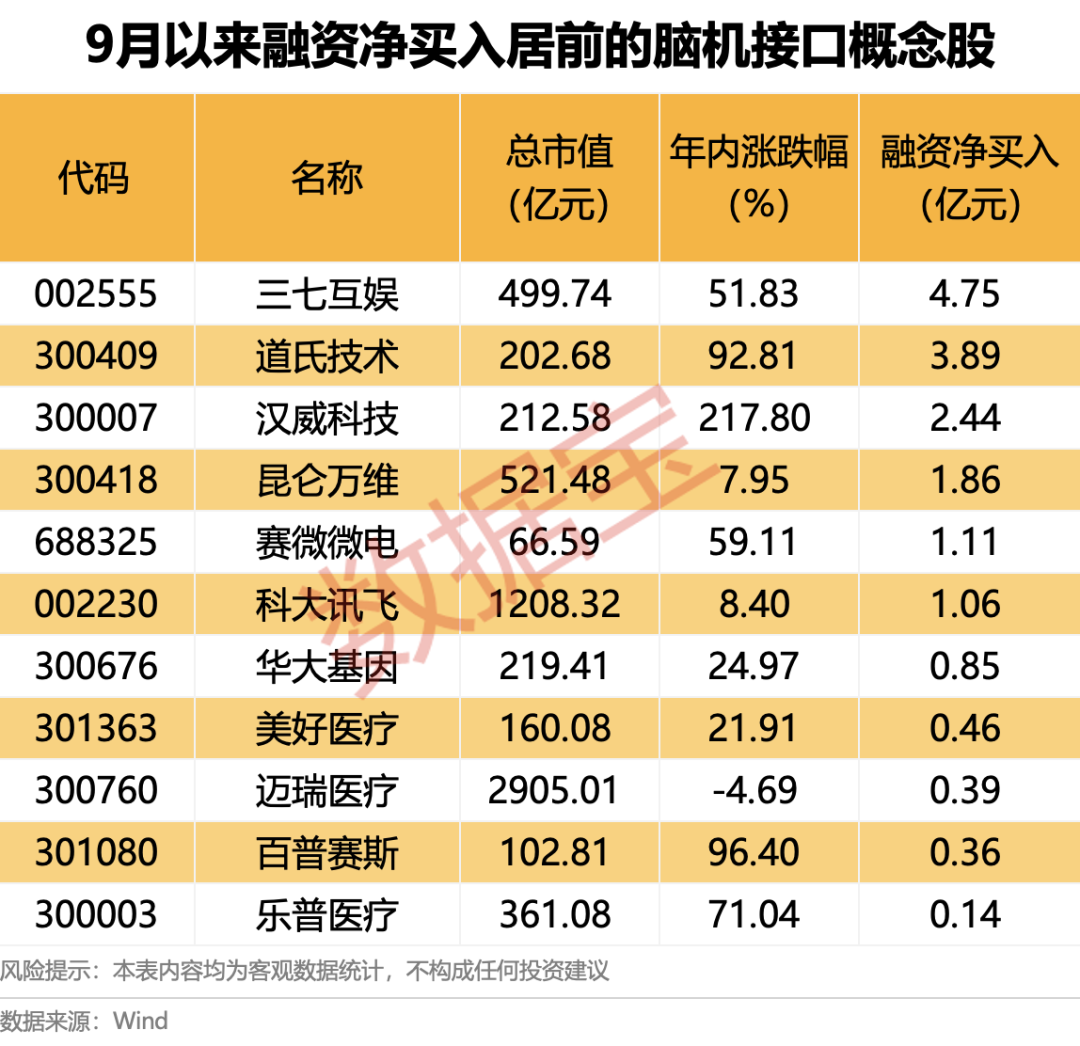
Group 1 - The first brain-computer interface (BCI) industry standard in China has been officially released, which will take effect on January 1, 2026, laying the foundation for the high-quality development of the BCI medical device industry [2] - The standard defines the terminology and definitions related to medical devices that utilize BCI technology, marking a significant step in the establishment of a regulatory framework for the industry [2] - The Chinese government aims to achieve breakthroughs in key BCI technologies by 2027, establishing an advanced technical, industrial, and standard system, with the goal of creating 2 to 3 industrial clusters and expanding new applications and business models [2] Group 2 - A-share BCI concept stocks have seen an average increase of 62.55% this year, with companies like Hanwei Technology, Innovation Medical, Sino Medical, and Rongtai Health experiencing stock price increases exceeding 170% [2] - Seven companies have received institutional research since September, with Xiangyu Medical receiving the most attention from 49 institutions, focusing on self-developed core components for BCI applications [3] - Dao's Technology has invested in leading BCI companies to enhance its capabilities in medical rehabilitation and human-computer interaction, indicating a trend of collaboration within the industry [3] Group 3 - Market funds have been actively increasing their positions in BCI concept stocks, with half of these stocks receiving net purchases from financing clients since September, and several stocks seeing net purchases exceeding 100 million yuan [4] - Notable companies with significant net purchases include Sanqi Interactive Entertainment, Dao's Technology, and Hanwei Technology, reflecting strong market interest in the BCI sector [4]


脑机接口,迎重磅利好
Zheng Quan Shi Bao· 2025-09-17 00:00
Core Insights - The first national standard for brain-computer interface (BCI) medical devices in China has been approved, laying a foundation for the high-quality development of the BCI industry, effective from January 1, 2026 [1] - The Chinese government aims to achieve breakthroughs in key BCI technologies by 2027, establishing an advanced technology, industry, and standard system, with the industry expected to grow significantly by 2030 [1] Industry Developments - The average increase in A-share BCI concept stocks this year is 62.55%, with companies like Hanwei Technology, Innovation Medical, and Sainuo Medical seeing stock prices double, exceeding 170% growth [2] - Seven companies have received institutional research since September, with Xiangyu Medical receiving the most attention from 49 institutions, focusing on self-developed core components and rapid certification of BCI products [2][3] - Dao's Technology is enhancing its capabilities in BCI by investing in leading companies and exploring collaborations in various sectors [2] Market Activity - Since September, half of the BCI concept stocks have seen net purchases from financing clients, with six stocks having net buy amounts exceeding 100 million yuan, led by companies like Sanqi Interactive Entertainment and Dao's Technology [3][4] - A table of BCI concept stocks shows significant net buy amounts and year-to-date performance, with Sanqi Interactive Entertainment at 499.74 billion yuan market cap and a 51.83% increase, while Dao's Technology has a market cap of 202.68 billion yuan and a 92.81% increase [4]
【私募调研记录】银叶投资调研翔宇医疗、领益智造
Zheng Quan Zhi Xing· 2025-09-05 00:12
Group 1: Xiangyu Medical - The brain-computer interface (BCI) shows clear prospects in rehabilitation medicine, potentially shifting patients from "passive rehabilitation" to "active rehabilitation," thereby saving labor costs and improving outcomes [1] - The company possesses an integrated advantage of "BCI technology + proprietary rehabilitation equipment," having obtained registration certificates for two EEG collection devices, with over 20 devices expected to be certified by the end of the year and nearly 100 by the end of next year [1] - More than 50 large hospitals are currently using the company's equipment, which is expected to contribute to performance in 2025 and significantly enhance performance in 2026 [1] - R&D investment has increased by 38.80% year-on-year, with 117 new patents added, totaling 1,933 patents, including several related to BCI technology [1] - The sales model starts with partnerships with top-tier hospitals to create benchmarks, gradually extending to grassroots levels and eventually entering the home market [1] Group 2: Lingyi Technology - In the first half of 2025, the company achieved revenue of 23.625 billion yuan, a year-on-year increase of 23.35%, and a net profit of 930 million yuan, up 35.94% [2] - Revenue from the I-terminal business was 20.865 billion yuan, while the automotive and low-altitude economy business generated 1.183 billion yuan, and other businesses contributed 1.577 billion yuan [2] - The company holds core technologies in humanoid robotics, including servo motors and reducers, and has secured domestic and international orders, positioning itself as one of the top three manufacturers of embodied intelligent hardware globally [2] - In the AI server sector, the company is expanding into cooling and power supply businesses, with capabilities in CDU and liquid cooling modules, and has formed a joint venture with Bohua Xinda and Boke Electronics [2] - The company has repurchased shares worth 320 million yuan and plans to distribute a cash dividend of 139 million yuan, totaling 459 million yuan in returns to investors [2]
