数字化技术

Search documents
国光股份(002749) - 002749国光股份投资者关系管理信息20260325
2026-03-25 08:22
Group 1: Company Operations and Strategy - The main factors influencing the promotion of the company's comprehensive crop solutions include agricultural product purchase prices, land transfer conditions in target market areas, and the quality and coverage of distribution channels [2]. - The company has a high demand for technical marketing personnel due to its service model, requiring increased recruitment and training efforts to cover more markets and crops [3]. - The company is actively increasing campus recruitment, having hired nearly 300 graduates from agricultural colleges in the fall of 2025, and is currently conducting spring recruitment [3]. Group 2: Personnel Management and Incentives - The company incentivizes technical marketing personnel through performance evaluations, which include daily work assessments, regional product sales evaluations, and individual product sales assessments [4]. - Core technical marketing personnel are also incentivized through equity incentives [4]. Group 3: Technology and Digitalization - The company emphasizes the importance of digital technology in enhancing agricultural service efficiency and precision, supported by a nationwide technical service team that has accumulated extensive field data [5]. Group 4: Regulatory Environment - In 2025, significant changes in pesticide industry regulations were implemented, including the "one product, one certificate" policy, which aims to standardize pesticide labeling and ensure consistency across products [6][7]. - This policy is expected to enhance product quality, maintain fair competition, and promote the sustainable development of the pesticide industry, potentially increasing market concentration in the future [7].

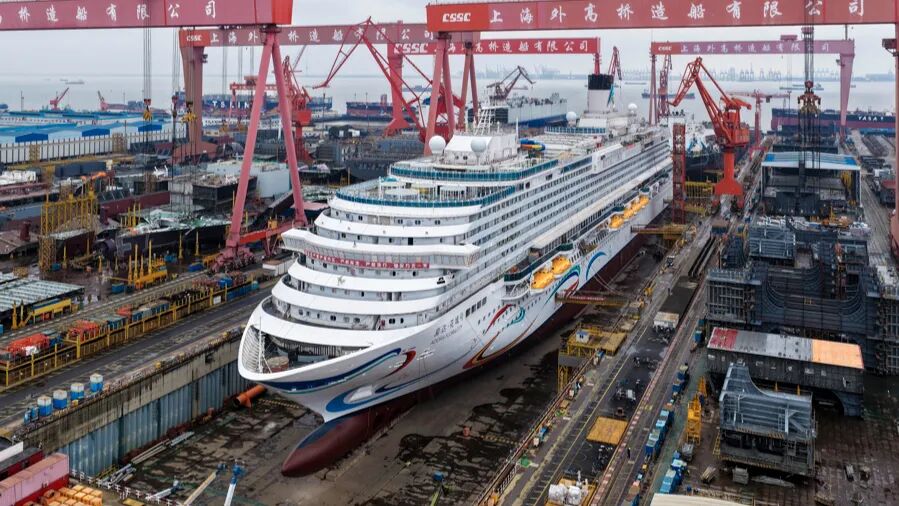
2144间客房,满载游客量5232人!第二艘国产大型邮轮爱达·花城号“定妆”,计划3月出坞
Xin Lang Cai Jing· 2026-02-28 03:43
Core Viewpoint - The second domestically produced large cruise ship, "Aida Huacheng," is nearing completion, with 94% of the project finished and 92% of construction progress achieved ahead of schedule, expected to launch in mid-March [1]. Group 1: Design and Aesthetics - The ship's design is inspired by Dunhuang murals, featuring flying celestial beings and floral patterns, covering an area of over 33,502 square meters [2]. - The painting process faced challenges due to the complexity of the coating system and the precision required for intricate designs, utilizing advanced technologies like digital twin, 3D modeling, and laser projection to achieve millimeter-level accuracy [2]. Group 2: Construction and Efficiency - The "foundation" for the ship's paint was carefully selected based on the functional differences of various ship areas, with specific paints chosen for underwater, waterline, and dry areas to enhance durability and aesthetics [5]. - Compared to the first large cruise ship, the painting work on "Aida Huacheng" has improved significantly, with a 20% increase in overall construction efficiency, and the painting tasks were completed seven days ahead of schedule [5][7]. Group 3: Technical Innovations - The shipbuilding company is enhancing production efficiency through digitalization and automation, including the use of RPA robots for time tracking and visual management, which improves resource efficiency and cost control [7]. - "Aida Huacheng" has a total tonnage of 141,900 tons, a length of 341 meters, and 2,144 cabins, accommodating up to 5,232 passengers, with advanced technology and AI features integrated into its design [7].

宝马集团:董事长齐普策随默茨访华 与宁德时代深化可持续发展合作
Zhong Guo Qi Che Bao Wang· 2026-02-27 05:55
Group 1 - BMW Group's Chairman, Zipser, accompanied German Chancellor Merz on a visit to China, highlighting the importance of strengthening Sino-German cooperation in various fields, particularly in the automotive industry [1][3] - During the visit, BMW signed a memorandum of understanding with CATL, focusing on collaborative efforts to reduce carbon footprints in electric vehicle supply chains, marking a significant step in sustainable development and technological innovation [1][3] - The partnership with CATL aims to enhance data exchange, carbon footprint accounting methodologies, and the establishment of a standardized data ecosystem to support long-term industry stability [3][4] Group 2 - Zipser emphasized that China is not only the largest automotive market globally but also a hub for technological innovation, urging companies to establish a strong local presence to remain competitive [4][5] - BMW has invested over 120 billion yuan in its Shenyang production base since 2010, positioning it as a leading center for smart manufacturing and innovation [4][5] - The upcoming launch of the new generation BMW iX3 long-wheelbase model at the Beijing Auto Show in April represents BMW's highest level of localization, tailored to meet Chinese consumer demands [5]



科技赋能“公务餐” 改革 正元智慧多项数字化实践获认可
Quan Jing Wang· 2026-02-24 01:18
Group 1 - The core viewpoint of the articles highlights Zhengyuan Wisdom's commitment to leveraging digital technology in the reform of "public meals" and the regulation of "campus meals," achieving recognition for multiple practical outcomes [1][2] - On January 22, the Zhejiang Provincial Government's work report for 2026 emphasized the strict implementation of "public meal" reforms, aiming to reduce "three public" expenses and redirect limited fiscal resources towards development and public welfare [1] - Zhengyuan Wisdom is recognized as a technological pioneer in the "public meal" reform, having established a cross-regional payment cloud platform that connects canteens across various government levels in Zhejiang Province, providing robust technical support for the reform [1] Group 2 - On January 14, a special meeting was held in Beijing to advance the reform of campus meals, with a goal to achieve full coverage of school canteens by the end of 2027 [1] - Zhengyuan Wisdom's mature smart canteen solutions align with the requirements of Beijing's campus meal reform, helping to establish a benchmark smart canteen at Pinggu Middle School, which includes comprehensive food safety management and traceability [1] - The company emphasizes its role in enhancing public service quality and safeguarding campus services through digital technology, continuously delivering replicable and scalable technical solutions and practical experiences to support high-quality development [2]
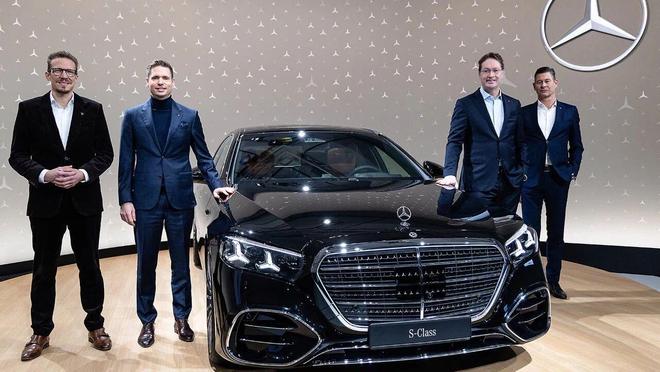
大中华区“掌门人”佟欧福首秀全球财报会 奔驰将在3年内推出超40款新车型
Zhong Guo Jing Ying Bao· 2026-02-14 11:14
Core Viewpoint - Mercedes-Benz is focusing on long-term investment and local integration in China, aiming to enhance competitiveness rather than short-term sales battles [2][7]. Financial Performance - For the fiscal year 2025, Mercedes-Benz's revenue is projected to reach €132.2 billion (approximately ¥1.084 trillion), with an adjusted EBIT of €8.2 billion (approximately ¥67.236 billion), reflecting a 40% year-on-year decline [3]. - The free cash flow from industrial operations is expected to be €5.4 billion (approximately ¥44.28 billion) in 2025, increasing to €9.2 billion (approximately ¥75.44 billion) in 2024 [3]. Investment and R&D - Capital expenditures and R&D investments are set to peak in fiscal year 2025, with R&D costs at approximately €6.055 billion (approximately ¥49.65 billion), a year-on-year increase of 8.5% [4]. - Capitalized development costs are projected at €2.394 billion (approximately ¥19.63 billion), up 19.4%, while fixed asset investments will reach approximately €5.482 billion (approximately ¥44.95 billion), a 35.7% increase [4]. Market Strategy in China - China remains a core market for Mercedes-Benz, with a focus on optimizing the value chain and improving local profitability [7][8]. - The company plans to launch over 15 new and updated models in China in 2026, marking the most intensive product rollout in its history [9]. Sales and Profitability - In 2025, Mercedes-Benz's global sales are expected to be 2.16 million units, a 10% year-on-year decline, with approximately 575,000 units sold in China, down about 19% [5][6]. - The adjusted EBIT for the passenger car segment is projected to be €4.8 billion (approximately ¥39.36 billion) in 2025, with a sales profit margin of 5.0% [6][7]. Technological Advancements - Mercedes-Benz is enhancing its local technology collaborations, including the development of an advanced driver assistance system in partnership with Momenta [8][10]. - The company aims to integrate AI and advanced digital systems across its product lineup, with nearly all models expected to feature AI smart cabins and leading driver assistance systems within the next 12 to 18 months [10].
中国区“掌门”佟欧福首秀全球财报会 奔驰将在3年内推出超40款新车型
Zhong Guo Jing Ying Bao· 2026-02-14 10:20
Core Viewpoint - Mercedes-Benz is focusing on long-term investment and local integration in China, aiming to enhance its competitiveness rather than engaging in short-term sales battles. The company plans to make China a core market for its high-end luxury and new energy vehicles [1][7]. Financial Performance - For the fiscal year 2025, Mercedes-Benz expects revenues of €132.2 billion (approximately ¥1.084 trillion), with an adjusted EBIT of €8.2 billion (approximately ¥67.236 billion), reflecting a 40% year-on-year decline. Free cash flow from industrial operations is projected at €5.4 billion (approximately ¥44.28 billion) [2]. - The company anticipates that high-end luxury vehicles will account for 15% of total passenger car sales in 2025, driven by growth in this segment and strict cost control [2]. Capital Expenditure and R&D - Capital expenditures and R&D investments are expected to peak in fiscal year 2025, with R&D costs around €6.055 billion (approximately ¥49.65 billion), an 8.5% increase year-on-year. Capitalized development costs are projected at €2.394 billion (approximately ¥19.63 billion), up 19.4% [3]. - Fixed asset investments are expected to reach approximately €5.482 billion (approximately ¥44.95 billion), a 35.7% increase [3]. Sales and Market Performance - Global sales for Mercedes-Benz in 2025 are projected at 2.16 million units, a 10% decline year-on-year, with approximately 575,000 units sold in China, reflecting a 19% drop [4]. - Despite the decline in sales, high-end luxury vehicle sales are becoming a significant contributor to cash flow, accounting for 15% of total sales [4]. Business Segments - The adjusted EBIT for the passenger car business in fiscal year 2025 is expected to be €4.8 billion (approximately ¥39.36 billion), with a sales profit margin of 5.0% [4][7]. - The light commercial vehicle segment maintained a double-digit profit margin of 10.2% in 2025, despite a decline in adjusted EBIT to €1.75 billion (approximately ¥14.35 billion) [5]. Strategic Focus in China - Mercedes-Benz emphasizes the importance of local market integration and technology collaboration in China, with plans to launch over 15 new and updated models in 2026 [8][9]. - The company has invested over ¥100 billion in China over the past decade, establishing a strong R&D presence with centers in Beijing and Shanghai [9][10]. Production and Supply Chain - Beijing Benz is the largest production base for Mercedes-Benz globally, with cumulative production exceeding 6 million units by January 2026. The local product lineup will expand from 14 to 20 models by 2027, covering both fuel and electric vehicles [10].
2026年1月物价数据点评:“反内卷”与新质生产力发展并进
BOHAI SECURITIES· 2026-02-12 10:11
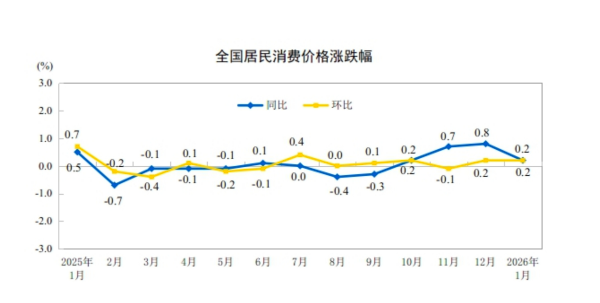
Group 1: CPI Analysis - In January 2026, the CPI increased by 0.2% year-on-year, a decrease from the previous value of 0.8%[11] - Core CPI's month-on-month growth reached its highest level in six months, driven by increased travel demand and rising international gold prices[4] - Food prices remained stable month-on-month, with fresh vegetable prices decreasing by 4.8%[14] Group 2: PPI Analysis - In January 2026, the PPI's year-on-year decline narrowed, while the month-on-month increase expanded[5] - Prices in the upstream raw materials sector turned from decline to increase due to the "anti-involution" effect, with basic chemical raw materials rising by 0.7%[25] - The month-on-month increase in production materials prices expanded, while living materials prices shifted from stable to rising[25] Group 3: Future Outlook - The CPI is expected to increase in February 2026, influenced by sufficient pig supply and potential price rises in fresh vegetables before the Spring Festival[16] - The PPI is projected to maintain a similar month-on-month increase in February, with a further narrowing of the year-on-year decline to around -1.0%[5] - Input inflation may rise in February, driven by ongoing "anti-involution" and the rapid development of new productive forces[26]
春节错月致1月CPI同比涨幅回落,反内卷带动相关领域价格改善
第一财经· 2026-02-11 06:23
Core Viewpoint - The article discusses the recent trends in China's Consumer Price Index (CPI) and Producer Price Index (PPI), highlighting a decline in CPI and an improvement in PPI due to various factors including seasonal effects and policy implementations [3][5]. CPI Analysis - In January, the CPI increased by 0.2% month-on-month and year-on-year, with a notable decrease of 0.6 percentage points compared to December [3][5]. - The decline in CPI is attributed to the high base effect from the previous year's Spring Festival and a significant drop in energy prices, which fell by 5.0%, contributing approximately 0.34 percentage points to the CPI decrease [5][7]. - Core CPI, excluding food and energy, rose by 0.8% year-on-year and 0.3% month-on-month, marking the highest increase in six months, indicating a steady recovery in consumer demand [5][7]. PPI Analysis - The PPI rose by 0.4% month-on-month in January, marking the fourth consecutive month of increase, with the growth rate expanding by 0.2 percentage points from the previous month [7][8]. - Key factors driving PPI growth include the ongoing construction of a unified national market and increased demand in certain industries, leading to price increases in sectors such as photovoltaic, power batteries, cement, and steel [7][8]. - Specific price changes include a 0.1% increase in cement and lithium-ion battery manufacturing, a 1.9% increase in photovoltaic equipment manufacturing, and a 0.5% increase in computer and communication equipment manufacturing due to rising demand for digital technologies [7][8]. Future Price Trends - The National Bureau of Statistics indicates that favorable factors for moderate price recovery are accumulating, with expectations for expanded consumer demand supported by fiscal and financial policies [8]. - The emphasis on industry self-discipline and capacity management is expected to continue, contributing to price stabilization and recovery [8].

春节错月致1月CPI同比涨幅回落,反内卷带动相关领域价格改善
Di Yi Cai Jing· 2026-02-11 04:17
Group 1: Consumer Price Index (CPI) - In January, the CPI increased by 0.2% month-on-month and year-on-year, reflecting a decrease of 0.6 percentage points compared to December [1] - The decline in CPI is attributed to the Spring Festival timing and a significant drop in energy prices, which decreased by 5.0%, impacting CPI by approximately 0.34 percentage points [3] - Core CPI, excluding food and energy, rose by 0.8% year-on-year and 0.3% month-on-month, marking the highest increase in six months, indicating a steady recovery in consumer demand [3] Group 2: Producer Price Index (PPI) - The PPI rose by 0.4% month-on-month in January, marking the fourth consecutive month of increase, with an expansion of 0.2 percentage points from the previous month [5] - Factors contributing to the PPI increase include the ongoing construction of a unified national market and rising demand in certain industries [5] - Prices in sectors such as photovoltaic, battery, cement, and steel have shown positive improvements due to the "anti-involution" policies implemented last year [5] Group 3: Industry-Specific Price Changes - In January, prices for cement manufacturing and lithium-ion battery manufacturing increased by 0.1%, continuing a four-month upward trend [5] - The price of photovoltaic equipment and components shifted from a 0.2% decrease to a 1.9% increase, while basic chemical raw materials saw a 0.7% increase [5] - The prices of non-ferrous metal mining and smelting industries rose significantly, with silver smelting prices increasing by 38.2% and copper smelting by 8.4% [6] Group 4: Future Price Trends - The National Bureau of Statistics indicates that favorable factors for moderate price recovery are accumulating, supported by policies aimed at boosting consumption and stabilizing market expectations [6] - The implementation of coordinated fiscal and financial policies is expected to gradually expand consumer demand, providing a foundation for stable price operations [6] - Emphasis on industry self-regulation and capacity management is anticipated to further enhance price recovery in key sectors [6]
四中全会精神在基层丨不到30秒,一辆汽车出口!这座港口涌动“开放密码”
Xin Hua Wang· 2026-02-04 15:31
Core Insights - The article highlights the significant growth of the automotive export sector in Shanghai, particularly through the Haitong Automotive Roll-on/Roll-off Terminal, which is set to export 1.457 million vehicles by 2025, marking a 15% year-on-year increase [1] - Shanghai's total import and export volume reached 4.51 trillion yuan, a historical high, with exports increasing by 10.8% [1] Group 1: Terminal Operations and Growth - The Haitong Terminal has expanded its operations from a single port to a collaborative model involving two ports and three locations, increasing its vehicle handling capacity from 2.06 million in 2021 to 3.98 million by 2025, representing a growth of over 90% [3] - The export volume of vehicles from the terminal is projected to rise from 900,000 in 2021 to 2.74 million by 2025 [3] Group 2: Logistics and Infrastructure - The "Two Ports and Three Locations" model integrates resources and enhances logistics efficiency, addressing challenges such as tight shipping schedules and limited space [3] - The terminal has established 12 international automotive roll-on/roll-off shipping routes, covering 295 ports in 135 countries and regions, with a projected volume of over 200,000 for "water-water transport" by 2025 [3] Group 3: Future Development and Sustainability - The terminal aims to focus on green and intelligent development during the 14th Five-Year Plan, enhancing its green energy systems and achieving near-zero carbon emissions [4] - Plans include the implementation of a unified data platform, automated handling, and AI decision-making systems to transform port operations [4]