
新能源汽车电池

Search documents
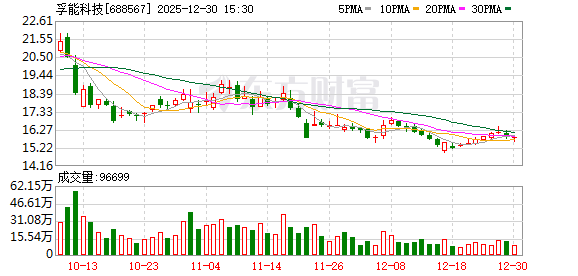
孚能科技:公司SPS产品已斩获广汽、吉利、三一重卡、一汽解放等多个客户项目定点,目前在手订单充足
Mei Ri Jing Ji Xin Wen· 2025-12-30 10:08
Core Insights - The company Fulin Technology (688567.SH) is experiencing a steady increase in production capacity utilization as its Ganzhou and Guangzhou bases ramp up production [1] - The company has secured multiple customer projects for its SPS products, including partnerships with GAC, Geely, JMC, SANY Heavy Truck, and FAW Liberation, indicating a strong order backlog [1] Group 1 - The company is in the process of ramping up production at its Ganzhou and Guangzhou facilities [1] - The production capacity utilization rate is steadily improving [1] - The company has a sufficient order backlog with multiple customer projects secured [1]


中国汽车工业协会新能源汽车电池分会筹备工作会议在京成功召开
Zheng Quan Shi Bao Wang· 2025-12-30 09:27
Group 1 - The core viewpoint of the article is the establishment of the Battery Branch by the China Association of Automobile Manufacturers (CAAM) to enhance the development of the new energy vehicle industry in China and to serve as a bridge between government, automotive, and battery enterprises [1] - The meeting held on December 29 in Beijing included participation from 28 companies, such as CATL, FAW Group, BYD, Geely, and Sunwoda, indicating strong industry support for the initiative [1] - The formation of the Battery Branch aims to consolidate and expand China's advantages in the new energy vehicle sector and promote high-quality development across automotive and battery industries [1]



福建福州闽侯县市场监管局推动新能源汽车电池产业链质量协同提升见实效
Zhong Guo Zhi Liang Xin Wen Wang· 2025-12-11 07:44
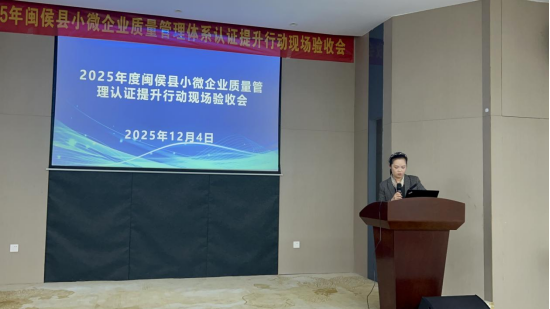
Core Insights - The acceptance meeting for the quality management system enhancement action in the new energy vehicle battery industry chain marks the conclusion of a six-month collaborative improvement project [1][3] Group 1: Project Outcomes - The enhancement action has shown significant results, with five upstream supply chain companies achieving a 100% "first-time inspection pass rate" and "delivery rate" since August 2025, leading to an estimated annual quality cost savings of over 3.6 million yuan [5] - Two chain enterprises, Fuzhou Huichuang Automation Technology Co., Ltd. and Fuzhou Jiucheng Industrial Co., Ltd., successfully passed the secondary supplier audit by CATL, transitioning from supporting companies to core partners [5] - The collaborative enhancement has transformed the Fuzhou new energy vehicle battery industry chain from a fragmented operation to a closely connected and mutually beneficial development model [5] Group 2: Systematic Changes - The quality management system established through this collaborative enhancement allows for data-driven quality control, shifting from a reactive approach to a proactive one, where data drives problem identification [5] - The introduction of a visual management system has enabled real-time display of production progress, quality indicators, and equipment status across five chain enterprises, supporting collaborative management [5][6] - The systematic transformation involved calibrating process standards and refining quality control processes, leading to a transparent management workflow [6] Group 3: Collaborative Model and Ecosystem Upgrade - The enhancement action has restructured the collaborative model of the industry chain, promoting ecological upgrades by establishing standardized quality guidelines and ensuring efficient execution across upstream and downstream enterprises [7] - A key feature of the initiative is the real-time sharing of quality data through a monitoring system, which allows for immediate alerts and adjustments to maintain quality standards [7] - The initiative has also focused on talent development, achieving a 95% certification pass rate for key positions, thereby enhancing the management capabilities of small and medium-sized enterprises [8] Group 4: Competitive Advantage and Future Outlook - The collaborative enhancement results have translated into increased market competitiveness for supply chain companies, with Fuzhou Huichuang Automation Technology Co., Ltd. and Fuzhou Jiucheng Industrial Co., Ltd. expected to generate an additional annual sales revenue of over 3.5 million yuan by entering CATL's supply chain [8] - The resilience of the regional industry chain has significantly improved, strengthening the quality foundation of the Fuzhou new energy vehicle parts industry and enhancing its risk resistance [8] - The collaborative development model established serves as a replicable and scalable experience for regional industrial upgrades, demonstrating that mutual growth among industry chain participants is essential for enhancing competitiveness [10]
全球最大、国内首条……上周末 我国多领域迎来新突破!
Yang Shi Xin Wen· 2025-11-23 22:10
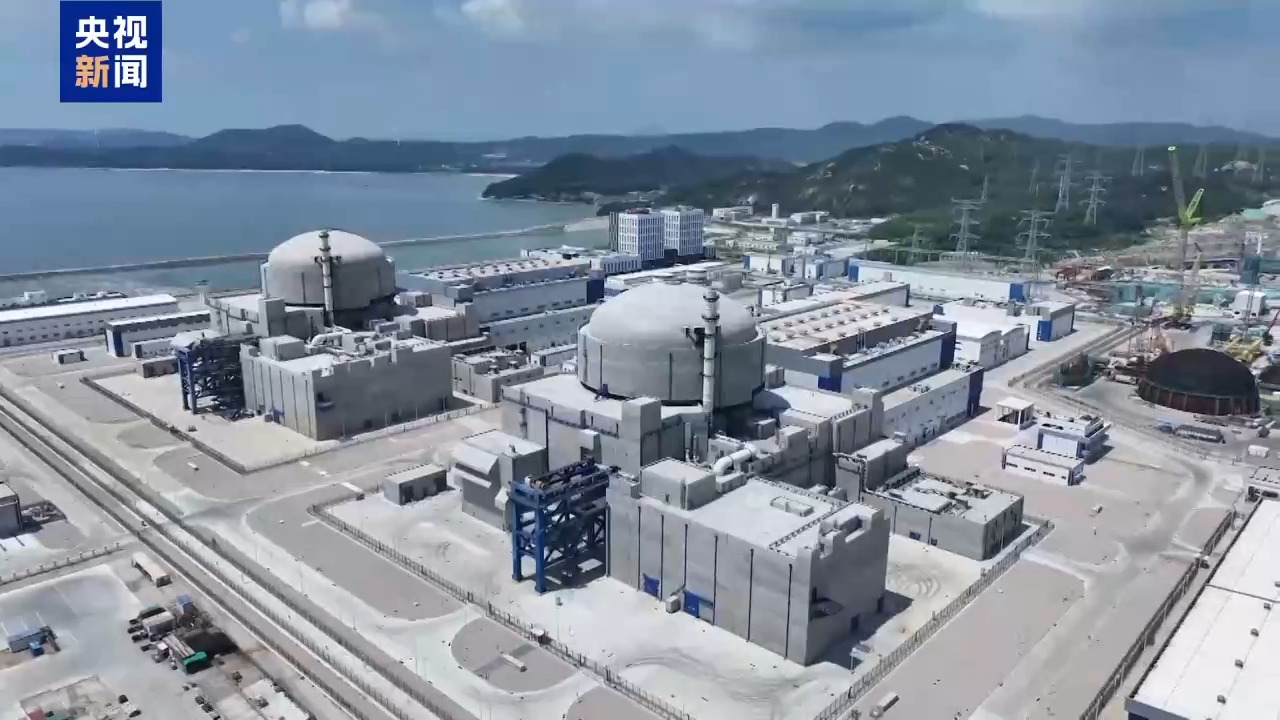
Core Insights - China's "Hualong One" nuclear power unit 2 has successfully connected to the grid, marking a significant advancement in the mass construction of this technology [2] - The completion of the "Hualong One" nuclear power base in Zhangzhou, Fujian, with six units planned, is expected to provide over 60 billion kilowatt-hours of clean energy annually, meeting 75% of the electricity demand for Xiamen and Zhangzhou [4] Clean Energy Industry - China has established the world's largest and most complete clean energy industrial chain, with a significant decrease in coal power's share from 58.7% in 2015 to 33.1% in the first half of 2025 [5] - The country's green hydrogen production capacity exceeds 150,000 tons per year, accounting for over 50% of the global total, with 540 hydrogen refueling stations built, representing 40% of the global share [8] Satellite IoT Business - The commercial trial of China's satellite IoT business has officially started, aimed at supporting the safe and healthy development of emerging industries such as commercial aerospace and low-altitude economy [9] Infrastructure Development - The completion of the world's largest span four-cable-stayed bridge, the Yanjin Changjiang Bridge, with a main span of 1860 meters, adds to China's infrastructure achievements [11] Battery Technology - China has built its first large-capacity all-solid-state battery production line, which is expected to enhance electric vehicle range from 500 kilometers to over 1000 kilometers [13] - The production line is currently undergoing small batch testing, with plans for mass production between 2027 and 2030 [15]
宁德时代第三大股东套现逾170亿元
第一财经· 2025-11-17 15:19
Core Viewpoint - Ningde Times announced a non-public transfer of shares at a price of 376.12 CNY per share, with a total of 45.6324 million shares being transferred, resulting in a cash-out of over 17.1 billion CNY for the third-largest shareholder, Huang Shilin [3][4]. Group 1: Share Transfer Details - The share transfer was fully subscribed by 16 institutional investors, with a total of 1.465 billion shares effectively subscribed, resulting in a subscription multiple of 3.2 times [3]. - The transfer price was determined based on the average stock price over the previous 20 trading days, set at no less than 70% of that average [4]. - The stock price of Ningde Times fell by 3.3% to 390.78 CNY on the day of the announcement [3]. Group 2: Market Context and Risks - Huang Shilin has previously reduced his holdings multiple times through block trades, with stock prices fluctuating between 180 CNY and 330 CNY in the first half of 2022 [4]. - Approximately 77.5 million shares from Ningde Times' H-share IPO cornerstone investors will be unlocked on November 20, 2025, with a market value exceeding 40 billion HKD [4]. - The company faces risks such as the potential restoration of the new energy vehicle purchase tax in 2026 and rising lithium carbonate prices, which surged by 63% compared to six months ago [4].

转让定价每股376.12元,宁德时代第三大股东套现逾170亿元
Di Yi Cai Jing· 2025-11-17 14:08
Core Viewpoint - Huang Shilin, the third-largest shareholder of CATL, is cashing out again, with a planned transfer of shares that will exceed 17.1 billion yuan, indicating a significant liquidity event for the company [1][2] Group 1: Share Transfer Details - CATL announced a share transfer price of 376.12 yuan per share, with a total of 45.6324 million shares to be transferred, fully subscribed by 16 institutional investors [1] - The share transfer is a non-public transfer, and the acquired shares cannot be transferred for six months post-acquisition [1] - The effective subscription amount for the transfer was 146.5 million shares, resulting in a subscription multiple of 3.2 times [1] Group 2: Market Reaction and Valuation - Following the announcement, CATL's stock price fell by 3.3%, closing at 390.78 yuan [1] - Market participants noted that the transfer price was not significantly discounted, indicating that CATL remains a high-quality asset [1] Group 3: Historical Context and Future Considerations - This is not the first time Huang Shilin has reduced his stake; he previously sold shares between January and June 2022, with prices fluctuating between 180 yuan and 330 yuan [2] - Approximately 77.5 million shares from CATL's H-share IPO cornerstone investors will be unlocked on November 20, 2025, with a market value exceeding 40 billion HKD [2] - Industry risks include the potential restoration of the new energy vehicle purchase tax in 2026 and rising lithium carbonate prices, which have surged by 63% compared to six months ago [2]
蔚来电池科技公司高层调整,李斌由董事长变更为董事
Cai Jing Wang· 2025-11-11 07:45
Core Points - NIO Battery Technology (Anhui) Co., Ltd. has undergone a change in its business registration, with Li Bin transitioning from Chairman to Director, and He Xu taking over as the legal representative, Director, and General Manager [1] - The company was established in October 2022 with a registered capital of 2 billion RMB [1] - NIO Battery Technology is wholly owned by NIO Holdings Ltd. [1]

蔚能在合肥成立电池科技公司,注册资本6000万
Jing Ji Guan Cha Wang· 2025-10-24 17:24
Core Viewpoint - Hefei WeNeng Battery Technology Co., Ltd. was established on October 20, with a registered capital of 60 million RMB, focusing on battery leasing, electric vehicle charging infrastructure operation, and recycling of used power batteries [1] Company Summary - The legal representative of Hefei WeNeng Battery Technology Co., Ltd. is Lai Xiaoming [1] - The company is wholly owned by Wuhan WeNeng Battery Assets Co., Ltd. [1] Industry Summary - The company's business scope includes battery leasing, operation of electric vehicle charging infrastructure, and recycling and secondary utilization of used power batteries [1]
浙江台州弗迪新能源动力电池项目全面投产
Xin Lang Cai Jing· 2025-10-22 05:23
Core Viewpoint - The establishment of the Taizhou Fudi New Energy Power Battery project represents a significant investment in the new energy vehicle battery sector, highlighting the strategic focus of BYD Group on lithium iron phosphate blade battery production [1] Group 1: Project Overview - The Taizhou Fudi New Energy Power Battery project covers a total area of 1,500 acres and plans to invest 8.8 billion yuan, with 8 billion yuan allocated for fixed asset investment [1] - The project aims to achieve an annual production capacity of 22 GWh of new energy vehicle power batteries upon reaching full production [1] Group 2: Industry Impact - This project is one of the largest single manufacturing investments in recent years in Taizhou, which is expected to enhance the development level of the local automotive industry chain [1] - The establishment of this strategic base is crucial for building a highland for the development of the new energy vehicle industry in Taizhou [1]
全球感知|新能源企业出海 合规经营呼唤 “中外协作”法务模式
Xin Hua Cai Jing· 2025-09-20 06:08
Core Viewpoint - Chinese new energy companies are becoming key players in driving global energy transition, but they must manage risks and ensure compliance to operate successfully in international markets [1][2]. Group 1: Regulatory Compliance - The EU's Battery and Waste Battery Regulation mandates that from February 18, 2027, batteries for light vehicles, electric vehicles, and industrial batteries over 2kWh must have a "battery passport" for market entry [1]. - Compliance with EU regulations in labor, data protection, and corporate governance is crucial for Chinese new energy firms to succeed in Europe [2]. - High compliance costs present opportunities for companies to establish systems that meet EU standards, potentially eliminating weaker competitors [2]. Group 2: Strategic Approaches - Companies can adopt differentiated competition strategies, such as shifting focus from saturated lithium battery markets to niche markets like nickel-hydride batteries [3]. - Small and medium enterprises should prioritize practical compliance by forming "China-foreign cooperation" legal teams and partnering with local law firms with established resources [3]. - A flexible "one country, one policy" strategy is recommended for market entry, adapting to local conditions and investment environments [4]. Group 3: Risk Management - Geopolitical factors, such as the U.S. Inflation Reduction Act, pose significant risks, preventing Chinese battery companies from accessing U.S. clean energy tax credits and placing them at a competitive disadvantage [3]. - Compliance should be integrated into business processes rather than being confined to legal departments, requiring dynamic databases to support regulations like the "battery passport" [4]. - Due diligence on overseas partners is essential to avoid involvement in local corruption or legal issues [4].