
新能源汽车电池

Search documents
比亚迪王传福:第二代刀片电池9分钟“充饱”
Di Yi Cai Jing· 2026-03-05 11:31
Core Viewpoint - BYD's second-generation blade battery demonstrates significant advancements in charging speed, achieving 10% to 70% charge in just 5 minutes and 10% to 97% in 9 minutes [2] Group 1 - The second-generation blade battery represents a technological breakthrough in electric vehicle battery performance [2] - The rapid charging capabilities could enhance the appeal of electric vehicles to consumers, potentially increasing market share for BYD [2]


视频|欣旺达动力与吉利系威睿电动就23.13亿元买卖合同纠纷达成一审和解!
Xin Lang Cai Jing· 2026-02-06 23:23
Group 1 - The article emphasizes the importance of using authoritative and professional analyst reports for stock trading, highlighting the role of Jin Qilin analysts in providing timely and comprehensive insights to uncover potential investment opportunities [1][1][1]


华友钴业:加码海外布局 拟在印尼投建电池产业链一体化项目
Zhong Guo Qi Che Bao Wang· 2026-02-03 09:57
Core Viewpoint - Huayou Cobalt announced a cooperation framework agreement with ANTAM and IBC to jointly invest in the electric vehicle battery supply chain in Indonesia [1] Group 1: Partnership Details - The agreement involves Huayou Cobalt's subsidiary HYD collaborating with ANTAM and IBC [1] - The three parties aim to establish an integrated battery industry project in Indonesia [1] Group 2: Project Objectives - The project intends to position Indonesia as a specialized production base for electric vehicle batteries and other battery application products [1] - Products from this initiative will target the domestic market, regional markets, and international markets [1] Group 3: Economic Impact - The collaboration is expected to contribute positively to the sustainable economic development of the local Indonesian economy [1]

浙江华友钴业股份有限公司关于子公司签订合作框架协议的公告
Shang Hai Zheng Quan Bao· 2026-01-30 22:21
Group 1 - The core point of the announcement is that Zhejiang Huayou Cobalt Co., Ltd. has signed a framework agreement with PT Aneka Tambang Tbk and PT Industri Baterai Indonesia to collaborate on an integrated battery industry project in Indonesia, focusing on the entire supply chain for electric vehicle batteries [3][7][13] - The framework agreement is a preliminary agreement that outlines the intent for cooperation, with specific investment amounts and collaboration methods still under negotiation [2][14] - The agreement aims to establish Indonesia as a production base for electric vehicle batteries and related products, contributing positively to the sustainable economic development of Indonesia [7][13] Group 2 - The agreement includes multiple sub-projects such as mining, smelting, refining, precursor and cathode materials, battery production, and battery recycling, with specific production capacities outlined for each sub-project [8][9] - The expected production capacities include 100,000 tons of nickel products from pyrometallurgical smelting, 50,000 tons from hydrometallurgical smelting, 105,000 tons of precursors, 30,000 tons of cathode materials, and 20 GWh of nickel-based batteries [9][10] - The collaboration will involve forming joint ventures for each sub-project, with specific equity structures to be determined after feasibility studies [10][11] Group 3 - The signing of the framework agreement is seen as a strategic move for the company to deepen its global layout and promote high-quality development, enhancing its core competitiveness [13] - The agreement is not expected to have a significant impact on the company's current year operating performance, with future impacts dependent on the progress of specific projects [2][13] - The agreement's effectiveness is contingent upon meeting several preconditions, and it may be terminated under certain circumstances, such as failure to meet conditions within specified timeframes [11][12]
亿纬锂能:参股公司与印尼国企签订新能源汽车电池产业链合作框架协议
Sou Hu Cai Jing· 2026-01-30 11:41
Group 1 - The core point of the article is that the company HYD, in which the company holds a 15% indirect stake, has signed a framework agreement with Indonesian state-owned enterprises ANTAM and IBC to collaborate on the entire supply chain of new energy vehicle batteries in Indonesia [1] Group 2 - The collaboration will involve the construction of an integrated battery industry chain project, which includes seven sub-projects: - Pyrometallurgy: annual production of 100,000 tons of nickel products - Hydrometallurgy: annual production of 50,000 tons of nickel products - Precursor: annual production of 105,000 tons - Cathode materials: annual production of 30,000 tons - Batteries: annual production of 20 GWh of nickel-based batteries (Phase 1: 7 GWh) - Battery recycling: annual capacity not exceeding 10,000 tons - Mining project: capacity to be determined [1] Group 3 - The agreement is a framework and intention-based agreement, with specific investment amounts and joint venture methods still under negotiation, indicating uncertainty [1] - Each sub-project requires internal approval and regulatory approval from domestic and foreign authorities, with uncertainty regarding the ability to obtain such approvals [1] - The financial impact for the current year remains uncertain [1]

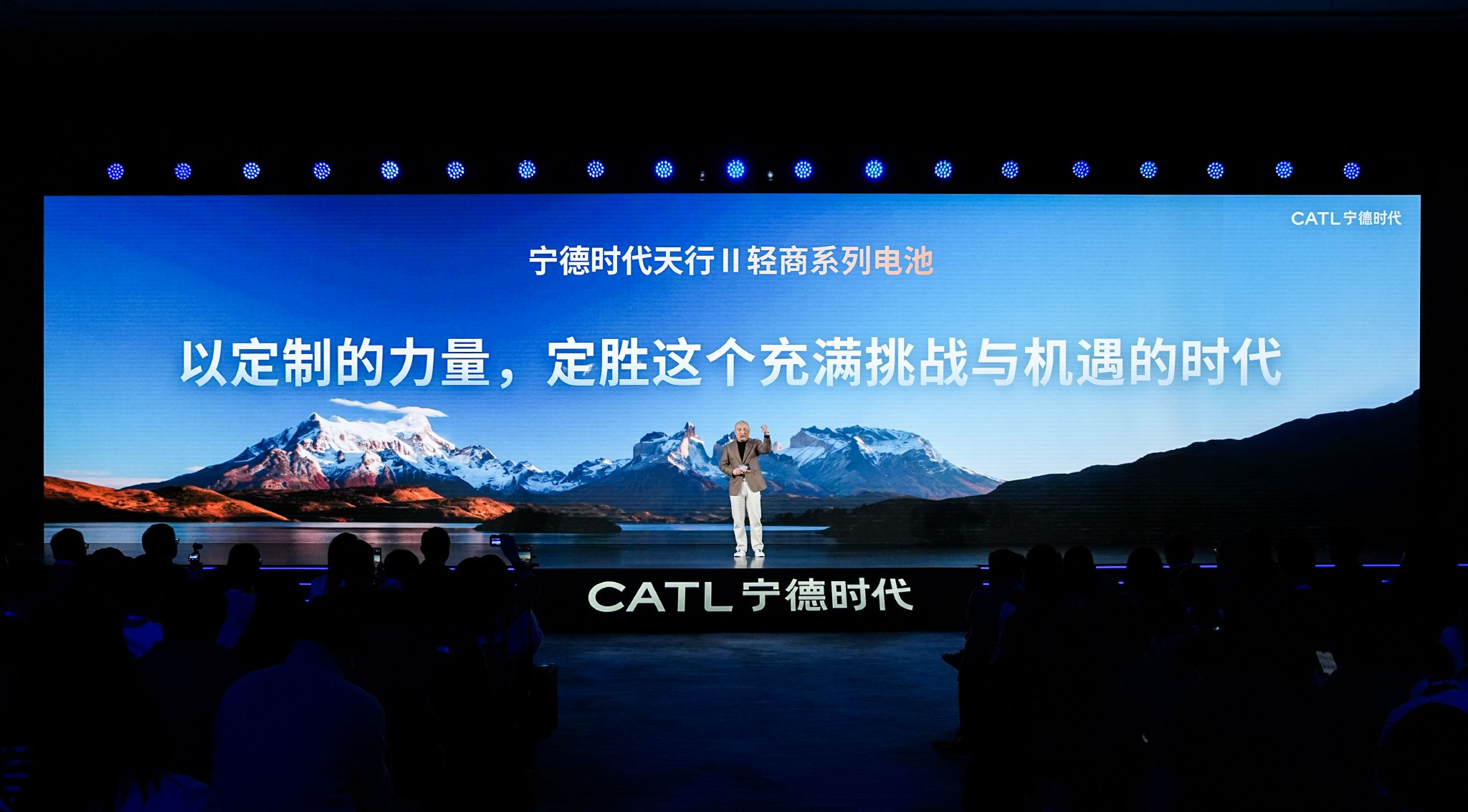
宁德时代发布天行II 轻商系列解决方案
Xin Lang Cai Jing· 2026-01-22 13:44
Core Viewpoint - CATL has launched the "Tianxing II Light Commercial All-Scenario Customization Series Solutions" and the industry's first intelligent battery management application "Battery Butler" Tianxing version, aiming to enhance the efficiency and profitability of light commercial vehicles through a comprehensive ecosystem of hardware, software, and services [1][11]. Group 1: Product Innovations - The Tianxing II series offers four customized solutions targeting various operational scenarios such as urban distribution, intercity transport, last-mile delivery, and cold-region logistics, addressing the need for more precise operational requirements in the light commercial vehicle sector [3]. - The Tianxing II Light Commercial Super Charging Version features significant upgrades in cold resistance, power output, and lifespan, allowing for a 30% reduction in charging time from 20% to 80% in just 30 minutes, and a 30% increase in discharge power [5]. - The Tianxing II Light Commercial Long-Endurance Version boasts a battery capacity of 253 kWh, enabling a range of 800 kilometers, and incorporates a unique hybrid chemical system for enhanced safety and energy density [6]. - The Tianxing II Light Commercial High-Temperature Super Charging Version supports peak charging at 4C, allowing for a 60% charge in just 18 minutes, and features technology that reduces energy consumption by 5% [8]. - The Tianxing II Light Commercial Low-Temperature Version is the first mass-produced sodium-ion battery, maintaining over 92% usable capacity at -20°C and ensuring safety under extreme conditions [9]. Group 2: Intelligent Management Solutions - The "Battery Butler" Tianxing version app provides users with real-time monitoring of battery lifecycle, maximizing profitability and management precision through transparent data visualization [11]. - The app includes proactive risk assessment features, allowing users to receive alerts on potential issues and connect directly with CATL's service network for rapid support [11]. - The app offers three charging modes tailored to different scenarios, including an emergency fast-charging mode to ensure operational continuity during peak demand periods [11]. Group 3: Market Strategy and Future Outlook - CATL is committed to redefining the ecosystem of the light commercial vehicle industry by aligning product development with user needs and real-world applications, as stated by the company's logistics division president [13]. - The company aims to continue leveraging cutting-edge technology to create sustainable, replicable solutions in collaboration with industry partners, driving the electrification of light commercial vehicles towards greater efficiency and reliability [14].

从“零件思维”到“科学归因”:新能源汽车电池安全的责任边界之问
Di Yi Cai Jing Zi Xun· 2026-01-15 05:49
Core Viewpoint - The recent discussions surrounding the safety responsibilities of power batteries have become a focal point in the industry, particularly following a global recall initiated by an international automaker in early 2026, which has drawn attention to the battery supply chain [1] Group 1: Battery Safety and Responsibility - The recall event has prompted deeper reflections on the boundaries of responsibility within the supply chain, especially as battery failures and safety incidents have become more frequent amid the rapid growth of new energy vehicle ownership [1] - A lawsuit was filed against a battery supplier, XWANDA, by a domestic automaker claiming quality issues with the supplied battery cells, seeking over 2.3 billion yuan in damages [3] - XWANDA emphasized that the battery system issues cannot be solely attributed to the battery cells without comprehensive technical validation, highlighting the complexity of the battery pack as a system [3] Group 2: Market Position and Performance - XWANDA holds a significant position in the industry, with a reported domestic new energy passenger vehicle installation volume of 21.32 GWh and a market share of 3.93% for the period from January to November 2025, marking an increase of 0.57 percentage points year-on-year, ranking fifth [3] - Globally, XWANDA's battery installation volume is projected to reach 18.8 GWh in 2024, representing a year-on-year growth of 74.1%, with a market share of 2.1%, ranking tenth [3] Group 3: Systematic Analysis of Battery Failures - Analysts suggest that the analysis of battery failures should encompass three parts: full lifecycle data tracing, systematic verification of components, and cross-comparison of performance across different battery pack designs [4] - Responsibility for failures may stem from various factors, including manufacturing defects in battery cells, unreasonable BMS overcharge protection logic, insufficient coolant flow, or excessive vibration loads at installation points [4] Group 4: Collaborative Development Model - The industry is urged to shift from a simple "parts procurement" and "post-factum accountability" approach to a "pre-collaborative development" model to ensure the safety and reliability of batteries [6] - An example of this model is XWANDA's collaboration with a new energy vehicle company, where both parties formed a joint team from the early stages of vehicle definition to ensure compatibility and consistency between battery cell characteristics and system requirements [6] Group 5: Call for Industry Standards - The recent events surrounding XWANDA have highlighted the need for a "joint responsibility sharing agreement" within the industry, advocating for a shift from post-event accountability to proactive collaboration to prevent technical risks [8] - Industry organizations are encouraged to establish standard processes for attributing technical issues, ensuring a neutral stance until third-party testing and judicial conclusions are reached, while also enhancing data collection and sharing throughout the battery lifecycle [8]
从“零件思维”到“科学归因”:新能源汽车电池安全的责任边界之问
第一财经· 2026-01-15 05:39
Core Viewpoint - The recent discussions surrounding the safety responsibilities of power batteries have become a focal point in the industry, particularly following a global recall initiated by an international car manufacturer in early 2026, which has drawn attention to the battery supply chain [1]. Group 1: Battery Safety and Responsibility - The recall incident has prompted deeper reflections on the boundaries of supply chain responsibility, especially as battery failures and safety incidents have been on the rise amid the rapid growth of new energy vehicle ownership [1]. - A domestic car manufacturer filed a lawsuit against XINWANGDA, claiming quality issues with the supplied battery cells, seeking compensation exceeding 2.3 billion yuan. XINWANGDA responded that the third-party testing and judicial processes are not yet complete, emphasizing the need for a comprehensive technical validation rather than attributing battery system issues solely to the battery cell segment [4]. - XINWANGDA's market position is significant, with a domestic new energy passenger vehicle installation volume of 21.32 GWh and a market share of 3.93% in the first 11 months of 2025, reflecting a year-on-year increase of 0.57 percentage points, ranking fifth in the industry [4]. Group 2: Systematic Analysis of Battery Failures - A systematic approach to fault attribution is necessary, which includes full lifecycle data analysis from battery cell production to failure, systematic verification of BMS control strategies, and cross-comparison of performance across different battery pack designs [5]. - The responsibility for battery failures may lie in various components, including manufacturing defects in battery cells, unreasonable BMS overcharge protection logic, insufficient coolant flow leading to localized overheating, or excessive vibration loads at installation points [5]. Group 3: Collaborative Development Models - The collaboration model between vehicle manufacturers and battery suppliers must shift from simple "parts procurement" and "post-factum accountability" to a "pre-collaborative development" model to ensure the safety and reliability of batteries [8]. - An example of this is XINWANGDA's partnership with a new energy vehicle manufacturer, where both parties formed a joint team from the early stages of vehicle definition, ensuring that battery cell characteristics align perfectly with BMS control strategies and thermal management needs [9]. Group 4: Industry Call for Responsibility Sharing - The recent public relations incident involving XINWANGDA has highlighted the need for the industry to establish a "shared responsibility agreement" and to promote the "joint venture" model to shift accountability from post-event to preemptive measures through deep collaboration [11]. - The industry should develop standard processes for attributing technical issues, ensuring that all parties maintain a neutral technical stance until third-party testing reports and judicial conclusions are released, while also enhancing the collection and sharing of battery lifecycle data to provide a reliable data foundation for scientific attribution [11].
川渝高竹新区签约落地一新能源汽车电池重大项目
Xin Hua Wang· 2026-01-14 10:13
Core Viewpoint - The signing ceremony for the Times Changan Power Battery Project took place in Chongqing, with a total investment of approximately 5.5 billion yuan, aimed at promoting the development of the new energy vehicle industry in the Chengdu-Chongqing region [1] Group 1: Project Overview - The Times Changan Power Battery Project is a joint venture established by CATL and Changan Automobile, with an investment to build a 25 GWh power battery production base covering an area of about 1,000 acres [1] - The project aims to create a "technologically advanced new energy power battery supporting base" and will introduce CATL's latest generation of battery technology, which is known for its leading-edge and iterative compatibility [1] Group 2: Economic Impact - Once completed, the project is expected to meet the power battery supply needs for Changan Automobile's brands, including Avita, Deep Blue, and Qiyuan [1] - The project is anticipated to officially commence production in the second half of 2027, with an estimated annual output value of around 10 billion yuan upon reaching full capacity [1] Group 3: Regional Development - The project is located in the Chuanju Gaozhu New District, which is positioned at the intersection of Beibei District in Chongqing and the neighboring town of Gaotan in Guang'an, Sichuan Province, and has begun to form an industrial cluster dominated by automotive parts manufacturing [1]

宁德时代首个全场景零碳示范校落地 “零碳科普校园行”拟三年扩展至5000校
Chang Jiang Shang Bao· 2026-01-09 00:00
Core Insights - The "Zero Carbon Science Popularization Campus Tour" initiated by CATL has reached a significant milestone by covering 500 schools nationwide, marking its commitment to public welfare and zero-carbon education [1][4]. Group 1: Project Overview - The project, launched in October 2024, has already reached 30 provinces, benefiting nearly 100,000 students and training 400 "zero-carbon science seed teachers" within just three months [2][5]. - The initiative aims to expand to over 1,000 schools by 2026 and achieve coverage of 5,000 schools within three years, emphasizing a model of "industry-education integration" [1][5]. Group 2: Educational Impact - The project has successfully broken geographical and resource barriers, providing quality science resources to both urban and remote schools, ensuring equal access to zero-carbon knowledge [2][3]. - A systematic zero-carbon science textbook for grades 3-6 has been developed in collaboration with Beijing Normal University, addressing the challenges faced by teachers in preparing lessons [2][3]. Group 3: Innovative Teaching Methods - The project incorporates diverse educational scenarios, including field visits to renewable energy industry bases, interactive activities, and competitions to engage students in understanding zero-carbon concepts [3][4]. - Schools have adopted various innovative practices, such as the "all-staff popularization + key cultivation" model at Bole Eight Primary School, which covers over 2,500 students [3][4]. Group 4: Local Resource Utilization - The project leverages local resources in Bole, a region rich in wind and solar energy, to create a comprehensive zero-carbon science education environment, including a zero-carbon science laboratory and interactive spaces [4][5]. - Local education authorities recognize the initiative as a bridge connecting remote areas with global cutting-edge renewable energy resources, enhancing the educational framework [4][5].