新能源汽车购置税

Search documents
瑞银:中欧电动车价格承诺机制,为中国品牌带来长短期双重利好
Jing Ji Guan Cha Wang· 2026-01-16 09:34
Core Viewpoint - The introduction of a "price commitment" mechanism instead of high tariffs is a significant benefit for Chinese automotive companies, allowing them to avoid high tariffs and potentially achieve excess profits in a competitive market environment [2] Group 1: Price Commitment Mechanism - The price commitment mechanism is a legal alternative to anti-dumping or anti-subsidy measures under the World Trade Organization framework, where companies submit applications specifying minimum prices and annual export quantities [2] - This mechanism is expected to help improve the profitability of automotive companies and assist in establishing a mid-to-high-end brand image for Chinese vehicles in international markets [2][3] Group 2: Market Trends and Export Growth - Despite a slowdown in domestic demand, the export volume of Chinese vehicles is on the rise, with an expected increase of 1.5 million units in overseas sales by 2026, surpassing the previous average annual increase of 1 million units [3] - In 2025, the export of Chinese passenger cars is projected to reach 5.739 million units, representing a year-on-year growth of 19.7%, with nearly 50% of these being new energy vehicles [3] Group 3: Market Share Projections - By 2030, the market share of Chinese automotive brands in Western Europe is anticipated to rise from 5% to 15%, driven by increased cooperation with local European companies and the expansion of local production capacity [4] - Currently, Chinese automotive brands hold a 20% share in the global market, which is expected to grow to 25% by 2030 [4] Group 4: Challenges Facing the Automotive Market - The introduction of a 5% purchase tax on new energy vehicles in 2026 is expected to negatively impact the automotive market, with significant cost increases for consumers [6] - The new subsidy policy for new vehicles will reduce the financial support for consumers, particularly affecting lower-end models priced between 80,000 to 100,000 yuan [6] - Rising raw material prices, including lithium, copper, and aluminum, are anticipated to increase automotive production costs by several thousand yuan [7] Group 5: Sales Forecasts - The wholesale segment of the domestic automotive market is projected to experience a low single-digit decline in 2026, with retail sales also expected to decline in the mid-single digits, translating to a reduction of approximately 500,000 vehicles sold [7] - For the new energy vehicle sector, sales growth is forecasted at 8%, significantly lower than the previous year's growth of over 30%, with total sales growth expected to reach around 15% when including exports [7]

毛戈平股东或套现14亿港元,用于改善个人生活和投资;万科:因到龄退休,郁亮辞职;宜家中国回应关店丨邦早报
创业邦· 2026-01-09 00:08
Group 1 - The core viewpoint of the article highlights significant developments in various companies and industries, including IPOs, leadership changes, and market strategies [2][4][15] Group 2 - Zhiyuan AI went public on January 8, 2026, with a goal to become a leading global model enterprise by 2026, as stated by its founder and chief scientist, Tang Jie [2] - Vanke A announced the resignation of Yu Liang due to retirement, effective January 8, 2026, marking a significant leadership change in the company [4] - The founder's family of Maogeping plans to reduce their stake by 3.51%, amounting to approximately 1.41 billion HKD, to improve personal finances and invest in the beauty industry [4][7] Group 3 - Xiaomi's Lei Jun announced a significant investment in R&D, committing 200 billion CNY over the next five years to enhance core technologies, including AI and chips [7] - Multiple car manufacturers are launching promotional activities to counter the impact of new electric vehicle purchase taxes, with Tesla and GAC Group leading the charge [8] - Alphabet Inc. has surpassed Apple in market capitalization, becoming the second-largest company globally, reflecting its strong position in the AI sector [8] Group 4 - JD.com established the "Chameleon Business Unit" to accelerate the commercialization of AI technologies, with new AI products set to launch soon [13] - Alibaba Cloud introduced a multimodal interaction development kit aimed at AI hardware, integrating various foundational models for diverse applications [20] - Ford plans to launch an L3 level driving assistance system by 2028, initially in a new affordable electric pickup truck [21]
美宣称:将无限期控制委石油销售丨今日财讯
Sou Hu Cai Jing· 2026-01-08 15:08
Group 1 - The People's Bank of China conducted a reverse repurchase operation of 1.1 trillion yuan with a term of 3 months (90 days) [2] - China Petroleum & Chemical Corporation (Sinopec) and China Aviation Oil Holding Company announced a restructuring, with China Aviation Oil being the largest aviation fuel service provider in Asia [2] - Domestic flight ticket prices have significantly dropped after New Year's Day, with some tickets as low as 210 yuan, equivalent to a 1.1% discount [2] Group 2 - Multiple automotive companies have announced promotional discounts in response to the impact of the new energy vehicle purchase tax, including Tesla's low-interest financing options [5] - Bawang Tea has denied rumors of plans for a Hong Kong IPO, stating that there are currently no such plans [6] - The U.S. government has announced it will indefinitely control the sale of Venezuelan oil, with revenues being deposited into U.S. controlled accounts [7] Group 3 - The memory market has entered a "super bull market" phase, surpassing historical highs from 2018, driven by increased demand from AI and server capacity [8]






10余家车企加码促销
Xin Lang Cai Jing· 2026-01-08 12:52
Core Viewpoint - Multiple automotive companies are launching aggressive discount promotions to counter the impact of the new energy vehicle purchase tax [1] Group 1: Company Promotions - Tesla China has introduced a car purchase incentive, offering a "7-year ultra-low interest" financing plan for the Model 3/Y/Y L, with a minimum down payment starting at 79,900 yuan and monthly payments as low as 1,918 yuan [1] - Tesla's Model Y L is participating in these promotions for the first time, and there is also a "5-year 0% interest" financing option available [1] - GAC Group has announced similar promotional activities for its self-owned brands, including a limited-time purchase tax guarantee policy, financial interest subsidies, and additional incentives for trade-ins or scrappage [1] Group 2: Subsidy Details - For GAC Trumpchi, the total "government-enterprise subsidy," which includes "national subsidies" and purchase rights, can reach up to 70,000 yuan [1] - Prior to these announcements, several automotive companies had already revealed promotional policies for the first month of the new year in 2026 [1] - The industry generally believes that the increased discounts at the beginning of the year are primarily aimed at offsetting the effects of the newly imposed purchase tax on new energy vehicles [1]
汽车股继续走软 北京汽车跌超3% 车企密集推降价促销活动
Zhi Tong Cai Jing· 2026-01-08 06:17
Group 1 - The automotive stocks continue to decline, with Beijing Automotive down 3.13% to HKD 1.86, Li Auto down 2.25% to HKD 65.3, GAC Group down 1.99% to HKD 3.95, and Great Wall Motors down 1.23% to HKD 14.47 [1] - Multiple car manufacturers are launching price reduction promotions to counter the impact of the new energy vehicle purchase tax, with Tesla China offering a "7-year ultra-low interest" financing plan for Model 3/Y/Y L and GAC Group announcing various incentives including tax subsidies and additional trade-in bonuses [1] Group 2 - According to Dongfang Securities, consumer sentiment is cautious due to the suspension of subsidies in some provinces and cities, leading to a decline in retail sales of passenger vehicles in November and December 2025, with limited impact on 2026 from the end-of-year surge [2] - Guotai Junan Securities believes that the reduction of subsidies for mid-to-high price range new energy vehicles and fuel vehicles will positively influence the automotive industry's profit margins and reduce internal competition [2]


元旦新能源车市:购置税正式开收,车企花式“兜底”
Di Yi Cai Jing· 2026-01-05 07:47
Core Insights - The new policy for electric vehicle (EV) purchase tax has been implemented in 2026, reducing the previous full exemption to a 50% reduction, resulting in a 5% tax rate for consumers [2][4] - The subsidy policy has shifted from fixed amounts to a percentage of the vehicle price, although the maximum subsidy remains unchanged, leading to a decrease in support for lower-priced models [2][4] Group 1: Market Reactions - Car manufacturers and dealerships are increasing promotional efforts to attract hesitant buyers, aiming for a strong start to the 2026 market [2][3] - During the New Year holiday, there was a notable increase in customer inquiries and test drives, with sales staff working in larger numbers to accommodate demand [3][5] - Many dealerships are advertising their sales achievements to draw in more customers, with some offering cash discounts and trade-in subsidies [3][4] Group 2: Specific Company Strategies - Li Auto is offering varying discounts based on model, with significant reductions for popular models like the L6 and L7 [4] - NIO and other new energy brands are implementing "bottom line" measures to offset the increased purchase tax, such as cash subsidies and price reductions [6][7] - Tesla has not introduced any compensatory measures for the new tax policy but continues to see strong customer interest and sales [7] Group 3: Sales Performance - Some dealerships reported high sales volumes during the holiday, with one store selling over 10 new energy vehicles in a single day [8][9] - Despite the increased costs from the new tax, many brands are still experiencing robust sales, indicating strong market demand [8][9] - The introduction of new models and promotional strategies is expected to maintain consumer interest and sales momentum in the coming months [10][11]



“试驾排到凌晨一两点”,20余家车企推购置税托底
第一财经· 2026-01-05 04:08
Core Viewpoint - The article discusses the impact of new policies on the electric vehicle (EV) market in China, highlighting that despite changes in tax incentives and subsidies, consumer demand remains strong, as evidenced by high foot traffic in EV showrooms during the New Year holiday [5][6]. Group 1: Market Demand - NIO's showroom in Shanghai experienced high customer traffic and test drive requests during the New Year holiday, indicating robust consumer interest in EVs [3][5]. - Other new energy vehicle brands, including Tesla and Zeekr, also reported increased customer flow, suggesting a general trend of strong demand across the sector [5]. Group 2: Policy Changes - In 2026, two significant policy changes were introduced: the reduction of the new energy vehicle purchase tax from full exemption to a 5% rate, and a shift in subsidy structure from fixed amounts to a percentage of vehicle price [5][6]. - Despite these changes, many new energy vehicle sales representatives indicated that the impact on sales was limited, as many vehicles priced above 16.67 million yuan still qualify for full subsidies [5][6]. Group 3: Manufacturer Responses - NIO has implemented a 2,000 yuan subsidy to offset the increased purchase tax for consumers, demonstrating proactive measures to maintain sales [6]. - Zeekr has introduced direct price reductions to counteract the tax changes, while other brands like Xiaomi are offering attractive financing options to enhance vehicle affordability [7]. - Over 20 manufacturers, including NIO, Li Auto, and Changan, have adopted purchase tax "safety net" policies to mitigate the impact of the new tax regulations [7]. Group 4: Tesla's Position - Tesla, despite being a leading player in the EV market, has not introduced any "safety net" policies in response to the new tax regulations, yet its sales performance remains strong, with no decline in customer traffic reported during the holiday period [7].
下周关注|12月PMI数据将公布,这些投资机会最靠谱
Di Yi Cai Jing Zi Xun· 2025-12-28 01:20
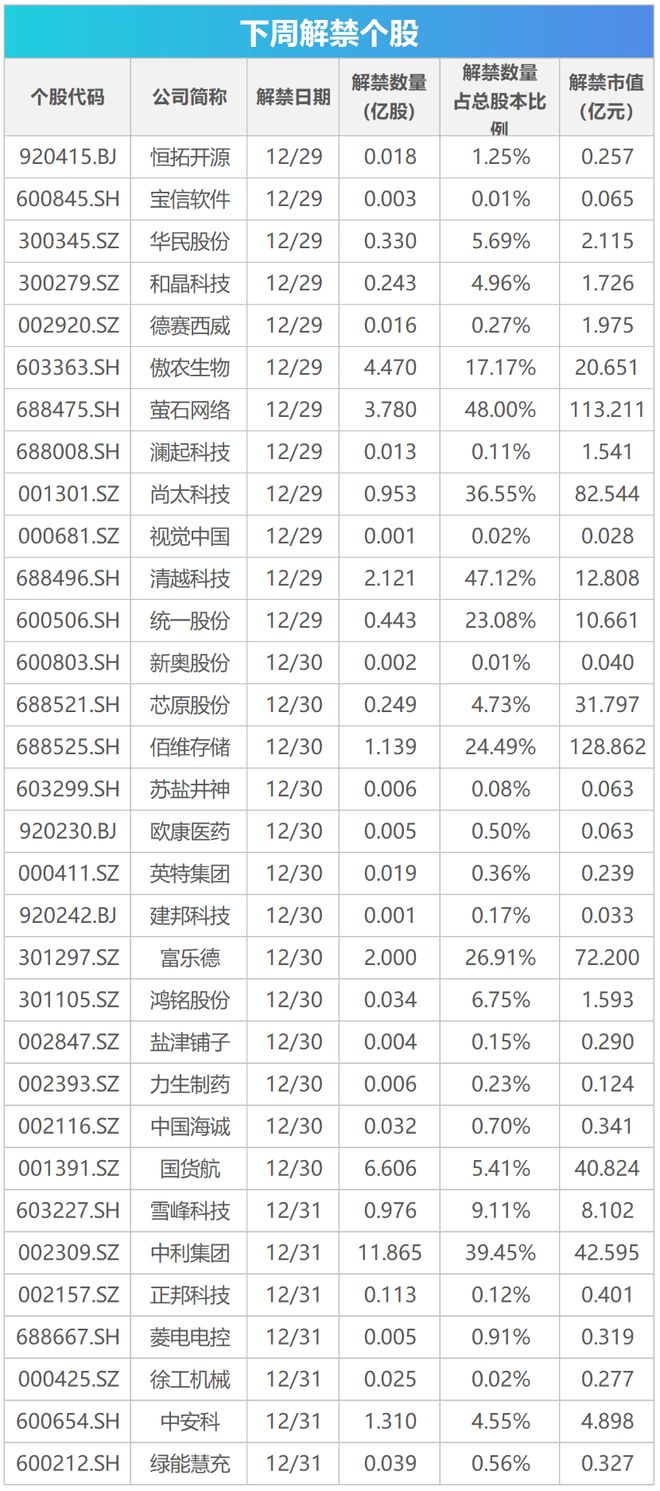
Group 1 - December PMI data will be released on December 31, with November manufacturing PMI at 49.2%, an increase of 0.2 percentage points from October, indicating improved economic conditions [1] - The non-manufacturing business activity index for November is at 49.5%, a decrease of 0.6 percentage points from October, suggesting a decline in service sector activity [1] - The comprehensive PMI output index for November stands at 49.7%, down 0.3 percentage points from October, reflecting overall economic contraction [1] Group 2 - The 2025 Shenzhen Brain Conference is being held from December 28 to 30, aiming to create a platform for industry integration and innovation [2] - The purchase tax for new energy vehicles will be adjusted to a 50% reduction starting January 1, 2026, changing the maximum tax exemption from 30,000 yuan to 15,000 yuan per vehicle [3] Group 3 - A total of 622.7 billion yuan in reverse repos will mature next week, with significant amounts maturing on specific days, including 470.1 billion yuan on Sunday [4] - Next week, the market will see a significant decrease in the scale of locked-up shares being released, with only 3 trading days due to the New Year holiday, totaling 3.683 billion shares worth approximately 58.097 billion yuan [5] Group 4 - Specific companies with significant lock-up share releases include Baiwei Storage and Yingxi Network, each with a release value exceeding 10 billion yuan [5] - Detailed data on individual companies releasing shares includes various firms with their respective release dates, quantities, and market values [6][7] Group 5 - There are no new stock issuances planned for the upcoming week, with only three trading days available [8]

年末车市未见翘尾行情:部分消费者开始观望,业内期待补贴接续
Xin Lang Cai Jing· 2025-12-25 05:27
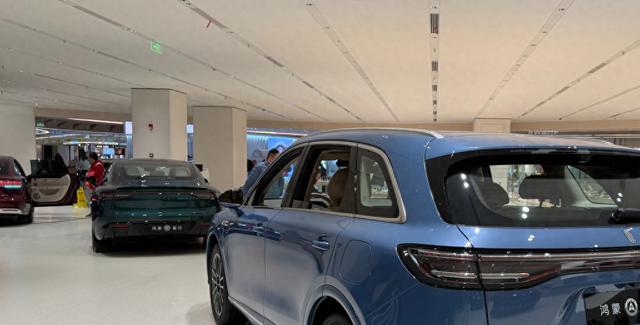
Core Insights - The automotive market is experiencing a quiet end to the year, with consumers showing a strong wait-and-see attitude, contrasting sharply with the usual year-end rush [1][9] - The decline in consumer activity is attributed to changes in policy, particularly the phasing out of various subsidies and the upcoming adjustment of the new energy vehicle purchase tax [2][12] - Industry experts predict a significant drop in December retail sales, with an expected year-on-year decrease of 12.7% [2][12] Consumer Behavior - Consumers are hesitant to make purchases, anticipating the continuation of national subsidies in the coming year and expecting new models with enhanced features at lower prices [2][12] - The automotive market saw its first year-on-year decline in sales in November, with approximately 2.701 million vehicles sold, a 4.4% decrease compared to the previous year [2][12] - Many consumers are waiting for the release of popular new models expected in 2026, contributing to the current market stagnation [2][12][13] Market Dynamics - The pace of new product iterations is accelerating, leading to increased consumer indecision as many wait for better deals [3][13] - The automotive price war has cooled, with many dealerships adopting a more subdued approach to sales, lacking the usual festive promotions [6][14] - The National Market Supervision Administration has issued guidelines to prevent irrational price competition, which has further impacted sales strategies [7][15] Future Outlook - The automotive industry is expected to face growth challenges in 2026, with many analysts predicting a mere 2% increase in sales, totaling around 28.2 million vehicles [8][16] - There is a consensus that consumer-side policies will need to be supported to stimulate demand, with expectations for new subsidy policies to be introduced [8][16][17] - The "two new" policies have shown significant effects, with over 2.5 trillion yuan in sales driven by trade-in programs, benefiting over 360 million people [8][16]
车市年终“翘尾”失败 2026年市场承压
经济观察报· 2025-12-14 04:51
Core Viewpoint - The automotive market in 2026 is expected to face significant pressure due to the cancellation of subsidies and the introduction of a 50% purchase tax on new energy vehicles [1][4][12]. Group 1: Market Conditions - The automotive market is experiencing a downturn, with retail sales in November dropping to 2.225 million units, a year-on-year decrease of 8.1% [6]. - The cancellation of local subsidies has led to a significant decline in consumer activity, with many dealerships reporting a lack of customers compared to previous years [2][7]. - The expectation of a year-end sales surge has not materialized, as dealers report disappointing sales figures [6][12]. Group 2: Subsidy Policies - The central government's vehicle replacement subsidy is set to continue until December 31, 2025, but many local subsidies have already been exhausted [2][8]. - The introduction of a 50% purchase tax on new energy vehicles starting in 2026 is anticipated to further strain the market [4][12]. - Despite the challenges, some regions are still implementing local subsidies to stimulate sales, with examples of cash incentives being offered in various cities [9][14]. Group 3: Company Responses - In response to the market conditions, many automakers are introducing their own incentives, such as covering the additional purchase tax for customers who order vehicles before the end of 2025 [3][12]. - Companies like Dongfeng Honda and Lynk & Co are optimistic about maintaining stable sales through strategic product offerings and adapting to policy changes [12][13]. - Automakers are focusing on enhancing their product value and aligning their strategies with local market demands to navigate the upcoming challenges [13][14].