
货币发行

Search documents
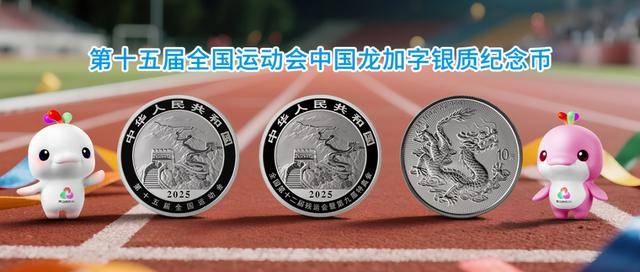
10月起陆续发售!全运会历史上首次发行贵金属纪念币
Sou Hu Cai Jing· 2025-09-28 14:53
Core Viewpoint - The issuance of the "Chinese Dragon" silver commemorative coin for the 15th National Games marks a significant event in the history of the Games, being the first precious metal coin issued in 66 years, aimed at enhancing public interest and participation in the events [3][6]. Group 1: Coin Details - The People's Bank of China officially issued a set of two silver commemorative coins on September 25, with a face value of 10 yuan each, weighing 31.104 grams and made of 99.9% pure silver [3][5]. - The maximum issuance volume is set at 500,000 coins for the National Games and 10,000 coins for the National Paralympic Games [3][6]. Group 2: Cultural Significance - The coin features the Great Wall on the front and a dragon with auspicious clouds on the back, symbolizing the resilient spirit of the Chinese people [5][6]. - The issuance aligns with the themes of "green, shared, open, and clean" in organizing the Games, promoting the integration of sports and culture [3][6]. Group 3: Distribution and Sales - Commemorative products related to the coin will be available for sale starting in October through official partners like the Industrial and Commercial Bank of China and the Bank of Communications, as well as authorized retailers [8].



公安部:何某某造假币,专坑老人!
券商中国· 2025-09-22 03:55
Core Viewpoint - The article emphasizes the serious threat posed by counterfeit currency to national financial management and the property rights of citizens, highlighting the law enforcement efforts to combat such crimes effectively [1]. Group 1: Recent Cases of Counterfeit Currency - In May 2024, a series of counterfeit currency cases involving individuals in Beijing were investigated, leading to the destruction of 8 production sites and the seizure of over 2 million yuan in counterfeit money [2]. - In December 2023, a case in Inner Mongolia resulted in the dismantling of 6 counterfeit production sites and the confiscation of over 400,000 yuan in fake currency, including denominations of 20, 50, and 100 yuan [3]. - In October 2024, a case in Hunan involved the production of counterfeit currency based on orders, with over 300,000 yuan in fake 100 yuan notes seized [4][5]. - In July 2024, a case in Sichuan led to the confiscation of 1.6529 million yuan in counterfeit 50 yuan notes, with the perpetrators using various deceptive methods to circulate the fake currency [6]. - In July 2023, a case in Yunnan resulted in the dismantling of 7 production and storage sites, with over 3.06625 million yuan in counterfeit currency seized [7][8]. Group 2: Law Enforcement Actions - Law enforcement agencies have intensified efforts to combat counterfeit currency production and distribution, successfully apprehending multiple suspects and dismantling numerous production sites across various regions [2][3][4][6][7]. - The article highlights the proactive measures taken by police to investigate and prosecute individuals involved in counterfeit currency crimes, ensuring that cases are forwarded to the judicial system for further action [5][8]. Group 3: Public Awareness - The article advises the public to remain vigilant against counterfeit currency, especially in crowded places, and to carefully verify the authenticity of banknotes during transactions [9].
第二套人民币:新中国货币体系的奠基之作
Sou Hu Cai Jing· 2025-09-18 04:26
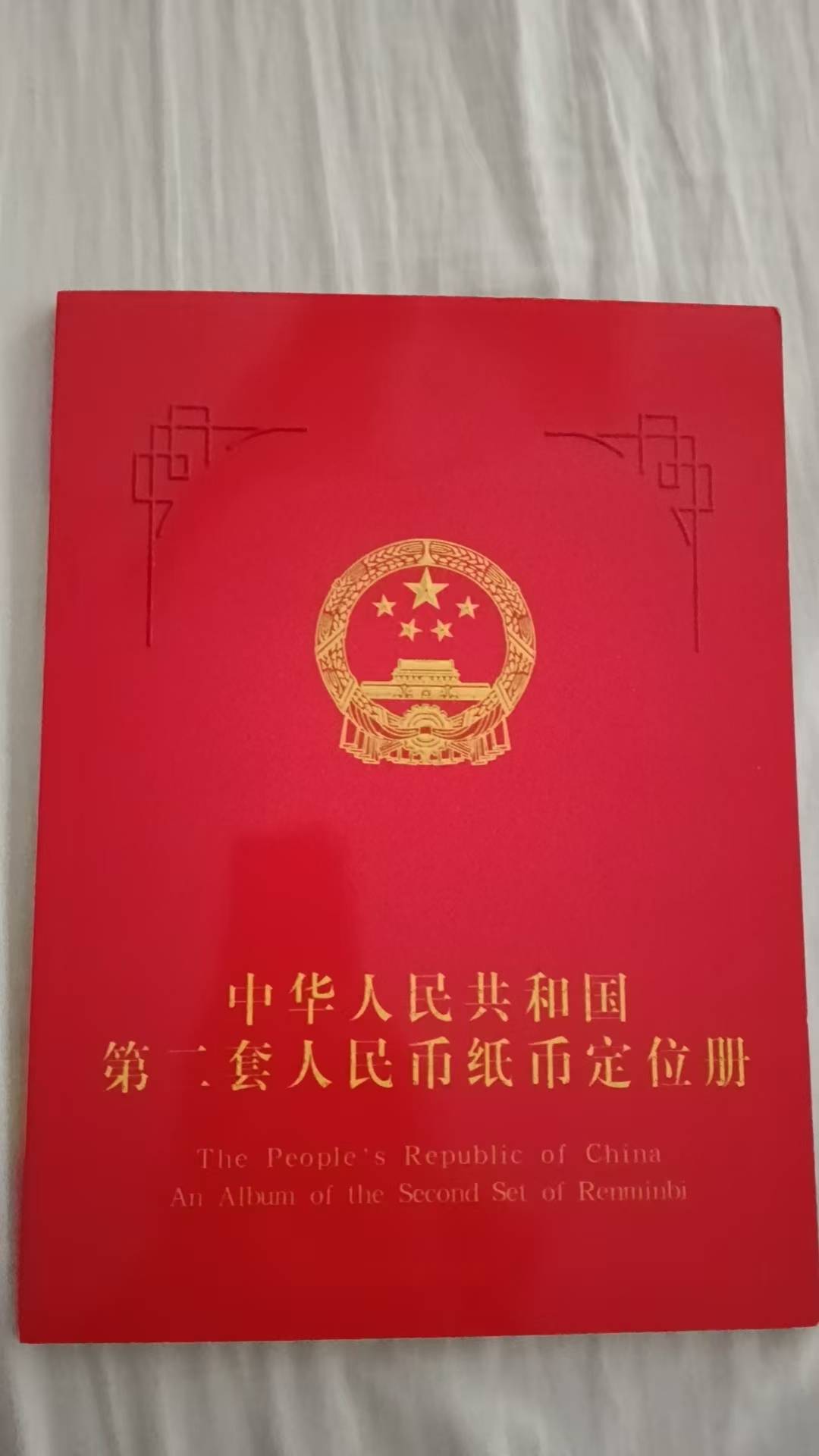
Core Points - The second set of Renminbi, issued from March 1955 to January 1999, played a crucial role in establishing a modern currency system in China, addressing the monetary chaos of the early years of the People's Republic and reflecting significant historical and cultural values [1][11]. Background of Issuance - The first set of Renminbi had limitations such as large denominations, multiple valuation units, and poor anti-counterfeiting measures, which complicated transactions and financial management [1][2]. - The need for a standardized and stable currency system arose during the 1950s as the national economy began to recover, prompting the People's Bank of China to prepare for the design and issuance of the second set of Renminbi [2]. Currency Composition - The second set of Renminbi consists of 11 denominations and 13 versions, including unique features such as the 3 yuan note, which was printed in the Soviet Union and later became rare due to its limited circulation [5]. - The introduction of coins in December 1957, made from aluminum-magnesium alloy, complemented the paper currency and improved the small transaction process [5]. Design Features - The design of the second set of Renminbi reflects the era's political and cultural significance, featuring images of laborers and symbols of national achievements, which embody the values of the time [8]. - Advanced printing techniques were employed, enhancing the anti-counterfeiting capabilities and showcasing the progress in China's currency printing technology [8]. Historical Impact - The issuance of the second set of Renminbi unified the currency system, simplified transactions, and provided a stable financial environment essential for economic recovery and development [11]. - It played a vital role in supporting industrial and agricultural development during the "First Five-Year Plan" and laid the groundwork for future currency systems in China [11]. Collectible Value - The second set of Renminbi has become a popular collectible due to its historical significance and rarity, particularly the Soviet-printed notes, which are highly valued in the market [13]. - The cultural and historical aspects of the currency make it an important artifact for studying China's history and financial evolution, with prices for complete sets continuing to rise [13].
揭秘:为何人民币历史上曾短暂出现过3元面额?
Sou Hu Cai Jing· 2025-09-12 10:22
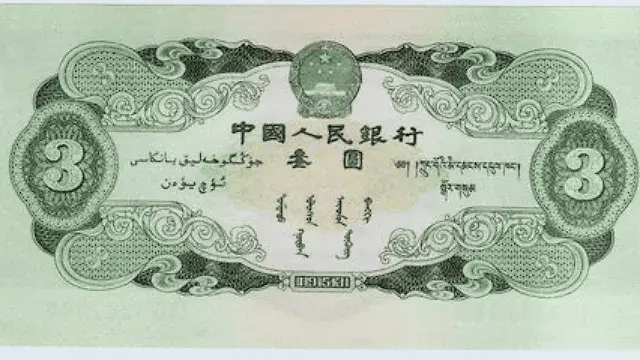
Core Insights - The article discusses the historical significance and reasoning behind the issuance of the 3 yuan banknote in China's second set of currency, highlighting its unique cultural and economic implications [3][4][6]. Group 1: Historical Context - In the early 1950s, shortly after the establishment of New China, the government began designing a new currency, leading to the introduction of the 3 yuan note as a result of a collaboration with the Soviet Union [3]. - The 3 yuan banknote was derived from a redesign of the original 10 yuan note featuring the Jinggangshan pattern, reflecting the influence of Soviet cultural traditions [3][6]. Group 2: Economic Considerations - The introduction of the 3 yuan note was partly driven by economic concerns, particularly the need to prevent counterfeiting and manage the risks associated with larger denominations [4]. - Chen Yun, a key economic figure, advised against issuing banknotes larger than 5 yuan to mitigate potential economic losses from counterfeiting by adversarial forces [4]. Group 3: Cultural Influence - The number 3 holds significant cultural importance in Russian tradition, symbolizing perfection and having deep roots in folklore and religious beliefs, which influenced the design of the Chinese currency [3][5]. - The decision to include the 3 yuan note was seen as a compromise to meet both cultural preferences and practical economic needs, although the existing 2 yuan note could have sufficed for daily transactions [6]. Group 4: International Relations Impact - The article hints at a future discussion regarding the impact of deteriorating Sino-Soviet relations on the currency system and the eventual withdrawal of the 3 yuan note from circulation [8].
“西藏自治区成立60周年”贵金属纪念币铸造工艺了解一下
Sou Hu Cai Jing· 2025-08-16 01:45
Group 1 - The People's Bank of China is set to issue a set of gold and silver commemorative coins for the 60th anniversary of the Tibet Autonomous Region on August 15, 2025, consisting of one gold coin and one silver coin, both recognized as legal tender in the People's Republic of China [1][2] - The design of the commemorative coins features a solemn and unified main pattern that reflects both the spirit of the Chinese nation and the historical heritage of Tibet, with the reverse side showcasing the celebration logo for the 60th anniversary along with decorative patterns of the Gesang flower [1] - The 8-gram round gold coin employs a mirror background and multi-layered sandblasting technique, with shallow relief craftsmanship that highlights the theme and the Gesang flower, creating a dynamic visual effect [1] Group 2 - The 30-gram round silver coin also features a mirror background and utilizes multi-layered sandblasting, incorporating advanced color-changing technology on the Gesang flower design, allowing it to display vibrant colors and flowing light effects [2] - This innovative craftsmanship enhances the visual layers of the coin, merging the cultural characteristics of Tibet with modern minting technology, symbolizing the happiness and achievements of 60 years of development in Tibet [2]
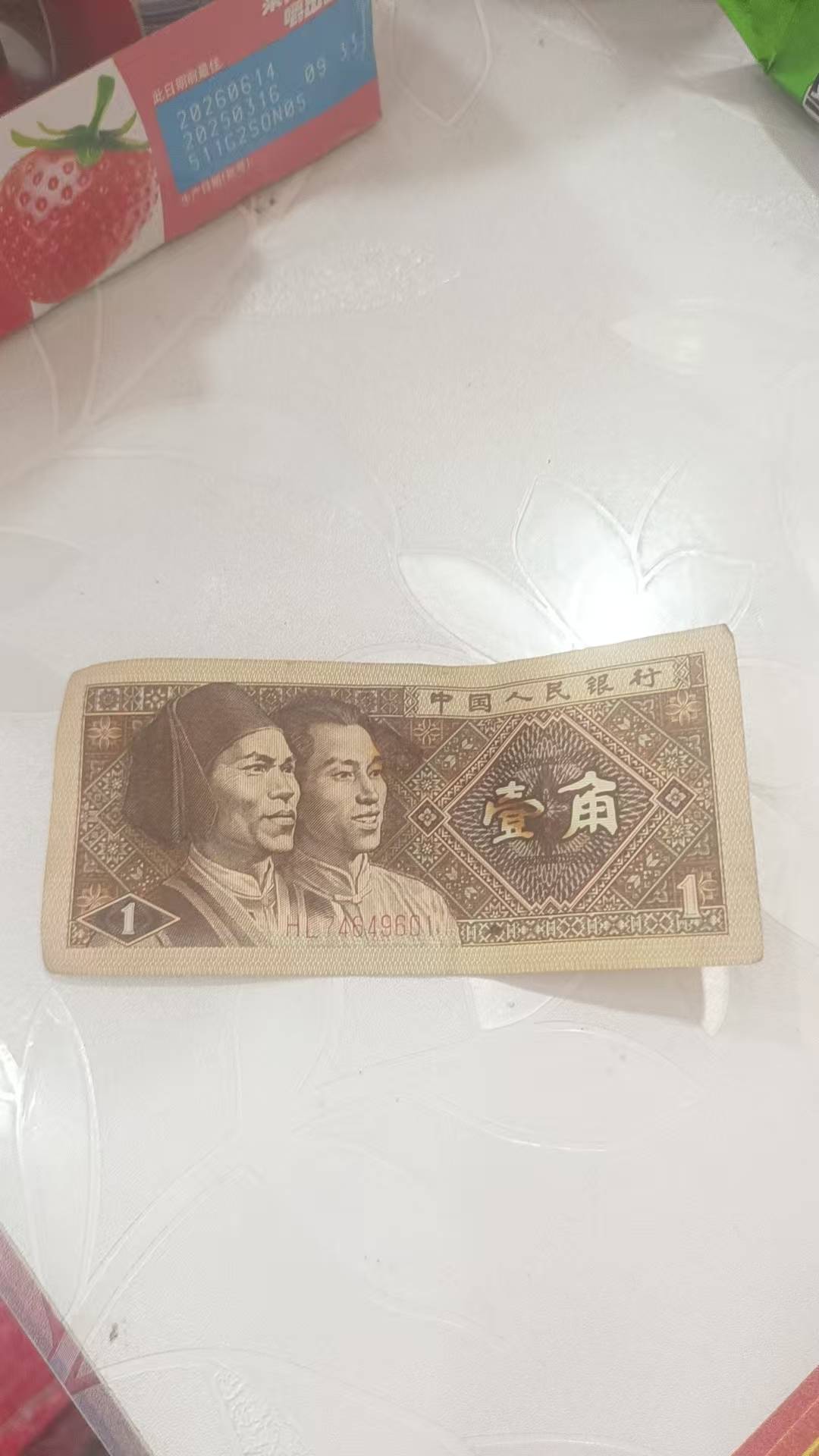
第四套人民币1角券:时代经济与文化的微缩印记
Sou Hu Cai Jing· 2025-08-13 06:28
Group 1 - The fourth set of RMB 1 jiao note plays a crucial role in daily small transactions, filling the gap in the circulation of jiao currency and facilitating retail consumption and convenience in change [1] - The design of the note incorporates traditional cultural elements and reflects the aesthetic of the era, becoming a familiar symbol of "small money" in people's lives [1] - The front of the note features the portraits of the Gaoshan and Manchu ethnic groups, symbolizing the concept of a "big family of the Chinese nation" and promoting values of equality, unity, and inclusiveness among different ethnicities [4] Group 2 - The reverse side of the note prominently displays the national emblem and includes inscriptions in various ethnic languages, showcasing the authority of RMB as the national legal currency and its respect for cultural diversity [4] - The 1 jiao note has deeply penetrated everyday life, serving as a key player in numerous small transactions and helping to activate grassroots economic vitality during the early market economy [5] - For many individuals born in the 70s and 80s, the 1 jiao note represents a significant part of their childhood memories, linking family consumption, school life, and local commerce [5] Group 3 - As the fifth set of RMB is gradually promoted, the 1 jiao note has gained new value dimensions in the collector's market, influenced by its condition, serial number, and unique features [8] - Although the circulation value of ordinary notes is relatively limited due to their large initial issuance, their historical and cultural significance makes them valuable for collectors and researchers [8] - The collection and exchange of the 1 jiao note have become a means of promoting currency culture and enhancing public interest in monetary history [8] Group 4 - The fourth set of RMB 1 jiao note reflects the evolution of multiple values, from an economic tool to a cultural symbol, encapsulating themes of national unity, economic change, and social life [9] - It serves as a tangible reference for understanding Chinese currency culture and social development, inviting further exploration and appreciation of its historical significance and value [9]
新法案正式落地!又有大的财富机遇要来了?
大胡子说房· 2025-08-09 06:03
Group 1 - The core viewpoint of the article is that the legalization of stablecoins in the U.S. represents a significant shift in monetary policy, potentially allowing for increased liquidity and a new form of currency management that could rival the Federal Reserve [1][2][40]. - The "Genius Act," which has been passed by the U.S. House of Representatives, is essentially a stablecoin bill that legitimizes stablecoins, moving them from a gray market to a regulated financial instrument [3][4]. - The article suggests that the introduction of stablecoins could double or even multiply the purchasing power of the dollar, as one dollar can generate multiple stablecoins, leading to increased liquidity in the market [6][24][28]. Group 2 - The relationship between stablecoins and U.S. Treasury bonds is emphasized, indicating that stablecoins will likely be backed by U.S. debt rather than just the dollar itself, which could change the dynamics of currency issuance [13][14][37]. - The article discusses the potential for stablecoins to act as a "shadow central bank," allowing the U.S. government to issue currency without direct reliance on the Federal Reserve, thus altering the traditional monetary policy landscape [31][39]. - It is projected that the U.S. stablecoin market could grow from $200 billion to $2 trillion in three years, leading to an estimated $4 trillion in liquidity, which could significantly impact asset prices across the board [42][44].

重磅预告!就在今天◆是否美国必须先降低关税,中国才愿意参与谈判?外交部回应!◆全红婵、盛李豪、黄雨婷拟保送
Jin Rong Shi Bao· 2025-05-06 22:58
Group 1 - The Asian Development Bank's 58th Annual Meeting was held in Milan, Italy, from May 4 to 7, with China's Finance Minister highlighting China's contribution to global economic growth at around 30% [1] - During the "May Day" holiday from May 1 to 5, 2025, the total cross-regional movement of people in China exceeded 1.465 billion, maintaining a high operational level [1] - Hainan's duty-free shopping market saw significant activity during the "May Day" holiday, with a total shopping amount of 510 million yuan and 79,100 shoppers recorded [1] - The national postal and express delivery industry in China handled over 4.8 billion packages during the "May Day" holiday, marking a year-on-year growth of over 20% [1] - The People's Bank of China is set to issue a set of cultural gold and silver commemorative coins on May 11, 2025, consisting of three gold and three silver coins [1] Group 2 - During the "May Day" holiday, UnionPay and Wanglian processed 23.439 billion payment transactions amounting to 7.64 trillion yuan, representing a year-on-year growth of 20.49% and 3.21% respectively [2] - The Shenzhen Stock Exchange has revised its guidelines for member client trading behavior management to enhance accountability and improve the evaluation mechanism [2] - The National Sports Administration has released a public notice regarding the proposed recommendations for undergraduate admission of outstanding athletes [2] - The Canadian Prime Minister arrived in the U.S. for discussions with President Trump, focusing on current trade pressures and broader economic and security relations between Canada and the U.S. [2] Group 3 - Microsoft officially ceased operations of its instant messaging software Skype on May 5, 2025, migrating its core functions to Microsoft Teams [3]
