飞行汽车制造

Search documents
小鹏“飞行汽车”量产工厂试产
Guan Cha Zhe Wang· 2025-11-03 08:48
Core Insights - Xiaopeng Huitian has successfully trial-produced the first "land aircraft carrier" flying vehicle at its mass production facility in Guangzhou, marking the world's first factory to utilize modern assembly lines for the mass production of flying vehicles [1] - The factory, covering an area of approximately 120,000 square meters, is designed for the production of the split-type flying car "land aircraft carrier," with an initial annual production capacity of 5,000 units and a planned capacity of 10,000 units [1][3] - The production line can produce one flying vehicle every 30 minutes at full capacity, integrating high-quality requirements from the aviation industry with the scalable efficiency of the automotive manufacturing process [1] Production Capacity and Supply Chain - The significance of the "10,000" production capacity is highlighted, as it is crucial for reducing costs in the supply chain, particularly for components like motors, composite materials, and battery packs, which see significant cost reductions only after reaching this production level [3] - Traditional aviation has struggled with low production volumes due to discrete manufacturing processes, but achieving the "10,000" level could enable the adoption of automotive industry practices such as modularization and automation in aviation [3] Certification Challenges - Xiaopeng Huitian faces challenges in the airworthiness certification process, with the Type Certificate (TC) application for the flying vehicle (code X3-F) accepted in March 2024, currently in the airworthiness approval stage [3] - The Production Certificate (PC) application is set to be accepted in May 2025, contingent upon the TC approval, while the Airworthiness Certificate (AC) has not yet entered substantive review [3]



全球首个飞行汽车量产工厂试产 首台“陆地航母”飞行器下线
Zhong Guo Xin Wen Wang· 2025-11-03 07:14
Core Insights - The first mass production line for flying cars, located in Guangzhou, has successfully produced its first "land carrier" flying vehicle, marking a significant milestone in the industry [2][4] - The "land carrier" flying car features a split design with a ground vehicle and flying apparatus, showcasing advanced engineering and design capabilities [2][4] Production Capacity and Technology - The factory covers an area of approximately 120,000 square meters and is designed to produce the split flying car with an annual capacity of 10,000 units, with an initial capacity of 5,000 units [4] - In full production, the assembly line can produce one flying vehicle every 30 minutes, demonstrating a significant leap in scale, efficiency, and quality consistency by integrating automotive assembly line techniques into the aviation sector [4] Environmental and Manufacturing Innovations - The factory operates under the principles of being refined, intelligent, and green, utilizing photovoltaic power generation and energy-saving equipment to significantly reduce carbon emissions [4] - The manufacturing process has achieved breakthroughs in several areas, including composite materials, power systems, connections, painting, and final assembly, merging high-quality aviation standards with the mass production efficiency of the automotive industry [4]
汇天飞行汽车首台“陆地航母”飞行器下线
Zheng Quan Ri Bao Wang· 2025-11-03 06:39
Core Insights - The successful trial production of the world's first flying car mass production line by Guangdong Huitian Aerospace Technology Co., Ltd. marks a significant milestone in the aviation industry, indicating a shift from manual production to large-scale manufacturing in China's low-altitude economy [1][2] - The factory, located in Guangzhou's Huangpu District, has a planned annual production capacity of 10,000 flying cars, with an initial capacity of 5,000 units, making it the first facility globally capable of producing flying cars at this scale [1][2] Company Overview - Huitian's factory covers approximately 120,000 square meters and is dedicated to the production of the split-type flying car known as "Land Aircraft Carrier" [1] - The production line is designed to output one flying vehicle every 30 minutes at full capacity, showcasing a significant leap in manufacturing efficiency by integrating automotive assembly line techniques into the aviation sector [1] Technological Innovations - The factory incorporates multiple industry-leading technological breakthroughs, including five core workshops focused on composite materials, power systems, connections, painting, and final assembly, which merge high-quality aviation standards with automotive manufacturing efficiency [1][2] - Huitian's innovative manufacturing process redefines the standards for flying car production, combining the scale of automotive production with the quality requirements of the aerospace industry [2] Industry Impact - The establishment of this mass production facility is expected to optimize manufacturing costs and ensure the commercial viability of flying cars, accelerating the arrival of the personal flying era [2] - The initiative aligns with China's strategic focus on low-altitude economy as a key emerging industry, contributing to the development of a world-class industrial cluster in the Guangdong-Hong Kong-Macao Greater Bay Area [2]

汇天打造西北首条低空自驾旅游线路
Zheng Quan Ri Bao Wang· 2025-10-28 11:40
Core Insights - The launch of the first low-altitude self-driving tourism route in Northwest China, themed "Flying to Dunhuang, Technology Driving the Silk Road," marks a significant development in the integration of low-altitude and cultural tourism in Dunhuang [1] - A strategic cooperation agreement was signed between Dunhuang Municipal Government and Guangdong Huitian Aerospace Technology Co., Ltd. to enhance the construction of flight camp networks and expand land-air integrated self-driving routes [1] - The "Land Carrier" flying car demonstrated its capabilities in the Northwest region, showcasing smooth takeoff and landing, stable flight posture, and convenient operation, aligning well with Dunhuang's tourism model [1] Industry Developments - The initial phase will establish five dedicated flight camps along the route, with plans for completion and trial operation by July 2026, aiming to replicate this model across the Hexi Corridor region [2] - A cooperation intention agreement and a procurement agreement for the first batch of 200 flying cars were signed with multiple companies, creating a comprehensive low-altitude cultural tourism ecosystem in Dunhuang [2] - The collaboration among various stakeholders aims to integrate resources and build a specialized support system for the flying car camp ecosystem and low-altitude self-driving tourism routes [2]
探秘低空经济 解锁市场“新蓝海”
Xin Hua Wang· 2025-08-12 06:12
Core Viewpoint - The low-altitude economy is rapidly emerging as a new market "blue ocean" driven by innovation, with significant development opportunities in various industries [1][2]. Group 1: Industry Development - The low-altitude economy encompasses a wide range of application scenarios, including logistics, smart agriculture, and intercity travel [2]. - GAC's flying car GOVE successfully completed a flight demonstration in a complex urban low-altitude environment, showcasing the rapid progress in this sector [2]. - Approximately 60% of the core components of flying cars share similarities with those of new energy vehicles, allowing for cost-sharing and leveraging advancements in the automotive industry [2]. Group 2: Investment Opportunities - The low-altitude economy in China reached a scale of 505.95 billion yuan in 2023, with a growth rate of 33.8%, and is expected to exceed one trillion yuan by 2026 [6]. - Investment focus areas include the manufacturing of flying vehicles, ground infrastructure for flight safety, and various application scenarios for flying vehicles post-launch [7][8]. - The manufacturing sector is anticipated to see early performance releases due to the critical role of flying vehicle production in enabling flight activities [7]. Group 3: Role of State-Owned Enterprises - State-owned enterprises (SOEs) have distinct competitive advantages in developing the low-altitude economy, including strong policy support, abundant resources, and high credibility [4][5]. - SOEs are expected to benefit from government policies such as tax incentives and project funding, enhancing their ability to drive rapid development in the low-altitude economy [5]. - The brand influence and public trust associated with SOEs may lead consumers to prefer their products, especially in safety-critical areas [5].

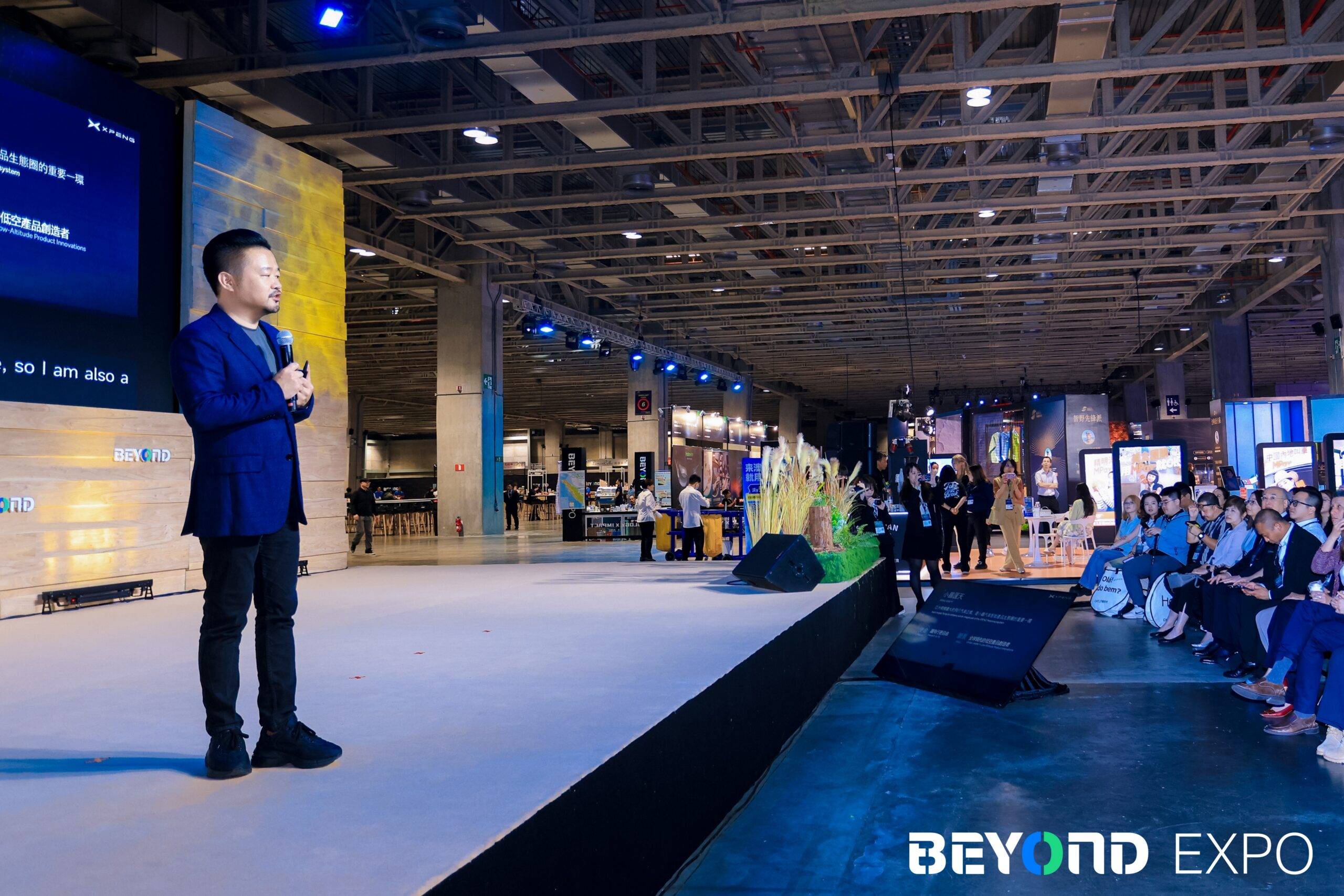
小鹏汇天王潭:量产飞行汽车将实现个人自由飞行|BEYOND Expo 2025专题报道
Sou Hu Cai Jing· 2025-06-16 14:34
Core Insights - The low-altitude economy refers to the utilization of low-altitude resources to create economic value through flight services and related products, encompassing various sectors such as aircraft manufacturing, flight services, and flight training [1] - The market size of the low-altitude economy in China is projected to exceed $1.4 trillion by 2030 and reach $4 trillion by 2035 [1] Company Overview - Xiaopeng Huitian, co-founded by Wang Tan, is recognized as Asia's largest flying car company, established in 2020, with its founders having been involved in the industry since 2013 [3] - The company has invested over $10 billion to date and employs 1,400 people, with 85% being R&D personnel [3] - Xiaopeng Huitian completed a $150 million Series A financing round last year and plans to start construction of its flying car production facility in October [3] - The company aims to invest an additional $4.5 billion in the future to ensure the safety and mass production of its first global flying car [3] Product Strategy - Xiaopeng Huitian has adopted a three-step product strategy: the first step involves scenic flights in limited scenarios, the second step focuses on intercity flights, and the third step aims for narrow flying cars [7] - The company has developed the "Land Carrier" product, its first mass-produced flying car, which allows users to switch between ground and flight modes within five minutes [7] - The Land Carrier requires only a C driver's license for ground driving and features advanced autonomous driving capabilities, including automatic takeoff, landing, and flight [7] Safety and Regulatory Compliance - The Land Carrier employs a single-rod control system that is easy to learn, with a training time of three minutes [10] - The vehicle includes multiple safety redundancy designs, such as three flight control systems and dual power sources [10] - Xiaopeng Huitian's flying vehicle (code-named X3-F) has had its production license application accepted by the Civil Aviation Administration, marking the beginning of the product's mass production system review [10] Future Developments - The company plans to establish over 200 flying camps by the end of this year, expanding to 500 by 2026 [10] - Xiaopeng Huitian has signed a strategic cooperation agreement with Dong'an Power to jointly develop the next generation of hybrid aviation systems, aiming for higher efficiency and lower costs [10] - The company envisions the dawn of a new era of personal freedom in flying [10]
我国首颗地球物理场探测业务卫星“张衡一号”02星成功发射;海南:到2027年建设基础级智能工厂100家以上丨智能制造日报
创业邦· 2025-06-15 03:08
Group 1 - China's first geophysical field detection satellite "Zhang Heng No. 1" 02 successfully launched, enhancing the country's monitoring capabilities for natural disasters [1] - GAC Aion's new flying car GOVY AirCab received nearly 1,000 pre-orders within 24 hours, with a market price not exceeding 1.68 million [2] - Hainan plans to build over 100 basic-level smart factories by 2027, aiming to establish a tiered cultivation system for smart factories [3] Group 2 - The delivery of the domestically produced high-end "green giant" methanol reserve car carrier "Anji Hongsheng" in Jiangsu can transport 9,500 vehicles, marking a significant upgrade in the shipbuilding industry towards high-end, intelligent, and green development [4]