AI编程

Search documents
科技巨头逐鹿AI编程,亚马逊入局
2 1 Shi Ji Jing Ji Bao Dao· 2025-07-15 13:41
Core Insights - Amazon's AWS has launched Kiro, an AI programming tool that emphasizes establishing a complete specification system before coding, addressing challenges like design consistency and technical debt [1][2] - Kiro's approach contrasts with traditional AI programming tools that generate code directly from user prompts, focusing instead on a structured development process [2][3] - The AI programming tool market is highly competitive, with major players like Microsoft and Google already having significant market presence [6][7] Group 1: Kiro's Features and Innovations - Kiro introduces a "Spec-Driven Development" philosophy, aiming to create higher quality and more maintainable applications by clarifying requirements and system design before coding [2][3] - The tool can automatically generate data flow diagrams and task lists, helping teams identify missing elements in their projects [3] - Kiro is designed to be used independently of the AWS ecosystem, allowing developers to log in with Google accounts, thus broadening its potential user base [3][4] Group 2: Market Dynamics and Competition - The global market for generative AI programming assistants is projected to grow from $25.9 million in 2024 to $97.9 million by 2030, indicating significant growth potential in this sector [6] - Major tech companies are actively investing in or acquiring AI programming startups, highlighting the commercial value of this market [8] - The competitive landscape includes established products like GitHub Copilot, which has evolved to offer more comprehensive development support, indicating a trend towards more intelligent and integrated AI programming tools [6][7]

Windsurf打工人被谷歌做局24小时后获收购!华人AI编程明星出手,接收250名员工
量子位· 2025-07-15 00:34
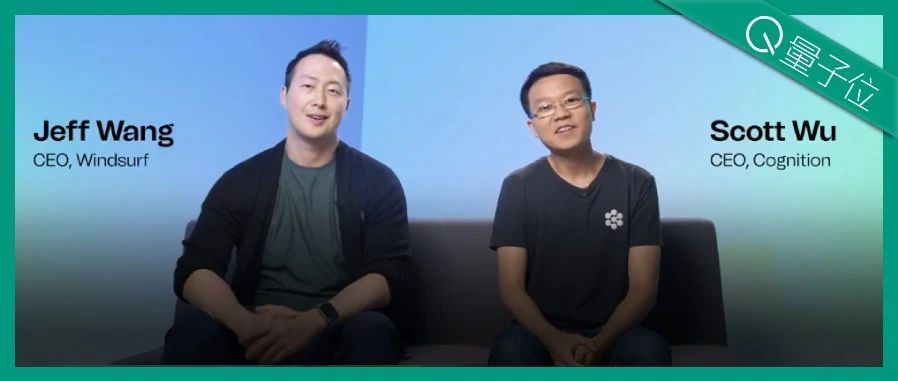
Core Viewpoint - The AI programming sector is experiencing intense competition, highlighted by the rapid acquisition of Windsurf's assets and team by Cognition after Google's talent acquisition of Windsurf's core team [1][6]. Group 1: Acquisition Dynamics - Google executed a talent acquisition of Windsurf's CEO Varun Mohan, co-founder Douglas Chen, and core R&D team for $2.4 billion, leaving the remaining 250 employees and the company itself as an "empty shell" [2][3]. - Cognition swiftly acquired all remaining assets and the team of Windsurf, including intellectual property, product lines, and all employees not taken by Google, although the specific acquisition price was not disclosed [15][16]. Group 2: Employee Treatment - Cognition's approach to employees contrasts sharply with Google's, as Cognition announced that 100% of employees would have the opportunity to participate economically in the acquisition, with immediate vesting of stock options [16][23]. - All employees will receive accelerated vesting of their stock options, allowing them to gain their rights without waiting for the usual vesting period [16]. Group 3: Market Context - The competitive landscape is underscored by significant revenue figures, with Cursor achieving an annual revenue of $500 million and GitHub Copilot surpassing $300 million, prompting major players to aggressively acquire valuable AI programming assets [20]. - The fate of Windsurf serves as a warning to AI startups that they must align with larger players or risk being acquired, as seen in previous instances involving Microsoft and Google [21]. Group 4: Future Prospects - Cognition's acquisition of Windsurf positions it to enhance its AI programming agent Devin by integrating it with Windsurf's IDE, potentially solidifying its foothold in the AI programming domain [24]. - The ongoing competition among AI giants indicates that while this acquisition has concluded, the broader battle for AI applications is just beginning, with continuous technological and commercial developments expected [29].


从亲密伙伴抢人,Cursor挖走Claude Code两位核心人物
机器之心· 2025-07-02 00:54
Core Viewpoint - The AI industry is experiencing intense talent competition, highlighted by Anysphere's recruitment of key personnel from Anthropic, which may complicate their existing partnership [1][2][3]. Group 1: Talent Acquisition - Anysphere has successfully recruited Boris Cherny and Cat Wu from Anthropic, both of whom played significant roles in the development of Claude Code [4][5]. - Boris Cherny, the lead developer of Claude Code, will take on the role of Chief Architect and Engineering Lead at Anysphere, while Cat Wu will serve as Product Lead [5]. Group 2: Financial Performance - Anthropic's annual revenue has reached $4 billion, translating to a monthly revenue of approximately $333 million, marking a nearly fourfold increase since the beginning of the year [7]. - Anysphere's annual recurring revenue has surpassed $500 million, with a monthly income of about $42 million, more than doubling from $200 million just three months prior [11]. Group 3: Market Dynamics - The competition in the AI programming market has intensified, with major players like OpenAI, Google DeepMind, and Amazon entering the space, following the successful launch of Anthropic's AI programming product, Claude Code [12]. - The recruitment of core personnel from Anthropic by Anysphere could introduce new dynamics in this rapidly evolving market [13].
Anthropic接棒OpenAI狙击谷歌,刷新AI编程模型热度
Di Yi Cai Jing· 2025-05-23 11:20
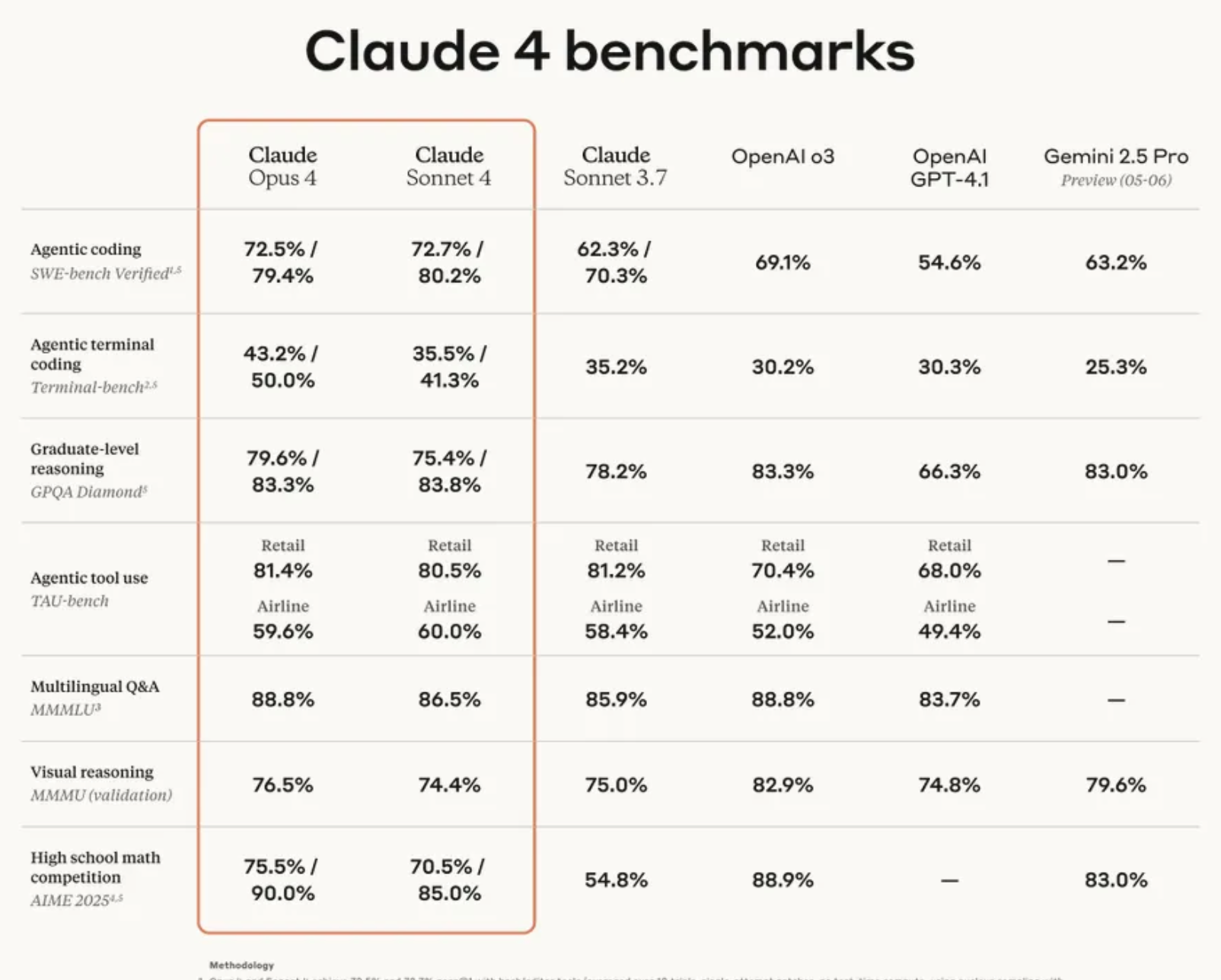
Core Insights - Anthropic has launched the Claude 4 series of large models, including Claude Opus 4 and Claude Sonnet 4, to compete with Google's Gemini 2.5 Pro in the programming domain [1][2] - The new models are designed to enhance Anthropic's influence in the programming field, focusing on enterprise-level AI solutions with a safety-first approach [2][7] Model Specifications - Claude Opus 4 is tailored for complex, long-duration tasks and intelligent workflows, while Claude Sonnet 4 is an upgraded version of Sonnet 3.7, offering improved code and reasoning capabilities [2][3] - Both models utilize a hybrid architecture for rapid responses and deeper reasoning, available on Anthropic API, Amazon Bedrock, and Google Cloud's Vertex AI [2] Performance Comparison - In various coding benchmarks, Claude Opus 4 and Sonnet 4 outperformed previous models, with Opus 4 achieving 79.4% in SWE-bench Verifiedis and 83.3% in reasoning GPQA Diamonds [6] - Claude Sonnet 4 is noted for its efficiency and speed, making it suitable for everyday development tasks, while Opus 4 is more appropriate for large, complex projects [3][4] Industry Trends - The AI programming sector is witnessing significant developments, with major companies like Apple and Tencent also entering the space, indicating a growing market for AI-driven coding solutions [7][8] - The industry is bifurcating into two main directions: Copilot assistants, which are human-led with AI support, and Agent systems, where AI autonomously executes tasks under human supervision [7][8] Future Outlook - The CEO of Anthropic emphasized a shift from merely teaching AI to code towards enabling it to independently complete projects, reflecting a broader trend in AI development [8][9] - Despite the advancements, challenges remain in technology maturity, cognitive alignment, and safety, which need to be addressed for further growth in the AI programming market [8][9]
四位00后,估值650亿
投资界· 2025-05-10 07:48
Core Viewpoint - The article highlights the rapid rise of AI startups, particularly focusing on Anysphere, which recently completed a $900 million financing round, achieving a valuation of $9 billion. This reflects the ongoing trend of young entrepreneurs, particularly those born in the 2000s, making significant strides in the AI industry [1][11]. Group 1: Company Overview - Anysphere, founded by four MIT graduates, has developed an AI programming tool called Cursor that simplifies coding by allowing users to generate code using simple everyday commands [3][4]. - The company achieved $100 million in annualized revenue within a year of launching Cursor, making it one of the fastest-growing startups in history [6]. - Cursor has gained popularity among major companies, including OpenAI and Shopify, and has undergone multiple updates and iterations to enhance its functionality [6][10]. Group 2: Investment and Growth - Anysphere's funding journey began with seed investments from OpenAI's startup fund and Neo, totaling approximately $800,000 [9]. - The company has attracted a prestigious group of investors, including a16z, Thrive Capital, and Google’s chief scientist, Jeff Dean, with its valuation increasing significantly over time [10][11]. - The latest financing round of $900 million was led by Thrive Capital, further solidifying Anysphere's position in the AI market [11]. Group 3: Industry Trends - The article notes a broader trend of young founders, particularly those born in the 2000s, emerging in the AI sector, with examples like the AI recruitment platform Mercor and the AI programming company Magic [14][15]. - The average age of founders in 2024 is reported to be the youngest in history, with a significant portion being from the 90s and 00s, indicating a shift towards younger entrepreneurs in the tech landscape [15][16]. - Investors are increasingly recognizing the potential of young innovators who possess technical skills and a fresh perspective on new technologies [16][17].