
Database

Search documents
1223支高校队伍竞逐AI原生数据库
Huan Qiu Wang Zi Xun· 2026-01-19 01:23
Group 1 - The 2025 National College Student Computer System Capability Competition and the 5th OceanBase Database Competition concluded at Beijing University of Science and Technology, attracting 1,223 teams and 2,620 students from universities across the country [1][3] - The competition aims to enhance practical skills in database core modules and AI application development, reflecting the growing demand for AI-native databases that support hybrid queries and multimodal retrieval [3][4] - The event has become a significant platform for cultivating core talent in the database field, covering over 500 universities and more than 11,000 students in five years [1][3] Group 2 - Experts emphasize the need for continuous breakthroughs in the database ecosystem, highlighting the importance of solid foundational capabilities to maintain international competitiveness [3][4] - The competition's design focuses on real industry problems, bridging the gap between theoretical knowledge and practical application, thus enhancing students' engineering practices and comprehensive skills [3][4] - The shift in database roles from data storage management to data empowerment is noted, with the future of databases being likened to a reliable and inclusive data infrastructure akin to an electrical grid [4]

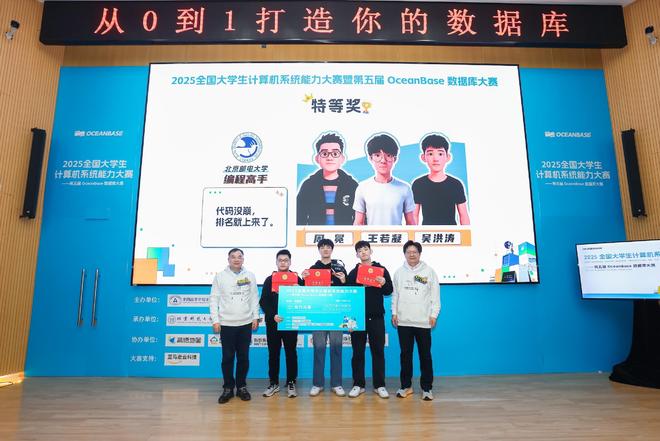
第五届OceanBase数据库大赛收官:2620名学生参赛,探索AI原生数据库
Bei Jing Shang Bao· 2026-01-18 11:19
Group 1 - The 2025 National College Student Computer System Capability Competition and the 5th OceanBase Database Competition concluded at Beijing University of Science and Technology, attracting 1,223 teams and 2,620 students from across the country [1] - The champion team from Beijing University of Posts and Telecommunications won a prize of 100,000 yuan for their performance in database kernel optimization and AI application development [1] - The OceanBase Database Competition, initiated in 2021, has become a key platform for talent cultivation in the database field, covering over 500 universities and more than 11,000 students in five years [1] Group 2 - The competition adopted a "preliminary + final" format, focusing on practical projects and requiring participants to implement core database modules and integrate vector retrieval functions [2] - The finals introduced the Apache 2.0 open-source AI native database OceanBase seekdb, with challenges addressing core demands of AI implementation, specifically "running fast" and "stability" [2] - The dean of the Computer and Communication Engineering School emphasized the need for deep integration of AI and databases to enhance performance and build efficient data infrastructure for AI training and applications [2]
裁员惹的祸?MySQL开源仓库被曝三个月无提交
3 6 Ke· 2026-01-14 12:17
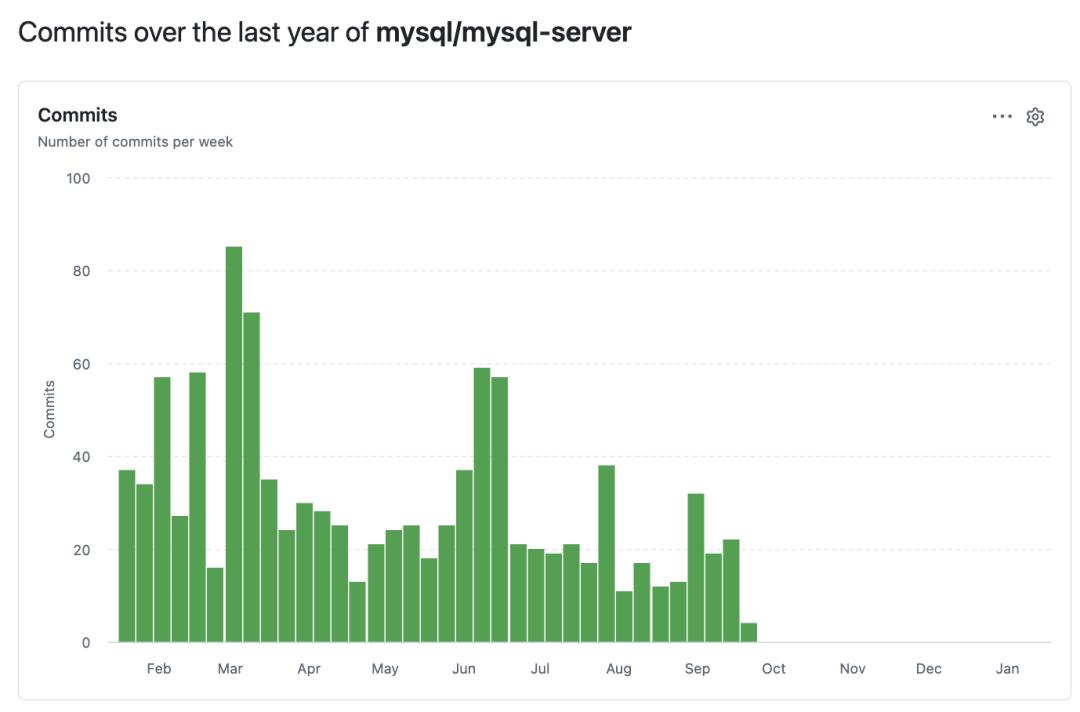
Core Viewpoint - MySQL, owned by Oracle, has not seen any code commits in its GitHub repository for over three months, raising concerns about its future as an open-source project and its current status as a genuine open-source initiative [1][4]. Development Activity - MySQL's development activity has reached a historical low, with the total number of commits in 2025 dropping to the lowest level since the project's inception in 2000-2001, significantly below pre-2019 levels [5][9]. - The official MySQL Server repository has recorded zero commits as of now [7]. Impact of Workforce Changes - A significant workforce reduction occurred in September 2025, with approximately 70 core developers laid off, which coincides with the observed stagnation in MySQL's development [9]. - This mass layoff has been linked to Oracle's strategic shift away from the community version of MySQL, leading to concerns about the project's viability [10][11]. Strategic Shift of Oracle - Oracle is increasingly focusing on proprietary product lines, including enterprise versions and cloud services, while resources for the open-source community version are being reduced [11]. - The MySQL team has been integrated into Oracle's HeatWave business unit, indicating a shift towards cloud analytics and AI capabilities rather than traditional community version development [11]. Community Concerns - Industry experts express skepticism about Oracle's commitment to maintaining MySQL as a genuine open-source project, suggesting that it has become more of a nominal open-source initiative [12][16]. - Comparisons are drawn with MariaDB, which maintains a more active and transparent development process, highlighting the perceived decline of MySQL's community engagement [15][16]. User Experience and Technical Issues - Users have reported performance declines with newer MySQL versions, and significant bugs have persisted for extended periods, raising concerns about the software's reliability [16][17]. - The lack of substantial new releases since MySQL 8.0 in 2018 has led to dissatisfaction among users, with the next major version not expected until 2024 [17]. Future Outlook - Despite MySQL's current popularity and installation base, the stagnation of its open-source project may compel enterprises to reconsider their database choices, with a noticeable trend of users migrating to MariaDB [22]. - While MySQL is unlikely to disappear immediately, continued stagnation could lead to a decline in its usage [24].

Truist Raises MongoDB (MDB) PT to $500, Highlighting Persistence in AI Valuation Gap
Yahoo Finance· 2026-01-09 11:31
Group 1 - MongoDB Inc. has been identified as a promising tech stock, with Truist raising its price target to $500 from $450 while maintaining a Buy rating, highlighting a significant valuation gap in the AI sector [1][3] - In FQ3 2026, MongoDB reported $628 million in revenue, marking a 19% year-over-year increase, driven primarily by MongoDB Atlas, which experienced a 30% revenue growth and now constitutes 75% of total revenue [2][3] - The company provided optimistic guidance for FQ4 2026, expecting revenue between $665 and $670 million, which translates to a growth rate of 21% to 22%, and for FY2026, projected revenue is between $2.434 and $2.439 billion [3]

国产数据库新突破:openGauss发布AI原生底座,实现数据零丢失
Feng Huang Wang· 2025-12-29 11:53
Group 1 - The openGauss community announced that openGauss has achieved a 35.02% market share in China's offline centralized relational database market, with the commercial version accounting for nearly 30% (29.4%) [1] - The community introduced the "1+2" strategy focusing on the development of oGRAC multi-read and multi-write databases, as well as an AI-native multimodal database foundation [1] - The newly released oGRAC multi-master database architecture offers RPO=0 (zero data loss) and RTO<10 seconds for business recovery, with TPCC performance reaching 3.5 million tpmC in a dual-node deployment [1] Group 2 - The Chinese Academy of Sciences Software Research Institute has officially joined the openGauss community council to enhance original innovation in the foundational software sector [2] - openGauss has gathered over 880 industry partners and more than 8,400 developers, with global downloads exceeding 5.5 million [2] - Huawei's Kunpeng Computing Business President reiterated Huawei's commitment to the community, stating that they will share technologies such as modular capabilities and distributed memory with the database ecosystem [2]
openGauss社区正式发布业界首个开源多写数据库oGRAC
Huan Qiu Wang Zi Xun· 2025-12-29 05:23
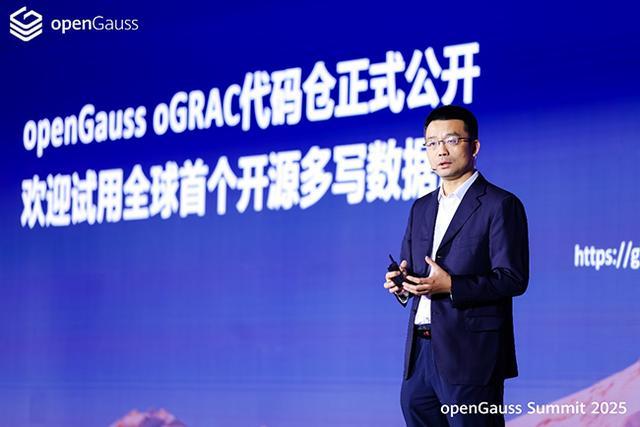
Core Insights - The openGauss community has launched the industry's first open-source multi-write database architecture, oGRAC, marking a significant milestone in the database industry [1][3]. Group 1: Technical Breakthroughs - The oGRAC architecture aims to provide high availability and linear scalability while supporting multi-node read and write operations [4]. - Key innovations include an in-place update engine that utilizes undo-based consistency snapshot pages, achieving page-level MVCC (Multi-Version Concurrency Control) and significantly enhancing high-concurrency data access [4]. - In testing environments, oGRAC has demonstrated a throughput capacity of 3.5 million tpmC, positioning it as a leader in performance within the industry [4]. Group 2: High Availability and Resource Efficiency - The database core supports incremental checkpoints and global cluster management, ensuring a recovery point objective (RPO) of 0, which guarantees zero data loss [5]. - The architecture introduces a distributed caching mechanism and distributed lock service, achieving a linear scalability ratio of 0.82, allowing for over 50% savings in computing and storage resources compared to traditional solutions [5]. Group 3: Open Source Ecosystem - The openGauss community emphasizes the importance of open source as a driving force for technological innovation and industry progress, inviting global developers and partners to collaborate on the exploration and application of multi-write databases [6]. - The release of oGRAC provides a new, open, and reliable foundational software choice for industries such as finance, telecommunications, energy, and the internet, which have stringent requirements for data consistency and high availability [6].
openGauss Summit 2025在京成功举办:共绘AI时代数据库新图景
Huan Qiu Wang· 2025-12-28 07:13
Core Insights - The openGauss Summit 2025 showcased the innovation and ecological impact of openGauss as an enterprise-level open-source database community, emphasizing its role in the evolution of open-source database technology and AI integration [1][10]. Group 1: Community and Industry Collaboration - The openGauss community has gathered over 880 industry partners and more than 8,400 global developers, with over 5.5 million downloads of its versions [6]. - The community's "1+2" strategy focuses on long-term technological evolution and aims to develop two major breakthroughs: the oGRAC multi-read and multi-write database and an AI-native multimodal database foundation [6]. - A "Supernode Database Industry-Academia-Research Alliance" has been established to promote technological innovation and results transformation in supernode architecture [9]. Group 2: Technological Advancements - The oGRAC multi-master database architecture features global consistency mechanisms and rapid failover technology, achieving RPO=0 (zero data loss) and RTO<10 seconds (business recovery in seconds) [8]. - The DataVec capability has been enhanced to support integrated AI pipelines and in-database large models, addressing issues like "model hallucination" [8]. - The first multi-database kernel engine, DataVec, has been launched, enabling precise and rapid retrieval for intelligent platforms [8]. Group 3: Market Performance - openGauss holds a 35.02% market share in China's offline centralized relational database market, with its commercial version accounting for 29.4%, making it the leading open-source database [10]. - The technology has been successfully implemented in various sectors, including finance, government, telecommunications, healthcare, manufacturing, and industrial control [10]. - Companies like Zhihu, Donghua Medical, and others shared their successful practices in performance tuning and intelligent manufacturing, validating openGauss's reliability in complex business scenarios [10].
openGauss联合13家单位成立“超节点数据库产学研联盟”
Bei Jing Shang Bao· 2025-12-27 13:02
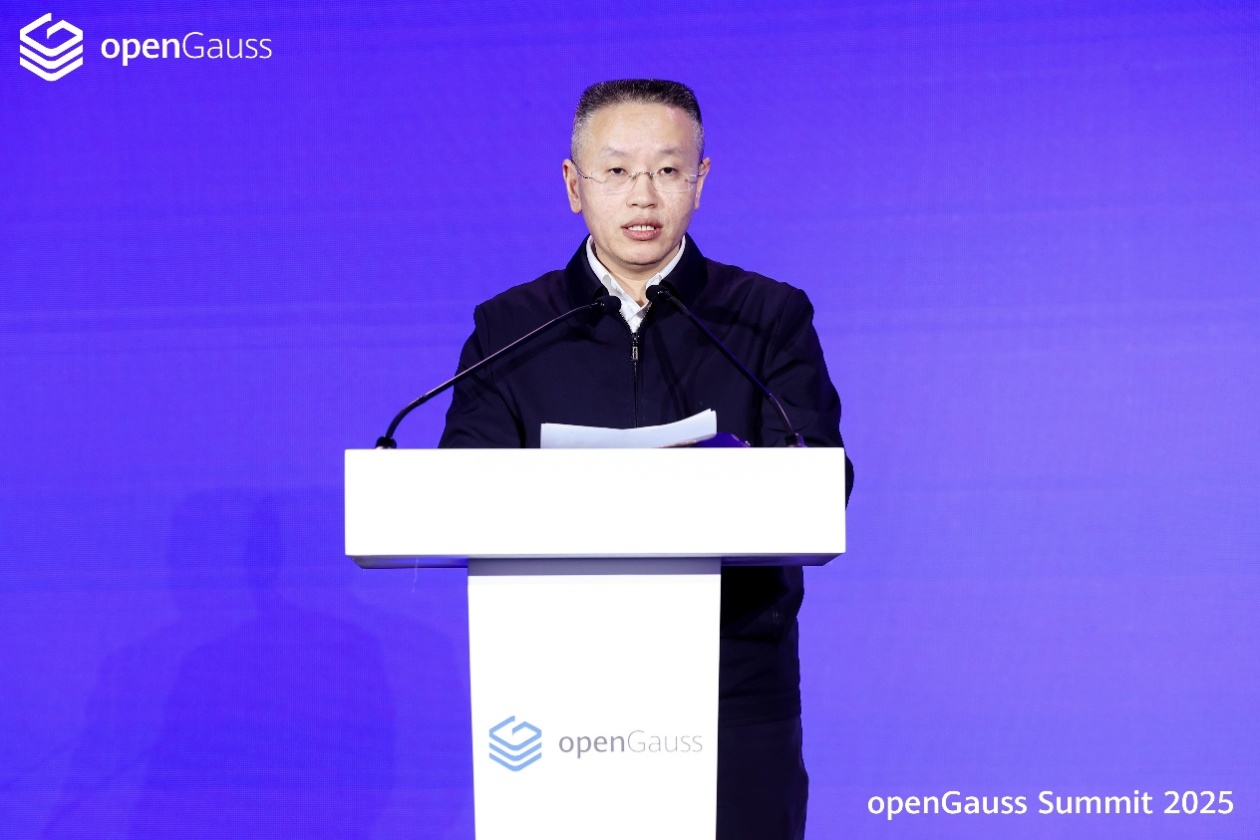
Core Viewpoint - The establishment of the "Supernode Database Industry-Academia-Research Alliance" aims to promote breakthroughs and innovations in database technology under the supernode architecture, accelerating the transformation and application of results [1] Group 1: Alliance Formation - The alliance consists of 13 entities, including operators, databases, the Chinese Academy of Sciences, and top universities [1] - The Chinese Academy of Sciences Software Research Institute has announced its membership in the openGauss community council [1] Group 2: Community Achievements - The openGauss community has gathered over 880 industry partners and more than 8,400 global developers in five years [1] - The community version has been downloaded over 5.5 million times globally [1] Group 3: Market Position - In the Chinese offline centralized relational database market, openGauss holds a market share of 35.02% [1] - The commercial version of openGauss accounts for 29.4% of the market, surpassing other open-source database versions [1] - openGauss has maintained its position as the leading database solution in the market [1] Group 4: Future Commitment - Huawei's Kunpeng Computing Business President Li Yi stated that Huawei will continue to invest firmly in the openGauss community [1]
国产数据库加速创新,产学研用共建超节点数据库联盟
Xin Lang Cai Jing· 2025-12-27 05:18
Core Insights - The article discusses the establishment of the "Supernode Database Industry-Academia-Research Alliance" at the openGauss community summit, highlighting the importance of databases in the AI era and the need for innovation in domestic database technology [1][2]. Group 1: Industry Trends - The rise of supernode technology is identified as a key trend, which integrates thousands of computing cards into a powerful computing unit for large-scale tasks [1]. - The Chinese database industry is at a critical stage of high-quality development, facing challenges such as technology route collaboration and the integration of AI [2]. Group 2: Community and Collaboration - The openGauss community has grown significantly, with over 880 industry partners and more than 8,400 global developers, achieving over 5.5 million downloads of its community version [2]. - The integration of top national research institutions, such as the Chinese Academy of Sciences, into the openGauss community is expected to enhance original innovation and exploration capabilities in the foundational software field [3]. Group 3: Market Position - openGauss has achieved a market share of 35.02% in China's offline centralized relational database market, with a commercial version adoption rate of 29.4% [2].

数智浪潮下自主创新数据库的突围
Xin Hua Ri Bao· 2025-12-24 13:04
Core Insights - The current transformation across various industries, particularly in finance, government, and energy, emphasizes the importance of autonomous innovation in key technologies, especially database technology, which is crucial for long-term competitiveness [1] - The evolution of the database industry in China has shifted from a phase of rapid growth to one of high-quality development, with a projected market size exceeding 800 billion by 2027, while the number of database vendors is expected to decrease significantly [2] - Huawei's database products, GaussDB and TaurusDB, have established a strong presence in critical business scenarios, demonstrating their capabilities through rigorous testing and achieving significant market share in China [3][4] Industry Trends - The Chinese database market is transitioning from a focus on usability to a focus on high-quality performance, with increasing technical barriers leading to a reduction in the number of vendors [2] - The competition in the domestic database market is intensifying, making continuous innovation in core technologies essential for survival and growth [2] Company Developments - Huawei's GaussDB has become the leading relational database in China, surpassing foreign competitors with a market share of 13.9%, showcasing its technical strength and strategic investment over 20 years [4] - The implementation of GaussDB at the Shandong Provincial Finance Department has resulted in significant performance improvements, including a 150% increase in key concurrent scenario performance and over five times the efficiency in complex queries [6] - TaurusDB, designed to be fully compatible with MySQL, offers a seamless migration path for businesses, achieving a performance increase of seven times compared to open-source MySQL [6] Service and Support - Huawei has established a comprehensive service ecosystem to support long-term partnerships, focusing on lifecycle service and collaboration across industry, academia, and research [7] - The evolution of Huawei's database offerings highlights the importance of technical value as the foundation for building a robust data infrastructure, balancing rapid technological advancements with long-term system stability [7]
