Displays

Search documents
LG Display (LPL) - 2025 Q3 - Earnings Call Transcript
2025-10-30 06:02
Financial Data and Key Metrics Changes - Revenue for Q3 2025 was KRW 6.957 trillion, up 25% QoQ and 2% YoY [4] - Operating profit reached KRW 431 billion, improving by over KRW 500 billion QoQ and YoY [4] - Net income was KRW 1.2 billion, influenced by foreign currency translation gains [5] - EBITDA in Q3 was KRW 1.4239 trillion with an EBITDA margin of 20% [5] - Cash and cash equivalents stood at KRW 1.555 trillion, largely unchanged QoQ [7] - Debt-to-equity ratio was 263%, down 5 percentage points QoQ [7] Business Line Data and Key Metrics Changes - Mobile and others segment revenue share reached 39%, up 11 percentage points QoQ [6] - The share of OLED products out of total revenue was 65%, up 9 percentage points QoQ [6] - TV segment revenue share was 16%, down 4 percentage points QoQ [6] - Auto segment's share was 8%, down 2 percentage points QoQ [6] Market Data and Key Metrics Changes - Area shipment fell 1% QoQ despite growing shipments of small and medium OLED products [5] - ASP per square meter was $1,365, up 29% QoQ [5] - Total area shipment is projected to grow in low single-digit percentage QoQ for Q4 [8] Company Strategy and Development Direction - The company is focusing on an OLED-centered business structure upgrade and cost innovation [10] - Plans to ensure stable operations in the small mobile business by expanding panel shipments [12] - In the IT LCD business, the focus is on reducing low-margin products while enhancing high-end segments [14] - The company aims to solidify its leadership in the premium market for large panels [15] Management's Comments on Operating Environment and Future Outlook - Management expects external uncertainties and shipment volatility to persist in Q4 [11] - The company plans to address challenges by prioritizing business efficiency initiatives [11] - OLED products revenue share is expected to remain stable QoQ in Q4 [11] Other Important Information - The company plans an additional workforce improvement program in Q4 as part of cost innovation efforts [11] - CapEx for this year is expected to be in the high KRW 1 trillion range, below last year's level [15] Q&A Session Summary Question: Sustainability of Business Performance and Market Outlook - The company believes it has the structure to sustain business performance and expects to improve profitability by another KRW 1 trillion this year [20][21] Question: Response to ASP Pressure and Future Growth Strategy - The company will maintain an optimum pricing strategy while upgrading product mix and continuing cost innovation [22] Question: Market Reception of New Models and Shipment Outlook - The company has seen positive reception for new models and expects to further expand performance from last year [27][28] Question: Strategy for Foldable Smartphone Panel Business - The company is preparing for potential market growth and maximizing supply volume for existing products [34] Question: LCD IT Business Strategy - The company is focused on maintaining profitability by downsizing low-margin models and enhancing high-end lineups [39] Question: OLED TV Business Strategy - The company projects a mid 6 million unit level of large OLED panel shipment this year, expecting growth to 7 million units next year [44]

LG Display (LPL) - 2025 Q3 - Earnings Call Transcript
2025-10-30 06:00
Financial Data and Key Metrics Changes - Revenue for Q3 2025 was KRW 6.957 trillion, up 25% QoQ and 2% YoY [3] - Operating profit reached KRW 431 billion, improving by over KRW 500 billion QoQ and YoY [3] - Net income was KRW 1.2 billion, influenced by foreign currency translation gains [4] - EBITDA in Q3 was KRW 1.4239 trillion with an EBITDA margin of 20% [4] - Cash and cash equivalents stood at KRW 1.555 trillion, largely unchanged QoQ [6] - Debt-to-equity ratio was 263%, down 5 percentage points QoQ [6] Business Line Data and Key Metrics Changes - Mobile and others segment revenue share reached 39%, up 11 percentage points QoQ [5] - The TV segment's revenue share was 16%, down 4 percentage points QoQ [5] - The auto segment's share was 8%, down 2 percentage points QoQ [5] - OLED products accounted for 65% of total revenue, up 9 percentage points QoQ [5] Market Data and Key Metrics Changes - Area shipment fell 1% QoQ despite growing shipments of small and medium OLED products [4] - ASP per square meter was $1,365, up 29% QoQ [4] - Total area shipment is projected to grow in low single-digit percentage QoQ for Q4 [7] Company Strategy and Development Direction - The company is focusing on an OLED-centric business structure and cost innovation to enhance profitability [8] - Plans to expand panel shipments in the small mobile business and invest in new technologies for IT OLED [10] - The company aims to solidify its leadership in the premium market with a diverse lineup of OLED panels [11] - Continuous growth in the auto segment is expected due to expanding in-vehicle display adoption [12] Management's Comments on Operating Environment and Future Outlook - Management acknowledges external uncertainties and competition but remains optimistic about improving profitability [9] - The company plans to address challenges by prioritizing business efficiency initiatives [9] - Expectations for stable performance in the OLED market despite macro uncertainties [17] Other Important Information - A workforce improvement program is planned for Q4, expected to have a more significant impact on financial performance than the previous quarter [9] - The company is maintaining a cautious approach to capital expenditures, focusing on future preparedness [12] Q&A Session Summary Question: Sustainability of Business Performance - Management believes the company has the structure to sustain performance and anticipates a change in the OLED market dynamics [15][16] Question: Response to ASP Pressure - The company will maintain an optimum pricing strategy while upgrading product mix and continuing cost innovation [18] Question: Market Reception of New Models - The reception for new models is generally positive, with potential adjustments in shipment plans based on market trends [21][22] Question: Strategy for Foldable Smartphone Panels - The company is preparing for potential market growth in foldable smartphones while maximizing supply volume for existing products [26][27] Question: LCD IT Business Strategy - The company is focused on high-end LCD technologies and maintaining profitability while downsizing low-margin models [30][31] Question: OLED TV Business Strategy - The company projects growth in OLED panel shipments and aims to strengthen competitiveness through cost innovation [34][35]
Here Is Why Bargain Hunters Would Love Fast-paced Mover LG Display (LPL)
ZACKS· 2025-10-15 13:50
Core Viewpoint - Momentum investing focuses on "buying high and selling higher" rather than traditional strategies of "buying low and selling high" [1] Group 1: Momentum Investing - Momentum investors often face challenges in determining the right entry point, as stocks can lose momentum when their valuations exceed future growth potential [2] - A safer approach involves investing in bargain stocks that exhibit recent price momentum, utilizing tools like the Zacks Momentum Style Score to identify these opportunities [3] Group 2: LG Display (LPL) Analysis - LG Display has shown a price increase of 2.2% over the past four weeks, indicating growing investor interest [4] - The stock has gained 47.8% over the past 12 weeks, with a beta of 1.49, suggesting it moves 49% more than the market [5] - LPL has a Momentum Score of B, indicating a favorable time to invest based on momentum [6] - The stock has a Zacks Rank 2 (Buy) due to upward revisions in earnings estimates, which attract more investors [7] - LPL is trading at a Price-to-Sales ratio of 0.27, suggesting it is undervalued at 27 cents for each dollar of sales [7] Group 3: Investment Opportunities - LPL is identified as a strong candidate for investment, with potential for further price appreciation [8] - There are additional stocks that meet the criteria of the 'Fast-Paced Momentum at a Bargain' screen, providing more investment opportunities [8] - Zacks offers over 45 Premium Screens tailored to different investing styles, aiding in stock selection [9]


维信诺8.6代OLED产线订购多款核心设备
WitsView睿智显示· 2025-10-11 09:27
Core Viewpoint - The article discusses the recent developments in the OLED industry, particularly focusing on the 8.6 generation AMOLED production lines being established by major manufacturers like Visionox, BOE, Samsung Display, and TCL Huaxing. The introduction of new technologies, especially Visionox's ViP technology, is highlighted as a significant advancement in OLED production, which could reshape the competitive landscape in the high-end display market [2][9]. Summary by Sections Visionox's 8.6 Generation AMOLED Production Line - Visionox, in collaboration with Hefei City, has established Hefei Guoxian Technology Co., Ltd. to procure core equipment for its 8.6 generation AMOLED production line, with a total investment of 55 billion RMB. This line is notable for being the world's first to use a maskless lithography process [2][9]. ViP Technology - The ViP (Visionox intelligent Pixelization) technology developed by Visionox eliminates the need for fine metal masks (FMM), allowing for more precise AMOLED pixelation and overcoming traditional OLED limitations regarding display size and resolution. However, the process still requires initial uniform deposition of organic light-emitting materials [3][5]. Competitive Landscape - Four major manufacturers are currently building 8.6 generation OLED production lines, each adopting different technological approaches. Samsung Display, BOE, and Visionox have confirmed the purchase of deposition equipment, while TCL Huaxing is focusing on printed OLED technology [4][6]. Technology Comparison - A comparison of different OLED technologies reveals that FMM OLED uses precise metal masks, while ViP OLED utilizes lithography for pixel design, and printed OLED employs inkjet printing. ViP technology is expected to achieve higher pixel density (1700-2000 PPI) compared to traditional methods [5][6]. Production Progress - As of 2025, major manufacturers are accelerating the construction of their 8.6 generation OLED lines. Samsung Display's A6 line is expected to begin mass production in the second or third quarter of 2026, while BOE and Visionox are also making significant progress towards their production timelines [7][8]. Market Implications - The advancements in OLED technology and the establishment of new production lines are expected to shift the focus of the high-end display industry towards IT applications, including smartphones, tablets, and laptops. The competition in the mid-size high-end display market is anticipated to become more diversified and intense [9].



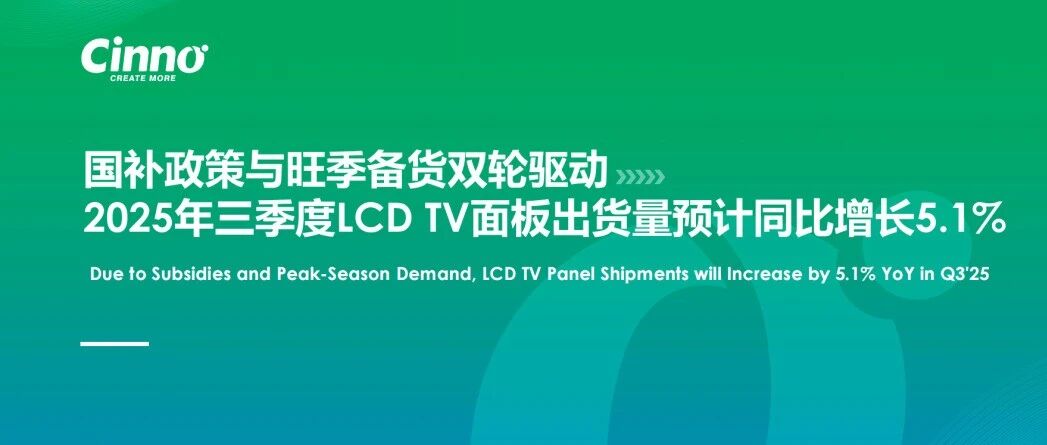
国补政策与旺季备货双轮驱动,2025年三季度LCD TV面板出货量预计同比增长5.1%
CINNO Research· 2025-10-09 08:32
Group 1 - The core viewpoint of the article is that the LCD TV panel shipment volume is expected to increase by 5.1% year-on-year in Q3 2025, driven by national subsidy policies and seasonal inventory preparations [2][3]. Group 2 - The article provides a detailed analysis of the global LCD TV panel shipment volume, shipment area, and the ranking of major panel manufacturers in terms of shipment volume and area [2][3]. - It includes monthly changes in LCD TV panel prices from September 2024 to September 2025 [3]. - A timeline related to the "old-for-new" national subsidy policy for 2024-2025 is outlined [3]. - The expected shipment volume and area rankings for global LCD TV panels in Q3 2024 are discussed, along with year-on-year comparisons [3]. - The article presents detailed shipment volume and area share data for various manufacturers (BOE, CSOT, HKC, Innolux, AUO, CHOT, Sharp) segmented by size from Q1 2024 to Q3 2025 [3][4].
Omdia Forecasts Large-Area Display Shipments to Grow 2.8% YoY in 2025, Mobile PC Displays Lead the Growth
Businesswire· 2025-10-03 06:00
Core Insights - The large-area display market is expected to see a 2.8% year-over-year increase in unit shipments in 2025, despite declines in the TV and monitor segments [1] Group 1: Market Performance - The growth in large-area display shipments is primarily driven by strong demand for mobile PC displays, particularly for notebooks and tablets [1] - The decline in the TV and monitor markets is offset by the performance of mobile PC displays [1]


品牌持续发售!OLED显示器市场火力全开
WitsView睿智显示· 2025-09-28 09:06
Core Viewpoint - The OLED display market is rapidly evolving with new product launches almost every month, driven by strong demand in the gaming sector and competitive pricing strategies from various brands [2][3][6]. Product Launches - Alienware has released a 27-inch 2K 280Hz QD-OLED display priced at 5,649 yuan. Other brands like MSI, AOC, and TITAN ARMY have launched 27-inch 2K 500Hz QD-OLED displays, with AOC's product being the most competitively priced at 4,999 yuan [3]. - In addition to QD-OLED displays, new W-OLED displays have also been introduced, including a 34-inch model from LG Electronics and a 32-inch model from ASUS [3]. - The market has seen a decrease in prices for some OLED displays in September compared to August, with Samsung's 27-inch 4K QD-OLED display dropping by 500 yuan (7% decrease) and Philips' 27-inch 2K 280Hz QD-OLED display decreasing by 300 yuan (9% decrease) [3]. Market Trends - By September 2025, eight brands had launched 27-inch 2K 280Hz QD-OLED displays, while seven brands had introduced 27-inch 2K 500Hz QD-OLED displays, indicating a growing competitive landscape [5]. - The specifications of OLED displays are expanding, with potential future products like a 27-inch 2K 540Hz model anticipated to meet consumer demand [5]. - Currently, OLED displays are primarily used in the gaming sector, but there is potential for expansion into products tailored for content creators [5]. Supply Chain Insights - The supply of OLED display panels is mainly dominated by South Korean manufacturers, but the growing market may attract more panel suppliers in the future [5]. Market Projections - TrendForce forecasts that OLED display shipments will reach 2.64 million units in 2025, representing an 86% year-on-year increase, with a penetration rate of approximately 2.1% in the overall display market. By 2028, this rate could challenge 5% due to strong demand in gaming and proactive efforts from panel and brand manufacturers [6].

TrendForce集邦咨询:十一长假将至 LCD电视面板大厂计划调降稼动率稳运维
Zhi Tong Cai Jing· 2025-09-24 05:49
Group 1 - TrendForce's latest survey indicates that demand for LCD TV panels is expected to slow down by Q4 2025, prompting major manufacturers like BOE, CSOT, and HKC to implement production breaks during China's National Day holiday [1][2] - The estimated production utilization rate for October is projected to decrease by six percentage points from the manufacturers' August plans, dropping to 79% [1] - The holiday strategy is aimed at maintaining low inventory levels before the end of October and reducing operational costs [1] Group 2 - BOE, CSOT, and Sharp plan to take a production break of five to seven days for their 10.5-generation production lines during the holiday, with an estimated utilization rate of around 74% for October [2] - HKC's main production lines are expected to implement a five-day holiday, leading to an estimated utilization rate of approximately 77.5% for the 8.6-generation panels [2] - Demand for October is supported by preparations for the Double 11 shopping festival, but is still expected to decrease by 4.8% compared to September, prompting manufacturers to control production to alleviate potential supply-demand pressure [2]

Kopin (NasdaqCM:KOPN) Update / Briefing Transcript
2025-09-15 14:17
Summary of Kopin Corporate Update Call - September 15, 2025 Company Overview - **Company**: Kopin Corporation (NasdaqCM: KOPN) - **Industry**: Defense Technology, specifically focusing on micro LED displays for soldier-worn systems Key Points and Arguments 1. **Major Contract Award**: Kopin has been awarded a significant contract from the U.S. Army under the Industrial Base Analysis and Sustainment (IBAS) program, marking a transformative milestone for the company [4][5][6] 2. **Product Development**: The contract accelerates the development of ultra-bright, full-color, low-power micro LED microdisplays tailored for augmented reality applications for soldiers, enhancing clarity and reliability in combat conditions [5][6] 3. **Funding and Manufacturing**: The contract includes funding for domestic manufacturing capabilities, which will support facilities, equipment, and workforce training, establishing Kopin as a key onshore manufacturer for these displays [6][8] 4. **Market Positioning**: Kopin is positioned as a foundational partner in the modernization of U.S. military technology, with over 400,000 defense vision systems already deployed [6][8] 5. **Revenue Potential**: Expected production volumes range from 80,000 to 120,000 systems for headsets, translating to potential revenue between $350 million and $500 million depending on volume [14][17] 6. **Collaboration with Army**: Kopin is co-developing the microdisplay technology with the Army, which enhances the likelihood of success in securing additional contracts within the Soldier Borne Mission Command (SBMC) program [16][20] 7. **Technological Challenges**: The development of the microdisplay presents significant technical challenges, particularly in achieving stability and yield for full-color micro LEDs [35][36] 8. **Competitive Landscape**: The U.S. Army recognizes the need to catch up with adversaries, particularly China, which has heavily invested in color micro LED technology for military applications [39][40] Additional Important Content - **Strategic Partnerships**: Kopin's partnership with Theon International positions the company to support NATO and other international defense initiatives [9] - **Future Investments**: Anticipated investments from the IVAS program office could reach tens of millions of dollars for onshore manufacturing capabilities in 2026 and beyond [25][26] - **Long-term Vision**: The contract and associated developments are seen as a defining moment for Kopin, transitioning the company from a display supplier to a strategic asset within the U.S. defense innovation ecosystem [8][9]

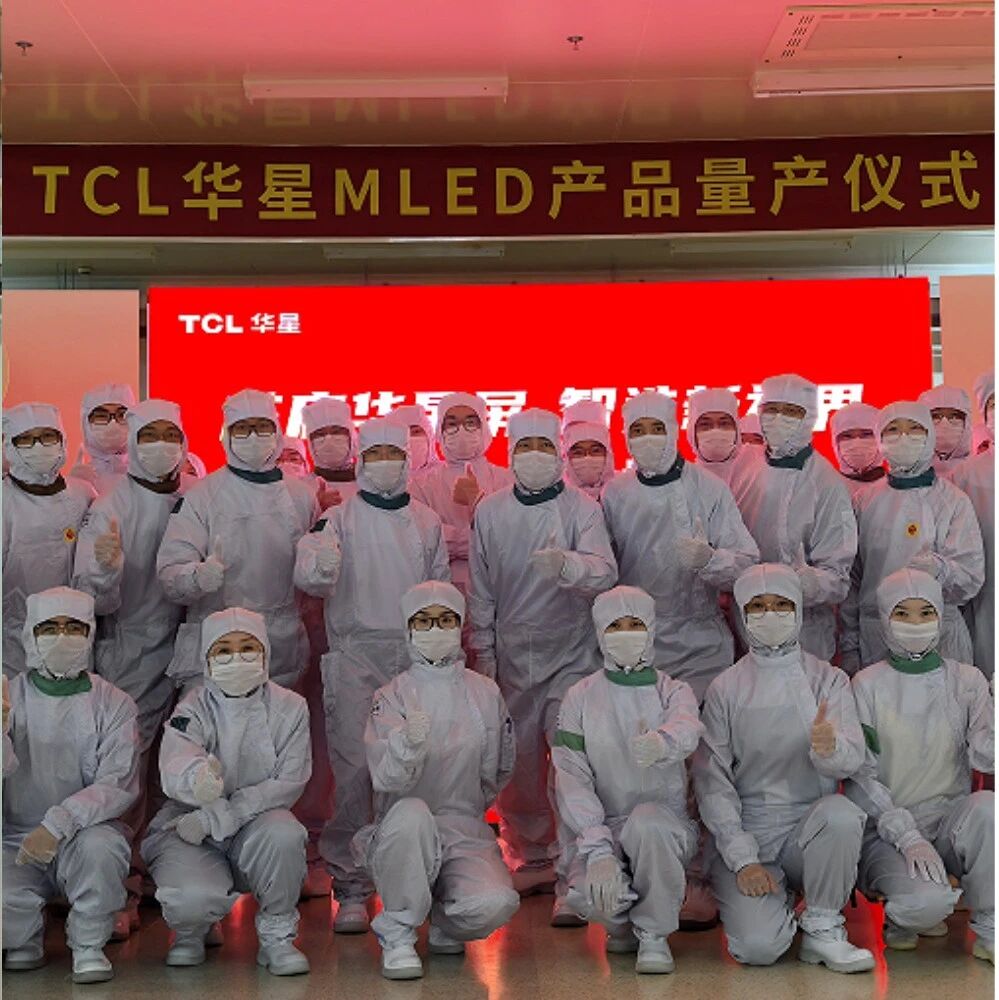
TCL华星Mini LED COB直显产品在苏州正式量产
WitsView睿智显示· 2025-09-15 10:41
Core Viewpoint - TCL Huaxing has officially announced the mass production of Mini LED COB direct display products, marking a significant step in enhancing its display technology portfolio, which includes LCD, OLED, and MLED [2][7]. Group 1: Product Details - The first mass-produced product is the P1.2 Mini LED COB display screen, featuring a large panel design with adjustable brightness ranging from 0 to 800 nits and a high contrast ratio of 5000:1, suitable for various applications such as meetings, command centers, and security monitoring [3]. - The product has undergone rigorous testing, including impact resistance and high-temperature water exposure, demonstrating superior durability compared to traditional SMD screens. Its chip-level armor packaging technology conceals solder points within the substrate, enhancing overall reliability and lifespan [3]. - The COB display's high contrast performance allows it to present 0.01 lumens of micro-light on a pure black background, improving detail restoration in nighttime monitoring. Its modular design supports arbitrary cutting and splicing, providing flexibility for large display system setups [3]. Group 2: Market Position and Future Prospects - MLED is TCL Huaxing's third display technology route following LCD and OLED, with the project officially launched in July 2024. The company expedited equipment installation, debugging, and technical validation, achieving mass production 15 days ahead of schedule [7]. - As a major player in the panel industry, TCL Huaxing's entry into the LED display market is expected to accelerate the adoption of COB technology, intensify market competition, and reshape the industry chain ecosystem [7]. - In 2023, TCL Huaxing has been actively advancing in the MLED technology field, launching multiple products and expanding applications. Notably, it has supplied three 11.98-inch Mini LED screens for Xiaomi's YU7 automotive display and introduced low-power, high-efficiency Mini LED products for VR and XR applications [7].