Government Finance

Search documents
记者观察:外币主权债券接力发行 中国金融开放信号强劲
Shang Hai Zheng Quan Bao· 2025-11-20 09:28
Core Insights - The Ministry of Finance of the People's Republic of China successfully issued €4 billion in sovereign bonds on November 18, representing a significant move in the international bond market [1] - This marks the second issuance of foreign currency sovereign bonds by China within a short span of two weeks, indicating a commitment to opening its financial markets to global investors [1] - The issuance attracted strong participation from international investors, reflected in record-high subscription multiples, showcasing confidence in Chinese sovereign bonds [1]
Bond Markets Have Europe's Biggest Economies in a Bind. Why It's a Warning for Trump.
Barrons· 2025-11-19 06:00
Core Viewpoint - The U.K. government is facing challenges in addressing a fiscal deficit, avoiding both tax increases and spending reductions [1] Group 1 - The government is struggling to fill a fiscal gap [1] - There is a reluctance to implement tax hikes [1] - The government is also avoiding cuts to public spending [1]


南昌市财政局组织召开全市债务管理工作布置会
Sou Hu Cai Jing· 2025-11-18 05:30
Core Insights - The meeting emphasized the importance of local government bond funds in promoting economic and social development at the county level [1][2] - There is a focus on addressing challenges in debt management, including the need for timely updates on debt policies and effective project planning [1] - The meeting highlighted the necessity of collaboration among departments to achieve annual debt management goals [1] Group 1: Key Requirements for Debt Management - Improve awareness and prioritize the significance of local government bond funds [1] - Directly confront issues and enhance problem-solving capabilities related to debt management [1] - Maintain focus on targets and ensure effective progress towards achieving set objectives [1] Group 2: Acknowledgment and Deployment - Recognition of the current shortcomings in debt management across counties and districts [1] - Detailed deployment for accelerating the issuance and utilization of special bonds while mitigating debt risks [1] - Reporting on debt management status by the municipal finance bureau and discussions by county and district finance departments [1][2]

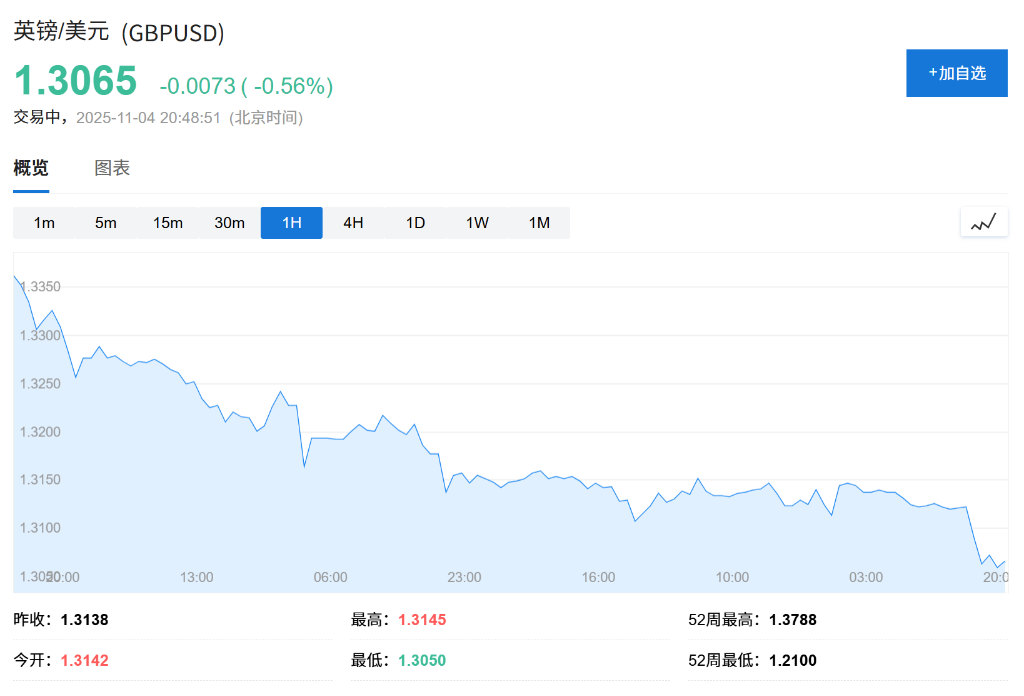
英镑跌至七个月低点!英国财政大臣里夫斯承诺削减债务,为加税铺路
Hua Er Jie Jian Wen· 2025-11-04 13:07
Core Viewpoint - The UK Chancellor of the Exchequer, Rachel Reeves, is paving the way for a significant policy shift, indicating that the Labour government may abandon its core campaign promise of not raising taxes to address increasing fiscal challenges [1][4]. Group 1: Fiscal Challenges - The UK government faces a fiscal gap estimated at £35 billion, driven by high borrowing costs, costly policy reversals, and a significant downgrade in economic growth forecasts by the Office for Budget Responsibility (OBR) [5]. - Reeves reiterated her commitment to the UK's "ironclad" fiscal rules, countering calls within her party to relax these rules for increased public spending [5]. - The core issue lies in the Labour Party's flagship tax promise during the campaign, which was to avoid raising personal income tax, National Insurance (NI), or Value Added Tax (VAT), collectively contributing to about two-thirds of government tax revenue [5]. Group 2: Political Strategy - Reeves' speech broke traditional norms, as Chancellors typically remain silent before formally presenting the budget, indicating a strategic move to garner support for a politically contentious fiscal plan [4][7]. - The speech aimed to prepare the public for potential widespread tax increases in the upcoming budget, with Reeves emphasizing the need for everyone to contribute to the country's future [6][8]. - Opposition parties criticized Reeves' address, with the Liberal Democrats and Conservatives dismissing it as ineffective and accusing the Labour Party of abandoning its commitments [6].
U.S. Treasury Yields Decline After Lowered Borrowing Estimate
Barrons· 2025-11-04 07:34
Group 1 - U.S. Treasury yields are declining, with a focus on quarterly borrowing estimates [1][2] - The U.S. Treasury has lowered its fourth-quarter borrowing estimate by $21 billion to $569 billion, attributed to a higher beginning cash balance and lower projected net cash flows [1] - The 10-year Treasury yield decreased by 2 basis points to 4.086%, while the 30-year yield fell by 2.1 basis points to 4.668% [2]
财政部部长表态:严肃追责违规举债、虚假化债
Huan Qiu Wang· 2025-11-04 01:04
Core Points - The Ministry of Finance in China has established a new Debt Management Department to oversee domestic debt management policies and regulations, including monitoring government debt and preventing hidden debt risks [1][3] - The Minister of Finance, Lan Fo'an, emphasized a strict discipline against the creation of new hidden debts and aims to implement a long-term regulatory system for local government debt [1] - This initiative is part of China's broader strategy to address local government financing pressures and stabilize economic growth amid a slowdown [3] Summary by Category Debt Management - The newly formed Debt Management Department will draft and execute government domestic debt management policies and plans [1] - Responsibilities include setting limits on national and local government debt balances and enhancing monitoring and regulation of government debt [1] Regulatory Measures - The Ministry will enforce strict accountability for violations related to illegal borrowing and false debt resolution [1] - A unified long-term regulatory system for local government debt is being established to prevent future debt accumulation [1] Economic Context - Last year, China introduced a debt scheme totaling 10 trillion yuan (approximately 1.83 trillion SGD) to alleviate financing pressures on local governments and support weak economic growth [3] - The focus remains on resolving debts accumulated through local financing platforms, referred to as hidden debts [3]

财政部设立新机构!领导班子亮相
券商中国· 2025-11-03 10:34
Core Viewpoint - The establishment of the Debt Management Department within the Ministry of Finance aims to enhance the management of government debt, ensuring it aligns with high-quality development goals and mitigates risks associated with local government debt [1][3][4]. Group 1: Department Structure and Responsibilities - The Debt Management Department is now officially listed as a department of the Ministry of Finance, with Li Dawei as the director and two deputy directors, Qu Fuguo and Zhao Zeyong [1]. - The department consists of six divisions: Comprehensive Division, Central Debt Division, Local Debt Division I, Local Debt Division II, Issuance and Redemption Division, and Monitoring and Management Division [1][2]. Group 2: Debt Management Mechanism - The primary responsibilities of the Debt Management Department include formulating and implementing domestic debt management policies, managing both central and local government debt, and monitoring government debt to prevent hidden risks [3][4]. - The total government debt in China is projected to reach 92.6 trillion yuan by the end of 2024, comprising 34.6 trillion yuan in national debt, 47.5 trillion yuan in local government legal debt, and 10.5 trillion yuan in local government hidden debt, resulting in a government debt ratio of 68.7% [3]. Group 3: Policy Implementation and Future Outlook - The Ministry of Finance plans to continue managing local government debt limits strictly, ensuring sustainable use and repayment capabilities [4]. - Li Dawei announced that 500 billion yuan will be allocated from the existing local government debt limit to support local governments in addressing existing project debts and enhancing fiscal capacity [5].

财政部公布前三季度财政收支数据,非税收入今年首次同比下降
Sou Hu Cai Jing· 2025-10-18 00:44
Group 1 - The core point of the article highlights that for the first three quarters of the year, non-tax revenue has experienced a year-on-year decline for the first time, contrasting with previous growth trends [2] - National general public budget revenue reached 163,876 billion yuan, showing a year-on-year increase of 0.5%, with tax revenue at 132,664 billion yuan, up 0.7%, while non-tax revenue fell to 31,212 billion yuan, down 0.4% [2] - Central general public budget revenue was 70,837 billion yuan, reflecting a year-on-year decrease of 1.2%, while local general public budget revenue was 93,039 billion yuan, increasing by 1.8% [2] Group 2 - National general public budget expenditure for the first three quarters totaled 208,064 billion yuan, marking a year-on-year growth of 3.1% [3] - Central general public budget expenditure was 31,008 billion yuan, with a year-on-year increase of 7.3%, while local general public budget expenditure reached 177,056 billion yuan, growing by 2.4% [3]

U.S. Treasury reveals custom duties receipts totaled $29.6B in September
Youtube· 2025-10-16 18:59
Core Insights - The US government reported a $198 billion surplus for September, significantly exceeding the $50 billion estimate from Reuters, marking the largest surplus for any September on record [1][2][3] - Year-to-date, the US is running a $1.77 trillion deficit, with customs duties for September reaching a record $29.6 billion, up 295% year-over-year [2][3] - Net interest payments on the debt have totaled $970 billion so far in FY25, indicating substantial ongoing fiscal obligations [3] Revenue and Expenditure - The increase in revenue is attributed to tariff payments, which have significantly changed due to recent policy implementations [4] - The Trump administration's efforts to slow down spending have contributed to an improved fiscal picture, resulting in a better monthly surplus [4][6] Market Implications - The improved fiscal situation, at least in the short term, may lead to less pressure on interest rates, which could influence market dynamics [6] - While the surplus is encouraging, it is important to note that this data can be volatile, and trends should not be assumed based on a single month’s performance [6][7]

Argentine Treasury struggles to contain peso slide, awaits US support
Reuters· 2025-10-08 15:22
Core Viewpoint - Persistent exchange rate pressures are significantly impacting Argentina's financial markets, leading to increased strain on the Treasury as revenues from a special liquidation deal with agricultural exporters decline [1] Group 1: Financial Market Impact - The ongoing exchange rate pressures are causing instability in Argentina's financial markets, which is a critical concern for investors [1] - The Treasury is experiencing financial strain due to reduced proceeds from a special liquidation deal with agricultural exporters, indicating a potential decline in government revenue [1] Group 2: Agricultural Sector - The agricultural sector's special liquidation deal is underperforming, which may have broader implications for the economy and government finances [1]