
公路运输

Search documents
四川富临运业集团股份有限公司第七届董事会第十三次会议决议公告
Shang Hai Zheng Quan Bao· 2026-01-22 19:02
登录新浪财经APP 搜索【信披】查看更多考评等级 证券代码:002357 证券简称:富临运业 公告编号:2026-001 四川富临运业集团股份有限公司 三、备查文件 第七届董事会第十三次会议决议公告 本公司及董事会全体成员保证信息披露的内容真实、准确、完整,没有虚假记载、误导性陈述或重大遗 漏。 一、会议召开情况 四川富临运业集团股份有限公司(以下简称"公司")第七届董事会第十三次会议于2026年1月22日9:30 以通讯表决方式召开,会议通知于2026年1月19日以电子邮件方式发出,本次会议应出席董事9名,实际 出席会议董事9名。会议由董事长王晶先生主持,会议的召集和召开程序符合《公司法》和《公司章 程》的规定。 二、会议审议情况 审议通过《关于为全资子公司提供担保的议案》 因业务发展需要,公司全资子公司眉山富临运业有限公司、遂宁富临运业有限公司、四川富临运业集团 射洪有限公司拟分别向中国民生银行股份有限公司成都分行申请1,000万元的综合授信额度,授信期限1 年。公司为前述3家全资子公司就授信额度内的借款提供连带责任保证。 表决结果:赞成9票,反对0票,弃权0票,回避0票。 具体内容详见公司披露于巨潮资讯 ...

今年全省公路水路计划投资超840亿元
Xin Lang Cai Jing· 2026-01-21 19:35
Group 1 - The core viewpoint of the articles highlights the comprehensive development of transportation infrastructure in Hunan province, aiming to enhance the quality and efficiency of logistics and transportation services [1][2][3] Group 2 - In 2023, Hunan plans to invest over 84 billion yuan in fixed assets for road and waterway transportation, focusing on building a modern high-quality integrated transportation network [1] - The province aims to complete the construction of three new highways and expedite the early operation of two expanded highways totaling 219 kilometers, along with the completion of 300 kilometers of ordinary national and provincial trunk roads and 6,000 kilometers of rural roads [1] - The inland waterway sector will see the completion of 262 kilometers of the Yongheng waterway and the acceleration of ongoing projects, with the addition of six new berths for vessels over 1,000 tons [1] - By 2025, the ratio of total social logistics costs to GDP in Hunan is expected to decrease from 17.5% in 2015 to 13.8%, remaining below the national average for five consecutive years [2] - The province will promote the regular operation of direct shipping routes and enhance key logistics hubs, focusing on improving the last mile connectivity for railways to ports and industrial parks [2] - Hunan will also upgrade transportation services, including the introduction of over 600 new energy buses and the renovation of service areas, aiming to improve the overall travel experience [2]
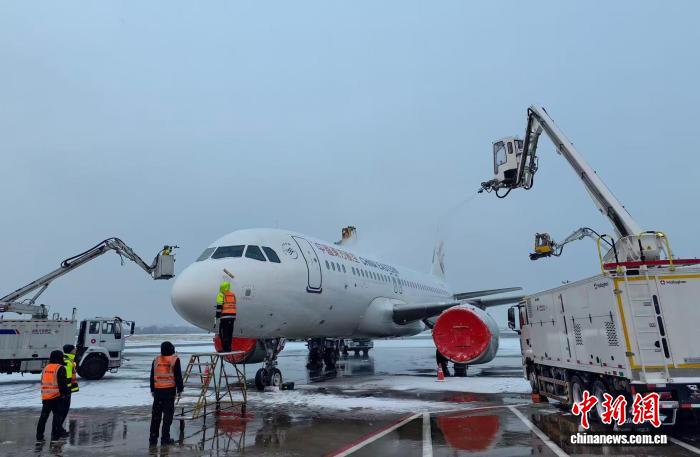
长江下游降雪 水陆空交通受阻
Zhong Guo Xin Wen Wang· 2026-01-20 06:19
Group 1 - The Yangtze River downstream experienced snowfall from January 19 to 20, causing disruptions in water, land, and air transportation [1][3] - As of 8 AM on January 20, the Jiangsu Maritime Bureau reported that 18 passenger ferry routes were suspended, and 1,072 personnel were evacuated from water-related construction sites [1] - The Nanjing Maritime Bureau implemented temporary traffic control for small vessels and suspended five passenger ferry routes, affecting 1,182 small vessels [1][3] Group 2 - The China Railway Shanghai Group announced temporary suspension measures for certain passenger trains on January 20, affecting routes including Hefei-Bengbu and Shanghai-Chengdu [1][3] - By 9 AM on January 20, Jiangsu Province had 1,810 passenger bus routes, with 1,459 routes suspended, and 937 bus lines also halted [3] - Nanjing Lukou International Airport reported flight cancellations to various destinations, with some flights from other cities to Nanjing also canceled due to the weather [3]

聊城东阿织密立体交通网,加速拥抱“大济南”
Qi Lu Wan Bao· 2026-01-20 05:37
齐鲁晚报·齐鲁壹点 谢晓丽 通讯员 王之荣 王甜甜 信用赋能,激活行业发展"一池春水" 日前,随着东阳高速公路正式通车,一条联通内外的"黄金通道"为东阿县发展注入新动力。2025年以 来,东阿县以交通基础设施建设为突破口,内外兼修,全面推进路网升级、行业治理与安全提升,为深 度融入济南都市圈、服务区域协同发展铺设了坚实的"跑道"。 高速推进,打通融合发展"大动脉" 2025年12月26日,总投资32.7亿元的东阳高速公路建成通车,成为东阿对外联系的关键一跃。与此同 时,备受瞩目的济南至东阿高速公路建设正酣,其东阿段路基、桥涵工程进度已超92%,累计完成投资 13.7亿元,预计2026年底即可贯通。届时,东阿与济南的时空距离将进一步压缩,同城化效应更加凸 显。此外,东梁高速、东聊高速等多个项目前期工作也在高效推进,一个"梯次推进、接续发力"的立体 交通格局正加速形成,为"济聊一体化"发展编织起日益密实的骨干网络。 路通村美,"四好农村路"铺就幸福底色 不仅要打通"大动脉",更要畅通"微循环"。2025年,东阿县投入超3600万元用于农村公路的新建、改造 与养护,让一条条"致富路""幸福路"直达田间地头、连通千家 ...
未扭亏先接盘!江西长运拟1655万元买下两家亏损公司
Shen Zhen Shang Bao· 2026-01-20 04:04
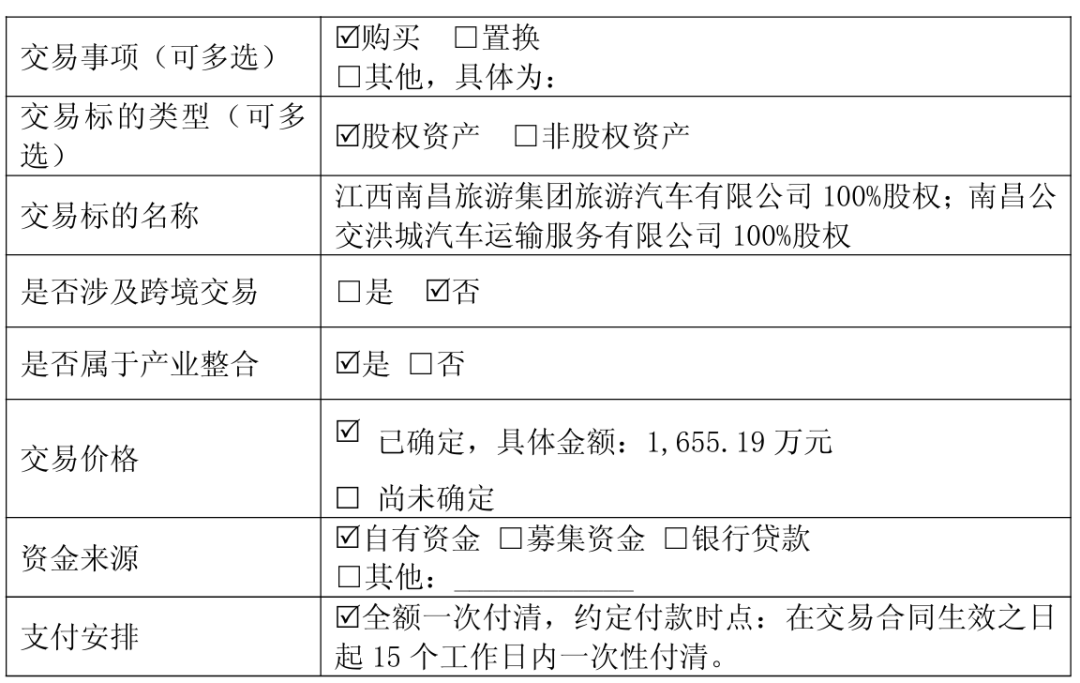
1月19日晚间,江西长运发布公告称,公司拟通过协议转让方式,按照评估价值,以353.57万元收购公司控股股东长运集团持有的南旅汽车100%股权;以 1171.46万元收购长运集团持有洪城汽运90%股权,以130.16万元收购南旅公司持有的洪城汽运10%股权。 本次交易旨在消除和避免在旅游客运业务方面与公司间接控股股东南昌交投集团控制的其他企业的同业竞争,同时为促进旅游客运业务资源整合,有效发 挥相关业务的协同和联动效应。 具体来看,根据南昌市人民政府办公室与南昌市国有资产监督管理委员会相关批复文件,南昌市政公用集团有限公司持有的长运集团100%股权及江西长 运16.67%股权无偿划转至南昌交投集团。 经公司第九届董事会第三十八次会议与2022年第三次临时股东大会审议通过,南昌市政公用集团有限公司避免同业竞争承诺由南昌交投集团承继,南昌市 交通投资集团有限公司出具《关于避免和消除同业竞争的承诺函》。 截至公告披露日,长运集团持有公司6567.69万股无限售条件流通股,占公司总股本的23.0869%,系公司控股股东。南昌交投集团直接持有公司16.6667% 股,通过长运集团间接持有公司23.0869%股权,系公司 ...

战寒潮 保民生 稳运行——应对气温陡降,江苏多措并举迎“寒”而上
Xin Hua Ri Bao· 2026-01-19 23:59
Group 1: Weather Impact and Response - Jiangsu province is experiencing a significant drop in temperature and snowfall due to a cold wave, prompting a critical period for supply and transportation [1] - The transportation department has taken swift action to ensure safety and smooth traffic flow, with 29,800 tons of snow-melting agents and 1,520 snow removal vehicles prepared [2] - Rail transport is facing challenges, with 151 train cancellations reported at Nanjing South Station and measures implemented to manage passenger flow and safety [3] Group 2: Supply Chain and Food Security - The Nanjing market has activated a supply guarantee plan, with 3,000 tons of vegetables stored to ensure freshness and availability [4] - Agreements with 30 vegetable bases have secured 10,000 tons of fresh produce to mitigate transport disruptions during adverse weather [4] - Online grocery demand has surged, with stock levels increasing by 35% to 50% in affected areas, particularly for essential food items [4] Group 3: Energy Supply and Management - Jiangsu's energy companies have initiated emergency responses, with the State Grid reporting a peak electricity load of 128 million kilowatts, an 18.5% increase from the previous day [8] - The province has secured additional power supply resources, increasing cross-regional electricity support by approximately 170,000 kilowatts [9] - Energy companies are conducting rigorous inspections and maintenance to ensure uninterrupted power and heating supply during the cold wave [7] Group 4: Emergency Response and Public Safety - The provincial meteorological department has issued 133 weather warnings to mitigate the impact of adverse conditions on public life [12] - A rapid response mechanism has been established to handle public inquiries and complaints related to the cold weather, with a focus on efficient service delivery [13] - Various departments are collaborating to ensure public safety and maintain order during the cold wave, including real-time monitoring and adjustments to services [10][11]
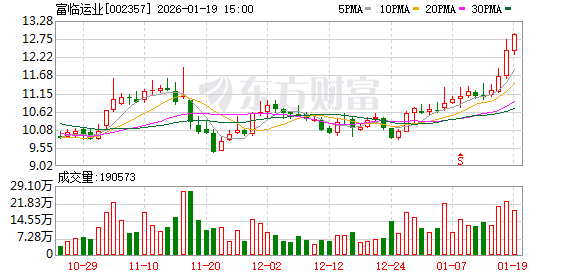
富临运业:截至2026年1月9日股东人数为15614人
Zheng Quan Ri Bao· 2026-01-19 11:37
(文章来源:证券日报) 证券日报网讯 1月19日,富临运业在互动平台回答投资者提问时表示,截至2026年1月9日,公司股东人 数为15614人。 ...
江西长运(600561.SH):拟收购南旅汽车100%股权及洪城汽运100%股权
Ge Long Hui A P P· 2026-01-19 10:54
Core Viewpoint - Jiangxi Changyun (600561.SH) aims to eliminate competition in the tourism passenger transport business with its indirect controlling shareholder, Nanchang Transportation Investment Group, by acquiring 100% stakes in Nanjing Tourism Group and Hongcheng Bus Transport for a total of 1,654.19 million yuan [1] Group 1 - The company plans to acquire 100% equity of Nanjing Tourism Group for 3.5357 million yuan and 90% equity of Hongcheng Bus Transport for 11.71458 million yuan, along with 10% equity for 1.30162 million yuan [1] - The acquisitions are intended to enhance resource integration in the tourism passenger transport sector and improve operational efficiency through synergy [1] - Post-transaction, both Nanjing Tourism Group and Hongcheng Bus Transport will become wholly-owned subsidiaries and included in the company's consolidated financial statements [1] Group 2 - The company will implement integrated management of Jiangxi Urban Intercity Bus Tourism Passenger Transport, Nanjing Tourism, and Hongcheng Bus Transport through a unified scheduling platform [2] - The integration aims to optimize resource allocation, reduce management costs, and enhance operational efficiency [2] - The company plans to expand services such as chartered tours and commuter buses to increase customer loyalty and improve service quality [2]
寒潮来袭!多地交通运输部门全力保障出行安全畅通
Xin Hua Wang· 2026-01-19 08:14
Group 1 - A significant cold wave is impacting various regions in China, prompting transportation authorities to enhance monitoring and response measures [1][2][3] - In Beijing, heavy snowfall has led to over 10 centimeters of new snow accumulation, with emergency response teams deployed for snow removal and road safety [1][2] - Hebei Province has mobilized 3,446 personnel and 1,111 pieces of equipment for snow removal, covering a total of 13,232 kilometers of roads [2] Group 2 - Shanxi Province has implemented a proactive approach to snow removal, utilizing both mechanical and manual methods to address the challenges posed by mountainous terrain [2][3] - The China Meteorological Administration has upgraded its emergency response level for severe weather, indicating the seriousness of the cold wave and associated snow and ice conditions [2] - In Shandong Province, a comprehensive snow removal strategy has been established, with over 2,900 personnel and 2,600 snow removal vehicles deployed for continuous operations [3] Group 3 - The railway sector is closely monitoring weather conditions to ensure safe train operations, with various departments coordinating efforts to manage snow and ice impacts [4][5] - Airports, including Beijing Daxing and Wuhan Tianhe, have activated extensive snow and ice removal operations, deploying numerous vehicles and materials to ensure flight safety [5] - Airlines are actively communicating with passengers regarding flight status and providing support for those affected by weather-related disruptions [5]
今年青海公路通车总里程将达9.5万公里
Xin Lang Cai Jing· 2026-01-18 18:29
Group 1 - The Qinghai Provincial Transportation Department plans to complete fixed asset investment in road and waterway transportation exceeding 16.5 billion yuan in 2026, with the goal of constructing and renovating 5,000 kilometers of ordinary provincial and rural roads, reaching a total road mileage of 95,000 kilometers [1] - The department will accelerate the construction of 20 ongoing projects and aims to add 1,500 kilometers of new road mileage, focusing on key projects with strong development potential [1] - The integration of transportation and tourism will be promoted, with plans to implement the "00" tourism road and improve inter-provincial passages, supporting the construction of the Qingnan experimental zone [1] Group 2 - The integration of rural passenger and freight postal services will be advanced, promoting deep integration of resources and data across transportation, postal, commerce, and agriculture sectors [2] - The optimization of differentiated toll policies on highways will be continued, implementing pricing strategies based on traffic volume and specific enterprise needs [2] - The construction of rural roads will be accelerated, with efforts to extend urban public transport and transform rural passenger transport into a bus-like operation, encouraging various transport service models [2]